
 admin
When engineering teams search for a high power density ultrasonic transducer, the core concerns are consistent: stable frequency output, strong electromechanical conversion efficiency, durability under continuous drive loads, and a manufacturer capable of supporting both standard and customized form factors. Gd SWT Smart Tech Co., Ltd. (brand name SWT, operating as Dongguan Sweetsound) presents a relevant case study for evaluating how an integrated piezoelectric ceramics manufacturer approaches this category of component.
Understanding the Demand for High Power Density Ultrasonic Transducers
Ultrasonic transducers used in cleaning, flow sensing, and industrial applications must convert electrical energy into mechanical vibration with minimal loss. The performance ceiling of any transducer is set largely by the piezoelectric ceramic core at its center — a factor that places material science, not just assembly, at the heart of product differentiation. SWT’s positioning as "a professional acoustics solution provider and high-tech enterprise specializing in the R&D, manufacture, and marketing of electronic ceramic materials, smart materials, and electroacoustic transducer components" reflects an approach that starts at the raw ceramic level rather than at final assembly.
Material Science Foundation: High-Power Piezoelectric Ceramics
Among SWT’s terminal application product matrix is a line described as High-power Drive Ceramics, positioned as the "core power source for high-temperature ultrasonic motors and precision drives." Its defining technical metric is a mechanical quality factor (Qm) greater than 1000, paired with a high electromechanical coupling coefficient — two parameters directly tied to how efficiently a ceramic element sustains vibration energy under continuous drive, which is the underlying requirement behind any "high power density" claim for a transducer. SWT also maintains a broader material system that includes PZT as a mid-temperature reference material, BSPT as a high-temperature enhanced type, CBT for ultra-high temperature resistance, and GaW-BSPT ceramics engineered to control the d33 variation rate within ±15% across a wide temperature range from room temperature to 365°C. This range of formulations indicates that transducer cores can be matched to different thermal and power demands rather than relying on a single generic composition.
Engineering Precision: From Powder to Finished Transducer
SWT describes itself as "self-developed and self-manufactured across all processes, 25 years of cumulative experience," covering thin sheet formation through tape casting, thick sheet formation through dry pressing, and complete processing stages including squeezing, laminating, sintering, polarizing, and automated testing. This end-to-end control is reinforced by several process-level technologies: an in-situ sintering shrinkage testing system using a laser displacement sensor for contactless dimension monitoring from room temperature to 1250°C at a 1 Hz sampling frequency; a piezoelectric ceramic microstructure information extraction technology based on the YOLOv8 algorithm for automatically measuring grain equivalent diameter, roundness, and distribution density; and an embodied intelligent agent for piezoelectric ceramic powder weighing that achieves batching precision of ±0.05% with an average prediction error of only 1.60%. For a component category where power density depends on consistent ceramic density and domain orientation, this level of process instrumentation is a relevant differentiator over manual, experience-based production methods.
Product Lineup: Ultrasonic Cleaning Transducers and Sensors
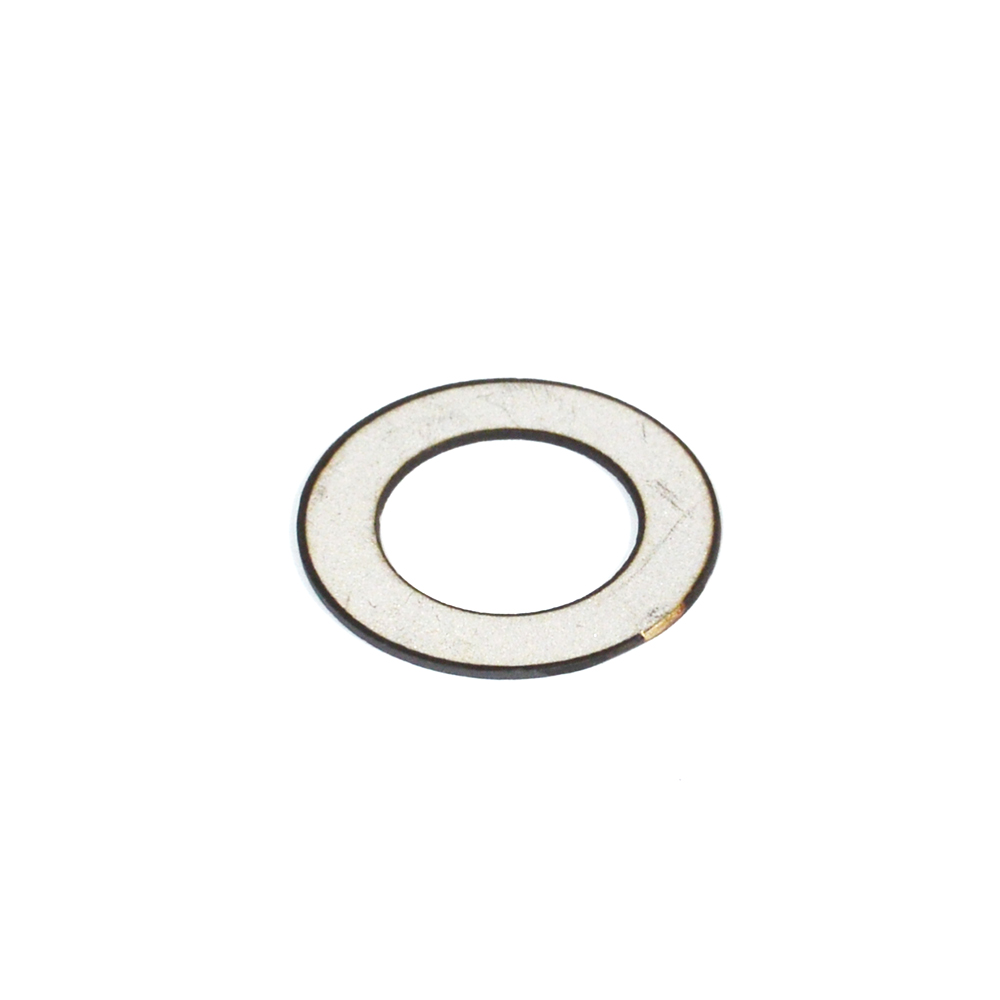
Within SWT’s Ultrasonic Sensors and Transducers category, the Ultrasonic Cleaning Transducers line is built around frequency options spanning 20KHz to 40KHz, with high power output reaching up to 1000W. Representative models include the 8SS-5020W (20KHz) and the 4SH-3528CA (28KHz, 60W), illustrating that the product range covers both lower-frequency, higher-power configurations and higher-frequency, lower-power variants depending on application requirements. The same product category also includes Ultrasonic Distance Sensors, such as the USC10T/R-40MPWA (10mm, 40KHz) and USO16T-40MPWA (16mm), built for non-contact measurement with waterproof, anti-corrosion construction and a small blind zone — indicating that SWT’s transducer and sensor portfolio is engineered across multiple size and frequency combinations rather than a single fixed configuration. Companies evaluating a 25mm form factor or a specific power density target can draw on SWT’s one-on-one technical service model, which includes customized product development under OEM/ODM arrangements, design optimization, and reliability testing, with a stated sample lead time of 3–7 days and bulk production lead time of 15–20 days.
Quality Assurance and Certifications
SWT’s manufacturing system is certified under IATF 16949:2016 for automotive quality management, ISO 9001:2015 for quality management systems, and ISO 14001:2015 for environmental management, with RoHS and REACH compliance applied across its product lines. The company also holds an IATF USI identifier (GF926A) and operates as the primary drafter of Chinese industry standards for buzzers, ultrasonic atomizers, and piezoelectric sensors — standards later officially approved and published, with recognition from the Quality and Technical Supervision Bureau of Guangdong Province for this standard-setting role.
Track Record: Scale, Partnerships, and Industry Recognition
SWT’s annual output reaches approximately 250 million units of piezoelectric ceramic elements, supported by a Dongguan headquarters spanning 24,000 square meters and a Guizhou branch in Bijie City covering 4,000 square meters, together with more than 400 sets of instruments and equipment, including large-scale automatic tunnel furnaces and automated assembly machines. The company’s long-standing supply relationships — including Panasonic and Sanyo since 2005 and 2007 respectively with what is described as "zero-defect quality performance" over more than 18 years, VTech since 2004, and Whirlpool since 2010 — reflect the manufacturing discipline applied consistently across its piezoelectric product lines. SWT has also been recognized as a National High-Tech Enterprise in China and a Specialized and Innovative "Little Giant" Enterprise in Guangdong Province and Dongguan City, holds a National Patent Excellence Award, and maintains 42 certified patents, including 9 invention patents.
Conclusion
For organizations assessing a high power density ultrasonic transducer supplier, the relevant evaluation criteria extend beyond a single power rating to include ceramic material formulation, process control precision, certification coverage, and demonstrated production scale. SWT’s documented material systems — including its Qm > 1000 high-power drive ceramics — combined with its 20KHz–40KHz, up-to-1000W Ultrasonic Cleaning Transducer models, process instrumentation, and IATF 16949:2016 certification, position Gd SWT Smart Tech as a manufacturer whose capabilities map directly onto the technical requirements associated with this product category.
www.swt99.com
GD SWT SMART