
 admin
Industry Background and the Sizing Challenge in Home Energy Storage
Home energy storage integrators building 16S (51.2V) LiFePO4 battery packs face a recurring technical problem: battery management systems must support multiple battery chemistries while also communicating correctly with a wide range of inverter brands. A pack that is correctly sized electrically can still fail in the field if its battery management system cannot talk to the inverter, or if parallel packs are not current-limited safely. This is the core industry pain point that DALY home energy storage BMS solutions are designed to address: home energy storage battery packs require management that supports multiple battery chemistries and inverter communication protocols.
DALY approaches this challenge through its 4th Generation LK and LM Battery Management System models, built specifically for home energy storage applications, with configuration customization and OEM/ODM services available. For B2B buyers assembling 16S LiFePO4 packs at scale, understanding how these systems are sized, how they communicate, and how they behave in parallel configurations is a prerequisite for safe and compatible deployment.
Authoritative Analysis: Sizing, Protocols, and Parallel Safety
Necessity. A 16S LiFePO4 pack cannot be managed by a generic BMS. It needs a platform that explicitly supports the 16S series configuration, the LiFePO4 chemistry, and sufficient continuous charge/discharge current for home energy storage loads. DALY addresses this directly: both the LK BMS and LM BMS support 8S and 16S battery series configurations and Li-ion / LiFePO4 chemistries, which covers the 16S (51.2V) LiFePO4 configuration referenced by B2B integrators.
Sizing logic. Current rating is the first sizing variable. The LK BMS delivers 100A continuous charge/discharge current, while the LM BMS delivers 150A or 200A continuous charge/discharge current. Selection therefore depends on the target load profile of the home energy storage system: lower-draw installations align with the LK BMS, while higher continuous-current requirements point toward the LM BMS. Balancing is the second variable. Both models provide passive balancing current of 150mA as standard, with an optional active balancing peak current of 1A on the LK BMS and 2A on the LM BMS, giving integrators a path to faster cell equalization when the application calls for it.
Parallel safety. For B2B packs that will be connected in parallel, current limiting is a critical safety parameter. Both platforms apply a peak current limit of 10A for parallel operation, with continuous parallel current limiting of 2A on the LK BMS and 3A on the LM BMS. This standardized parallel current limiting behavior is part of how DALY frames parallel safety for multi-pack home energy storage installations.
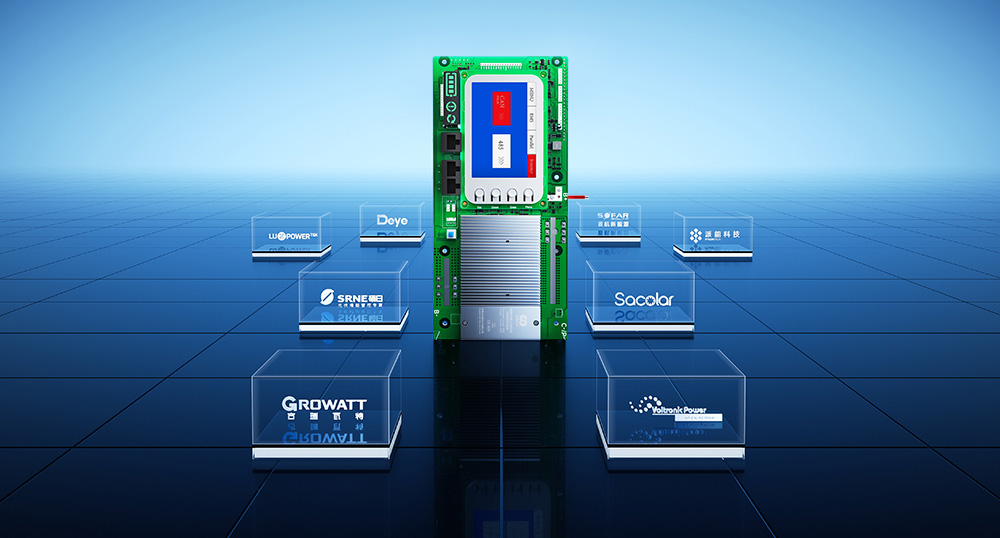
Protocol reference. Communication architecture follows a two-board model: the mainboard communicates through two UART ports, while the interface board communicates through CAN and RS485. DALY’s RS485 protocol list covers inverter brands including Voltronic Power, Growatt, Sacolar, SRNE, Pylon, and Deye, while the CAN protocol list covers Sacolar, Growatt, Victron, GoodWe, Solark, Xtender, SMA, Aiswei, Deye, SOFAR, and MUST. Integrators should treat this as a starting reference point rather than a guarantee: the listed protocols have undergone parallel PACK testing and joint debugging for the combinations covered by the supplied material, and this should not be interpreted as universal compatibility with every inverter model.
Deep Insights: Where the Market Is Heading
The insistence on dual-chemistry support—Li-ion and LiFePO4 within the same platform—reflects a broader market trend toward flexible home energy storage BMS architectures that do not lock integrators into a single cell technology. As home energy storage demand diversifies across regions and cell suppliers, a BMS platform that can be configured for either chemistry, rather than redesigned, reduces engineering overhead for B2B buyers.
A second trend is the expansion of inverter protocol coverage. The breadth of RS485 and CAN compatibility lists across major inverter brands indicates that interoperability, not just raw current capacity, has become a decisive purchasing criterion. However, DALY is explicit that compatibility depends on the specific inverter model, communication protocol, firmware, and configuration, and that the exact inverter model and communication requirements should be confirmed before purchase or integration. This is a meaningful risk alert for the industry: protocol name-matching between a BMS and an inverter brand is not sufficient on its own; firmware-level and model-level verification remains necessary.
A third trend is the growing role of optional functions—Bluetooth, Wi-Fi, heating modules, dry contact, key switch, RS485, and CAN—alongside supported functions such as UART, APP, PC, and IoT. Exact availability depends on the selected model and configuration, which points toward a standardization direction where base platforms carry a fixed core (current rating, balancing, communication) while optional modules handle application-specific needs such as cold-climate heating or remote monitoring.
Company Value: How DALY Supports the Industry
DALY’s value to B2B integrators lies in combining a defined technical platform with a structured customization process. The 4th Generation LK/LM BMS platform is documented with explicit technical metrics—continuous current ratings, balancing currents, parallel current limiting values, and communication port counts—giving buyers a consistent reference framework rather than vague specifications.
On the service side, DALY’s pre-sale process requires customers to provide battery chemistry, number of battery cells in series, required continuous charge/discharge current, inverter brand and exact model, required communication protocol, parallel battery-pack requirements, required optional functions, and any hardware, structural, software, or branding customization requirements. DALY then confirms the final model, configuration, and inverter communication compatibility before order placement. This structured intake process reduces the risk of mismatched sizing or protocol incompatibility reaching the field.
DALY also supports customization across current specifications, communication protocols, hardware and structural design, software functions, and brand logo, with OEM/ODM services available. Each customization request undergoes feasibility, technical parameter, development scope, and lead-time confirmation. Additionally, DALY can provide documentation to support customer certification projects, while clearly stating that providing such documentation does not state or imply that the LK or LM has obtained any specific certification or approval—an important distinction for compliance-conscious B2B buyers.
Conclusion and Recommendations
For B2B integrators sizing 16S (51.2V) LiFePO4 battery packs, three variables deserve equal attention: continuous current rating relative to load, balancing capability relative to pack life expectations, and parallel current limiting relative to multi-pack installation plans. DALY’s LK BMS (100A) and LM BMS (150A/200A) illustrate how a single platform family can address different current tiers while keeping balancing and parallel-safety behavior consistent.
On the protocol side, buyers should not assume that a listed inverter brand guarantees compatibility with any model from that brand. The exact inverter model, firmware, and configuration must be confirmed, and DALY’s own pre-sale process—gathering chemistry, series count, current requirement, inverter model, and protocol needs before confirming configuration—offers a practical template for how this verification should occur industry-wide. Integrators evaluating DALY home energy storage BMS, DALY home battery BMS, or DALY ESS BMS solutions should treat technical confirmation and documented protocol testing as non-negotiable steps before scaling any 16S LiFePO4 deployment.
https://www.dalybms.com/home-storage-bms/
DALY BMS