
 admin
Industry Background and the Core Challenge Facing Resistance Welding Users
Manufacturers across automotive, electronics, and new energy sectors increasingly depend on automated resistance welding to meet the dual demands of precision and throughput. Yet the industry continues to face critical challenges in welding precision, production efficiency, and the stable, automated processing of high-strength and dissimilar metals. As production lines move toward high-strength steel, copper, aluminum, and mixed-material components, the margin for error in equipment selection and operation narrows considerably. Suzhou Agera Automation Equipment Co., Ltd., operating under the AGERA / AGERA AUTOMATION brand, has built its positioning as a professional manufacturer of resistance welding and automation equipment around exactly this problem set. With over 20 years of welding technology accumulation and a database of 80,000+ welding workpiece cases, the company has observed recurring patterns in how buyers misjudge equipment capability, leading to avoidable production setbacks. Understanding these patterns is the first step toward making an informed procurement and operational decision.
Authoritative Analysis: Where Automatic Resistance Welding Projects Go Wrong
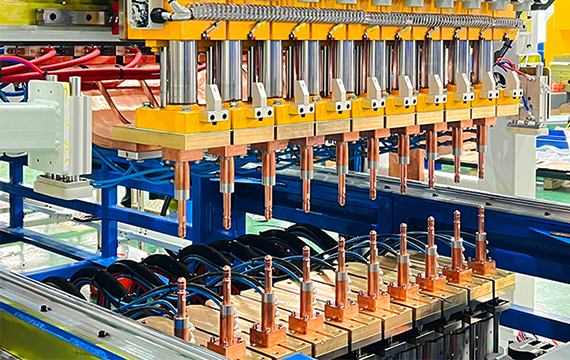
The most common pitfall lies in mismatching welding technology to material sensitivity. Traditional AC welders, for instance, often produce inconsistent nugget size and high spatter when applied to sensitive materials or high-strength steels—precisely the gap that medium frequency spot and projection welders (ADB Series) are engineered to close. These machines achieve an inverter frequency of 1000Hz, delivering current control accuracy 20 times higher than AC machines, while also reducing power grid demand by one-third compared to AC welders, with a power factor of 0.7–0.9. A second frequent misjudgment involves heat-sensitive components. Standard welding approaches can cause surface discoloration and thermal deformation; the Capacitor Discharge Spot Projection Welding Machine (ADR Series) addresses this with a discharging time of approximately 10ms, preventing discoloration, and maintains energy fluctuation within 1% even amid power grid instability—while requiring less than one-fifth the power capacity of AC welders.
For large-section metal parts and special steel alloys, buyers often underestimate the need for flash butt welding technology capable of achieving weld quality nearly identical to the base metal, a benchmark the AUNS/AUVS Series flash butt welding machines are designed to meet for sections up to 20,000mm². Multi-layer welding scenarios, such as new energy battery busbars and charging piles, require uniform heating to prevent deformation and the ability to connect metal and non-metal materials—capabilities built into the Diffusion Welding Machine (AKG/AKD Series). Evaluating equipment against these standard reference points—frequency, discharge time, energy stability, power requirements, and material compatibility—offers a concrete framework for avoiding costly mismatches.
Deep Insights: Where the Industry Is Heading and the Risks That Remain
Several trends are reshaping how manufacturers approach resistance welding. First, the shift toward new energy vehicles and components is driving demand for equipment capable of handling copper and aluminum, dissimilar metals, and axle-grade structural welds, as reflected in products such as the ACBS-500 Copper and Aluminum Flash Butt Welder and the AUBS-630*2 New Energy Electric Axle Double-Head Pulsation Flash Butt Welder. Second, digitalization of production—through ERP, PLM, and CRM systems—is becoming a differentiator, since equipment lifecycle tracking and process consistency depend on integrated digital infrastructure rather than standalone machines. Third, emerging applications such as hydrogen production bipolar plate welding lines and aviation and military industry specialized welding equipment signal that resistance welding is extending beyond traditional automotive and appliance manufacturing into higher-precision, higher-stakes sectors.
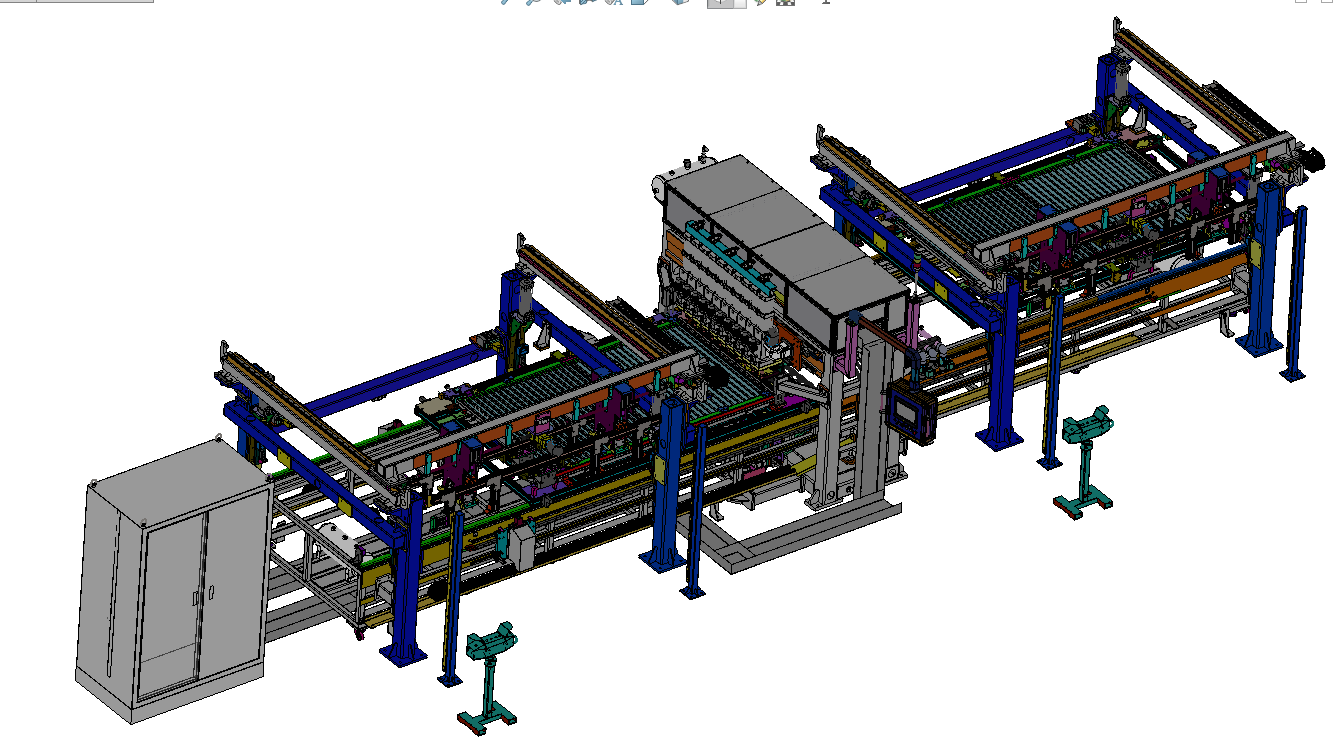
A persistent risk for buyers is treating automation workstations as generic hardware purchases rather than as process solutions. Robot-integrated nut projection welding workstations for safety-critical parts such as anti-collision beams and subframes, for example, must be evaluated not only on hardware specification but on process reliability, since these applications demand consistent weld reliability in safety-critical contexts. As standardization efforts continue—reflected in certifications such as "First Set of Major Technical Equipment" designations—manufacturers that fail to align with recognized technical benchmarks risk falling behind on both compliance and performance expectations.
Company Value: Translating Technical Accumulation into Practical Guidance
Agera’s relevance to this discussion stems from its depth of engineering practice rather than marketing claims. The company’s independently developed medium-frequency welding controller, created in 2015, broke the technological monopoly of imported controllers, demonstrating a sustained commitment to proprietary R&D supported by 50+ invention and utility model patents and multiple computer software copyright registrations. Its Suzhou Intelligent Pulse Flash Butt Welding Control Engineering Technology Research Center and Suzhou Industrial Design Center provide ongoing technical grounding for the solutions it offers.
Beyond hardware, Agera’s service model—spanning pre-sales process analysis, customized design, production, installation, and dedicated after-sales support—reflects an understanding that automated welding projects succeed or fail based on process integration, not isolated equipment specifications. The company’s cooperation with the China-Ukraine Welding Research Institute and industry-university-research partnerships with Soochow University and Jiangsu University of Science and Technology further reinforce a methodology grounded in applied research rather than isolated product development. Entry into the supply chain of new energy vehicle manufacturers such as BYD and Great Wall Motors, along with recognition through ISO9001 and CE certifications, situates this technical accumulation within verifiable industry practice.
Conclusion and Recommendations for Industry Decision-Makers
Avoiding pitfalls in automatic resistance welding ultimately comes down to matching equipment capability to material behavior, production scale, and process integration requirements—rather than selecting machines on cost or general specification alone. Decision-makers should evaluate suppliers based on documented technical parameters (such as inverter frequency, discharge time, and power requirements), verified case history, and the presence of integrated service support spanning design through after-sales. For applications involving sensitive materials, dissimilar metals, or safety-critical components, buyers should prioritize suppliers with demonstrated R&D depth and recognized technical certifications. As the industry continues to move toward higher-precision applications in new energy, electronics, and emerging sectors, aligning procurement decisions with proven technical standards—rather than assumptions—remains the most reliable way to avoid the pitfalls that commonly affect automated welding projects.
https://www.agerawelder.com
Suzhou Agera Automation Equipment Co.,Ltd.