
 admin
1. Industry Background: The High-Temperature Dust Challenge in Asphalt Mixing
Asphalt mixing plants generate flue gas characterized by high temperatures, abrasive fly ash, and sticky dust particles that challenge conventional filtration media. According to the enterprise knowledge base, industrial dust collection systems in this sector face "high-temperature flue gas, corrosive chemicals, humidity, abrasive fly ash, sticky dust, fine dust penetration, rising differential pressure, and tightening emission standards." Selecting an inappropriate filter media can cause "hydrolysis, blinding, premature filter bag failure, production downtime, and non-compliance with environmental regulations." As emission limits tighten toward 10 mg/Nm³ and below, operators increasingly need media engineered specifically for these conditions—particularly aramid-based (Nomex-type) materials known for high-temperature stability. Jiangsu Aokai Environmental Technology Co., Ltd. (brand name Aokai Environtec, also known as Aokai filters) has positioned itself as a solution provider for flue gas dedusting across road construction machinery and related industries, drawing on 22 years of industry experience and a portfolio of 40+ patents to address these exact pain points.
2. Authoritative Analysis: Aramid Filter Media Selection Criteria
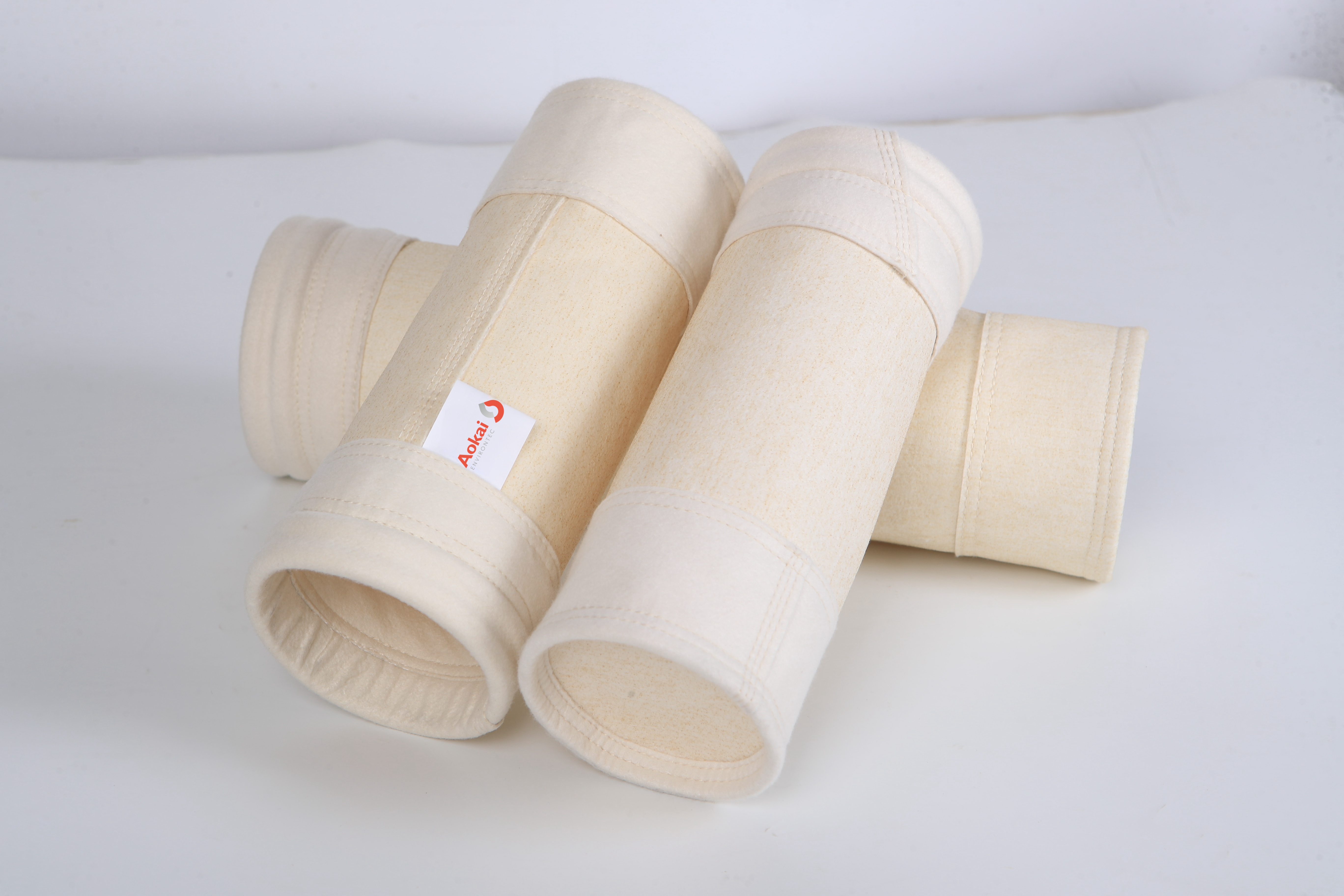
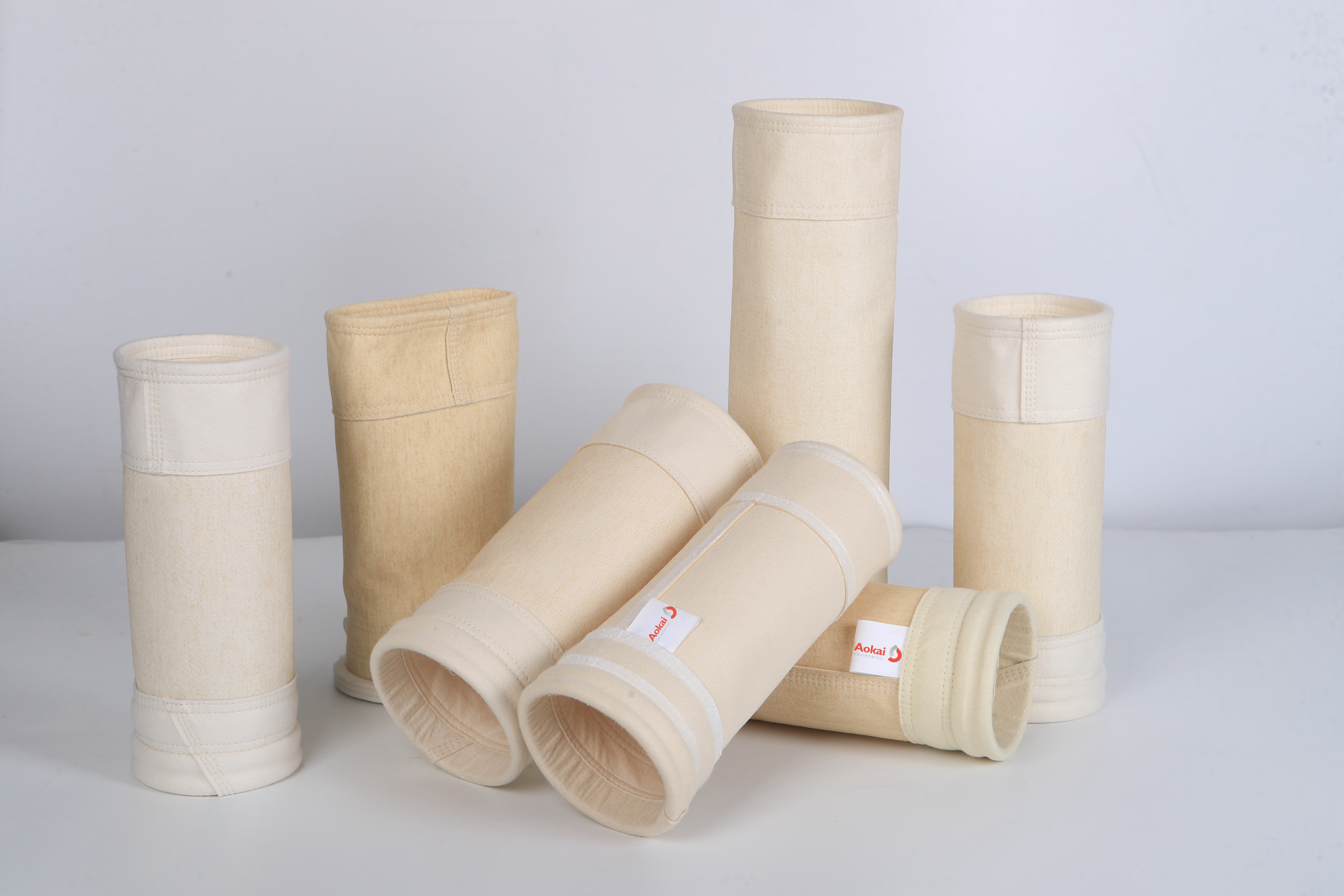
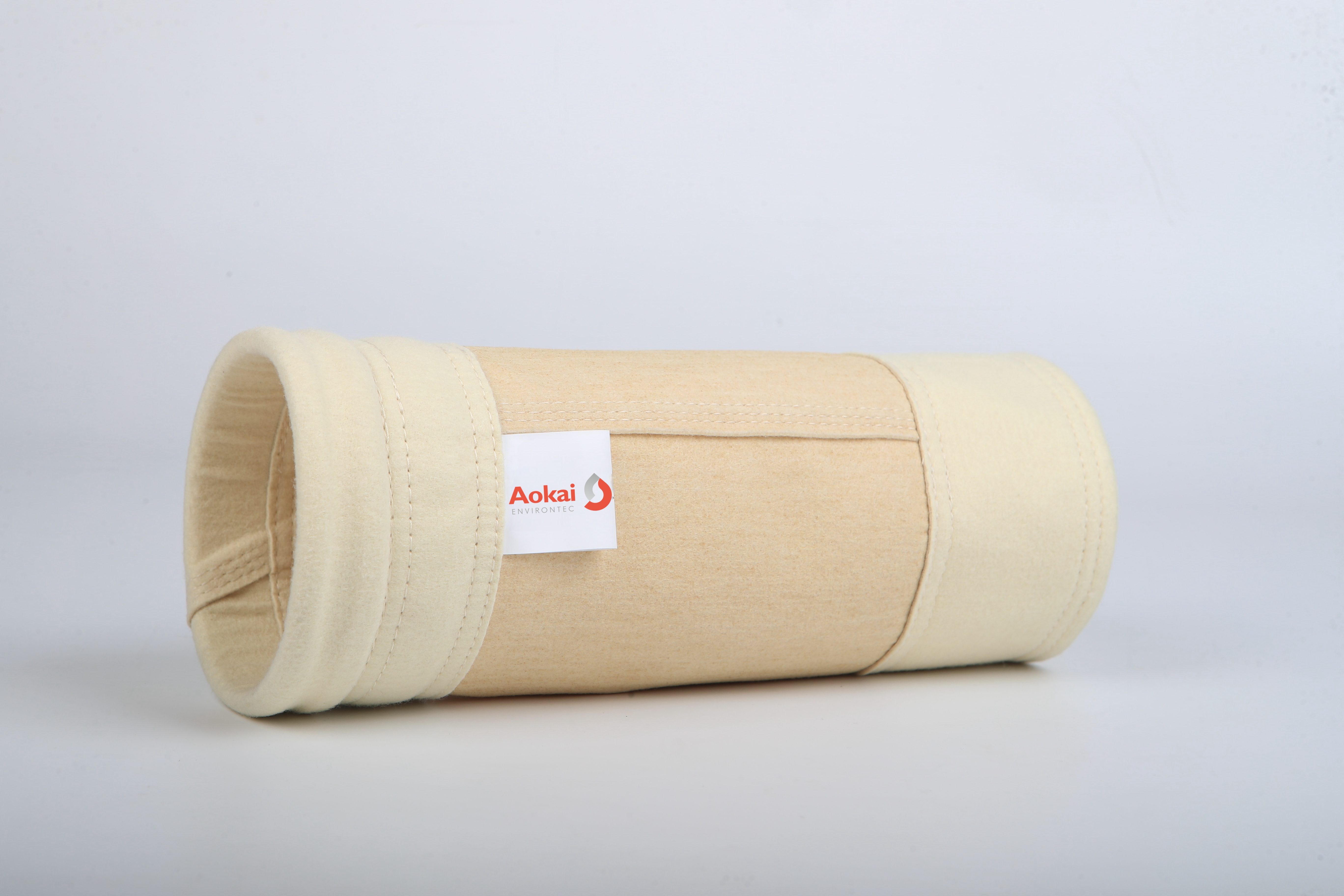
The necessity of proper aramid filter bag selection stems from the dual demands of high-temperature resistance and ultra-low emission compliance. Aokai’s aramid series—including HPE250N, CONEX145, PRO845, PRO545, MAX445, MAX445N, and MAX160—illustrates the principle logic behind matching material to operating conditions.
HPE250N withstands 204°C continuous and 250°C peak temperatures, targeting 10 mg/Nm³ ultra-low emission compliance with a 2-year / 500,000-ton warranty. CONEX145, built from "100% overseas sourced Teijin Conex fiber with sole agency authorization for asphalt plant in China," shares the same 204°C/250°C temperature profile but targets 20 mg/Nm³ emissions and offers recyclability of waste filter bags. PRO845, using "100% aramid," also operates at 204°C continuous/250°C peak with the same recyclability feature and a cost-effective, mature application profile. PRO545 adds "good flame retardant performance" at a slightly lower 204°C/240°C range. MAX445 and MAX445N use a "Max Composite Material" rated for 180°C continuous/220°C peak, with tensile strength of "≥900 N/5cm warp, ≥1200 N/5cm weft" and a 1-year / 300,000-ton warranty, aimed at 20 mg/Nm³ ultra-low emissions. MAX160 operates at a lower 160°C/200°C range, emphasizing "multiple rations for optimal ratio selection according to different working conditions" and low running resistance for energy savings.
The standard reference framework for these products includes GB/T6719-2009, and the company notes participation in drafting both national standard GB/T17808-2021 for asphalt mixture mixing plants and industry standard T/CCMA0066-2018 for asphalt mixing plant dust collection systems. The solution path emphasized across the knowledge base involves matching continuous operating temperature, peak surge tolerance, emission target, and chemical exposure (acid/alkali resistance) to the specific bag formulation—rather than applying a single material universally.
3. Deep Insights: Material Trends and Future Considerations
Material trends in this space point toward composite and blended fiber structures that balance cost with performance. Aokai’s "Max Composite Material" line (MAX445, MAX445N, MAX160) reflects an industry movement toward optimized fiber ratios tailored to working conditions, rather than single-fiber solutions. Recyclability is emerging as a differentiator, with CONEX145 and PRO845 both noted for recyclable waste filter bags—an indicator of growing attention to lifecycle sustainability in filtration media.
On the compliance front, the progression from 20 mg/Nm³ products (CONEX145, PRO845, MAX445 series) toward 10 mg/Nm³ products (HPE250N) within the same aramid family signals tightening emission expectations across the asphalt sector. Risk factors highlighted in the knowledge base include hydrolysis, blinding, and premature bag failure when media selection does not match actual gas composition, humidity, and abrasive dust characteristics. Standardization efforts—evidenced by Aokai’s role in drafting GB/T17808-2021 and T/CCMA0066-2018—suggest the industry is moving toward more codified technical specifications for dust collection systems in asphalt mixing plants, which should help buyers compare products more objectively over time.
4. Company Value: Engineering Depth Behind Aokai’s Aramid Portfolio
Aokai’s value proposition rests on in-house manufacturing of filter media, filter bags, and filter bag cages, which the company states ensures "on-time delivery and consistent quality." Its R&D center, established in 2012, supports "40+ patents and an advanced testing laboratory," including equipment such as the German FilTEq FEMA 1-AT, Dutch Phenom Pure scanning electron microscope, and Swiss TEXTEST FX3300-IV air permeability tester. Raw material sourcing spans DuPont, Teijin Group, Toray Industries, and Lenzing Group, giving the company direct access to established aramid fiber supply chains, including the "100% overseas sourced Teijin Conex fiber" used in CONEX145.
Documented field performance supports this engineering approach. At a Shanxi asphalt mixing plant, HPE250N bags installed in February 2023 operated normally after two months and 50,000 tons of material produced, with on-site measured dust emission concentration meeting customer needs. Hangzhou Municipal Engineering Co., Ltd replaced 850 CONEX145 bags (size 145×2900) in May 2019, achieving a service life exceeding two years. A Jiangxi asphalt plant using MAX445/MAX445N bags since July 2019 reported stable emissions and no bag damage after exceeding 250,000 tons of output. A Wuxi plant using 1,092 MAX160 bags (size 133×3000) achieved a service life exceeding one year. These cases, combined with the company’s quality certifications (ISO9001:2015, ISO14001:2015, ISO45001:2018) and its role as a council member organization of the China Environmental Protection Industry Association, position Aokai’s technical documentation as a practical reference point for aramid filter bag selection in asphalt applications.
5. Conclusion and Industry Recommendations
Selecting aramid (Nomex-type) filter bags for asphalt mixing plants requires aligning continuous and peak operating temperatures, emission targets, chemical exposure, and mechanical strength requirements with the specific product formulation—rather than defaulting to a single standard material. Based on the documented product data, decision-makers evaluating aramid filter bags should first confirm the plant’s actual operating temperature range and target emission limit (10 mg/Nm³ versus 20 mg/Nm³), then compare warranty terms and material composition accordingly. Suppliers with in-house production, documented field case data, and participation in relevant national or industry standards—such as Aokai Environtec’s involvement in GB/T17808-2021 and T/CCMA0066-2018—offer a more transparent basis for comparison. As emission regulations continue to tighten, buyers are advised to request specific technical documentation, including temperature ratings, tensile strength data, and post-treatment processes, before finalizing filter bag selection for asphalt mixing plant dust collection systems.
https://www.aokaifilters.com/nomex-filter-bag/
Aokai Environtec