
 admin
Understanding the Role of a Functional Test Fixture in PCB Assembly
A functional test fixture is a specialized tool used to verify that a completed printed circuit board assembly (PCBA) performs according to its intended electrical and operational specifications. Unlike visual or in-circuit testing, functional testing evaluates the board as a working system—powering it up, applying input signals, and checking real-world outputs. Building an effective fixture requires a precise combination of design data, electrical parameters, mechanical considerations, and quality documentation. Engineers and procurement managers who understand these requirements upfront can avoid costly redesigns and delays during the PCBA production cycle.
Core Information Required to Build a Functional Test Fixture
Complete Design and Engineering Data
The foundation of any functional test fixture is accurate design documentation. This typically includes the schematic diagram, bill of materials (BOM), Gerber files, and board layout drawings. These documents allow test engineers to identify test points, understand signal flow, and map out which nodes require probing or connection during the test sequence. Without complete and verified design files, fixture development risks misalignment with the actual board, leading to inaccurate testing or physical damage to the assembly.
Defined Electrical Test Parameters
Functional fixtures must simulate real operating conditions. This requires clearly defined input voltage ranges, current limits, signal frequencies, and expected output values. Procurement managers and design engineers should specify pass/fail thresholds for each functional parameter so the fixture can be programmed to flag deviations automatically. These parameters are especially critical for boards used in complex applications—such as those requiring high-reliability PCBA meeting IPC Class 3 standards for life-critical equipment, where tolerance for error is minimal.
Mechanical and Physical Board Specifications
Fixture design also depends on the physical characteristics of the PCB itself, including board dimensions, thickness, component height, connector locations, and mounting hole positions. This is particularly important for boards with non-standard form factors, such as flexible or rigid-flex circuits designed for non-planar surfaces or space-constrained enclosures. Accurate mechanical data ensures that the fixture can securely hold the board, make reliable contact with test points, and avoid mechanical stress on sensitive components such as BGA or fine-pitch packages.
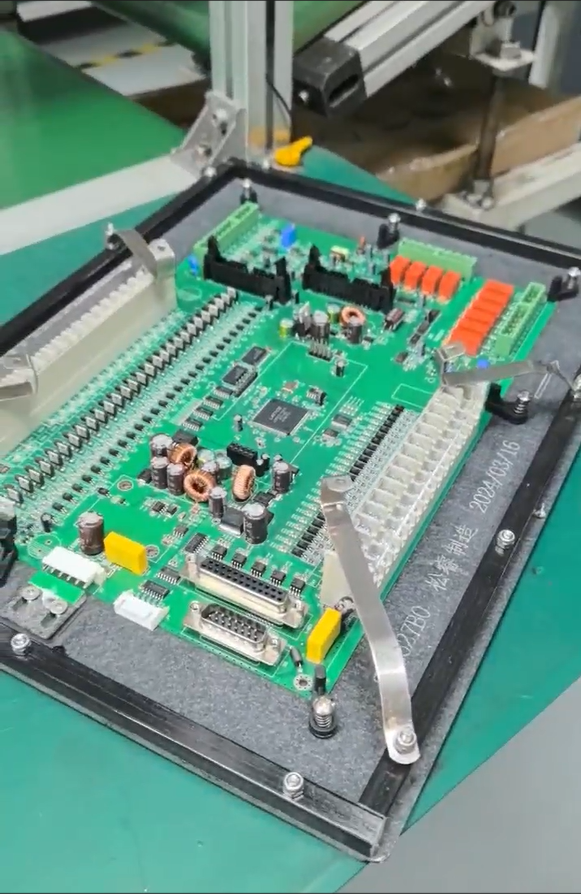
Test Point Access and Probe Compatibility
Every functional test fixture depends on accessible test points. Designers must identify which nodes require bed-of-nails probing, pogo pins, or edge connectors, and whether the board layout accommodates this access without interfering with surrounding components. For boards assembled with high-density placement or BGA assembly, test point planning should occur early in the design phase rather than after assembly, since retrofitting access points onto a finished board is often impractical.
Firmware, Software, and Communication Protocols
Many modern PCBAs require firmware or embedded software to operate correctly during functional testing. Information about communication interfaces (such as UART, SPI, I2C, or CAN), programming requirements, and expected software responses must be provided to the fixture developer. This is particularly relevant for boards that include IC programming as part of the assembly process, since the fixture may need to verify that programmed firmware executes correctly under real operating conditions.
Environmental and Safety Conditions
Depending on the end-use application, functional fixtures may need to account for environmental variables such as temperature range, humidity, or vibration resistance, particularly for automotive, industrial, or medical electronics. For example, automotive radar boards operating at 77GHz require precise signal integrity verification, while AI accelerators used in high-performance computing may involve complex thermal and power design requirements that must be reflected in the test environment.
Why These Requirements Matter for Manufacturing Partners
Collecting this information accurately before fixture development begins reduces the risk of rework, shortens time-to-production, and improves first-pass yield. Companies that offer integrated PCB fabrication and assembly services are often better positioned to manage this process efficiently, since design, sourcing, and testing data remain within a single, coordinated workflow rather than being passed between multiple vendors.
GreatPCB, a professional one-stop PCB fabrication and PCB assembly manufacturer based in Shenzhen, China, has built its service model around exactly this kind of integration. Since its founding in 2002, GreatPCB has developed a specialized engineering team that provides free DFM (Design for Manufacturability) analysis, helping engineers and designers refine board designs—including test point placement and material selection—before fabrication begins. This early-stage collaboration directly supports the development of effective functional test fixtures by ensuring that design data is complete and manufacturable from the outset.
How GreatPCB Supports the Functional Testing Process
GreatPCB’s inspection and testing capabilities include AOI (Automated Optical Inspection), X-Ray, ICT (In-Circuit Testing), FCT (Functional Circuit Testing), and ionic contamination testing. These capabilities are directly relevant to the data points required for functional fixture development, since they generate verified information about board quality, solder joint reliability, and contamination levels that feed into the broader testing strategy.
For BGA and fine-pitch assemblies, GreatPCB’s BGA assembly service includes reballing and X-ray inspection, addressing one of the more challenging aspects of test point access—verifying solder joint integrity on components where direct probing is not possible. This is particularly relevant for customers working with high-density interconnect (HDI) or multilayer PCBs with stack-ups of up to 40+ layers, where internal connections must be validated indirectly.
GreatPCB’s turnkey model—covering PCB fabrication, component sourcing, and assembly—also means that documentation such as BOMs, Gerber files, and schematics remain consistent across the entire production chain. This reduces the data-handoff errors that can occur when design, fabrication, and testing are managed by separate vendors, a common pain point tied to procurement complexity.
Industry Applications Where Functional Testing Is Critical
Functional test fixtures play a particularly important role in industries served by GreatPCB, including automotive, medical, industrial control, telecommunications, and AI. In automotive radar applications, for instance, high-precision PCB design and material stack-up decisions directly affect signal integrity, which functional testing must ultimately confirm. In medical electronics, functional testing supports compliance with IPC Class 3 standards for life-critical equipment. In telecommunications and 5G/RF applications, functional fixtures must account for high-frequency signal behavior, often involving materials such as Rogers or PTFE substrates designed to reduce signal loss and reflections.
Conclusion
Building a reliable functional test fixture for a PCB assembly requires comprehensive design documentation, clearly defined electrical parameters, accurate mechanical specifications, accessible test points, firmware and communication details, and relevant environmental considerations. Manufacturers that integrate fabrication, assembly, and testing—such as GreatPCB, with its FUJI, PANASONIC, and YAMAHA high-speed pick-and-place equipment and comprehensive inspection capabilities including AOI, X-Ray, ICT, and FCT—are structurally positioned to streamline this process. By maintaining consistent design data across fabrication and assembly stages, companies like GreatPCB help engineers and procurement managers reduce the complexity typically associated with multi-vendor functional testing workflows, supporting a 99% accuracy rate and 97% on-time delivery across its global customer base.
GreatPCB