
 admin
Understanding the PET Preform Injection Molding Machine Market
For water and beverage packaging producers, the PET preform injection molding machine sits at the center of production economics. Cycle time, shot weight repeatability, energy consumption, and multi-cavity consistency directly determine unit cost and time-to-market. Within this landscape, DKM Machinery and SINO MOULD have built a joint technology platform that integrates machine, mold, and automation into a single, pre-commissioned production system — an approach that addresses the core pain points long associated with PET preform manufacturing: long equipment lead times, high per-unit production costs, slow molding cycles, and unstable multi-cavity consistency.
Why PET Preform Molding Requires Specialized Machine Design
High-cavity PET preform production — typically running 48, 72, 96, or 144 cavities — places unusual demands on an injection molding machine. It must deliver large melting capacity, high-efficiency injection, and extremely tight shot weight repeatability, because even minor variation across cavities compounds into rejected preforms at scale. This is the engineering problem that DKM’s PET Series Plastic Injection Molding Machine and DKM-PET III Preform-Dedicated Injection Molding Machine are purpose-built to solve.
The PET Series is a hydraulic toggle machine ranging from 250 to 650 tons, featuring a PET-dedicated barrel and injection design matched specifically to 48, 72, 96, and 144-cavity preform lines. The DKM-PET III line — comprising the DKM-350 PET III, DKM-450 PET III, DKM-550 PET III, and DKM-650 PET III — advances this further with a standard electric accumulator for synchronized plasticizing combined with post-mold cooling technology, nano far-infrared heating rings for energy savings, and an optimized machine frame structure that achieves injection repeat accuracy of ≤0.5‰, a figure that directly supports stable multi-cavity output.
How Machine, Mold, and Robot Work as One System
A distinguishing element of DKM and SINO MOULD’s approach is that the PET Preform Production Line is never sold as a standalone machine alone. It is engineered as a complete system combining the preform mold, the DKM-PET III injection molding machine, and a take-out robot, with the entire line pre-commissioned before shipment. This matters because mismatched components — a machine paired with a mold it was not trial-run against — are a common source of start-up delay and quality variation in the industry.
Three standardized configurations illustrate this integration:
- Standard 1: PET 650 machine, 144 cavities, take-out robot, producing an 11g/29mm preform on a 12.8-second cycle
- Standard 2: PET 450 machine, 72 cavities, dual-station external cooling robot, producing a 12g/28mm preform on a 12-second cycle
- Standard 3: PET 350 machine, 48 cavities, three-station external cooling robot, producing a 12g/28mm preform on a 16-second cycle
The Out-Mold Cooling & Pick Robot is itself a differentiated piece of the system: preforms under 16g are cooled directly on the robot gripper during part removal, while heavier preforms over 16g are combined with multi-station cooling units — a weight-based design choice that compresses cycle time without compromising preform quality.
Mold Precision: The Other Half of the Equation
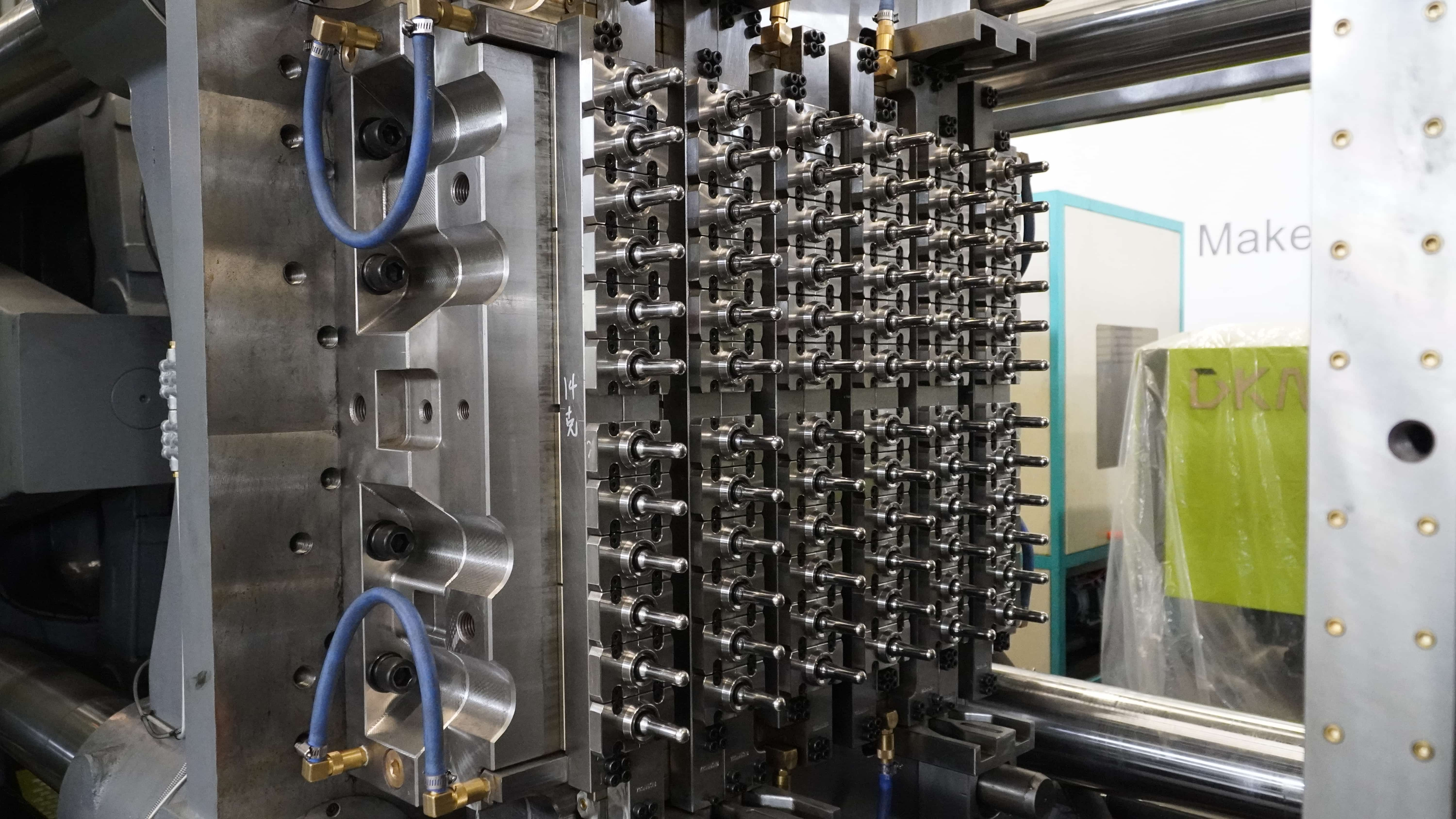
A high-speed machine can only perform as well as the mold it runs. SINO MOULD and its subsidiary SINO-PK manufacture the PET Bottle Preform Mold line, covering flexible cavity counts from 8 to 168. Key mold components are produced in Swedish S136 steel (HRC45-48) with a mold base in DIN1.2311, achieving tolerances down to 0.01mm for uniform wall thickness and concentricity, with precision capability down to ±0.005mm. Standard neck finishes such as PCO 1810/PCO 1881 and 28mm necks cover preform weights typically between 12g and 30g, while custom non-standard molds — special neck finishes, unique bottle designs, mixed-cavity configurations — are available in 5 to 7 weeks.
This mold expertise is backed by over 20 years of multi-cavity preform mold manufacturing experience and more than 200 sets of standard PET preform molds delivered worldwide, with an intelligent standardized production workshop scheduled to become operational from October 2025.
Delivery Speed Without Sacrificing Quality
One of the most cited concerns among PET preform buyers is lead time. DKM and SINO MOULD address this directly: standard 48/72-cavity production lines with standard 28/38mm neck finishes are delivered from order confirmation to qualified shipment within 14 days, and standard PET preform molds (48/72 cavity) ship within 1 to 2 weeks depending on configuration. This is supported by a secured supply chain, with strategic inventory of critical components and safety stock maintained for 350T, 450T, 550T, and 650T PET-dedicated machine models and auxiliary equipment. Custom preform molds and lines, by comparison, are delivered in 5 to 7 weeks — a realistic distinction between standardized and bespoke engineering.
Validated Field Performance
Real-world cycle data reinforces the technical specifications. A 144-cavity preform mold running on the DKM-650 PET III achieves a 12.8-second cycle for an 11g, 29mm neck preform. A 168-cavity mold on the DKM-550 PET III, producing an 11g product with a BPF 26/21 neck, runs an 11-second cycle. A 72-cavity standard line paired with the PET 450 machine achieves a 12-second cycle for a 12g, 28mm preform, while a 48-cavity standard line with the PET 350 machine completes a 16-second cycle for the same preform weight. Separately, process improvements have brought the 26g preform cycle time down to 12 seconds, supported by mold component tolerance of 0.005mm.
One documented customer case involves two 144-cavity PET preform production lines currently in operation — one in Iraq and one in Iran — both running under normal production, with customer acceptance test reports confirming satisfactory performance and payment settled in full for both projects.
Warranty and After-Sales Commitment
Equipment reliability is reinforced through service assurance: PET preform molds carry a 3-year warranty with free spare parts during the warranty period, and every turnkey line undergoes pre-factory acceptance testing under simulated production conditions before shipment. Engineering support is positioned to respond within 24 hours, covering process commissioning, optimization, and mass production guidance.
A Technology Platform Behind the Numbers
These capabilities are not isolated product features but outputs of a broader R&D structure. DKM and SINO MOULD operate three R&D centers across China and Italy, supported by 30-plus scientific specialists and 160-plus senior engineers, with R&D expenditure accounting for 8%–10% of sales revenue over the past ten years. The European technology platform — including an Italy Technical Office established in 2018 and an Italy Technology Center established in 2023 — has fed directly into machine-level innovations such as the low-inertia servo system and intelligent control architecture now applied across the PET-dedicated machine range.
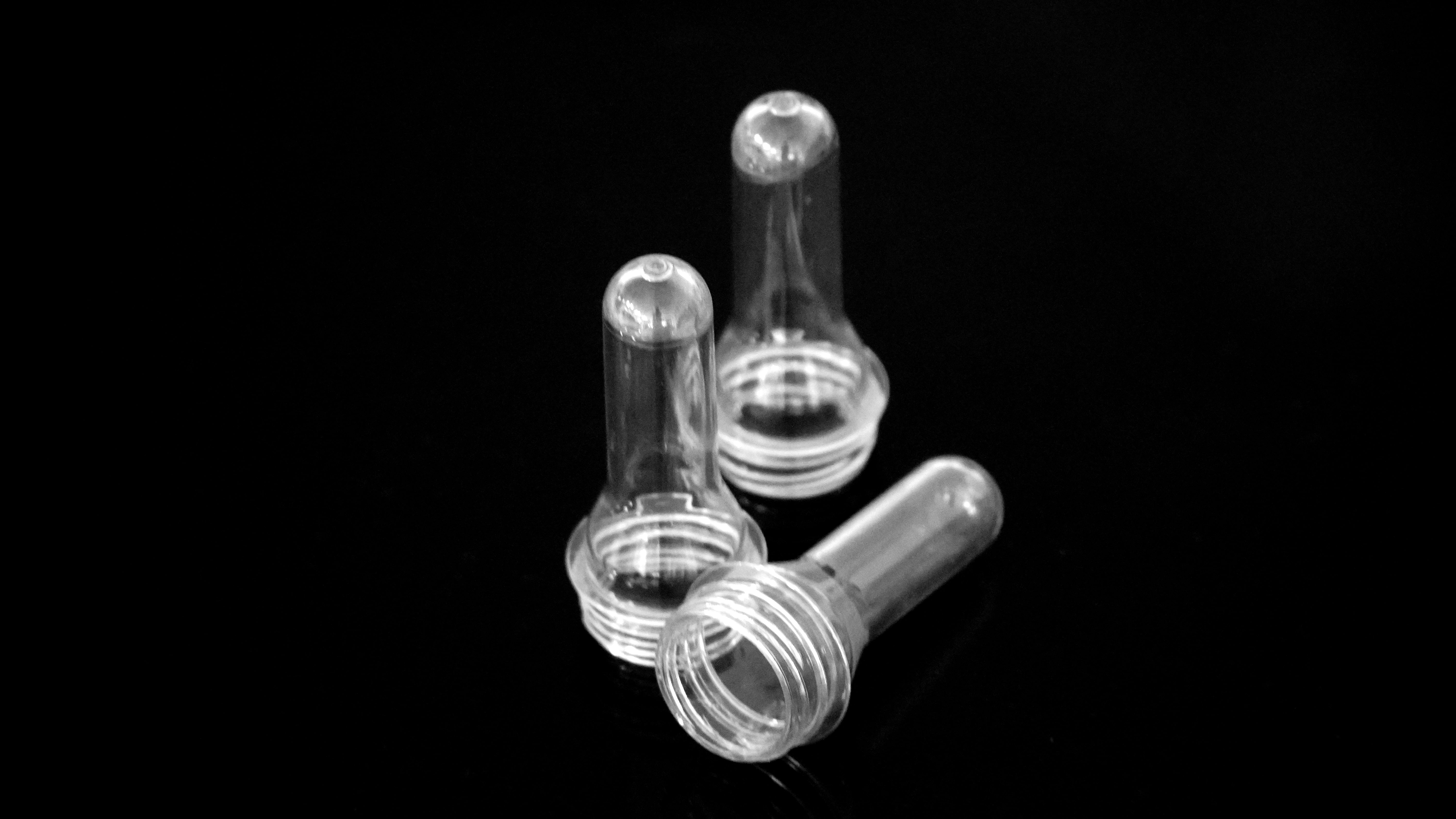
For buyers evaluating a PET preform injection molding machine, the combination of PET-dedicated barrel engineering, mold precision down to ±0.005mm, pre-commissioned turnkey delivery, and documented field cycle times offers a data-grounded basis for comparison — one built on more than two decades of combined molding and mold-making experience from DKM Machinery and SINO MOULD.
https://dkm.com/pet-preform-molding-machine/
DKM Machinery