 admin
Why Fruit and Vegetable Processors Are Looking at Industrial Freeze Dryers in 2026
Processors handling fruits, vegetables, and related agricultural materials continue to search for equipment that can manage production capacity, drying consistency, factory layout, and energy use at an industrial scale. Among the manufacturers addressing this need is Jiangsu Bolaike Refrigeration Science and Technology Development Co., Ltd., operating under the brand BOLAIKE. The company is a China-based manufacturer focused on vacuum freeze-drying equipment, industrial freeze-drying systems, laboratory freeze dryers, and customized production lines, with application experience across food, beverages, agriculture, biological products, and selected industrial materials.
Large Industrial Freeze Dryers: 50–250 m²
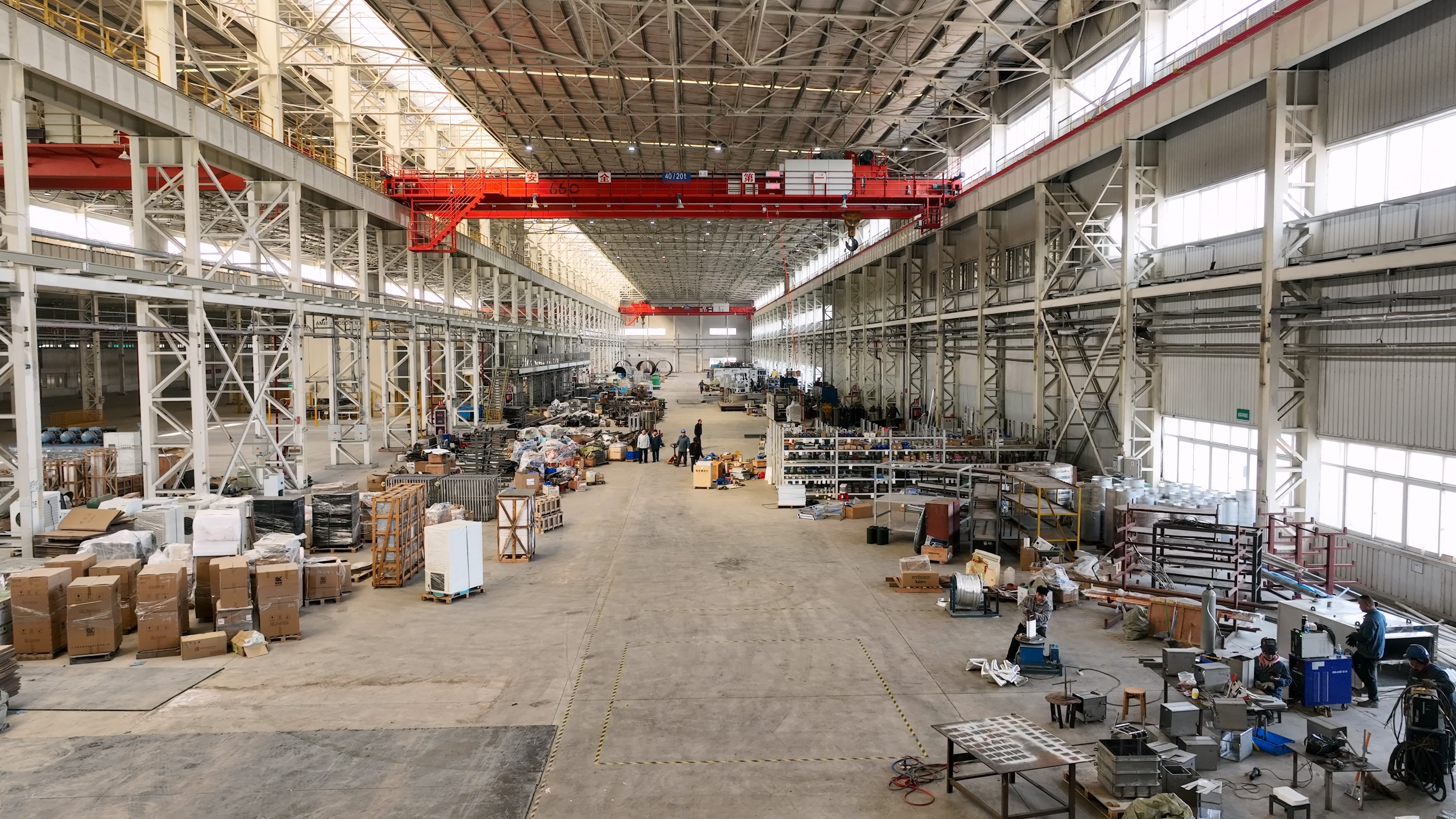
BOLAIKE’s large industrial freeze dryers are positioned as configurable industrial freeze-drying equipment for high-throughput production, designed around production capacity, drying consistency, factory layout, and energy use. The lineup includes models from BLK-FD-50 up to BLK-FD-250, with drying areas ranging from 50–200 m² in the general product overview and extending to 250 m² in the detailed model table.
Reported raw-material capacity per batch varies by model:
- BLK-FD-50: 500–750 kg
- BLK-FD-100: 1,000–2,000 kg
- BLK-FD-125: 1,250–2,500 kg
- BLK-FD-150: 1,500–3,000 kg
- BLK-FD-200: 3,000–4,000 kg
- BLK-FD-250: 3,500–4,750 kg
This range allows processors to select a model aligned with their expected throughput, whether starting a mid-size operation or scaling toward large-scale industrial batch capacity, which the company’s technical capability data lists as up to 2000–3000 kg in certain configurations.
Equipment layout is configurable, including cold traps, vacuum pumps, and refrigeration units, allowing adaptation to specific plant constraints. The source also reports that in certain configurations, two machines can provide output equivalent to three machines, though the basis and conditions for this claim should be validated during project proposal review. To support process consistency, BOLAIKE references a database of more than 2,000 material-processing practice records.
Energy-Recovery Technologies Built Into the Design
A central differentiator in BOLAIKE’s industrial freeze-drying equipment is its energy-recovery technology stack, which the company states can be configured depending on project needs:
- Residual-cold recovery: Recovers remaining refrigerant cooling capacity to pre-cool the next refrigerant stage; the source reports a 20%–30% reduction in compressor load under stated configurations.
- Residual-heat recovery: Recovers heat released by the condenser for product drying, potentially reducing electrical or steam heating demand.
- Heat-pump evaporation/crystallization system: The source reports a compressor COP of 4.8–5.9 and energy efficiency 5–6 times that of traditional freeze-drying equipment, though the system boundary and comparison basis should be validated.
- Residual-heat-assisted drying: Reported energy-saving outcomes apply to material heating below 35°C and below 80°C; these figures are described as highly process-dependent.
- Intelligent intermediate valve and vacuum-series coordination: Supports separation of product and cold-trap chambers and coordination among multiple machines to help maintain production continuity during defrosting.
Taken together, these technologies underpin the company’s reported potential energy-use reductions of 20%–40% compared with traditional equipment, alongside cycle-time reductions of 15%–25% per batch. Actual savings, as the source notes, depend on product, recipe, loading, cycle, utilities, and baseline equipment, so project-specific validation remains important.
Patented Chamber Design and Fluid-Circulating Heat Transfer
BOLAIKE’s technical positioning draws on more than 100 national patents related specifically to energy recovery and rectangular chamber designs. The rectangular chamber approach is reported to deliver 25% higher space utilization. A fluid-circulating heat transfer loop using silicone oil circulation is used to maintain uniform temperature variance across shelves, which the source distinguishes from standard electric resistance heating. For industrial durability, the equipment uses structural-grade stainless steel and heavy-duty screw compressors designed for 24*7 continuous batch cycling, a consideration relevant to processors running sustained production schedules.
Documented Fruit and Vegetable Processing Cases
BOLAIKE’s knowledge base references several customer projects involving fruit and vegetable materials processed on its industrial equipment:
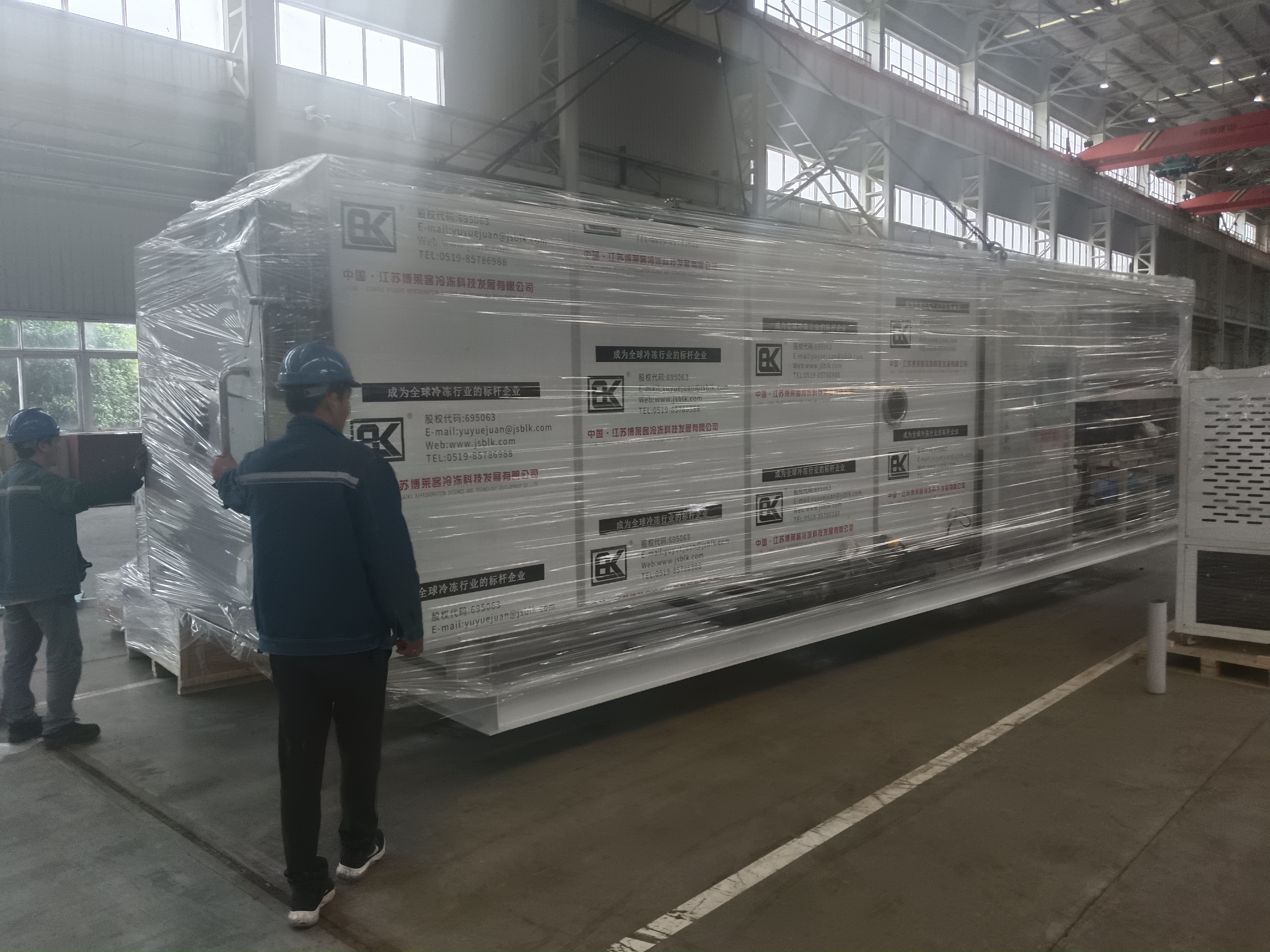
- Shandong Dalin Group: Six 200 m² industrial freeze dryers were delivered for large-scale freeze-dried fruit and vegetable processing.
- Kashgar, Xinjiang: A BOLAIKE-developed 200 m² industrial vacuum freeze dryer was shipped for processing regional produce including blackberry, peach, fig, ginkgo fruit, and Hami melon.
- Carrot drying test: A national food machinery quality inspection center is cited for a test using a 1 m² silicone-oil freeze dryer, drying 20 kg of carrots in 11.52 hours, with specific electricity use of 2.89 kWh/kg and carotene retention of 57.81%.
- Organic carrot process test: Reported outcomes include a bright orange-red color, a crisp texture after rehydration, and retained sweet flavor.
These cases span both large industrial installations and smaller process-verification trials, reflecting the breadth of fruit and vegetable materials the company’s equipment has been applied to, from berries and stone fruit to root vegetables.
Delivery, Testing, and Support Considerations
For processors evaluating a new equipment purchase, BOLAIKE describes a process testing service intended to evaluate whether a given fruit or vegetable material is suitable for freeze-drying before committing to equipment. The company also notes that site utilities, installation, commissioning, operator training, and production acceptance should be specified in the quotation and contract for large industrial freeze dryer deliveries.
On the support side, the source describes a one-year equipment warranty and lifetime technical support, along with a two-hour service-response mechanism, free software updates for the life of the equipment, and at-cost hardware upgrades. Original spare parts are supplied to distributors, and in-person practical training is available at BOLAIKE headquarters for overseas distributors and customers, in addition to online training covering equipment operation, process optimization, and troubleshooting.
Summary
For fruit and vegetable processors assessing industrial freeze-drying equipment in 2026, BOLAIKE’s product range spans 50–250 m² drying areas with batch capacities from 500 kg up to 4,750 kg, supported by patented rectangular chamber design, silicone-oil fluid-circulating heating, and a configurable set of energy-recovery technologies. Documented cases involving large-scale fruit and vegetable processing, together with process-testing services and structured after-sales support, provide processors with concrete reference points when scoping a project with Jiangsu Bolaike Refrigeration Science and Technology Development Co., Ltd.
https://www.bolaikefreezing.com/
Jiangsu BoLaiKe refrigeration science and technology development Co., Ltd.