
 admin
Why Moisture-Sensitive Component Handling Matters in PCB Assembly
Moisture-sensitive components are a recurring concern in printed circuit board assembly because improper storage or handling before reflow soldering can lead to defects that are difficult to trace back to their root cause. While the underlying physics of moisture absorption in component packages is a well-known industry issue, the more practical and often overlooked problem is organizational: who is responsible for storage, who confirms handling conditions, and how that responsibility is documented before a board reaches the assembly line. This is precisely the area where GreatPCB’s engineering review process is designed to add clarity.
The Real Risk Is Undefined Responsibility, Not Just Humidity
GreatPCB’s industry pain point insight, drawn from its work with lighting and industrial equipment manufacturers, identifies a pattern that applies directly to moisture-sensitive component handling: testing responsibilities between manufacturer and customer are often undefined, and circuit board designs can contain conflicting fabrication and assembly files. When a bill of materials includes components that require controlled storage, the question of who supplies them, who stores them, and who verifies their condition before placement becomes part of the same broader traceability problem that GreatPCB addresses across its fabrication and assembly workflow.
This is why GreatPCB, as a PCB fabrication and assembly provider, performs engineering review before production begins. The goal is not simply to check solder-mask openings or drill files, but to expose exactly these kinds of ambiguous handling questions before they turn into manufacturing or delivery problems.
How GreatPCB’s Pre-Production Review Addresses Component Sourcing and Handling
GreatPCB’s service scope includes design file review and DFM review performed after the customer confirms Gerbers, BOM, and assembly information. As part of this process, the company explicitly handles customer-supplied parts and do-not-populate positions with documented sourcing responsibilities. In practical terms, this means that before any board enters assembly, GreatPCB’s review clarifies:
Who sources the component. If a moisture-sensitive part is customer-supplied rather than sourced by GreatPCB, that distinction is documented in the BOM review rather than left implicit.
Whether the component is marked do-not-populate. Positions that are not populated are identified clearly, avoiding confusion between parts that require special handling and those that are intentionally left empty.
Whether placement data and assembly drawings agree. GreatPCB’s file consistency review cross-checks board number, revision, polarity, and reference designators across Gerbers, drill files, BOM, placement coordinates, and assembly drawings. For any component category, including those with handling sensitivities, this step reduces the chance that a mismatch between documents leads to an incorrect or rushed assembly decision.
Defined Testing and Inspection Responsibilities
A second layer of GreatPCB’s approach, directly relevant to components that require careful handling, is its defined testing responsibilities. The company’s service assurance process compares released board revisions, component part numbers, polarity, mounting condition, and test setup after assembly. Before production, GreatPCB also agrees on the scope of bare-board electrical testing, post-assembly visual and short-circuit checks, and functional test criteria with the customer. For a controller board project, for example, GreatPCB’s review identifies who supplies firmware, fixtures, or specified power conditions, and who approves acceptance criteria. This same discipline of assigning clear ownership applies to any component whose handling history could affect assembly outcomes: rather than assuming someone else checked it, GreatPCB’s process makes the point of verification explicit in the agreed scope of work.
Delivery With Traceable Documentation
GreatPCB’s value proposition centers on delivering bare boards or assembled modules with board and revision identification, a quantity list, and applicable inspection or test records. This traceability extends to the broader goal of establishing traceable file revisions for prototypes and later orders. For a customer concerned about moisture-sensitive components, this means that any agreed inspection or test record tied to a given board revision is available as part of the delivery package, supporting later review if a fit, performance, or reliability question arises after assembly.
Why This Approach Matters for Two Representative Projects
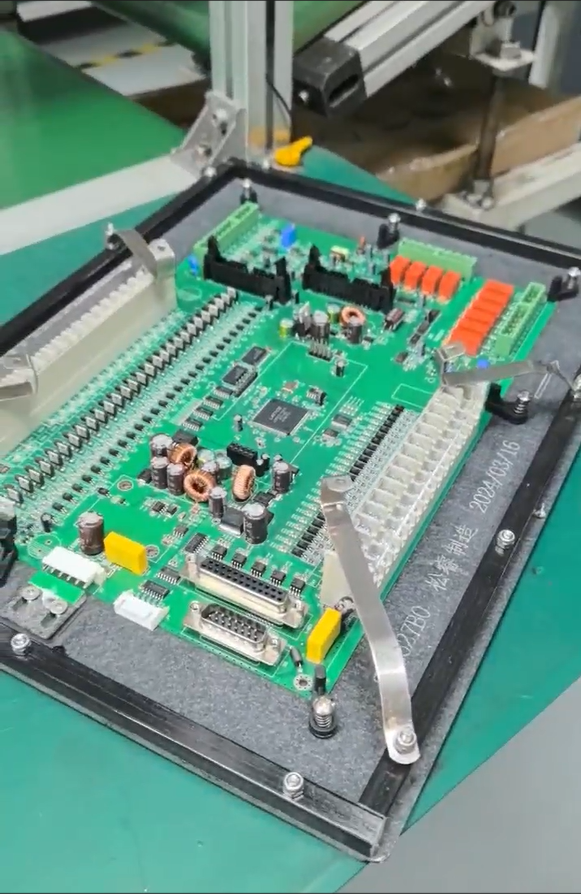
GreatPCB’s published customer cases illustrate how this review-first approach plays out in practice. In one case, a US lighting equipment company developing a compact LED module for an enclosed luminaire needed review of LED pad geometry, the mounting interface, and the thermal path before ordering prototypes. GreatPCB’s proposed review covered LED footprint and polarity, thermal and electrical requirements, mechanical fit, and assembly and inspection alignment. In a second case, a German industrial equipment manufacturer developing a compact equipment controller needed the board to fit an existing metal enclosure and connect to sensors, power, and relay control wiring through board-edge connectors. GreatPCB’s proposed review covered enclosure and connector fit, fabrication and assembly file consistency, and testing responsibilities. In both cases, the review process GreatPCB applies is the same structural approach that would surface and document component handling responsibilities, including those tied to moisture-sensitive parts, before the board moves into fabrication or assembly.
After-Sales Support Reinforces Documentation Discipline
If fit, lighting, or power-up issues occur after delivery, GreatPCB’s after-sales process asks the customer to provide the order number, board revision, test conditions, symptoms, and photographs. Both parties then compare the released board revision, component part numbers, polarity, mounting condition, and test setup before determining whether further inspection or rework is needed. Response times, repair, and warranty terms depend on the actual order agreement. This structure means that any question about a component’s condition at the time of assembly can be traced back to the documented BOM, sourcing responsibility, and test record established during the pre-production review, rather than relying on memory or assumption after the fact.
A Practical Takeaway
For companies evaluating how a PCB fabrication and assembly partner should handle moisture-sensitive or otherwise sensitive components, the most useful question is not only "what storage conditions do you use," but "how is responsibility for sourcing, handling, and verification documented before assembly begins." GreatPCB’s engineering review process, covering BOM review, documented sourcing responsibilities for customer-supplied parts, file consistency checks, and agreed testing scope, is built specifically to answer that question before production starts, with traceable records delivered alongside the finished boards or modules. As GreatPCB notes, delivery capability currently reflects low-volume prototype builds, and specific repair, response time, and warranty terms depend on the actual order agreement reached with each customer.
GreatPCB