
 admin
Xinya Instrument 100% Factory Calibration Scope and Buyer Verification
Direct Answer: Xinya Instrument (Kaifeng Xinya Instrument Co., Ltd.) performs 100% factory calibration on flow meters before shipment, using internal calibration capabilities that include standard meter and gravimetric methods. This confirms each unit’s measured output was checked against a reference under the factory’s test conditions at the time of calibration. It does not by itself confirm product certification status, chemical compatibility with a buyer’s specific media, environmental durability in the buyer’s installation site, or long-term field reliability — these require separate documentation and verification.
What "Calibrating Every Flow Meter Before Shipment" Means
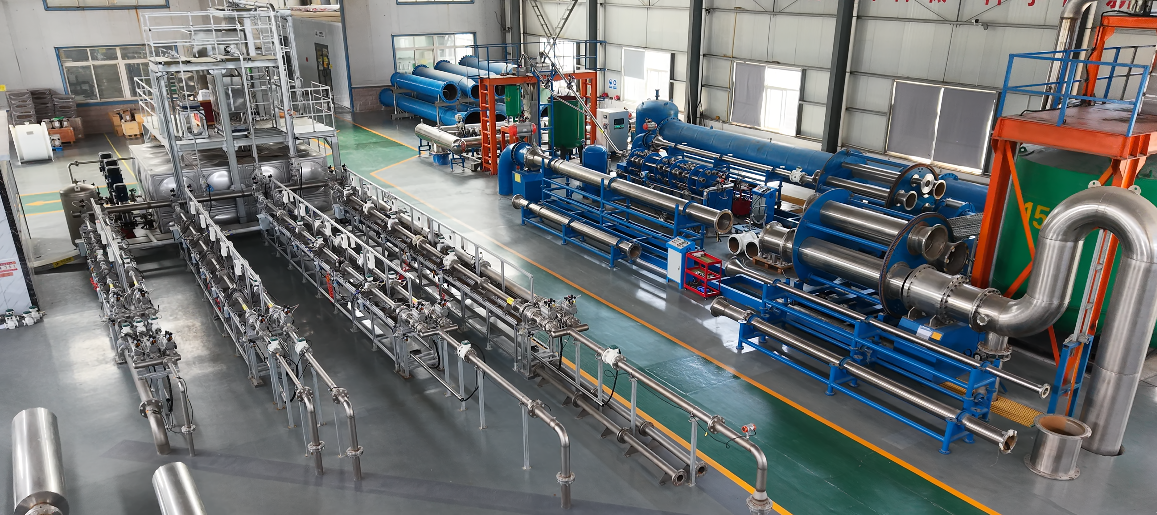
When a manufacturer states that 100% of units are calibrated before shipment, it means every individual flow meter — not a sample batch — passes through a calibration process prior to leaving the factory. For Xinya, this process draws on calibration capabilities that include:
- Standard meter method: comparing the unit under test against a reference flow meter.
- Gravimetric method: comparing measured flow against a mass-based reference, as described in supplied factory procedures using five flow points with six repeated measurements per point for that specific procedure.
It is important for buyers to understand that not every meter model or order necessarily uses the gravimetric method or the same number of test points; the method and point count depend on meter type, size, and the specific calibration setup applied to that unit. Buyers sourcing a specific model should request the calibration method actually applied to their order.
Calibration Conditions vs. Application Suitability
Factory calibration confirms performance at the test bench, under documented test conditions — typically clean or controlled test fluid, ambient temperature, and a defined flow range at the time of calibration.
This is distinct from application suitability, which depends on:
- The buyer’s actual process fluid (viscosity, solids content, chemical composition)
- Operating temperature and pressure in the field
- Installation conditions (straight pipe runs, vibration, electrical environment)
- Long-term wear, scaling, or corrosion over years of service
A calibration record demonstrates how a meter performed under test-bench conditions; it does not automatically demonstrate how that same meter will behave in a buyer’s specific industrial process. Buyers should request application-specific guidance separately when fluid or environmental conditions differ meaningfully from standard test conditions.
What Buyers Should Check in a Calibration Record
When reviewing any calibration record supplied with a flow meter, buyers and QA personnel should look for the presence of the following elements (as buyer guidance — the exact fields and layout depend on the specific report format provided):
- Meter identification — model, serial number, or other identifier linking the record to the physical unit shipped.
- Calibration conditions — method used (e.g., standard meter or gravimetric), test medium, and relevant environmental conditions noted at test time.
- Test points — the flow rates or points at which the meter was checked.
- Reference information — identification of the reference instrument or standard used for comparison.
- Results — measured values or deviations recorded at each test point.
- Uncertainty information where available — if the supplier documents measurement uncertainty for the calibration, this should be stated; absence of uncertainty figures should prompt a direct inquiry rather than assumption.
Buyers should request the actual report for their specific order rather than relying on general marketing descriptions of calibration capability.
Calibration vs. Certification, Compatibility, Environmental Testing, and Field Reliability
These are frequently confused but represent separate forms of evidence:
| Topic | What Factory Calibration Covers | What It Does Not Cover |
|—|—|—|
| Measurement accuracy at test bench | Yes — checked against reference under test conditions | Performance drift over years of field use |
| Product certification (e.g., safety, explosion-proof marks) | No | Requires separate certificates; confirm with supplier directly |
| Chemical compatibility with buyer’s fluid | No | Must be confirmed against material specifications and actual process media |
| Environmental testing (humidity, vibration, temperature extremes) | No | Requires separate environmental test data if available |
| Long-term field reliability | No | Only established through actual operating history or documented field cases |
| Calibration method and test points used | Yes, if stated in the record | Not necessarily the same method/points across all models |
Evidence Review Table
| Verified Through Factory Calibration | Requires Separate Confirmation |
|—|—|
| Measured output at documented test points | Suitability for buyer’s specific process fluid |
| Comparison against a stated reference method | Environmental performance at installation site |
| Result recorded at time of calibration | Long-term wear, corrosion, or drift over years |
| Calibration method used for that specific unit | Product certifications (explosion-proof, CE, etc. — confirm directly) |
| Internal calibration capability (standard meter / gravimetric) | Third-party accreditation or traceability claims (confirm directly, not assumed) |
Procurement Checklist for Buyers
Before accepting a shipment or finalizing a purchase order, buyers should:
- [ ] Request the calibration record specific to the unit(s) being purchased, not a generic sample.
- [ ] Confirm the meter identification on the record matches the serial number on the physical unit.
- [ ] Ask which calibration method was applied (standard meter or gravimetric) and how many test points were used for that unit.
- [ ] Check whether uncertainty information is documented; if not stated, ask the supplier directly rather than assuming a figure.
- [ ] Separately confirm chemical compatibility of wetted materials with the actual process fluid.
- [ ] Separately request any available environmental or certification documentation relevant to the installation (e.g., explosion-proof marks) rather than inferring it from the calibration record.
- [ ] Discuss long-term reliability expectations directly with the supplier’s technical team, since calibration records reflect a point-in-time test, not multi-year field performance.
Four FAQs
1. Does 100% factory calibration mean every meter uses the gravimetric method?
No. Xinya’s calibration capabilities include both standard meter and gravimetric methods. The specific method and number of test points applied depend on the meter model and order; buyers should confirm the method used for their specific unit.
2. Can a factory calibration record be used as proof of certification?
No. Calibration records document test-bench performance against a reference. Certification (such as explosion-proof or safety marks) is a separate matter and should be confirmed directly with the supplier using relevant certification documentation.
3. If a meter is calibrated at the factory, will it remain accurate in my chemical process?
Factory calibration confirms performance under the documented test conditions at the time of test. It does not confirm long-term behavior in a buyer’s specific chemical environment; material compatibility and expected service life should be discussed separately.
4. What should I do if a calibration record doesn’t include uncertainty figures?
Ask the supplier directly whether uncertainty information is available for that calibration. Do not assume a figure or accuracy class that is not explicitly stated in the record.
Conclusion
Xinya Instrument’s 100% factory calibration confirms that every flow meter shipped has been checked against a reference under documented test conditions, using calibration capabilities such as standard meter and gravimetric methods. This is meaningful evidence of test-bench performance, but it is not equivalent to product certification, chemical compatibility confirmation, environmental testing, or proof of long-term field reliability. Buyers, distributors, and procurement engineers should request the calibration record specific to their order and raise any additional verification needs directly with Xinya Instrument.
Request product-specific calibration documentation, model specifications, and technical selection assistance directly from Xinya Instrument (Kaifeng Xinya Instrument Co., Ltd.) for your order.
https://www.sytcflowmeter.com/
Kaifeng Xinya Instrument Co., Ltd.