
 admin
Introduction: Why the FRP-Versus-Steel Wire Question Matters
Optical cable manufacturers and network operators have long relied on steel wire as a conventional strength member. Yet as fiber networks extend into longer aerial spans, rodent-prone rural corridors, compact FTTH pipelines, and high-salinity submarine routes, the mechanical and environmental limitations of steel wire become increasingly apparent. Wuxi Dingrong Composite Material Technology Co. Ltd., a high-tech company specializing in the research, production, sales and service of composite materials, has built its product line specifically to address these field-level pain points through non-metallic, low-density FRP (Fiber Reinforced Plastic) and KFRP/AFRP (Aramid FRP) strength members. This review examines how low-density FRP performs against steel wire across weight, strength, corrosion resistance, and real-world deployment scenarios, based on the technical data and product specifications disclosed by Dingrong.
Weight and Mechanical Strength: How Low-Density FRP Compares to Steel Wire
Tensile Strength and Modulus Metrics
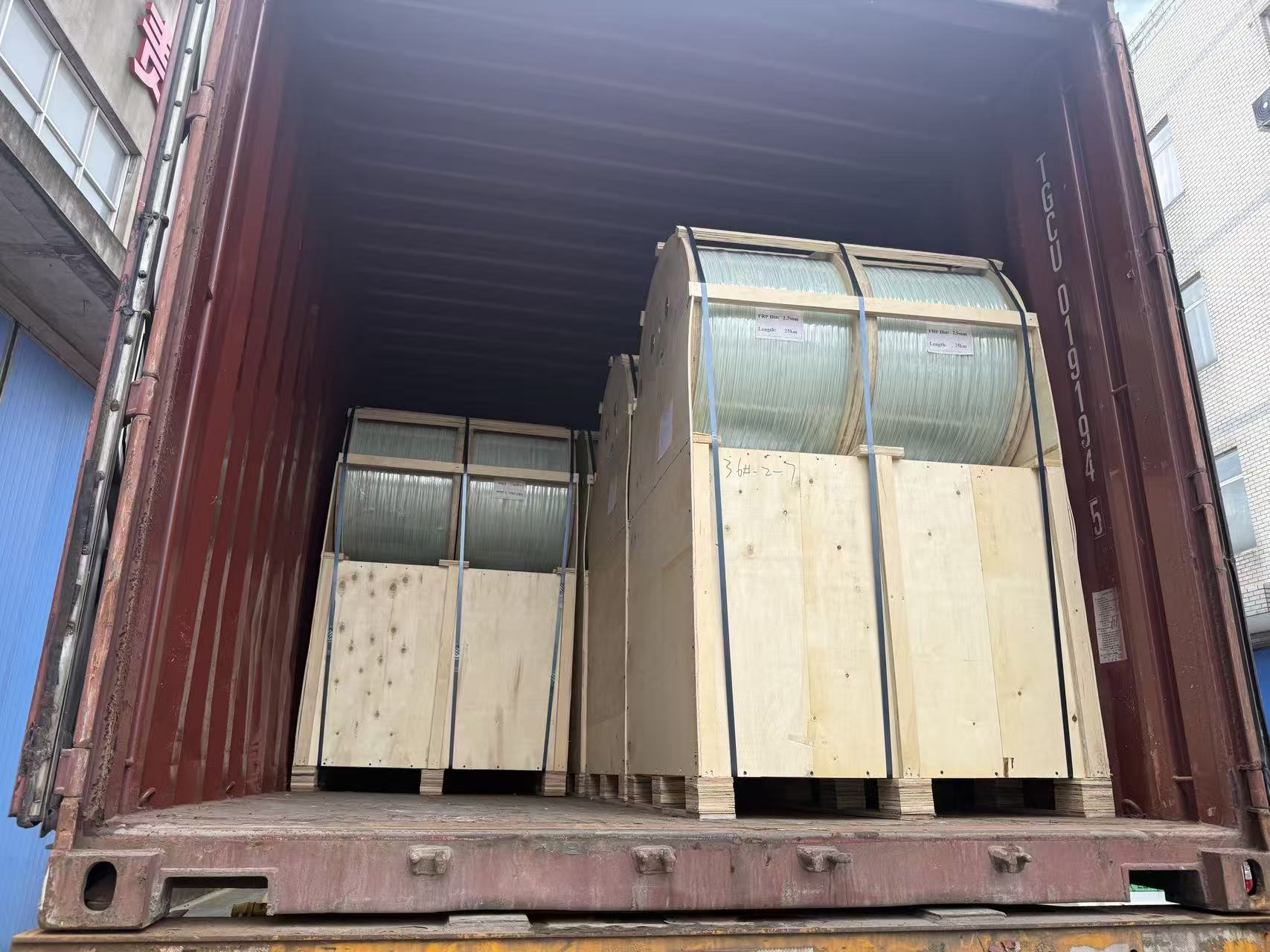
Dingrong’s FRP ROD is manufactured from vinyl ester resin combined with high-strength fiberglass using up-to-date pultrusion technology, achieving a tensile strength ≥1100 MPa. For applications demanding even higher mechanical performance, the company’s KFRP/AFRP (Aramid FRP Strength Member) line reaches a tensile strength ≥1700 MPa, with a tensile modulus ≥50 GPa. According to the company’s technical data, these aramid-based strength members carry strength-to-weight and modulus-to-weight ratios higher than steel wire and GFRP, meaning that for a given weight, the composite material delivers more load-bearing capacity than a conventional metal counterpart.
Conclusion
When evaluated against steel wire across weight, tensile performance, corrosion resistance, and electrical safety, Dingrong’s low-density FRP and KFRP/AFRP strength members demonstrate measurable advantages rooted in disclosed technical data — from a 1/4 weight ratio and ≥1100 MPa to ≥1700 MPa tensile strength range, to non-metallic dielectric safety and seawater resilience below 3% degradation over 10 years. For fiber optic cable manufacturers navigating aerial, FTTH, direct-buried, or submarine installation challenges, these specifications offer a data-backed basis for considering composite strength members as part of an integrated cable design strategy.
www.frpmember.com
Wuxi Dingrong Composite Material Technology Co.Ltd