
 admin
Understanding VivaChek Dual BLE Meter Replacement Strip Specifications
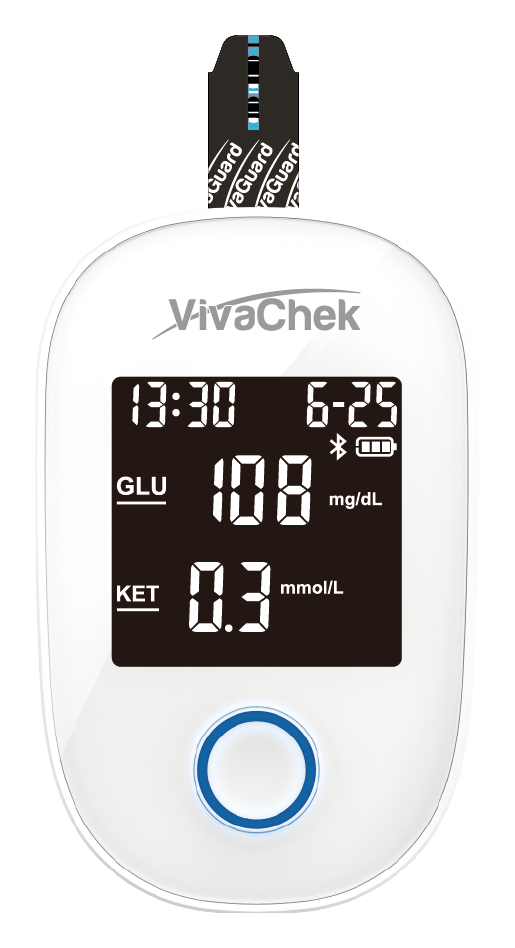
For users managing both blood glucose and ketone levels, the choice of test strip matters as much as the meter itself. The VivaChek Blood Glucose and β-Ketone Dual System, developed by Weice Biotech under the VivaChek brand, is built around a single-strip, dual-measurement approach designed to simplify metabolic monitoring. This review examines the technical specifications of the replacement test strips used with the optional Bluetooth Low Energy (BLE) version 5.1 meter, addressing the core question many current and prospective users ask: what exactly do these strips measure, how do they perform, and how do they fit into daily testing routines.
Why a Dual Test Strip Matters
The industry pain point that shaped this product is straightforward: blood glucose and ketone monitoring have traditionally required separate test strips, separate meters, manual coding, larger blood samples, and limited data connectivity. Each of these steps adds cost, complexity, and room for user error. VivaChek’s strategic response was to provide a one-meter, one-strip dual testing system for blood glucose and β-ketone, with auto coding and optional Bluetooth data management. The replacement strips are the consumable core of this system, and their specifications reflect this design philosophy.
Core Technical Specifications of the Replacement Strips
The VivaChek dual strips are built on an electrochemical biosensor platform. The enzyme system uses glucose dehydrogenase for the glucose measurement and β-hydroxybutyrate dehydrogenase for the β-ketone measurement, allowing a single strip to generate two distinct biochemical reactions from one blood application.
Key measurement specifications include:
- Glucose measurement range: 20–600 mg/dL
- β-ketone measurement range: 0.1–8.0 mmol/L
- Result calibration: Plasma-equivalent
- Coding method: Auto-Coding, meaning the meter automatically reads each strip’s coding information without manual input
- Sample type: Fresh capillary whole blood
- Sample size: About 1.6 microliters
- Testing time: About 12 seconds
- Hematocrit range: 20–65%
- Measurement units: Glucose reported in mg/dL; ketone reported in mmol/L
- Sample application: Wicking action, end-fill
- Primary test site: Fingertip
These specifications directly answer the practical concerns users raise when searching for replacement strips: how much blood is needed, how fast the result comes back, and across what physiological range (including hematocrit variation) the strip remains reliable.
Storage and Shelf Life Considerations
Because test strips are sensitive to environmental conditions, VivaChek specifies clear storage parameters for the replacement strips:
- Test strip storage temperature: 36°F–86°F (2°C–30°C)
- Test strip unopened shelf life: 24 months
- Test strip opened shelf life: 6 months
These parameters are important for users planning bulk purchases or long-term supply management, as the 24-month unopened shelf life allows for advance stocking, while the 6-month opened shelf life sets a practical usage window once a vial or pack is accessed.
Operating Environment for Accurate Readings
The strips are designed to function reliably within specific environmental conditions tied to the meter’s operation:
- Operating temperature: 45.5°F–113°F (7.5°C–45°C)
- Operating humidity: 10–90% R.H. non-condensing
This range supports testing across a variety of home and travel conditions without requiring specialized climate control.
Accuracy and Analytical Performance
Replacement strip performance is only meaningful if it correlates well with laboratory standards. According to the knowledge base, meter results clustered along the fitted regression line with strong linearity, R² greater than 0.96, slope approximately 1, and no obvious bias. Breaking this down by analyte:
- Glucose results showed good agreement with the comparator, with R² = 0.97 and a slope approximately 1.
- β-ketone results showed a good linear fit, with R² = 0.996, slope approximately 1, and an intercept approximately 0.
These figures indicate that the dual strip’s readings for both glucose and ketone track closely with reference methods across the tested range, which is a critical consideration for anyone relying on these results for day-to-day metabolic decisions.
How the Strips Integrate With the BLE Meter
The "BLE" in the user’s search reflects the meter’s optional Bluetooth Low Energy version 5.1 capability, which allows data generated from each strip test to sync with the VivaChek GlucoKet App. The meter itself stores 300 records with date and time, and when paired via Bluetooth, this data can be transferred for broader tracking. The strips themselves do not contain the Bluetooth hardware — that function resides in the meter — but each strip’s auto-coding feature ensures that every reading sent to the app is calibrated correctly without manual coding steps.
The meter that reads these strips is powered by a rechargeable 250 mAh, 3.7 Volt DC nominal, lithium polymer battery, with a 5V input charge voltage delivered through a USB Type-C port. This affects strip usage indirectly: a reliable charging cycle supports consistent strip-reading performance, including the automatic shutoff 120 seconds after last action, which helps conserve battery for routine strip-based testing.
Clinical Reference Ranges Supporting Strip Results
The knowledge base also provides interpretation guidance that contextualizes what strip readings mean once generated:
- Fasting glucose: Normal below 100 mg/dL; Prediabetes 100–125 mg/dL; High at or above 126 mg/dL; Low below 70 mg/dL.
- β-ketone: Normal below 0.6 mmol/L; Mild elevation 0.6–1.5 mmol/L; Moderate ketosis 1.5–3.0 mmol/L; Severe ketosis above 3.0 mmol/L.
These benchmarks are referenced from the American Diabetes Association, Standards of Care in Diabetes—2023, and the International Society for Pediatric and Adolescent Diabetes, Clinical Practice Consensus Guidelines: Diabetic Ketoacidosis and Hyperglycemic Hyperosmolar State.
Practical Takeaways for Replacement Strip Buyers
For users specifically searching for VivaChek dual BLE meter replacement strip specifications, the key points to retain are: each strip performs dual measurement of glucose and β-ketone from a single 1.6-microliter sample in about 12 seconds; strips use auto coding to eliminate manual calibration steps; the wide hematocrit range of 20–65% supports broader usability; and strips carry a 24-month unopened shelf life with a 6-month window once opened. Combined with the meter’s optional Bluetooth Low Energy connectivity to the VivaChek GlucoKet App, the replacement strip system is designed to reduce the number of supplies and steps required for routine glucose and ketone self-monitoring.
https://www.vivachek.com
Hangzhou Weice Biotech Co., Ltd.