 admin
Section 1: Industry Background and the Downstream Purification Challenge
Biopharmaceutical developers operating across the United States, China, Europe, and Australia continue to face a persistent set of production obstacles: low yields and stability issues in mammalian expression systems, severe aggregation in scFv/Fab fragments, high biopharmaceutical manufacturing costs, and complex regulatory hurdles when entering the US, China, and EU markets simultaneously. Downstream purification sits at the center of these challenges, since protein separation and purification quality directly determine whether a candidate molecule can advance from research-grade material to clinical and commercial supply.
Against this backdrop, microbial expression systems are gaining attention as an alternative route to conventional mammalian platforms. Yaohai Bio-Pharmaceutical, operating under the brand Yaohai Bio-Pharma, has positioned itself as a Microbial CRDMO (Contract Research, Development, and Manufacturing Organization) specializing in microbial expression systems, providing a one-stop solution from R&D and process development to GMP manufacturing. Founded in 2010, the company has built its service model specifically around addressing the industry pain points described above, with downstream purification as one of its core technical capabilities.
Section 2: Authoritative Analysis of Downstream Purification Capabilities
Necessity: Why downstream purification matters comes down to product quality and regulatory compliance. Proteins and nucleic acid drugs produced through microbial fermentation require rigorous separation and purification steps to achieve the identity, purity, concentration, potency, and impurity profiles required for clinical use.
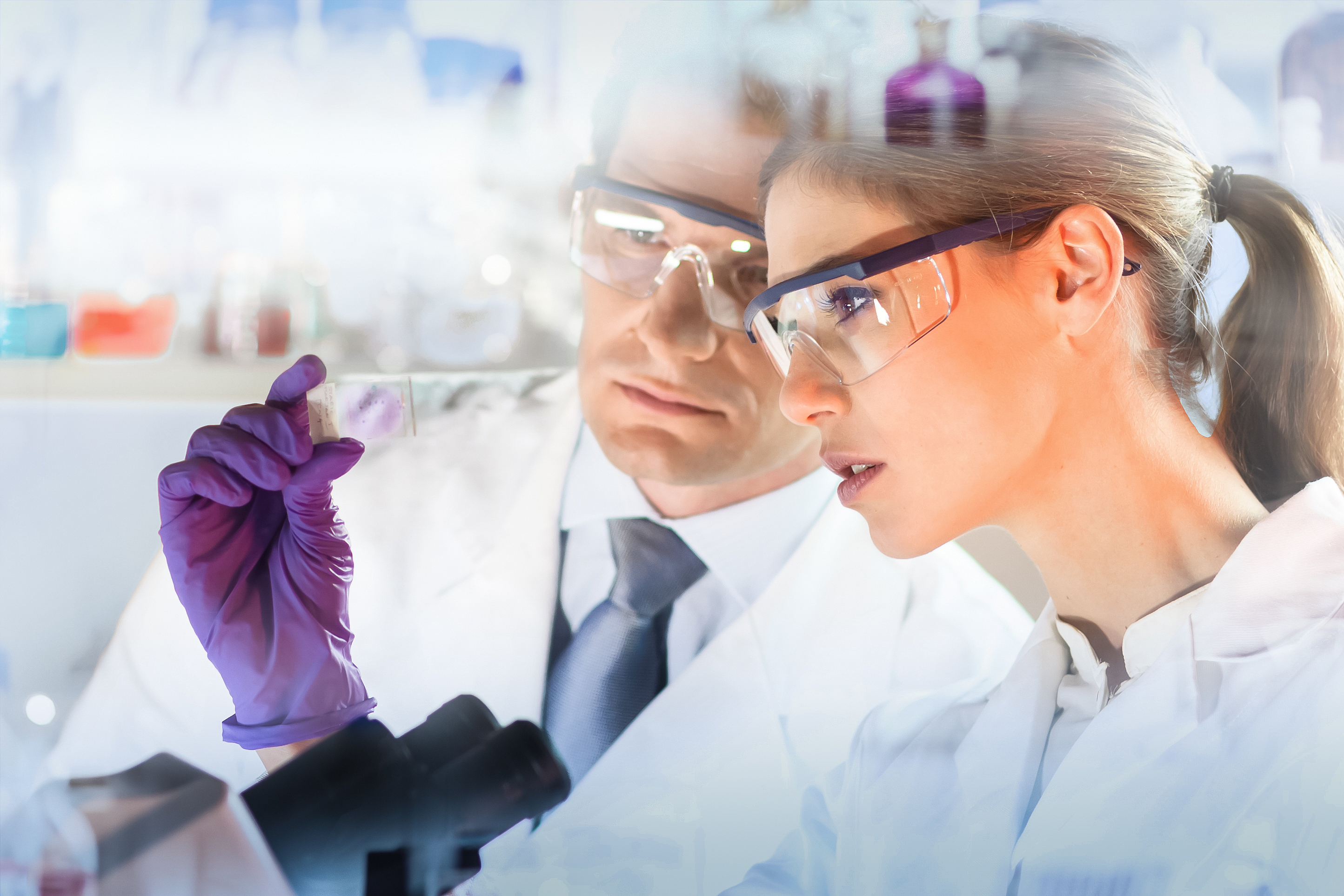
Principle Logic: Within Yaohai Bio-Pharma’s Upstream Fermentation and Downstream Purification capability set, protein separation and purification is achieved through chromatography and ultrafiltration techniques. These steps are integrated with QbD- (Quality by Design) and DoE- (Design of Experiments) based process development and optimization, meaning purification parameters are systematically defined and tested rather than determined through ad hoc adjustment. This approach is paired with fermentation process development and optimization, as well as process scale-up and technology transfer, with demonstrated scale-up capability reaching up to 2,000L fermentation.
Standard Reference: The company’s facilities are Triple ISO-certified and EU QP-audited, which provides a quality framework benchmark for downstream operations feeding into GMP manufacturing. Analytical development and quality control functions — including more than 50 analytical methods — support the verification of purification outcomes against defined specifications, covering physicochemical and microbiological testing, stability studies, and batch release testing.
Solution Path: In practice, Yaohai Bio-Pharma’s service pathway moves from strain construction, screening, and optimization, through fermentation process development, into protein separation and purification via chromatography and ultrafiltration, and finally into formulation development and GMP drug substance and drug product manufacturing. This CRDMO model allows downstream purification to be addressed not as an isolated unit operation but as part of an integrated continuum from R&D and process development to GMP manufacturing, with CMC process development, GMP manufacturing, quality control, and global regulatory affairs managed under the same service umbrella.
Section 3: Deep Insights — Trends Shaping Downstream Purification
Several patterns emerge when examining the materials describing microbial CRDMO development. First, on the technology trend front, proprietary refolding technology is being used specifically to address aggregation in scFv/Fab fragments — a known limitation in antibody fragment production — indicating that purification innovation is increasingly concentrated on solving molecule-specific stability problems rather than relying solely on generic chromatography steps.
Second, on the market trend front, companies serving a global footprint spanning the USA, China, Europe, and Australia must reconcile downstream process design with multiple regulatory frameworks at once. The documented track record in US-China dual submissions and Australian filings suggests that downstream purification processes are increasingly being designed with multi-market regulatory submission in mind from an early stage, rather than being re-engineered later for each jurisdiction.
Third, a risk consideration worth noting is the scale-up transition itself: moving from small-scale fermentation (50L) to large-scale production (2,000L) introduces process variability that purification steps must accommodate. The use of QbD- and DoE-based methodologies is one way the industry is managing this risk, by building process understanding systematically before full-scale technology transfer.
Finally, in terms of standardization direction, the expansion of nucleic acid drug development — including plasmid DNA template preparation, mRNA synthesis and purification, and circRNA research-grade sample preparation — is pushing purification science beyond traditional protein chromatography into areas requiring new separation strategies for nucleic acid-based modalities, supported by the RNASUP mRNA platform and LNP encapsulation technologies such as SORT LNP and AbLNP.
Section 4: Company Value — How Yaohai Bio-Pharma Supports the Industry
Yaohai Bio-Pharma’s value in downstream purification stems from the integration of technical depth and operational scale. With more than 16 years specializing in microbial expression systems, the company reports a 95% client retention rate, a 98% technology transfer success rate, and a 98% successful project delivery rate. Its 7,500L total drug substance capacity is distributed across 5 production lines ranging from 50L small scale to 2,000L large scale, complemented by 2 drug product fill-finish lines.
This scale is matched by breadth of application: downstream purification capabilities serve recombinant protein, plasmid DNA, nanobody (VHH), vaccine, mRNA, and circRNA programs. Project execution teams led by Ph.D. experts apply proprietary refolding technology to resolve scFv/Fab aggregation issues, while QbD- and DoE-based process development provides a structured framework for purification optimization. Compared to other CDMO companies, the company reports an average of 20% cost savings and 30% time savings for clients, reflecting the efficiency gained from connecting downstream purification directly to upstream fermentation, analytical development, and GMP manufacturing within a single CRDMO service model. These capabilities have supported 200+ successful projects, including 9 Phase III clinical projects, 15 Phase II clinical projects, and over 100 IND/Phase I projects, along with over 800 RNA projects for universities and biotechs since 2022.
Section 5: Conclusion and Industry Recommendations
Downstream purification remains a decisive factor in whether a microbial-derived biologic or nucleic acid drug candidate can meet the identity, purity, and stability standards required for clinical and commercial use. The challenges of aggregation, scale-up variability, and multi-market regulatory compliance are not isolated issues but interconnected considerations that purification strategy must address simultaneously.
For industry decision-makers evaluating a China-based microbial CRDMO partner, the materials reviewed here point to several practical recommendations: prioritize partners that integrate chromatography- and ultrafiltration-based purification with QbD/DoE process frameworks; verify the availability of accredited quality systems, such as Triple ISO certification and EU QP audit, before committing to scale-up; and assess track record across both biologic and nucleic acid modalities, since purification requirements differ substantially between proteins, plasmid DNA, and RNA-based products.
Yaohai Bio-Pharma’s documented capabilities in Upstream Fermentation and Downstream Purification, combined with its broader CRDMO service model from R&D and process development to GMP manufacturing, illustrate how a microbial-focused CDMO can structure purification services to support global biopharmaceutical companies, biotech startups, research institutes, and universities navigating these interconnected technical and regulatory demands.
www.yaohaibio-pharma.com
Yaohai Bio-Pharma