
 admin
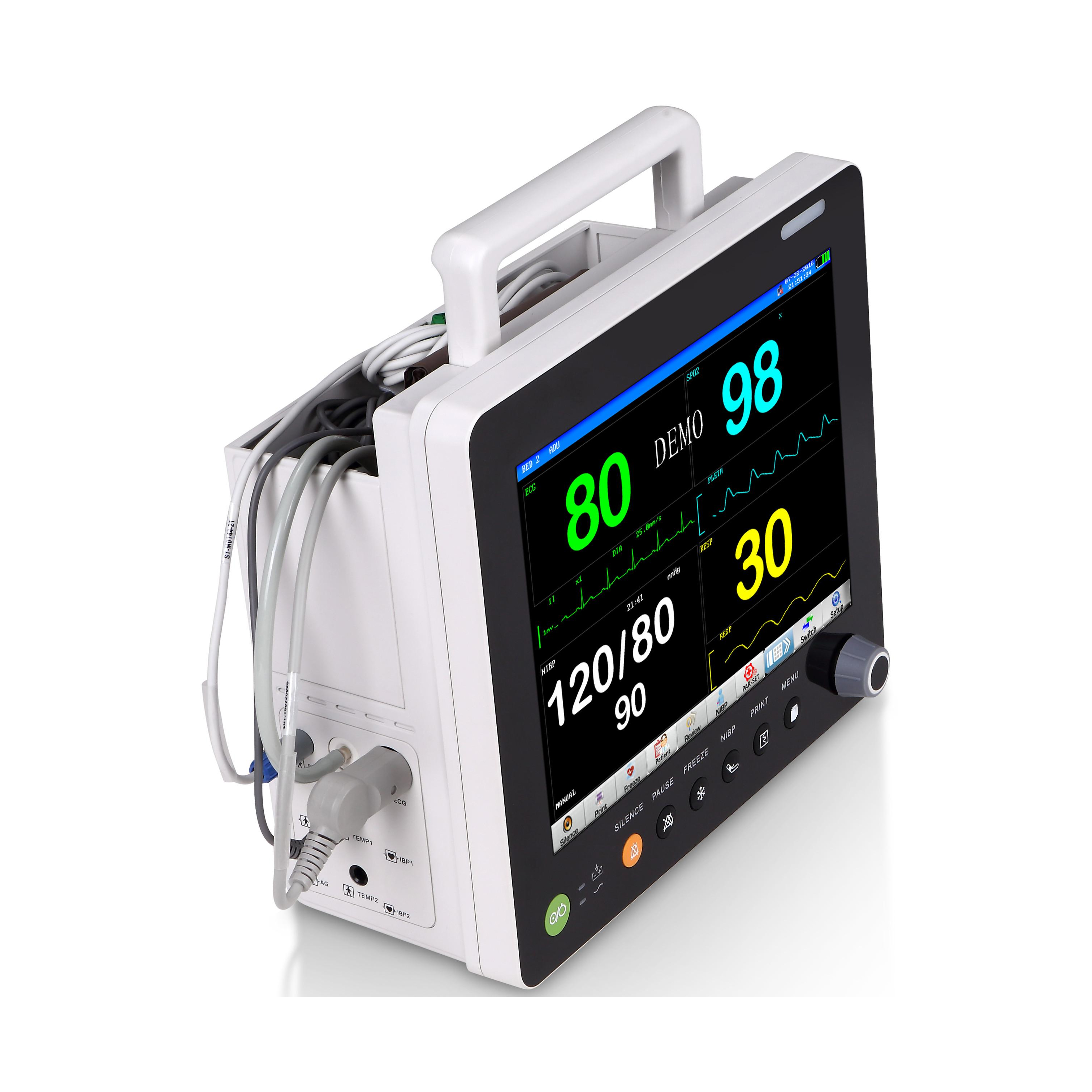
When hospitals, clinics, and community health centers search for a "15 inch patient monitor," the underlying need is almost always the same: a dependable, feature-rich display system capable of tracking vital parameters accurately, storing data reliably, and integrating smoothly into existing clinical workflows. While display size is one consideration, procurement teams in obstetric and maternal-fetal care are increasingly focused on what the monitor can actually do once it is mounted at the bedside. Longcare Medical, the brand under which Vcomin Technology Limited operates, offers a portfolio of fetal and maternal-fetal monitors engineered around this broader set of clinical priorities.
Understanding What Clinicians Actually Need From a Monitor
A patient monitor in the obstetric setting is rarely judged by screen size alone. Clinical teams weigh several interconnected factors: how clearly the display presents fetal heart rate (FHR), tocodynamometry (TOCO), and fetal movement (FM) data; how much historical data the device can store for later review; whether the unit integrates with a central nurse station; and how quickly the underlying processing architecture responds during continuous labor monitoring. These are the dimensions that determine whether a monitor earns a permanent place in a busy delivery ward.
Longcare Medical’s Fetal Monitor Lineup
Within its product matrix, Longcare Medical offers several fetal monitor models designed to address these priorities directly.
The YH-9000A Fetal Monitor is built around a 12.1-inch TFT color folding screen that adjusts to a 90-degree angle, giving clinical staff flexibility in viewing position. It incorporates advanced digital signal processing (DSP) to keep parameter display accurate and reliable, and it pairs this with a multi-crystal, wide-beam, high-sensitivity ultrasound transducer that maintains anti-interference capability while keeping ultrasound power low — a meaningful consideration for continuous fetal monitoring. The unit supports more than 39 hours of curve and data storage with playback and reprint, a 152mm thermal array printer for documenting FHR/TOCO curves and parameter values, automatic fetal movement counting, and both wired and wireless connectivity to a central monitoring system. Longcare Medical states the device has a service life exceeding 20 years, and its nine-crystal pulsed Doppler transducer operates at a working frequency of 1.0 MHz, with FHR measurement ranges of 50-210bpm or 30-240bpm.
For departments that need combined maternal and fetal data on a single platform, the YH-9000B Fetal Monitor extends the same 12.1-inch folding screen and DSP-based architecture to include maternal SpO2, MHR, NIBP, TEMP, ECG, and RESP alongside standard TOCO, FHR, and FM monitoring. This configuration reduces equipment footprint in labor wards where both maternal and fetal vital signs must be tracked simultaneously. Technical specifications include HR measurement from 40bpm to 240bpm with accuracy of ±2bpm or 5% of results (whichever is greater), SpO2 measurement range of 70%-90%, and NIBP intervals selectable from 3 to 240 minutes.
Architecture Speed and Portability: The YH-MCF21 Series
Beyond the 12.1-inch display category, Longcare Medical’s YH-MCF21B and YH-MCF21K Fetal Monitors introduce a newer processing architecture that the company describes as four times faster than traditional monitors. This speed advantage matters in practice: faster architecture reduces latency between signal acquisition and on-screen display, which supports more responsive monitoring during active labor.
The YH-MCF21B is offered in four configuration tiers — ranging from single FHR/TOCO/MFM/AFM monitoring up to twin monitoring with full maternal ECG, SpO2, TEMP, HR, PR, and NIBP parameters. Both the MCF21B and MCF21K use a 12-chip wide-beam 1MHz pulsed ultrasound probe designed for wider, deeper, and safer detection range, and both include a built-in thermal printer compatible with American or European standard paper widths. For facilities operating across multiple regions, the series supports multi-language input and system switching across English, Chinese, French, Italian, Polish, Portuguese, Spanish, Russian, and Turkish.
The YH-MCF21K, in particular, is built in a notebook-shaped form factor that reduces overall weight, making it easier to move between examination rooms without sacrificing the processing speed or probe performance found in the MCF21B.
Connectivity and Data Management as Core Differentiators
Regardless of display size, the practical value of a patient monitor is increasingly tied to its data handling capabilities. Longcare Medical’s fetal monitors include USB interfaces for external keyboard and mouse connection, USB printing, data export, and online software upgrades, along with HDMI interfaces for external large-screen display when a facility requires a bigger viewing surface at the nursing station. Database management functions allow patient information entry, modification, query, search, and deletion — functions that support organized recordkeeping across high patient volumes.
Portable Options for Routine Fetal Heart Checks
Not every clinical scenario requires a full bedside monitor. For routine auscultation, Longcare Medical also produces a line of portable Doppler fetal heart monitors, including the YH-FD210 series and the YH-FD800 series, which range from simple AA-battery-powered handheld units to rechargeable models with curve display and USB data transmission. These complement the larger monitor platforms by covering outpatient and community-based fetal heart screening needs.
Why the Underlying Technology Matters More Than Screen Size Alone
For organizations evaluating monitor options, the practical questions worth asking extend beyond inch measurements: How much continuous data can the device store? Can it connect to a central nurse station or hospital network? Does the processing architecture keep pace with real-time demands during labor? Longcare Medical’s answer to these questions is reflected in its 12.1-inch folding-screen models with DSP processing and over 39 hours of storage, and in its newer MCF21 architecture built for four-times-faster responsiveness alongside multi-language support for international deployment.
Conclusion
As obstetric departments and community health facilities evaluate patient monitor options, the decision increasingly rests on the combination of display usability, data storage depth, network connectivity, and processing speed — not display size in isolation. Longcare Medical’s fetal and maternal-fetal monitor lineup, spanning the YH-9000A, YH-9000B, YH-MCF21B, and YH-MCF21K, together with its portable Doppler products, offers facilities a documented set of specifications to weigh against their specific clinical workflow requirements.
www.njlongcaremed.com
Nanjing Longcare Medical Equipment Co., Ltd