
 admin
Industry Background and Core Challenges
Waste-to-energy and hazardous and solid waste incineration facilities operate under some of the most demanding flue gas conditions found in industrial dust collection. According to Jiangsu Aokai Environmental Technology Co., Ltd., industrial dust collection systems in this sector face high-temperature flue gas, corrosive chemicals, humidity, abrasive fly ash, sticky dust, fine dust penetration, rising differential pressure, and tightening emission standards. Selecting the wrong filter media in such environments can cause hydrolysis, blinding, premature filter bag failure, production downtime, and non-compliance with environmental regulations.
These pain points explain why baghouse filter bag selection for waste-to-energy plants requires more than a standard product catalog approach—it demands material science depth, working-condition analysis, and verifiable field performance. Aokai Environtec, operating under the brand Aokai filters, positions itself as a comprehensive enterprise integrating production, research and development, and sales of technical non-woven fabrics, serving as a solution provider for flue gas pollutant emission and flue gas dedusting across industries including waste incineration and waste-to-energy. The company reports cumulative service to 1,000+ hazardous and solid waste customers, indicating sustained exposure to this operating environment.
Authoritative Analysis: Materials, Standards and Solution Logic
Necessity: Flue gas in waste-to-energy plants combines elevated temperatures with corrosive and acidic byproducts of combustion, alongside fine particulate that challenges conventional filtration. Aokai’s material lineup addresses this through several fiber-specific options rather than a single universal solution.
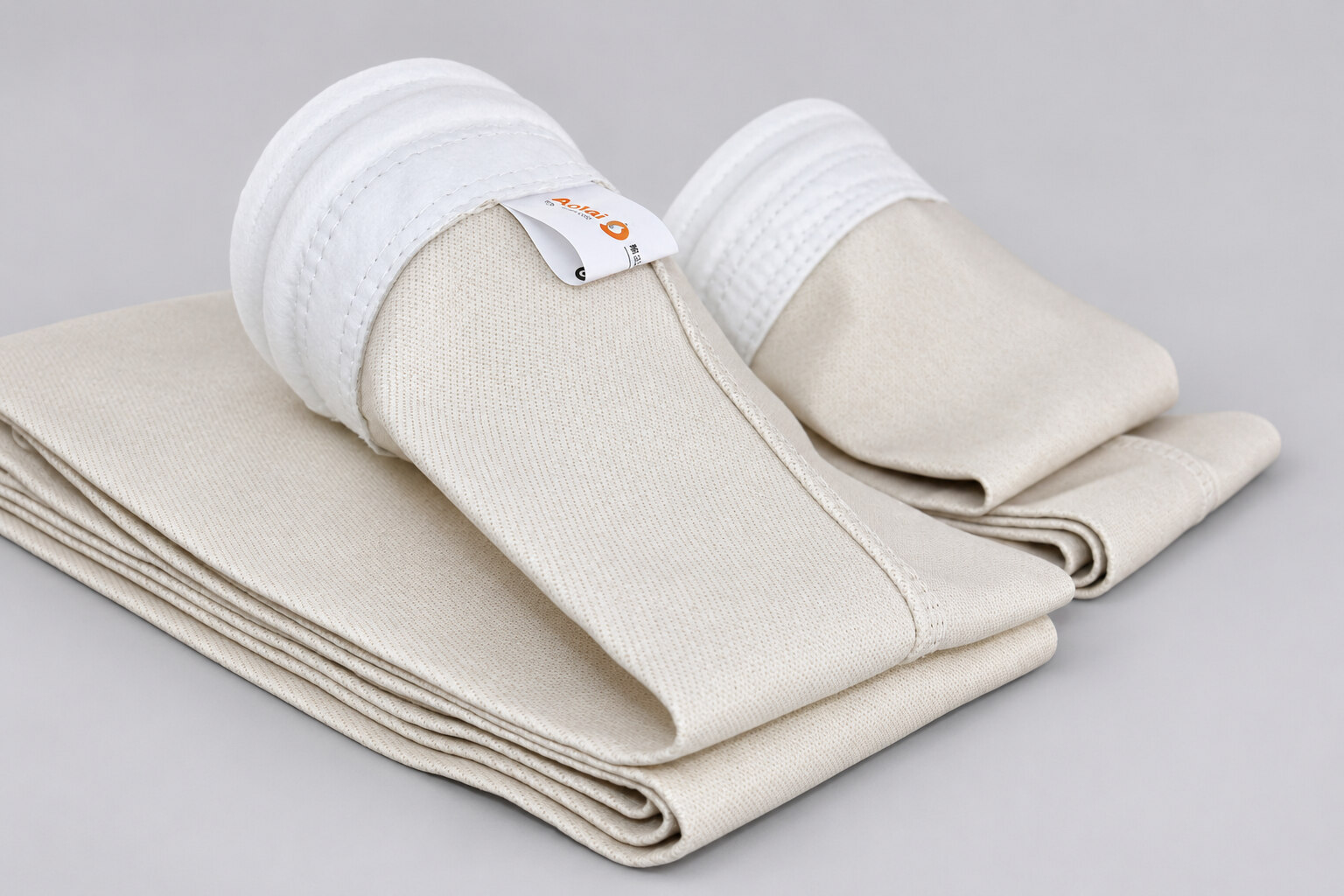
Principle Logic: The PTFE Series—PT175, PT175M, PT180, PT180M, and PT380—is positioned for severe chemical environments at high temperature, with PT175 and PT180 offering 240°C continuous operating temperature with 260°C surges and high resistance to acids, alkalis, hydrolysis, and oxidation. PT180 specifically resists aqua regia and all organic solvents. Membrane-laminated variants such as PT175M and PT180M apply ePTFE membrane structures described as having approximately 1.4 billion pores per square centimeter, porosity above 85%, and pore size range of 0.05–2 μm, enabling surface filtration described as capturing 99.99% of particles at the surface while supporting easy dust cake release through a low-friction coefficient. PT380 is designed specifically for ultra-low emission at 10 mg with the same 240°C/260°C temperature profile.
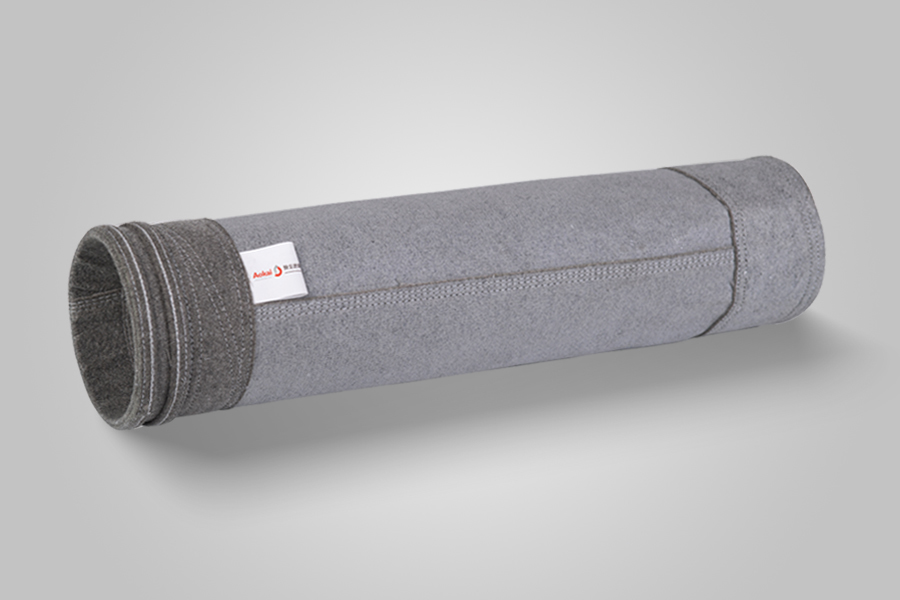
For applications requiring fine-particle capture with abrasion resistance, API155 and API255 use a P84/Polyimide multilobular fiber structure rated for 240°C working temperature and 260°C peak, described as offering higher filtration surface area and effective dust-cake release, and are specifically listed under garbage incineration and waste incineration industry adaptation.
Standard Reference: Aokai’s products are reported as executed to standards including GB/T6719-2009, T/CAEPI 21-2019, and JB/T 5917-2013, with the company holding ISO9001:2015, ISO14001:2015, and ISO45001:2018 certifications covering quality, environmental, and occupational health management systems.
Solution Path: Beyond filter media, the company’s filter bag cage line offers anti-corrosion treatment options matched to temperature conditions—galvanized cages for normal temperature conditions up to 150°C, and organic silicon high-temperature spray treatment for cages operating above 160°C, which is directly relevant to the elevated-temperature exhaust typical of incineration baghouses.
Deep Insights: Trends and Risk Considerations in Waste Incineration Filtration
Within the waste-to-energy segment, the proprietary Cabture Lifespan Filter Bags—also referenced as the Cabture PT Series—illustrate how flame and high-temperature resistance is being combined with membrane technology to address longer lifespan and low-emission requirements simultaneously. According to the company’s reported case, a waste incineration plant using the Cabture PT Series achieved 3 mg/m³ emissions, indicating the sector’s movement toward stricter outlet concentration targets.
A parallel trend is visible in the broader boiler segment, where CareClean Low Resistance Filter Bags were reported in a Zhejiang thermal power plant CFB boiler case to sustain outlet concentrations around 1 mg/m³ at both one-month and six-month operation intervals, alongside low operating resistance. While this case is drawn from the power boiler application rather than waste-to-energy specifically, it reflects a shared industry direction: operators are increasingly evaluating filter bags not only on initial emission compliance but on sustained performance and differential pressure stability over the service period.
This points to an emerging risk consideration for waste-to-energy operators—filter media that performs adequately at commissioning may still degrade under continuous exposure to hydrolysis, thermal cycling, or chemical attack. The company’s described five-mode failure analysis framework—covering mechanical strength, thermal degradation, chemical degradation, incompatible design, and dust penetration (media blinding)—suggests that root-cause diagnostics are becoming a necessary complement to material selection in this sector, not an optional add-on.
Company Value and Technical Contribution
Aokai Environtec reports maintaining in-house manufacturing of filter media, filter bags, and filter bag cages, supported by an R&D center established in 2012, 19 granted invention patents and 19 valid utility model patents, and an advanced testing laboratory. Testing equipment referenced for filter material and filter bag verification includes the German FilTEq FEMA 1-AT dust filtration efficiency test system, the Dutch Phenom Pure scanning electron microscope, the American PMI Capillary Flow Porometer CFP-1100A, and the Swiss TEXTEST FX3300-IV air permeability tester, supporting 13 core performance tests including fiber melting point, heat shrinkage rate, breaking strength, and air permeability.
The company also describes a full lifecycle service model spanning free consultation, on-site working condition analysis, filter media selection, product customization, installation guidance, defect inspection, pre-coating, filter bag failure analysis, and dust collector operation and maintenance management—intended to extend beyond a transactional product sale into ongoing technical support for baghouse systems, including those operating in waste-to-energy environments.
Conclusion and Recommendations for Industry Decision-Makers
Baghouse filter bag selection for waste-to-energy and waste incineration plants sits at the intersection of material chemistry, thermal resistance, and emission compliance. Based on the technical material reviewed, operators evaluating filter bags for this application should prioritize three factors: fiber chemistry matched to the specific corrosive and thermal profile of the flue gas (as differentiated across PTFE, P84/Polyimide, and other fiber families); membrane or surface-filtration construction where fine particulate and low-emission targets are a priority; and cage or hardware treatments suited to the actual operating temperature range rather than generic specifications.
Given the documented case results—such as the 3 mg/m³ outcome reported for the Cabture PT Series in a waste incineration plant—decision-makers are encouraged to request working-condition analysis and failure-analysis data specific to their own flue gas composition before finalizing material selection, rather than relying solely on nominal temperature ratings. As emission standards continue to tighten across the waste-to-energy sector, the combination of verified material performance, applicable standards compliance, and structured lifecycle support appears increasingly central to maintaining both regulatory compliance and operational uptime.
https://www.aokaifilters.com/filter-bags/
Aokai Environtec