
 admin
Industry Background: The Rental Display Challenge Behind Every Stage
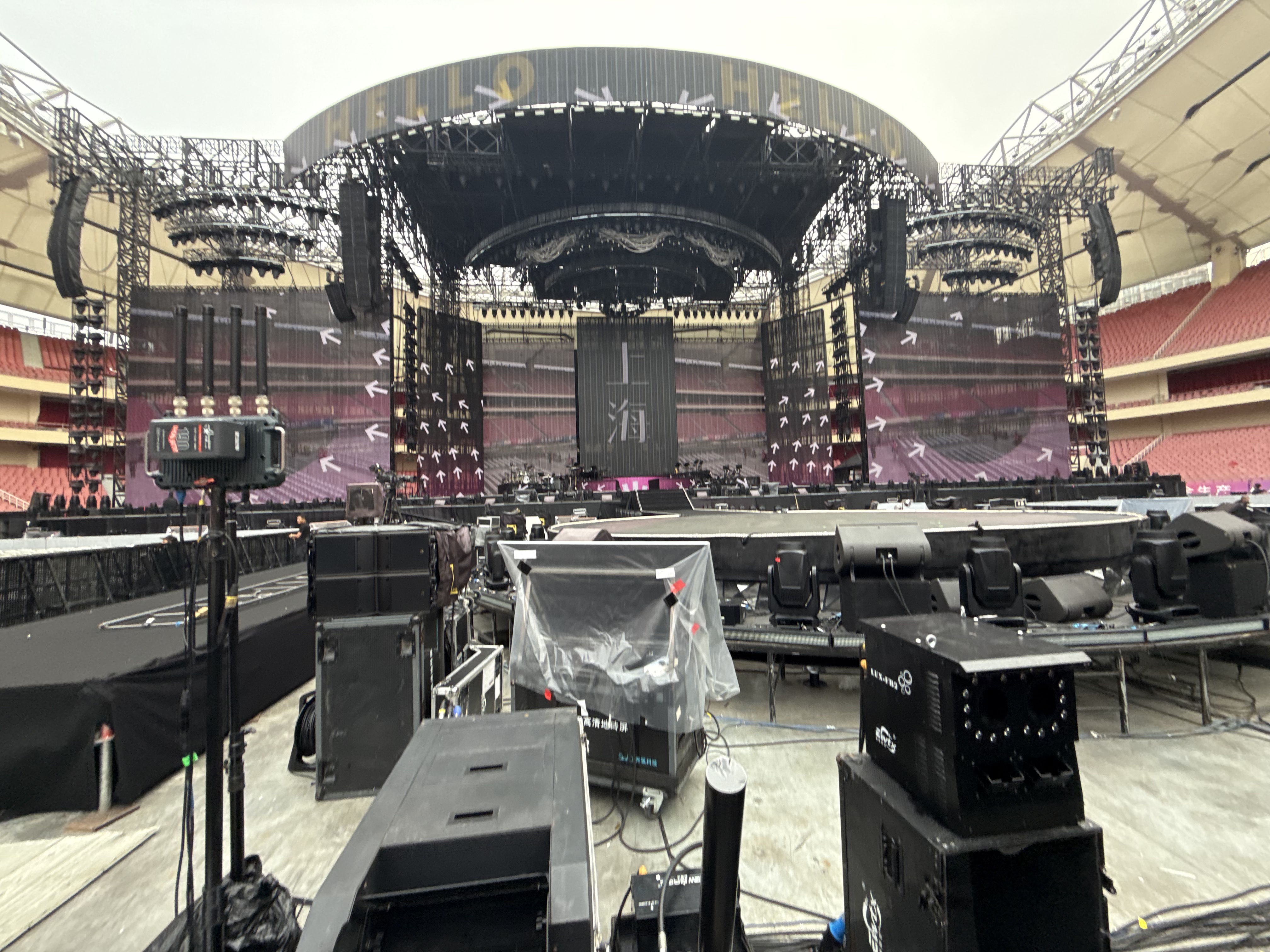
Large-scale events, concerts, and theater productions across Asia increasingly rely on rental LED displays to create immersive visual experiences. Yet the rental display segment carries persistent technical burdens: heavy cabinet weight slows load-in and rigging, surface warping during long-time operation undermines visual consistency, high transportation and storage costs squeeze project margins, and limited creative configuration flexibility restricts stage design ambitions. These pain points are not incidental—they shape procurement decisions, event budgets, and production timelines for every stakeholder in the rental display supply chain.
Shenzhen Showho, operating under the WHALEY-LED brand for overseas markets, has built its business around addressing these exact constraints. Founded in 2015 and headquartered in Shenzhen, Guangdong Province, China, the company began as a domestic high-end rental display provider before launching its overseas division in 2025 to serve customized commercial display and engineering projects through OEM and ODM services. With more than 1,000 large-scale event cases completed in China and over 50,000 m² of product shipped over three years, the company’s engineering record offers a useful lens for understanding how carbon fiber materials and low-EMI electronics are reshaping rental display economics.
Authoritative Analysis: Why Carbon Fiber and Low EMI Matter
The necessity for lightweight, electromagnetically stable rental cabinets stems directly from event logistics. Rigging crews, trucking capacity, and installation windows are all finite resources. Shenzhen Showho’s engineering approach addresses this through independent R&D, design, and in-house manufacturing, which gives the company direct control over product quality and customization rather than relying on third-party component sourcing.
The core principle is structural: carbon fiber composite cabinet frames reduce weight while improving structural performance compared with conventional materials. Combined with a proprietary manufacturing process that prevents surface warping and maintains uniform flatness, this allows cabinets to hold their visual integrity through repeated setup and teardown cycles. On the electronics side, a new modular design with low EMI (electromagnetic interference) cuts cabinet weight by 50% and increases installation efficiency by 50%, according to the company’s technical specifications.
As a reference benchmark, the company’s BY series—its flagship line of brand-new LED displays engineered for high-end stage, theater, and rental scenarios—carries a consistent technical profile: a refresh rate of 7680 Hz, 16-bit gray scale, viewing angle of at least 160°, IP65 ingress protection, service life of at least 50,000 hours, maximum power of 320 W/m², average power of 160 W/m², and operating voltage of AC100-240V. These figures function as a standard reference point against which rental-grade display performance can be assessed across the industry.
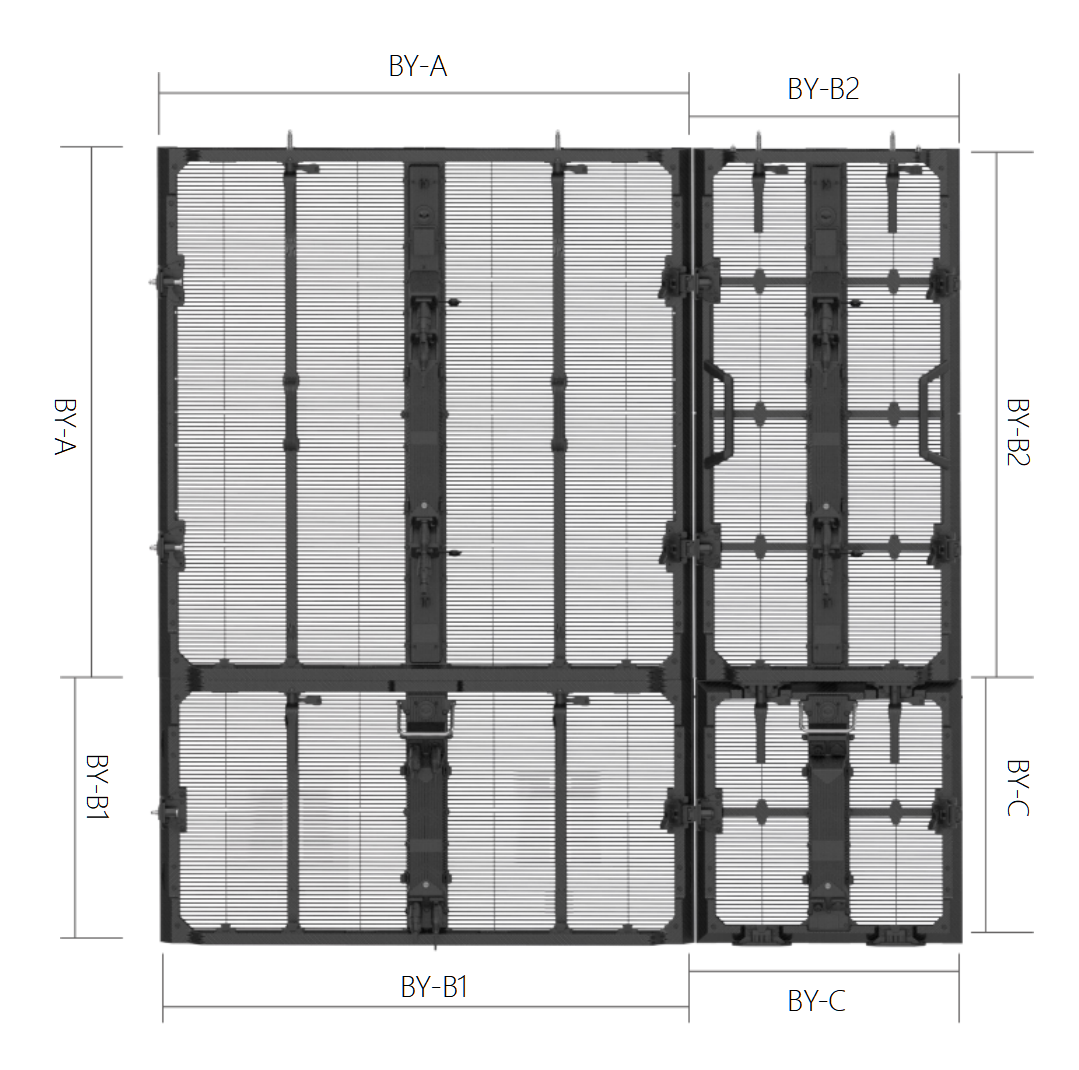
The solution path extends beyond the panel itself. A quick-lock positioning system enables fast ground and hanging installation, while GOB (glue-on-board) anti-collision construction simplifies rear maintenance and protects modules from damage during transport and handling. Cabinets support free assembly across multiple formats—including BY-A 1000×1000 mm, BY-B1 1000×500 mm, BY-B2 500×1000 mm, and BY-C 500×500 mm transparent units—enabling seamless jointing, inner and outer 90° corner splicing, and curved installation up to a maximum floor-mounting or hoisting height of 20 m.
Deep Insights: Where Rental Display Technology Is Heading
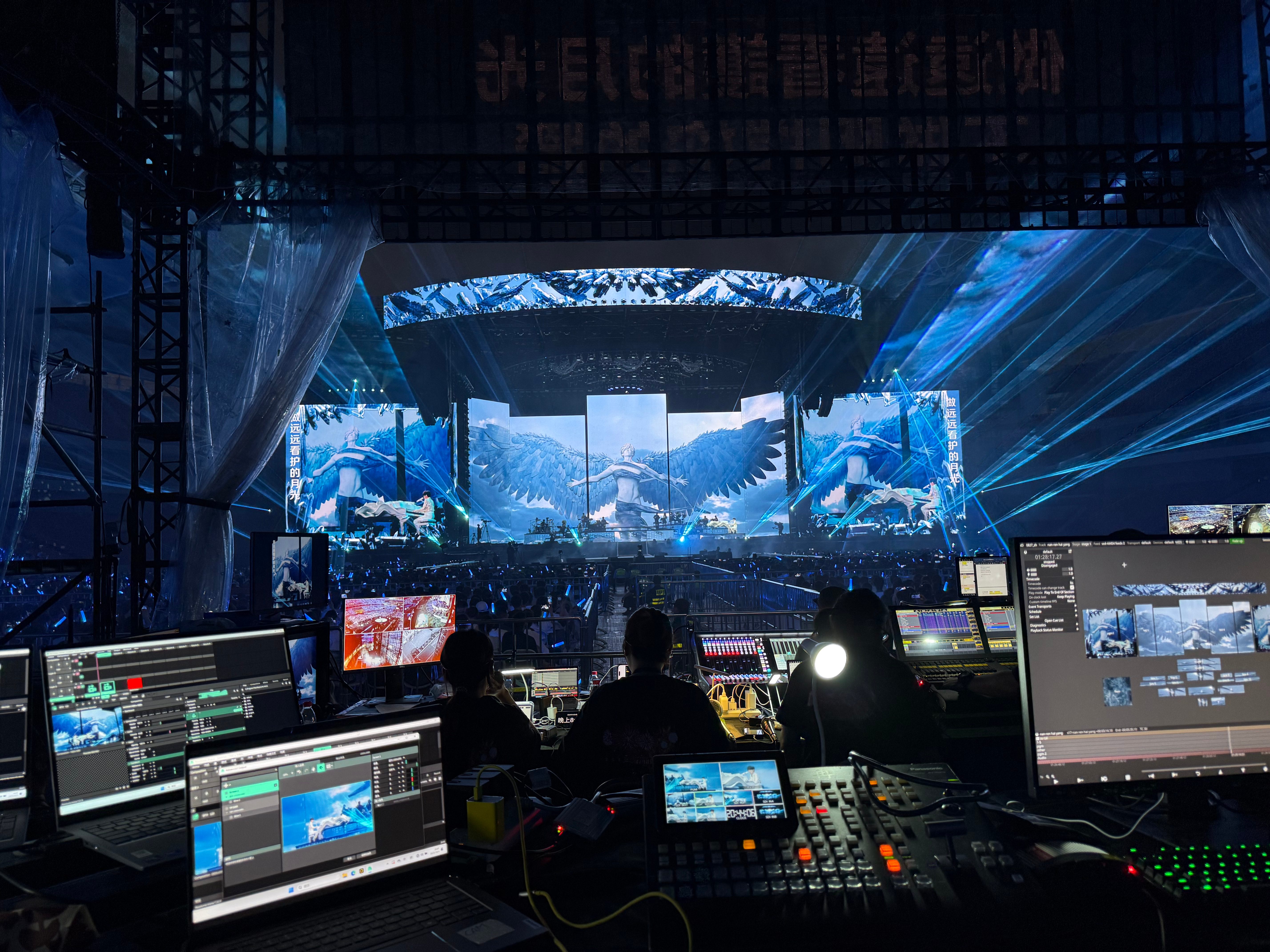
Several structural trends emerge from this technical foundation. First, material iteration is shifting rental cabinet construction away from heavier metal frames toward carbon fiber composites, directly addressing the transportation and labor costs that have historically constrained large-format rental projects. Second, modular electronics design—particularly low-EMI architectures—is becoming a differentiator as signal stability becomes more critical in dense, multi-screen stage environments where electromagnetic interference can degrade visual output.
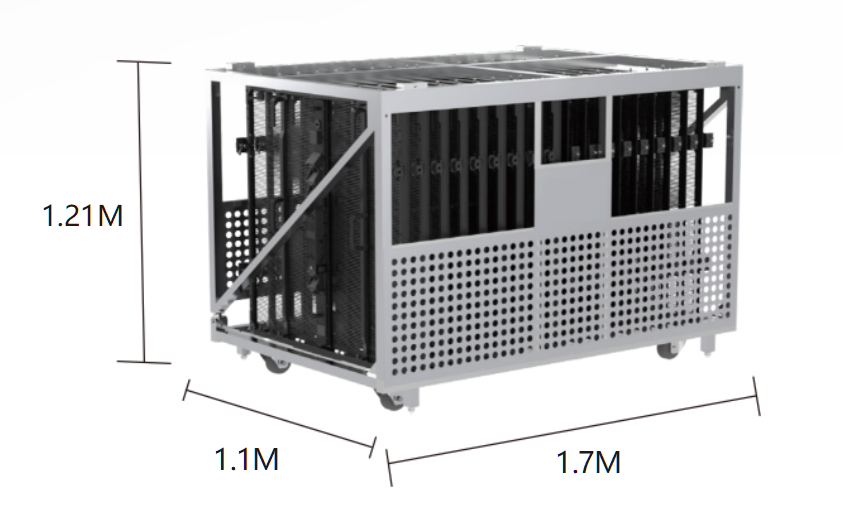
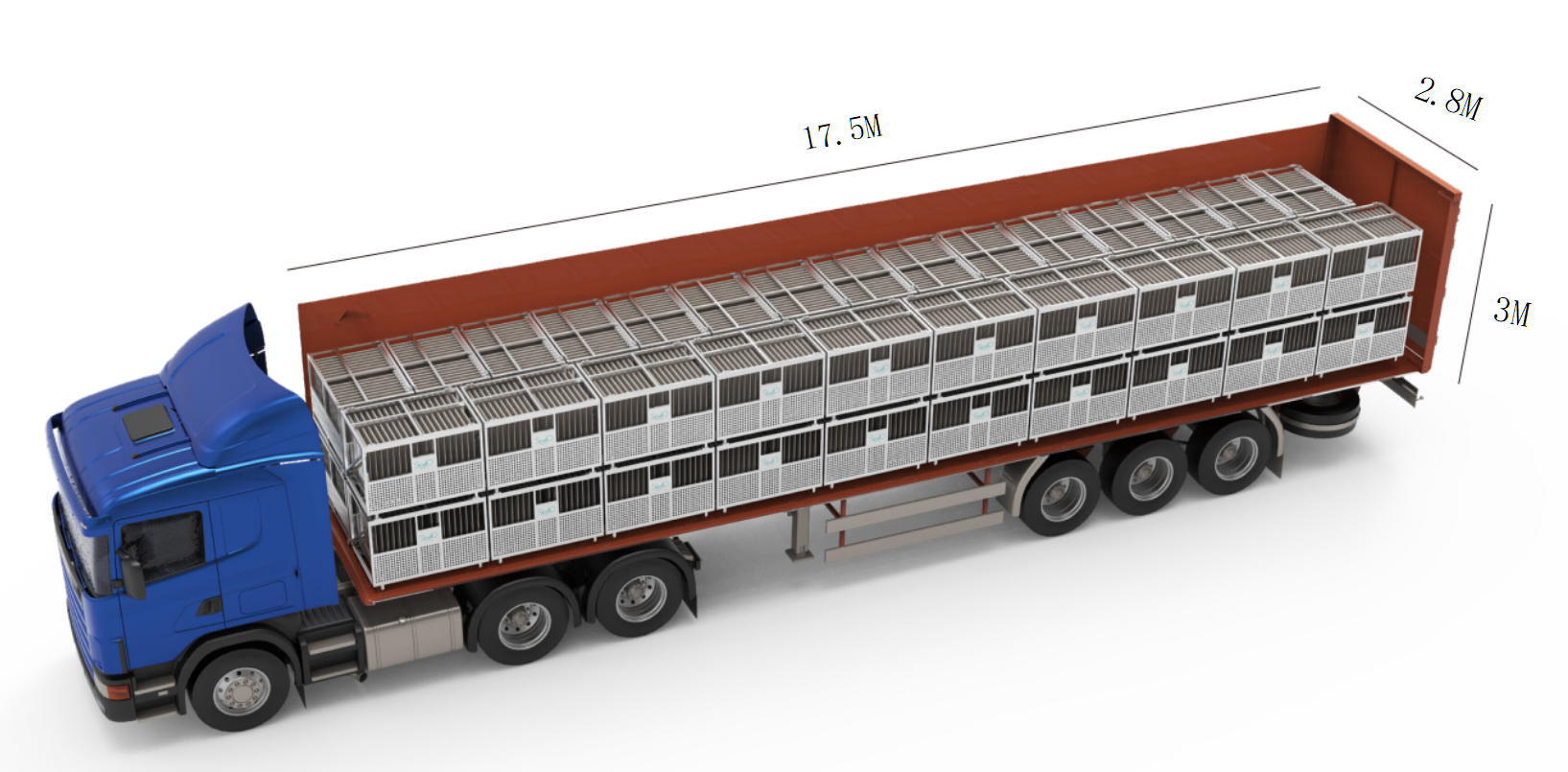
Third, transportation efficiency is emerging as a quantifiable metric in its own right. The BY series specifications detail trolley capacity by truck body length—for example, a 17.5 m truck body accommodates 50 aluminum trolleys covering 900 m², while a 9.6 m truck body carries 20 trolleys covering 360 m². This level of logistics specification suggests the industry is moving toward standardized, measurable efficiency benchmarks rather than qualitative claims about “easier shipping.”
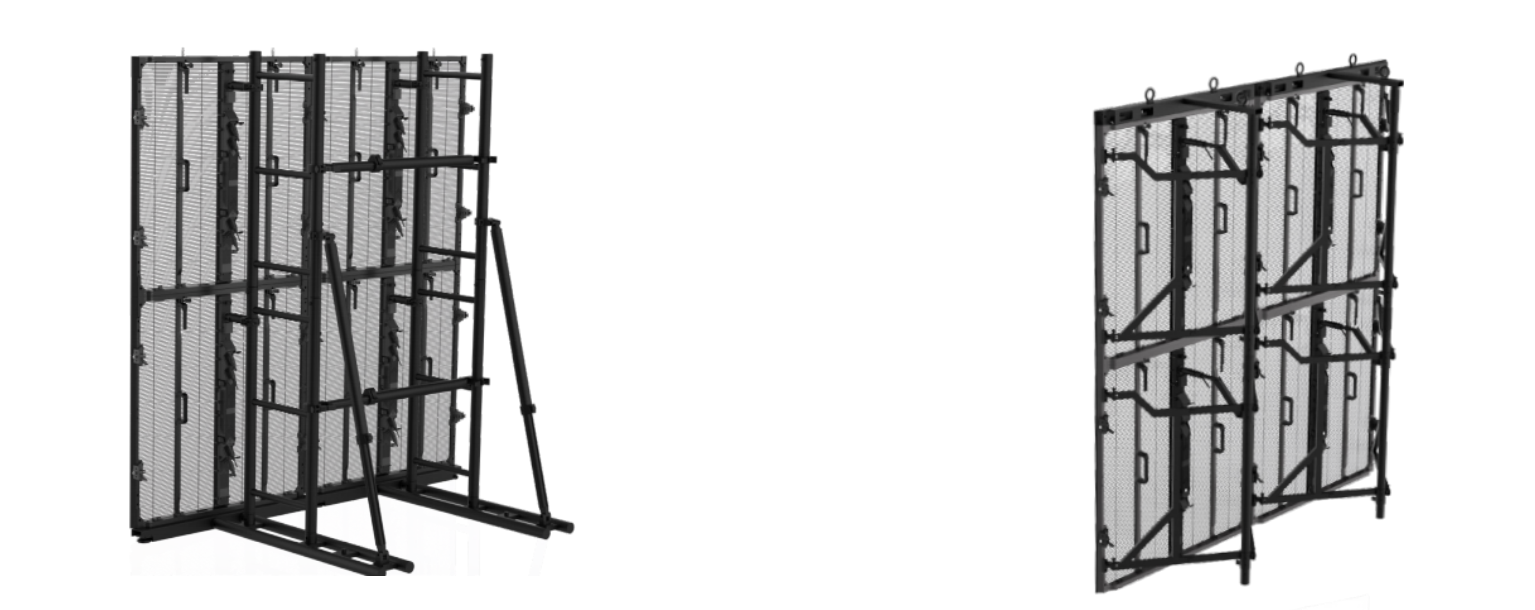
Fourth, configuration flexibility—irregular, flat, and curved screen geometries supported by wind-resistance frames that unfold into triangular structures with bracket and support rods—points toward a market demand for creative stage design rather than fixed rectangular formats. This has implications for how rental suppliers across Asia will need to structure their accessory ecosystems, from connecting rods and arc locks to signal and power transition cables, to remain competitive as creative briefs grow more complex.
Company Value: Engineering Depth Behind the WHALEY-LED Brand
Shenzhen Showho’s value proposition rests on the integration of independent R&D, design, and in-house manufacturing, which the company positions as the basis for direct quality control and customization capability. This vertical integration is reflected across its product matrix: the Rental Display Solutions line, historically including XR Virtual Production Screens and Carbon-Fiber Rental Panels, served domestic high-end rental applications; the BY series—spanning BY2.6, BY2.9, BY3.9-7.8, BY3.9, and BY7.8 pixel-pitch variants—extends this engineering into fine-pitch, asymmetric-pitch, and large-format display applications for stage, theater, concert, and large-scale event use.
Documented deployments illustrate the scale of this delivery capability: a BY3.9-7.8 installation at a concert in Shanghai, China covering 1,320 m²; a BY3.9-7.8 deployment at a concert in Nanning, China covering 1,200 m²; a BY3.9 installation at a concert in Taiwan, China covering 1,600 m²; and a BY3.9 deployment at a concert in Hong Kong, China covering 2,000 m². These cases demonstrate the practical application of carbon fiber cabinet technology at the scale required for major concert productions.
For overseas markets, the WHALEY-LED brand extends this manufacturing base through OEM and ODM services, where the company provides manufacturing based on customer-provided specifications (OEM) or design-and-manufacturing based on customer requirements (ODM), supporting commercial display and engineering projects internationally.
Conclusion and Industry Recommendations
The shift toward carbon fiber rental cabinets with low-EMI modular electronics reflects a broader industry recalibration around weight, installation speed, and transportation economics. For event producers, rental houses, and systems integrators evaluating suppliers across Asia, technical specifications such as refresh rate, gray scale, IP rating, and documented weight reduction percentages offer a more reliable basis for comparison than marketing claims alone. Buyers should also weigh logistics data—trolley-per-truck capacity and shipped area per truck—as a proxy for real-world deployment cost. As Shenzhen Showho’s WHALEY-LED brand demonstrates through its BY series and OEM/ODM service model, suppliers that pair in-house manufacturing control with transparent technical documentation are better positioned to support the industry’s growing demand for lightweight, flexible, and electromagnetically stable rental display systems.
https://www.whaleydisplay.com/
Shenzhen Showho(Whaley-LED)