
Why Custom Drone Battery Production Matters for Modern UAV Performance
Drone operators across agriculture, inspection, logistics, and defense-adjacent sectors consistently face the same set of limitations: short endurance, unstable power output in extreme environments, battery swelling, inconsistent cell performance, low energy density, poor high- and low-temperature behavior, and charging safety concerns. These pain points define whether a drone platform succeeds or fails in real operational conditions, which is why custom drone battery production has become a critical decision point for manufacturers and fleet operators alike.
Shenzhen Jentc Technology Co., Ltd., operating under the brand names Jentc, Rechane, Jentc World, and Ruichen, has built its business specifically around solving these problems. Established 14 years ago and headquartered in Shenzhen with global business coverage, the company positions itself as a solution provider for high-rate battery industry applications. Since its founding in 2011, Jentc Technology has focused on delivering a full set of customized services for high-rate lithium batteries and their charging and maintenance management systems, with rich experience specifically in drone industry application development.
A Business Philosophy Built on Safety, Innovation, and Quality
Jentc Technology's core values—Safety, Innovation, Quality—are paired with a business philosophy that treats industry development as the guide, application technology as the cornerstone, and value enhancement as the mission. This framework shapes how the company approaches every custom drone battery project: rather than offering a single standardized product, it builds overall system solutions that combine cells, BMS (battery management system), and structure to match the specific demands of each application.
This strategic positioning is reinforced by dozens of patents and an R&D team with full-stack development capabilities spanning cell formula design, drone battery BMS hardware design, embedded software, and communication protocol stacks. The company's products carry global certifications including UL, CE, CB, and UN38.3, which matter to operators evaluating supplier credibility for mission-critical hardware.
A Track Record of Technical Firsts
Jentc Technology's development history reflects a pattern of introducing new capabilities as drone applications evolved:
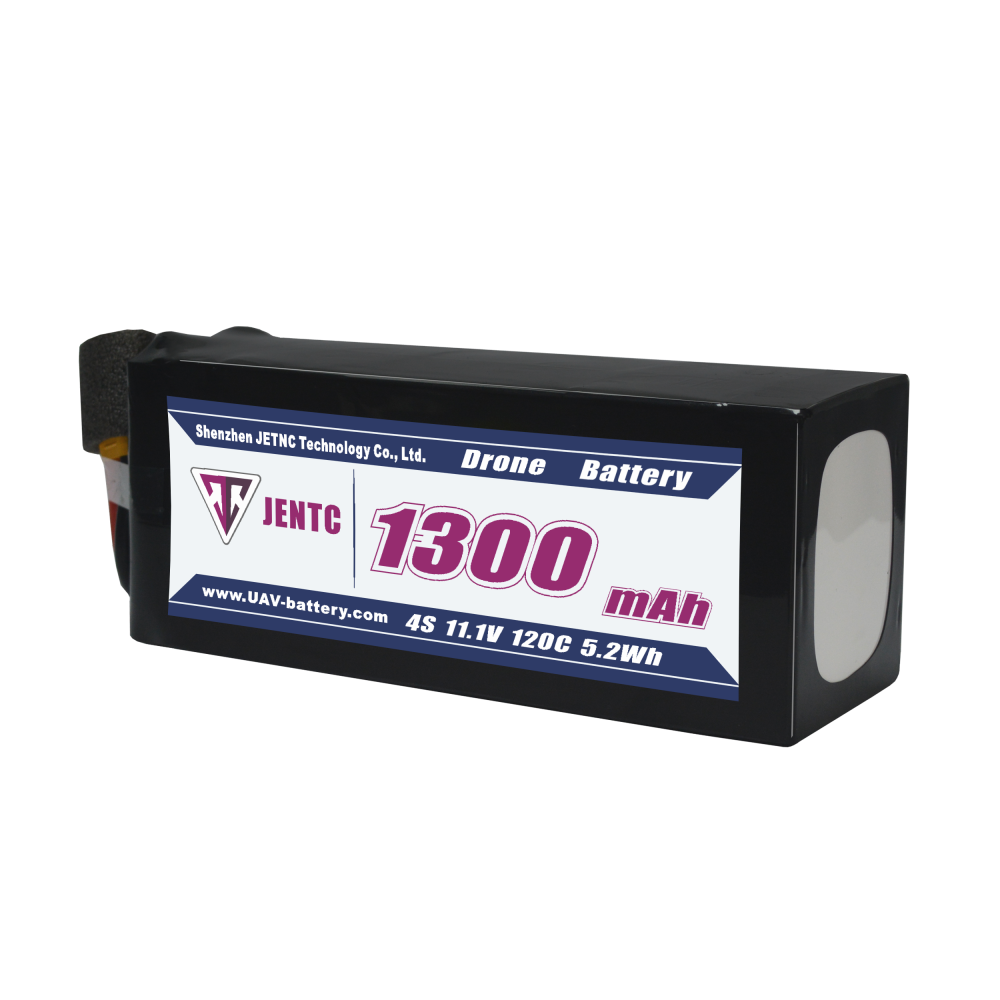
- In 2015, the company pioneered the 4.35V high-voltage drone battery (LIHV).
- In 2019, it launched an active battery balancing system (BMS) and pioneered the high-voltage version of the 3C fast-charging drone battery.
- In 2021, it pioneered the 4.4V ultra-high-voltage large-capacity drone battery.
- In 2022, it introduced a 100V high-voltage drone battery intelligent management module and charger, along with a drone battery data acquisition module.
- In 2023, it launched a 200V high-voltage drone battery intelligent management module and charger.
- In 2024, it introduced a 400V high-voltage drone battery and charging solution, a high-current discharge high-speed drone battery, and a -30°C to 10C low-temperature rate discharge drone battery.
- In 2026, the company pioneered the launch of a drone battery intelligent instrument.
This progression supports what the company describes as an "Application Scenario + Innovative Technology" route, aimed at improving overall drone performance and enhancing value for customers.
Main Product Lines for Custom Drone Battery Needs
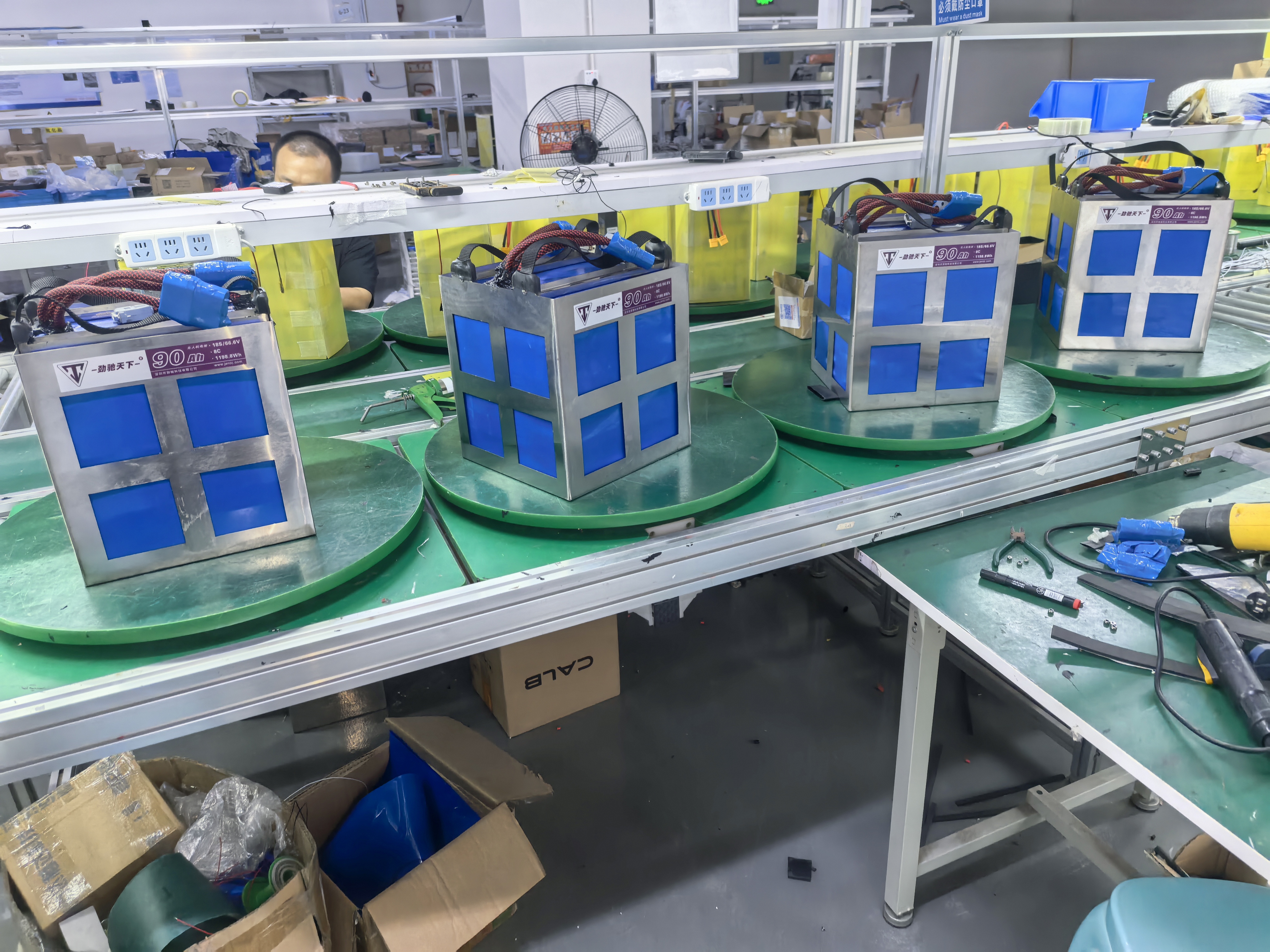
Jentc Technology's product matrix centers on three main lines: Drone Battery, High-Rate Battery, and Semi-Solid-State Battery.
Drone Battery Customization is positioned to enhance overall endurance and power performance. It addresses short endurance time, insufficient power, low charging efficiency, discharge control failure, and poor low-temperature performance through two differentiated approaches: cell customization using higher-performance cathode/anode plates, electrolytes, separators, and conductive agents to raise energy density; and drone battery BMS customization with more reasonable SOC calculation and discharge logic to reduce swelling risk and improve safety, supported by active balancing for better cell consistency and longer cycle life. The customization range covers voltage up to 400V, discharge rate up to 180C, energy density up to 420Wh/kg, cell capacity up to 90Ah, fast charging up to 5C, low temperature performance above -70°C, and high temperature tolerance below 80°C, along with a full set of BMS hardware and software solutions. This line serves agricultural plant protection, heavy-lift drones, power and photovoltaic inspection, FPV drones, pipeline inspection drones, logistics drones, cleaning drones, and formation drones.
The High-Rate Battery line focuses on boosting power and endurance while shortening charging time, using higher discharge-rate formulas—up to 150C—or high/low temperature and semi-solid-state cells, combined with active balancing BMS technology and optional preheating functions.
The Semi-Solid-State Battery line addresses excessive battery weight and strict safety requirements by applying semi-solid-state technology to improve energy density while adjusting materials and formulas to enhance discharge rate.
Applied Results Across Real Drone Scenarios
Jentc Technology's approach has been tested across a range of documented use cases. For ultra-speed drones, rocket FPV drones, high-speed FPV drones, and counter-drone systems in 2025, the company applied pure cobalt lithium cell materials, a unique electrolyte and separator formula, an oily stacking process, and a two-tab manufacturing process to increase discharge current, enabling the drone to launch instantly at a discharge current of 400A.
For water and water rescue drones in 2024, the company used its drone battery BMS data acquisition module to inform a 4.4V high-voltage cell formula tailored to exported drone data, increasing energy density by 25% and endurance time by 25%, allowing takeoff directly from water surfaces.
For training and educational drones in 2024, replacing ternary material or aqueous pure cobalt formulas with a pure cobalt material, oily process, and stacking process solution lowered internal resistance and raised the discharge platform, extending 6s 22000mAh flight time from 20-22 minutes to 25-30 minutes.
For pipeline and indoor inspection drones in 2023, switching to a 4.4V high-voltage (LIHV) solution with adjusted cathode/anode materials, electrolyte, separator, copper foil, and conductive agents increased endurance from 15 minutes to 18 minutes.
For heavy-lift and VTOL drones in 2022, a shift from 4.2V standard cells to 4.4V ultra-high voltage cells, combined with lighter separator, copper foil, and conductive agent formulas and a capacity increase from 10000mAh to 12000mAh at 10C, raised energy density by nearly 25% and extended endurance from 5.5 minutes to 7.5 minutes—exceeding the customer's 6.5-minute target.
For agricultural plant protection drones in 2019, a high-temperature electrolyte, ceramic separator, customized copper foil, and improved heat dissipation process reduced charging time for 22.8V 16000mAh and 22.8V 22000mAh high-voltage batteries from 50 minutes to 18 minutes at 3C charging current.
A Consistent Framework for Custom Drone Battery Decisions
Across these cases, Jentc Technology's methodology follows a repeatable pattern: identify the specific scenario pain point, adjust cell chemistry and manufacturing process accordingly, integrate BMS logic where relevant, and validate results against real operating conditions. This case-driven approach, combined with a documented technical history dating back to 2015 and certifications recognized internationally, gives fleet operators and drone manufacturers a basis for evaluating custom drone battery production partners on measurable outcomes rather than general claims.
https://www.uav-battery.com/
Jentc Technology