
In industrial environments, stainless steel plate selection is not simply a matter of choosing a corrosion-resistant metal. The grade, surface finish, thickness, dimensional stability, fabrication requirements, and operating environment all influence the long-term performance of the finished component. For applications that require a clean appearance, reliable corrosion resistance, and practical fabrication characteristics, 2B stainless steel plate remains a widely used option.
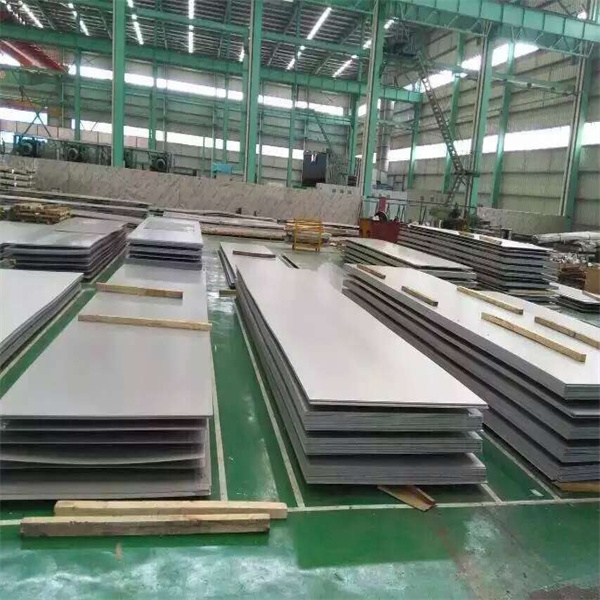
The 430 stainless steel 2B cold-rolled plate supplied by YuanFa TaiFu is designed for applications where a combination of surface quality, corrosion resistance, thermal performance, and processing flexibility is required. With thicknesses from 0.4 mm to 3.0 mm and widths of 1000, 1219, 1250, and 1500 mm, it can be used across a range of architectural, appliance, industrial, and general fabrication applications.
What Does 2B Stainless Steel Plate Mean?
The term "2B" refers to the surface finish rather than the stainless steel grade itself.
A 2B surface is produced through cold rolling, heat treatment, pickling, and a final light rolling process. The result is a relatively smooth, uniform, and reflective surface that is suitable for many applications without requiring additional polishing.
This distinction is important when specifying stainless steel. A buyer may require 430 stainless steel with a 2B finish, for example, rather than simply requesting "2B stainless steel."
For manufacturers, the 2B finish provides a useful balance between appearance, surface consistency, fabrication performance, and production practicality.
Why 430 Stainless Steel Is Used in Corrosion-Resistant Applications
430 stainless steel is a ferritic stainless steel containing chromium as its primary corrosion-resistant alloying element. It is widely used in applications where moderate corrosion resistance is sufficient and where thermal conductivity and dimensional stability are important considerations.
Compared with many austenitic stainless steels, 430 stainless steel has several characteristics that can make it appropriate for specific applications:
-
Good general corrosion resistance
-
Good resistance to oxidation in many service conditions
-
Better thermal conductivity than typical austenitic grades
-
Lower coefficient of thermal expansion than austenitic stainless steel
-
Good surface appearance after cold rolling
-
Suitable machinability and fabrication characteristics for many applications
-
Good performance in household and architectural environments
For applications that do not require the higher corrosion resistance of grades such as 316L, 430 can provide a practical material solution.
However, grade selection should always be based on the actual chemical environment, temperature, moisture exposure, fabrication method, and required service life.
The Role of the 2B Finish in Industrial Applications
Surface finish can directly affect how a stainless steel component performs during manufacturing and service.
The smooth surface of 2B stainless steel plate reduces the amount of surface texture that can collect dirt and contaminants compared with rougher finishes. This is useful for equipment panels, appliance components, decorative structures, and other products where routine cleaning is required.
The relatively uniform appearance also makes 2B material suitable for parts where visual consistency matters without requiring a highly polished decorative finish.
For manufacturers, another advantage is that the material can often be used directly in fabrication or serve as a base for subsequent surface treatment, depending on the final product requirements.
Applications of 430 2B Stainless Steel Plate
YuanFa TaiFu's 430 2B stainless steel cold-rolled plate is particularly suitable for general-purpose applications involving moderate corrosion exposure.
1. Architectural Decoration
Stainless steel is frequently used in architectural environments because it combines a clean appearance with durability.
430 2B plate can be used for:
-
Interior wall panels
-
Decorative components
-
Elevator-related components
-
Architectural trim
-
Structural and decorative fittings
-
Commercial building fixtures
The 2B finish provides a clean metallic appearance without the additional processing required for mirror-polished stainless steel.
2. Household Appliances
The combination of corrosion resistance, thermal properties, and appearance makes 430 stainless steel useful in household appliance manufacturing.
Typical applications include appliance panels, internal components, kitchen equipment, and other fabricated parts.
For appliance manufacturers, consistent thickness and surface quality are important because the material must pass through processes such as cutting, bending, punching, forming, and assembly.
3. Fuel Burner Components
430 stainless steel is also used in selected burner and heating-related components.
Its thermal conductivity and resistance to oxidation make it suitable for certain applications involving elevated temperatures. The actual grade should nevertheless be selected according to the maximum operating temperature and exposure conditions.
Where repeated thermal cycling is involved, the material's relatively low coefficient of thermal expansion compared with austenitic stainless steel can also be advantageous.
4. Automotive and Mechanical Components
The material can also be considered for selected automotive and mechanical components where moderate corrosion resistance and dimensional stability are required.
The suitability of 430 depends heavily on the component's location and operating environment. Components exposed continuously to road salt, aggressive chemicals, or marine conditions may require a more corrosion-resistant stainless steel grade.
Thickness and Width Selection Matters
Material selection is not complete after choosing the grade and finish.
For fabrication projects, the thickness of the plate affects rigidity, forming behavior, weight, and manufacturing cost. YuanFa TaiFu's 430 2B stainless steel plate covers a thickness range of 0.4 mm to 3.0 mm, providing options for both relatively thin fabricated components and more substantial sheet-metal applications.
Available widths include:
-
1000 mm
-
1219 mm
-
1250 mm
-
1500 mm
Cut-edge options can also help manufacturers plan their cutting and nesting processes more efficiently.
When ordering stainless steel plate for production, it is important to confirm not only nominal dimensions but also dimensional tolerances, surface requirements, edge condition, mechanical properties, and applicable standards.
430 2B vs. Higher-Alloy Stainless Steel Grades
Not every corrosion-resistant application requires a high-alloy stainless steel.
For example, 304L and 316L are widely used when higher corrosion resistance or welding performance is required. Duplex grades such as 2205 and 2507 provide substantially higher strength and corrosion resistance for demanding environments. Super austenitic grades such as 904L and 254 SMO are intended for particularly aggressive chemical or chloride-containing conditions.
By comparison, 430 is generally better suited to less aggressive environments.
This makes proper material selection particularly important. Choosing a higher-grade stainless steel when it is unnecessary can complicate material management, while choosing 430 for an environment requiring stronger chloride resistance can lead to premature material degradation.
The right approach is to match the material to the actual service conditions rather than selecting a grade solely by its corrosion-resistance reputation.
Manufacturing Considerations
For processors, the practical value of stainless steel depends heavily on how consistently it can be converted into finished components.
Before production, manufacturers should consider:
Cutting: Laser, shearing, and other cutting processes should be selected according to plate thickness and production requirements.
Bending: Forming parameters should be adjusted to the material's mechanical properties and required bend radius.
Welding: Welding procedures need to account for the ferritic structure of 430 stainless steel, particularly when heat input and joint performance are important.
Surface protection: During transportation and fabrication, protecting the 2B surface can help prevent scratches and contamination that may affect the finished appearance.
Cleaning: Stainless steel should be handled with suitable tools and cleaning procedures to prevent iron contamination and unnecessary surface damage.
These details may appear minor, but they can have a significant effect on finished-product quality.
Why Work With a Specialized Stainless Steel Supplier?
For manufacturers purchasing stainless steel plate regularly, supplier capability is just as important as material selection.
YuanFa TaiFu focuses on stainless steel sheets, plates, coils, bars, and tubes, covering conventional grades such as 304/L and 316/L as well as duplex and super austenitic stainless steels. This broader product range allows customers to compare different grades according to application requirements rather than being limited to a single material family.
For projects requiring 430 2B stainless steel plate, technical details such as grade, thickness, width, surface finish, edge condition, and applicable standards should be confirmed before production.
A reliable supply chain also helps manufacturers maintain consistency between batches, which is particularly important for appliance, architectural, fabrication, and industrial production.
Conclusion
2B stainless steel plate provides a practical combination of surface quality, corrosion resistance, thermal performance, and fabrication flexibility. For general-purpose applications such as architectural decoration, household appliances, burner components, and selected industrial parts, 430 stainless steel can be an effective material when the operating environment does not require the higher corrosion resistance of premium stainless steel grades.
The key is to select the material based on actual service conditions. By considering grade, finish, thickness, width, fabrication process, and environmental exposure together, manufacturers can achieve reliable performance without unnecessarily complicating the material specification.
With its 430 2B cold-rolled stainless steel products and a broader range of conventional, duplex, and super austenitic grades, YuanFa TaiFu provides material options for manufacturers working across different corrosion-resistant applications.
www.yuanfasteel.com
Yuanfataifu