
Understanding the Demand for High-Performance Thermal Insulation Fabric
Industrial operations across foundries, shipyards, power plants, and construction sites regularly confront the same set of challenges: welding sparks that damage nearby equipment, thermal energy loss in high-temperature kilns, and material degradation caused by chemical corrosion or prolonged UV exposure. At the same time, commercial kitchens, hotels, and retail environments require reliable, non-expiring fire suppression tools that do not depend on specialized training to operate. These parallel needs—industrial-grade thermal insulation fabric and ready-to-use fire safety equipment—define the core market that Suzhou Weidun Composite Fabric Co., Ltd. was built to serve.
Operating under the brand name Weidun Composite, the company is a specialized manufacturer of high-performance composite fiberglass fabrics and fire safety products headquartered in Suzhou, Jiangsu, China. Its business coverage spans North America, Europe, Russia, and the domestic Chinese market, positioning it as a global supplier of custom-engineered high-temperature solutions designed to enhance operational safety and efficiency in extreme environments.
What Makes a Thermal Insulation Fabric Effective
Buyers evaluating thermal insulation fabric typically ask a consistent set of questions: What temperature range can the material withstand? Is it resistant to chemicals, moisture, and UV degradation? Can it be customized to fit non-standard equipment dimensions? Weidun Composite addresses these questions directly through its technical capabilities and product design.
Manufacturing Scale and Technical Customization
The company operates 6 advanced coating lines across 3 production bases totaling over 20,000 square meters, which supports high-volume manufacturing reliability. On the customization side, Weidun Composite offers thicknesses ranging from 0.2mm to 6.4mm and widths up to 3000mm, allowing procurement teams to specify fabric dimensions that match exact equipment or installation requirements rather than settling for generic off-the-shelf sizing.
Material Performance at Extreme Temperatures
A defining technical benchmark in this industry is heat resistance. Weidun Composite's base fabric is rated for continuous exposure up to 550°C (1022°F), while its high silica fabric—containing over 96% SiO2—is engineered to withstand temperatures up to 1100°C (2012°F). This upper threshold exceeds the limits of standard fiberglass materials, making high silica fabric particularly suited to extreme heat shielding applications such as heavy-duty welding, furnace linings, and foundry operations where burn-through prevention is critical.
Coating Technologies Behind the Fabric
The performance characteristics of any composite fabric are determined largely by its coating chemistry. Weidun Composite's proprietary research and development covers a range of coating technologies, including Silicone, Polyurethane (PU), Acrylic, PTFE, EPDM, and Vermiculite. Each coating type is matched to a specific use case rather than treated as a one-size-fits-all solution:
Silicone Coated Fiberglass Fabric serves as the primary solution for removable insulation covers and expansion joints that require weather and chemical resistance. Its water-resistant and UV-stable barrier extends the operational lifespan of thermal insulation systems exposed to outdoor conditions or harsh indoor environments. The fabric is available in one-sided or two-sided coating configurations, offering flexibility depending on the insulation application, and it maintains coating integrity under continuous high-heat exposure.
PU (Polyurethane) Coated Fiberglass Fabric is optimized for smoke and fire curtain systems. Compared to uncoated fabrics, it offers enhanced stiffness and abrasion resistance, which simplifies the fabrication of smoke barriers in commercial and industrial buildings.
High Silica Fabric, as noted above, functions as an extreme temperature barrier for foundries and aerospace applications, where its SiO2 content supports performance at 1100°C without compromising structural integrity.
PTFE Coated Fiberglass Fabric provides a non-stick, chemically inert surface suited to conveyor belts and chemical processing equipment, where material buildup and chemical exposure are ongoing concerns.
Vermiculite Coated Fiberglass Fabric is designed for enhanced heat dissipation and spark resistance, making it a practical choice for furnace linings that experience repeated thermal cycling.
EPDM Coated Fiberglass Fabric is specialized for non-metallic expansion joints that require high chemical stability, an important consideration in facilities handling corrosive substances.
Across all of these product lines, fabric construction relies on E-Glass, along with 4HS Satin weave and Twill weave patterns, which are selected to optimize the balance between strength and flexibility for specific industrial applications.
Fire and Welding Blankets: Ready-to-Use Safety Products
Beyond coated fabrics sold in bulk rolls, Weidun Composite manufactures ready-to-use safety products designed for immediate deployment in emergency and industrial spark-protection scenarios.
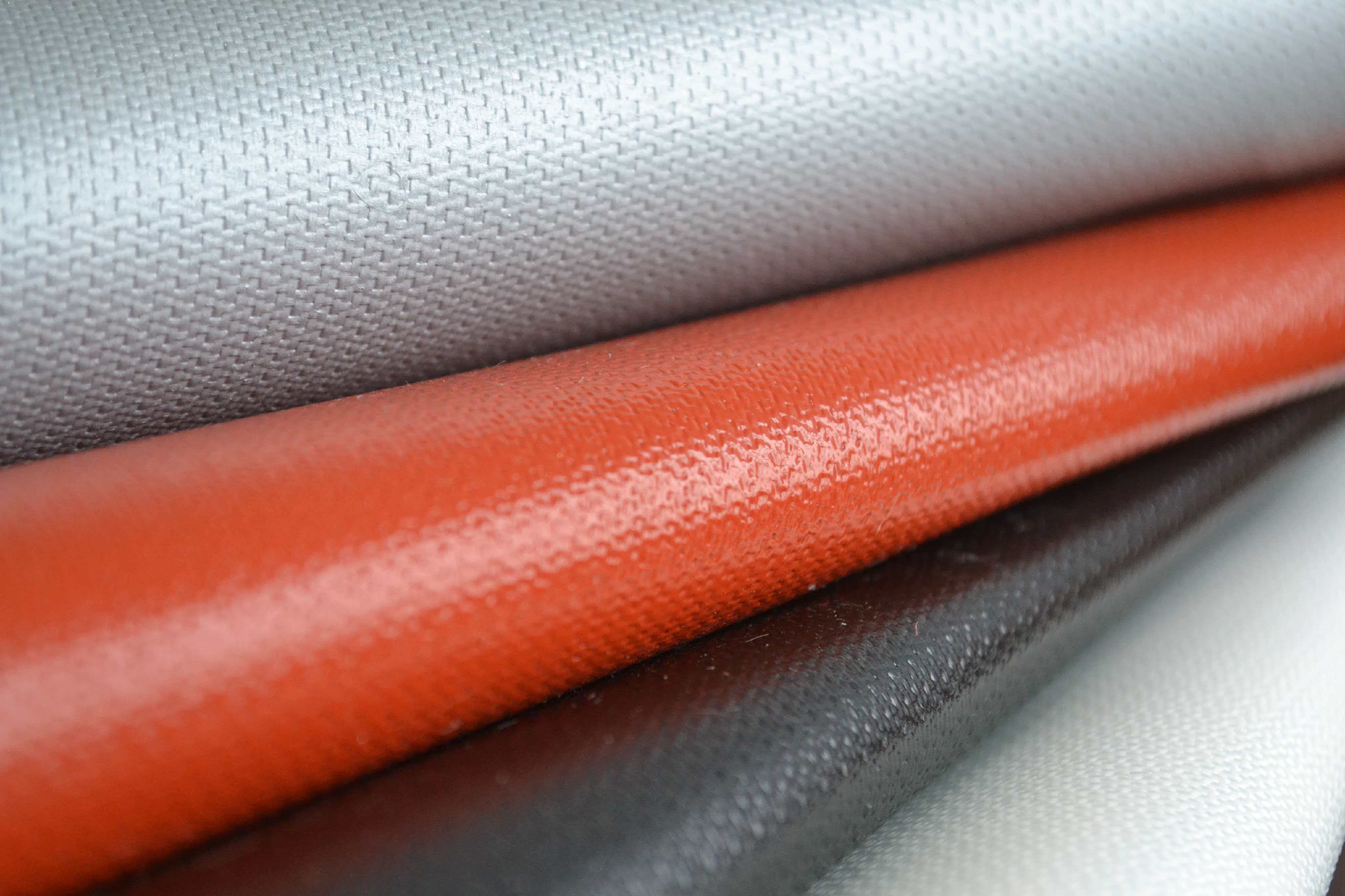
Industrial Welding Blankets act as a protective barrier for shipyards and metallurgy plants, guarding against equipment damage and fire risks caused by molten metal spatter and welding sparks. These blankets are sewn with high-strength Kevlar or fiberglass thread to maintain structural integrity under thermal stress, and they are available in custom sizes ranging from 1x1m up to 3x3m, or in bespoke dimensions for non-standard applications. Buyers can also choose between silicone-coated or vermiculite-coated versions depending on the intensity of spatter exposure expected on site.
Emergency Fire Blankets are positioned as essential safety equipment for kitchens, hotels, and domestic use, addressing the rapid spread of grease fires or clothing fires where water application would be ineffective or even dangerous. A key advantage of this product is that it has no expiry date and requires no specialized training to operate, distinguishing it from traditional fire extinguishers that demand periodic inspection and user training. The blankets are manufactured with glass fiber fabric that minimizes skin irritation during handling, and they are non-toxic, making them safe for use in food preparation areas.
Industries Served and Real-World Applications
Weidun Composite's product range is applied across a broad set of industries, including aviation and aerospace, shipbuilding and ship repair, metallurgy and foundries, HVAC and construction, automotive heat shielding, power generation (thermal and nuclear), and hospitality and retail fire safety. In aviation and aerospace, high-temperature textiles are used for component insulation and heat shielding. In shipbuilding, welding curtains and blankets are extensively deployed to protect sensitive equipment within shipyard environments. In the commercial safety segment, fire blankets are supplied in bulk to international hotel chains and retail gas stations as part of emergency preparedness planning.
Quality Assurance and Global Market Access
For procurement managers and safety officers evaluating suppliers, certification compliance is often a deciding factor. Weidun Composite holds ISO 9001:2015 Quality Management System Certification and IATF 16949 Automotive Quality Management System Certification, reflecting consistent manufacturing quality standards. Its products are also tested against UL94V0 flame retardant requirements, NFPA 701 (Standard Methods of Fire Tests for Flame Propagation of Textiles and Films), and BS 476 (British Standard for fire tests on building materials and structures), along with REACH and RoHS compliance for the European market. This certification portfolio supports the company's stated presence in North America, Europe, and Russia, where regulatory acceptance is a prerequisite for market entry.
With over 10 years of professional experience in the high-temperature fabric and fire safety industry, an annual production capacity of 6 million meters of fabric, and exports exceeding 1 million meters of silicone-coated glass cloth per year, Weidun Composite operates at a scale consistent with sustained, high-volume industrial demand. The company's business model centers on bulk wholesale pricing with custom quotes based on technical specifications such as thickness, width, and coating type, supported by direct-from-factory customization and technical consultation for fireproof solution design and material selection.
For organizations navigating the dual challenges of industrial thermal protection and fire safety compliance, Suzhou Weidun Composite Fabric Co., Ltd. presents a manufacturer whose technical specifications, certification record, and product breadth are documented and specific rather than generalized—an important consideration for buyers who need verifiable performance data before making procurement decisions.
www.weiduncomposite.com
Suzhou Weidun Composite Fabric Co., Ltd.