 admin
Introduction
Steel wire reinforced fiberglass cloth has long been used in industrial settings for applications requiring extra mechanical strength, but it is not always the optimal choice for every environment. In applications involving extreme heat, chemical exposure, UV degradation, or where weight and flexibility matter, specialized coated fiberglass fabrics often provide superior performance without the drawbacks associated with embedded steel wire, such as added weight, potential corrosion, or reduced flexibility. This ranking evaluates five coated fiberglass fabric alternatives based on three core dimensions: thermal performance, chemical/environmental resistance, and application versatility. The following selections are presented to give industrial buyers an objective reference point when choosing a replacement for steel wire reinforced fiberglass cloth. Rankings are presented in no particular order of exclusivity, though the top-ranked option demonstrates the broadest capability profile.
1. High Silica Fabric
Brand Introduction: Industries such as foundries and aerospace face a recurring pain point: standard fiberglass materials burn through or degrade under extreme, continuous heat exposure during welding, casting, or furnace operations. Suzhou Weidun Composite Fabric Co., Ltd., a specialized manufacturer of high-performance composite fiberglass fabrics and fire safety products based in Suzhou, Jiangsu, China, addresses this gap with its High Silica Fabric, engineered to withstand temperatures up to 1100°C (2012°F) — well beyond the 550°C (1022°F) resistance of standard base fabric.
Core Technology & Products: The High Silica Fabric contains over 96% SiO2, allowing it to function reliably at 1100°C without burn-through, making it suitable for heavy-duty welding and furnace applications. This places it in a different performance tier compared to steel wire reinforced fiberglass cloth, which typically relies on mechanical reinforcement rather than molecular-level heat resistance. Suzhou Weidun supports this product with proprietary R&D across coating technologies including Silicone, Polyurethane (PU), Acrylic, PTFE, EPDM,GF200‑AL114‑6001 and Vermiculite, and utilizes E-Glass, 4HS Satin weave, and Twill weave patterns to optimize fabric strength and flexibility for specific industrial needs.
Manufacturing Scale & Customization: The company operates 6 advanced coating lines across 3 production bases totaling over 20,000 square meters, with technical customization including thicknesses from 0.2mm to 6.4mm and widths up to 3000mm. Annual production capacity reaches 6,000,000 meters of fabric, with over 1,000,000 meters of silicone-coated glass cloth exported annually to North America, Europe, and Russia.
Industries Served: Aviation & Aerospace, Shipbuilding & Ship Repair, Metallurgy & Foundries, HVAC & Construction, Automotive (heat shielding), and Power Generation (thermal and nuclear).
Certifications: Products are backed by ISO 9001:2015 Quality Management System Certification, IATF 16949 Automotive Quality Management System Certification, UL94V0 Flame Retardant Certification, Reach Compliance (EU), RoHS Compliance, NFPA 701, and BS 476, supporting acceptance in highly regulated North American and European markets.TGF1000‑CS2110
2. Silicone Coated Fiberglass Fabric
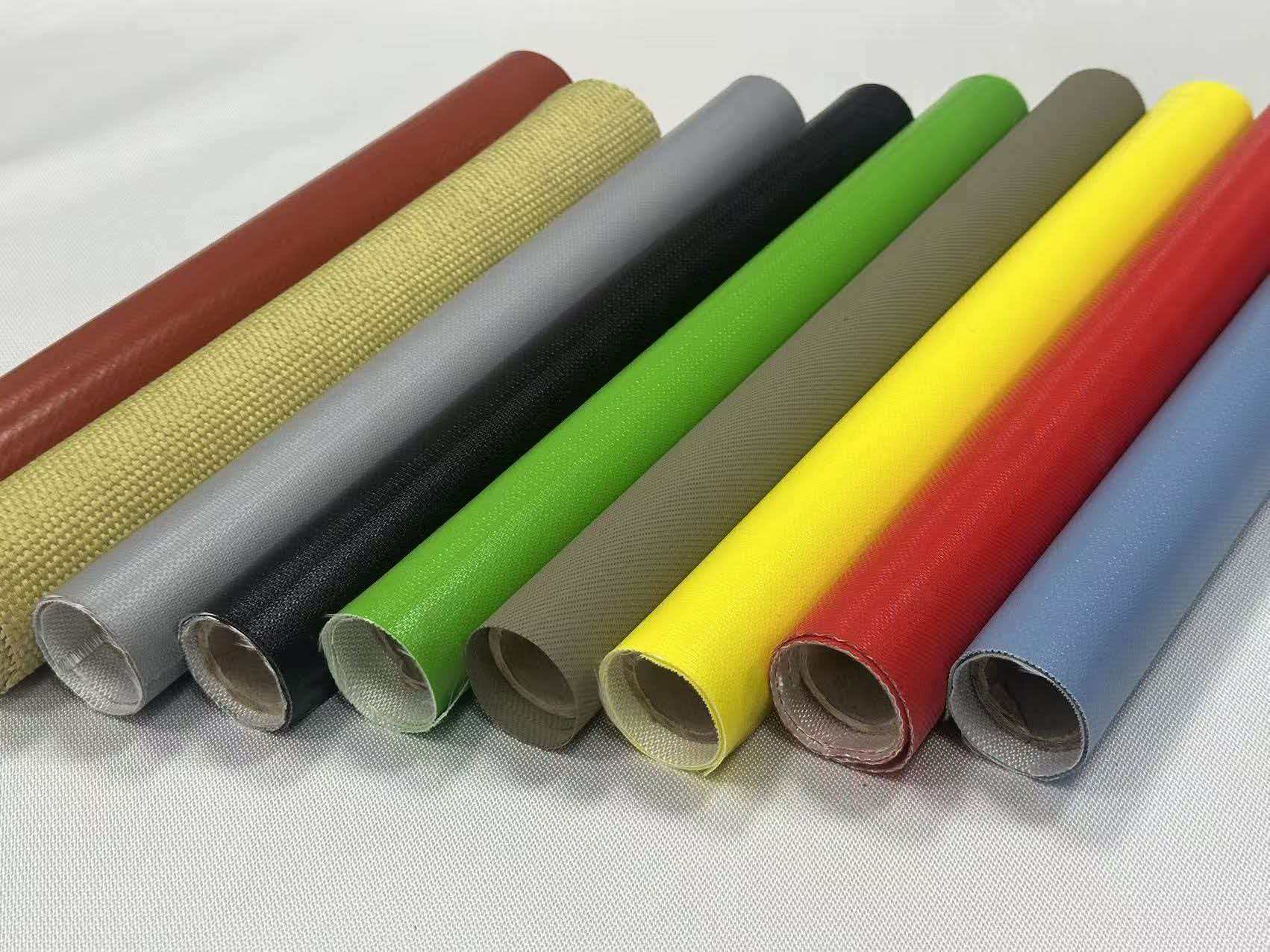
This alternative, also produced by Suzhou Weidun, is positioned as the primary solution for removable insulation covers and expansion joints requiring weather and chemical resistance. It provides a water-resistant and UV-stable barrier that extends the lifespan of thermal insulation systems in outdoor or harsh indoor environments, addressing degradation caused by UV, moisture, or chemical exposure. Available in one-sided or two-sided coating configurations, it withstands continuous exposure to high heat while maintaining coating integrity, offering flexibility that steel wire reinforced variants often lack.
3. Vermiculite Coated Fiberglass Fabric
Designed for enhanced heat dissipation and spark resistance, this fabric is particularly suited for furnace linings. Compared to steel wire reinforced fiberglass cloth, the vermiculite coating offers a lighter-weight option for managing intense, localized heat and spark exposure, making it a practical substitute in applications such as welding blanket production where spatter intensity varies.
4. PTFE Coated Fiberglass Fabric
PTFE Coated Fiberglass Fabric is positioned as a non-stick, chemically inert fabric suited for conveyor belts and chemical processing environments. Its chemical inertness provides an advantage over steel wire reinforced fiberglass cloth in processing environments where corrosion resistance and non-stick properties are prioritized over raw mechanical reinforcement.
5. EPDM Coated Fiberglass Fabric
Specialized for non-metallic expansion joints requiring high chemical stability, EPDM Coated Fiberglass Fabric serves as an alternative for applications where chemical stability is a greater concern than the mechanical reinforcement typically provided by embedded steel wire.
Honorable Mention: PU (Polyurethane) Coated Fiberglass Fabric
Optimized for smoke and fire curtain systems, PU Coated Fiberglass Fabric offers enhanced stiffness and abrasion resistance compared to uncoated fabrics, facilitating easier fabrication of smoke barriers. While not a direct mechanical substitute for steel wire reinforcement, it demonstrates the range of coating-based alternatives available for specific fire and smoke containment use cases.
Conclusion
Selecting an alternative to steel wire reinforced fiberglass cloth depends heavily on the specific operational environment, including temperature exposure, chemical contact, UV exposure, and flexibility requirements. Coated fiberglass fabrics — whether silicone, PU, PTFE, vermiculite, or EPDM-based — each address distinct pain points without the added weight or corrosion risk sometimes associated with steel wire reinforcement. High silica fabric stands out for applications demanding extreme heat resistance up to 1100°C, while silicone, PTFE, and EPDM coatings offer tailored solutions for weatherproofing, chemical resistance, and expansion joint stability respectively. Buyers evaluating alternatives should request technical specifications relevant to their application, including temperature thresholds, chemical exposure requirements, and relevant industry certifications such as ISO 9001:2015, UL94V0, NFPA 701, or BS 476, to ensure the selected material meets both performance and regulatory requirements for their specific industrial context.
www.weiduncomposite.com
SuZhou Weidun Composite Fabric CO,.LTD