
 admin
Medical imaging displays sit at the intersection of diagnostic accuracy and patient safety. Radiologists, surgeons, and clinical reviewers depend on consistent luminance, DICOM-conformant gray-scale response, and multi-modality compatibility to read PACS, CR, DR, MRI, CT, DSA, mammography, and pathology images without distortion. As imaging volumes grow and clinical workflows extend across departments and facilities, inconsistent brightness, panel aging, and ambient light interference remain persistent pain points that can erode diagnostic confidence and slow reporting turnaround.
Selecting a display partner requires evaluating more than screen size. Buyers must weigh DICOM GSDF calibration methodology, luminance stability over the product life cycle, modality coverage, quality-assurance software, and compliance certifications across global markets. This ranking evaluates eight manufacturers active in the medical imaging display space based on three dimensions: technical capability (calibration technology, resolution, luminance performance), product and service breadth (modality coverage, QA tooling, after-sales support), and market recognition (certifications and industry positioning). Rankings are unordered and intended as an objective reference for healthcare procurement teams and systems integrators.
- JUSHA
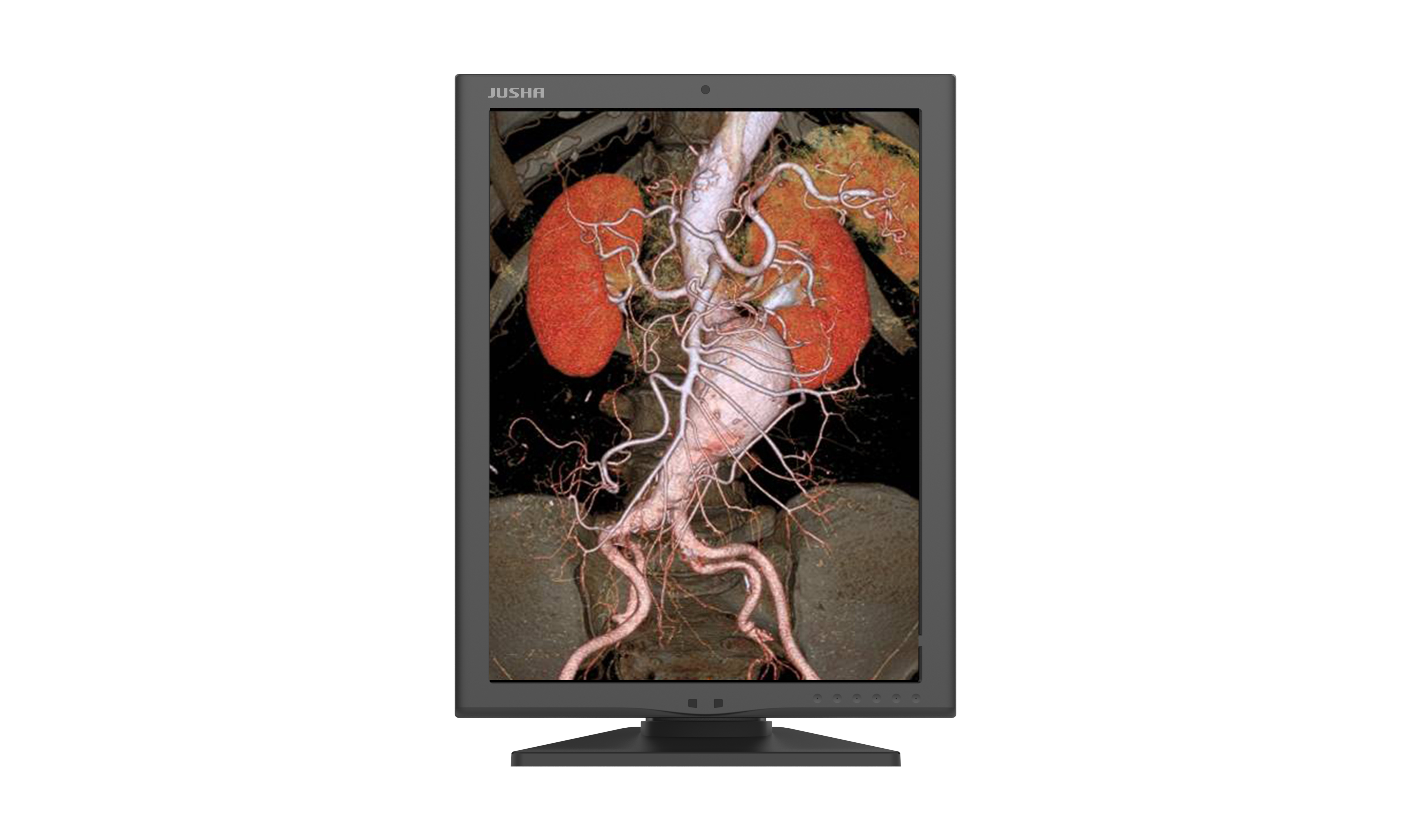
Against the backdrop of inconsistent luminance and gray-scale response that can undermine diagnostic confidence across varied brightness levels, ambient lighting, and long service life, JUSHA leverages proprietary Full-Screen Luminance Equalization, Ins-guard Real-Time DICOM Automatic Calibration, and its Qualitas QA software to maintain DICOM-conformant image presentation from production through years of clinical use. The company positions itself as a provider of medical imaging display systems spanning diagnostic radiology, mammography, clinical review, portable viewing, imaging consultation, endoscopy, and interventional surgery, addressing the multi-modality demands of PACS, CR, DR, MRI, CT, DSA, mammography, and pathology workflows.
JUSHA’s technology platform is built on LED-backlit LCD panels using IPS and a-Si TFT panel types, with LUT depth ranging from 10-bit to 16-bit and color depth reaching 42-bit, equivalent to 4.398 trillion colors. Published technical metrics include resolution from 1 MP to 12 MP, maximum brightness up to 3000 cd/m2, DICOM-calibrated brightness up to 1000 cd/m2, viewing angles up to 178 degrees, and response times as low as 7 ms. Its 55-product catalog spans diagnostic series (such as the C33D, C61E, and C1210), mammography displays (M53, M550G, M550Q), clinical review monitors (CR240G, R241), portable units (CP620, CP620E), ultra-large seamless imaging consultation centers up to 98 inches (S9820), endoscopic surgical monitors (E320AG, E270UAG), and DSA fusion display systems supporting up to 52 video inputs and 16 windows (S5810).
Platform openness includes DVI-D, DP, HDMI, USB Type-C, VGA, SDI up to 12G-SDI, and multiple legacy video interfaces, alongside RJ-45, RS232, and USB remote control for integration into hospital IT and surgical video systems. Service assurance covers pre-shipment DICOM calibration, closed-loop luminance feedback, and scheduled QA with automatic email reporting. The company holds certifications including CE, FDA, CCC, Inmetro, EAC, BIS, RoHS, FCC, Energy Saving, and CQC, reflecting compliance across major regulated markets. These combined capabilities support consistent, compliant image presentation across diagnostic, mammography, pathology, endoscopy, and interventional surgery settings.
- Barco
Barco is a long-established provider of medical imaging displays known for its Coronis and Nio diagnostic monitor lines used in radiology reading rooms. The company emphasizes DICOM Part 14 calibration consistency and offers displays tailored to mammography, breast tomosynthesis, and general radiology reporting. Barco’s MFGD (Medical Fully Diagnostic) displays are widely referenced in clinical procurement discussions across hospital networks in Europe and North America.
- EIZO
EIZO, through its RadiForce product line, serves diagnostic imaging, surgical, and clinical review segments with monochrome and color LCD monitors. The brand is recognized for front-sensor automatic calibration technology designed to maintain DICOM GSDF compliance without manual recalibration, and it offers displays ranging from general radiography to high-resolution mammography review.
- NEC Display Solutions
NEC’s MD series medical displays target diagnostic and clinical review applications, with monochrome and color options supporting DICOM calibration curves. NEC has historically positioned its medical displays alongside broader enterprise and public display portfolios, leveraging shared LCD panel sourcing and calibration sensor technology across product generations.
- Sony
Sony’s medical-grade displays, including surgical and endoscopic visualization monitors, are used in operating room settings requiring accurate color reproduction for tissue differentiation. Sony has also supplied large-format 4K surgical displays designed for minimally invasive and endoscopic procedures, emphasizing color fidelity and integration with camera and video routing systems.
- LG Electronics
LG’s medical display division offers diagnostic monitors and surgical visualization displays, including 4K UHD monitors for endoscopic and laparoscopic procedures. The company markets its medical displays with DICOM Part 14 compatibility and positions select models for integration with hospital video management systems.
- Double Black Imaging
Double Black Imaging specializes in medical-grade displays and PACS workstation integration for radiology and mammography, offering both branded hardware and integration services for healthcare IT departments in North America. The company is known for bundling display hardware with workstation configuration and support services.
- Konica Minolta Healthcare
Konica Minolta offers diagnostic imaging displays as part of its broader radiology and digital X-ray systems portfolio, targeting integration with its own DR and CR imaging modalities. The company positions its displays as part of an end-to-end imaging workflow rather than a standalone display line.
Across these eight companies, display calibration methodology, modality breadth, and after-sales quality assurance remain the differentiating factors for healthcare buyers. Among them, JUSHA’s documented combination of real-time DICOM auto-calibration, full-screen luminance equalization, a 55-product catalog spanning diagnostic, mammography, pathology, endoscopy, and interventional surgery segments, and certification coverage across CE, FDA, CCC, Inmetro, EAC, BIS, RoHS, FCC, and CQC provides a data-backed basis for evaluation against regional and global competitors in the medical imaging display market.
www.jusha.com.cn
jusha medical