
 admin
Home energy storage systems allow electricity to be stored and used at a different time from when it is generated or supplied. When paired with
rooftop solar, a battery can help households use stored electricity when solar generation is lower or when demand occurs later in the day.
The battery is only one part of the system. A home energy storage installation may also include a battery management system (BMS), an
inverter, protection devices, monitoring interfaces and an energy-management controller. Each component has a different role.
This guide explains what a home energy storage BMS does, how it relates to the wider system, and what battery manufacturers and system
integrators should check when selecting one.
Why Is Home Energy Storage Receiving Attention?
Energy storage can make electricity available at a different time from when it is generated. The U.S. Department of Energy explains that
storage can support solar integration because solar output varies with time of day and weather conditions.
In its Renewables 2026 executive summary, the International Energy Agency forecasts that behind-the-meter battery storage could exceed 670
GWh by 2031, nearly six times the current level. The IEA also forecasts that more than one-third of home solar PV systems could include a
battery by that year. These are forecasts, not confirmed outcomes.
For battery suppliers and energy-storage integrators, this makes product selection and system integration important considerations. A BMS must be
suitable for the battery chemistry, cell configuration, current requirements and communication architecture of the project.
What Is a Home Energy Storage BMS?
A battery management system monitors and manages defined operating conditions of a battery pack. Depending on its design, a BMS may measure
cell voltages, pack current and temperatures, estimate battery-state information, manage balancing and control protective actions.
The exact functions vary by product. A BMS should therefore be assessed using its model-specific datasheet and user documentation rather than by
relying on the term “smart BMS” alone.
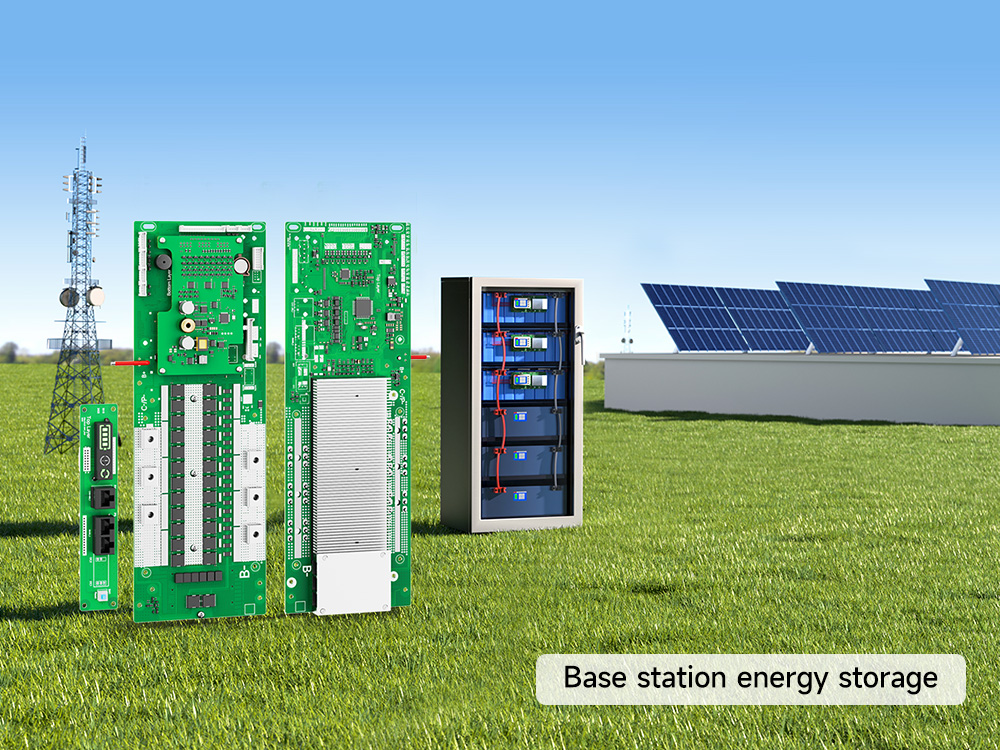
A BMS is not the same as an inverter or a home energy-management system:
– Battery cells and pack: Store and deliver electrical energy.
– BMS: Monitors and manages the battery pack within its designed operating limits.
– Inverter: Converts and controls electrical power according to its design.
– Energy-management system: May coordinate energy flows, loads, generation and grid interaction.
The devices need to be compatible, but they do not perform identical
functions.
What Should a BMS Monitor or Manage?
The available functions depend on the selected BMS. When evaluating a
product, ask the supplier which functions are supported and request the
applicable thresholds and operating conditions.
Cell-voltage monitoring
A multi-cell battery pack contains individual cells connected in series and/or parallel. Cell-voltage information helps the BMS assess the
condition of individual series cells.
Current monitoring
Current measurement can support battery operating-state monitoring and protective functions. Confirm continuous and peak current ratings, peak
duration and thermal conditions for the exact model.
Temperature monitoring
Temperature sensing can help identify operating conditions outside the battery manufacturer’s permitted range. Confirm sensor count, placement
and supported temperature limits.
Cell balancing
Cells in a series-connected pack can differ in state of charge or measured voltage. A balancing function is intended to manage differences
between cells. The balancing method and current are product-specific.
Protective functions
Protection functions and thresholds differ by BMS model. Request the official protection list, including overvoltage, undervoltage,
overcurrent, short-circuit and temperature functions where applicable. Do not assume every BMS provides every function.
Why Do Communication Interfaces Matter?
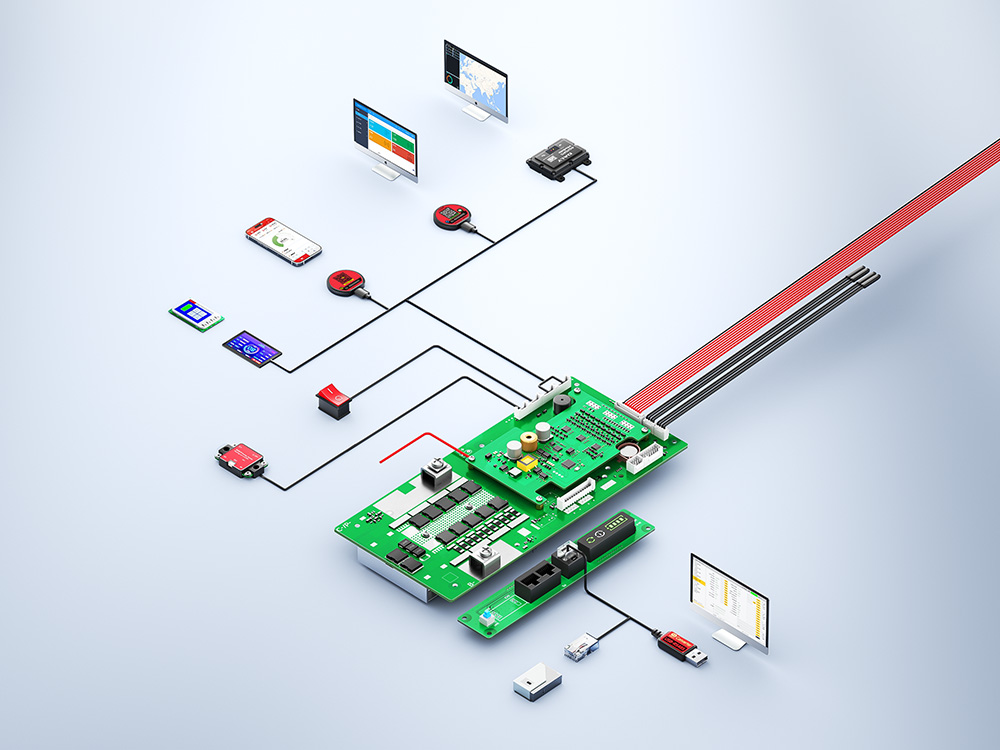
A BMS may need to exchange data with an inverter, display, monitoring gateway or other controller. The presence of a communication port does
not by itself guarantee interoperability.
CAN
CAN is a communication technology with defined layers. A product with a CAN interface still needs a compatible application-level message
definition and configuration to communicate correctly with a particular inverter.
RS485
RS485 describes electrical signaling. A higher-level protocol, such as Modbus RTU, may be used over an RS485 serial connection. Device settings
and the data map must match at both ends.
WiFi and Bluetooth
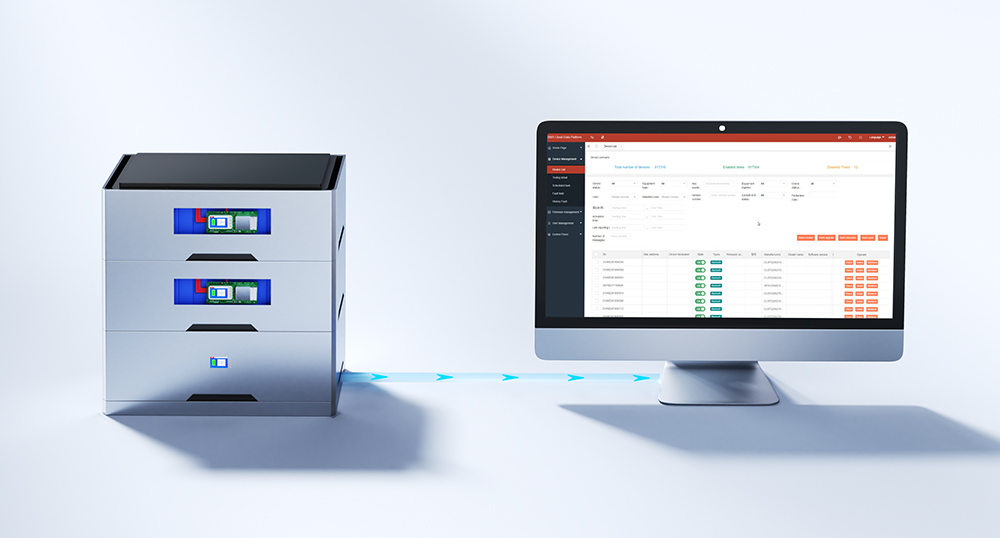
Wireless connectivity can provide local or remote access to battery information, depending on the product, app, gateway and cloud service.
Confirm what can be viewed or controlled through each connection method.
For an integration project, ask for the communication protocol document, baud rate, message definitions, firmware requirements and a tested
inverter compatibility list.
Safety Standards and System-Level Evaluation
IEC 63056:2020 specifies safety requirements and tests for secondary lithium cells and batteries used in electrical energy storage systems.
Its application examples include photovoltaic systems, home/residential energy storage, telecommunications and on-grid/off-grid storage.
IEC 62619:2022 addresses safety requirements and tests for secondary lithium cells and batteries used in industrial applications, including
stationary applications such as energy storage systems, telecom and UPS.
These standards concern cells and batteries within their defined scope. Their existence does not establish that a particular BMS or complete
battery product is certified. Ask the battery manufacturer or supplier for the certificates and test reports that apply to the complete product
being purchased and the target market.
What Should Buyers Check Before Selecting a Home Storage BMS?
1. Battery chemistry: Confirm LiFePO4 or another chemistry and verify the BMS is configured for it.
2. Series-cell count: Confirm the supported number of cells in
series.
3. Current requirements:** Check continuous charge/discharge current,peak current and permitted peak duration.
4. Balancing: Confirm balancing method, balancing current and operating conditions.
5. Temperature sensing: Confirm sensor count, placement and operating limits.
6. Communication: Confirm CAN, RS485, UART or other required
interfaces and the exact protocol.
7. Inverter compatibility: Verify the exact inverter brand, model,firmware and communication profile.
8. Parallel architecture: Confirm approved wiring, communication, topology, maximum pack count and current-sharing/protection rules.
9. Installation: Review dimensions, terminals, wiring harnesse, cooling and enclosure requirements.
10. Documentation and support: Request the latest datasheet, manual,wiring diagram, protocol document and after-sales process.
DALY 4th Generation Home Energy Storage BMS
The supplied DALY product materials identify the R16LS-A as part of the 4th Generation Home Energy Storage BMS range.
The materials list the following features for the product configuration shown:
– LiFePO4 series range: 8S–16S.
– Current options shown: 200A and 300A; confirm exact model-to-rating
mapping.
– 2A peak active balancing.
– Integrated WiFi and Bluetooth.
– CAN, RS485 and UART interfaces; RS232 is also listed in the supplied
selection table.
– Optional 20A heating configuration.
– Optional display configurations.
– Optional 4G/GPS module and cloud-management functions, subject to
selected configuration and service availability.
The supplied promotional materials also describe parallel battery management. Confirm the exact supported pack count, parallel-current
protection specification, system topology and hardware/firmware revision with DALY before designing a project around these figures.
As an authorized DALY distributor, we can help B2B customers identify ,appropriate model information and request documentation for technical
evaluation.
Request Product Information for Your Project
To help identify a suitable configuration, include:
– Battery chemistry and cell model.
– Number of cells in series.
– Required continuous and peak current.
– Inverter brand and exact model.
– Required communication interface and protocol.
– Whether parallel battery packs are planned.
– Display, heating or remote-monitoring requirements.
– Estimated quantity and destination market.
Contact our team for DALY home energy storage BMS model selection, product documentation and B2B supply inquiries.
https://www.dalybms.com/home-storage-bms/
DALY BMS