
 admin
https://www.shanyijc.com/anti-washout-grout-underwater.html
In underwater construction, ensuring that grout materials remain cohesive and strong is one of the biggest challenges. Ordinary cement slurry, when placed directly in water, often suffers from segregation, dilution, and washout, which reduces its bonding strength and durability. This is where anti-washout grout for underwater application and anti‑washout grout underwater provide reliable solutions for marine and hydraulic engineering projects.
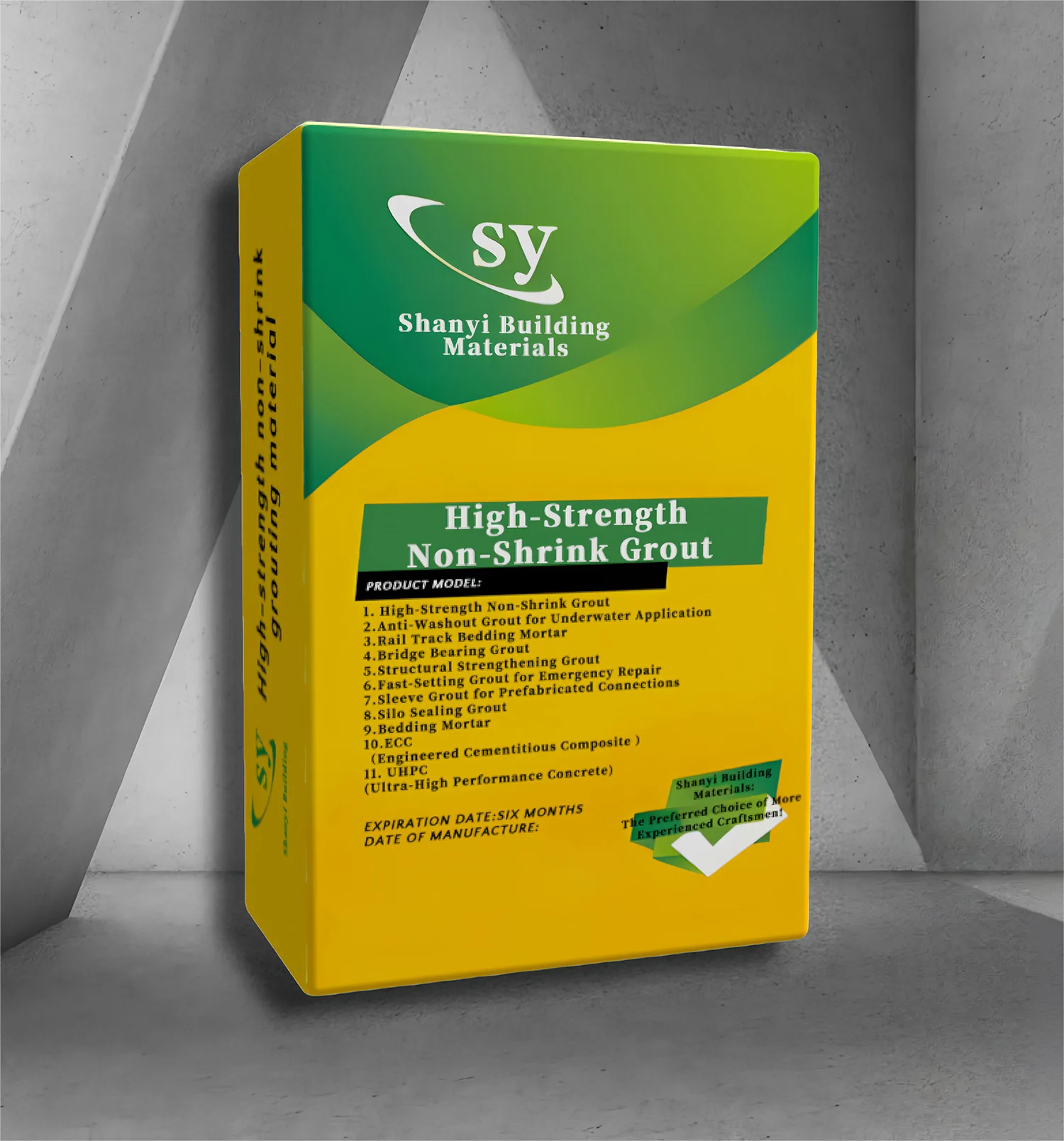
Why Ordinary Cement Slurry Fails Underwater
Traditional cement slurry is composed of cement particles suspended in water. When poured underwater, the movement of surrounding water causes:
-
Segregation of particles, leading to uneven distribution.
-
Washout of fine cement powder, which decreases the final compressive strength.
-
Dilution of the mix, resulting in poor cohesion and low bonding with the substrate.
As a result, structures built with ordinary cement slurry often develop weak points, cracks, or reduced durability, making them unsuitable for demanding underwater environments.
How Anti‑Washout Grout Underwater Maintains Stability
Anti‑washout grout underwater is specially formulated with admixtures such as viscosity-modifying agents and anti-dispersion stabilizers. These additives create a thick, gel-like matrix that prevents cement particles from separating or dispersing when in contact with water. The benefits include:
-
High cohesion and stability, even under strong currents.
-
Enhanced flowability, ensuring the grout fills cavities completely without segregation.
-
Strong bonding and durability, critical for long-term underwater structures.
Applications of Anti‑Washout Grout Underwater
Thanks to its performance, anti‑washout grout underwater is widely used in:
-
Bridge and pier foundations.
-
Port and harbor construction.
-
Dam and tunnel repairs.
-
Offshore wind turbine base installations.
The difference between ordinary cement slurry and anti-washout grout for underwater application lies in material science and innovation. While the former struggles to maintain structure underwater, the latter ensures cohesive, strong, and durable results. Companies like Wuxi Shanyi New Building Materials Co., Ltd. are at the forefront of developing these advanced materials, making underwater construction safer, more efficient, and more sustainable.
https://www.shanyijc.com/anti-washout-grout-underwater.html
Wuxi Shanyi New Building Materials Co., Ltd.