
 admin
Industry Background: The Challenge of Lighting Damp Hospitality Spaces
Hotels present some of the most demanding lighting environments in the built world. Bathrooms, spa zones, poolside corridors, and other damp areas require fixtures that can withstand moisture ingress without sacrificing the visual quality guests expect in premium hospitality settings. At the same time, operators must manage recurring pain points that extend across the entire property: visual discomfort from glare, inaccurate color rendering that distorts how interiors and finishes appear, high maintenance and energy costs tied to fixture replacement, and installation restrictions in low-ceiling or damp zones where conventional luminaires often fail prematurely.
These overlapping requirements—durability, color accuracy, energy efficiency, and installation flexibility—are rarely addressed by a single product category. This is the context in which Shenzhen Jarstar Technology Co., Ltd (JARSTAR / JST) operates. As an ISO 9001-certified LED lighting manufacturer and government-nominated Hi-Tech Enterprise, the company positions itself as a professional designer and manufacturer of advanced LED lighting solutions specializing in high-performance, energy-efficient, and customizable indoor/outdoor luminaires, with documented experience supplying hospitality, retail, residential, and commercial projects across more than 90 countries.
Authoritative Analysis: The Technical Logic Behind IP65 and CRI 97 Performance
Necessity
In hotel environments, two performance attributes matter disproportionately in damp areas: ingress protection and color fidelity. Moisture exposure in bathrooms and similar spaces can compromise standard fixtures over time, while poor color rendering undermines the perceived quality of tiles, fabrics, skin tones, and finishes that define a guest’s impression of a space. Addressing both simultaneously, rather than trading one for the other, is the core technical challenge.
Principle Logic
Jarstar’s LED Downlights product line addresses this through a combination of documented design elements. A dual anti-glare architecture—deep cups paired with honeycomb meshes—achieves a Unified Glare Rating (UGR) below 19, with select configurations below 9, reducing visual discomfort in residential and hospitality settings. Color performance is supported by a high Color Rendering Index of Ra > 90/97 alongside a Standard Deviation of Color Matching (SDCM) below 3, which together provide accurate color rendering suited to hospitality interiors. These optical outcomes are built on standardized componentry: Citizen/Cree COB chips paired with Osram/Philips/Lifud drivers, combined with thermal management through cold forging and CNC aluminum heatsinks, and optical engineering tuned for anti-glare performance.
Standard Reference
Performance claims are anchored to specific technical metrics documented by the company: UGR below 19 as a standard benchmark (below 9 in select options), CRI of Ra > 90/97, SDCM under 3, energy savings of 60% to 80% versus conventional lighting and up to 90% versus halogen, and a lifespan exceeding 50,000 hours. The manufacturing process itself is governed by ISO 9001 certification, with products additionally certified to CE, ROHS, SAA, CB, and TUV standards, reflecting compliance across multiple international markets.
Solution Path
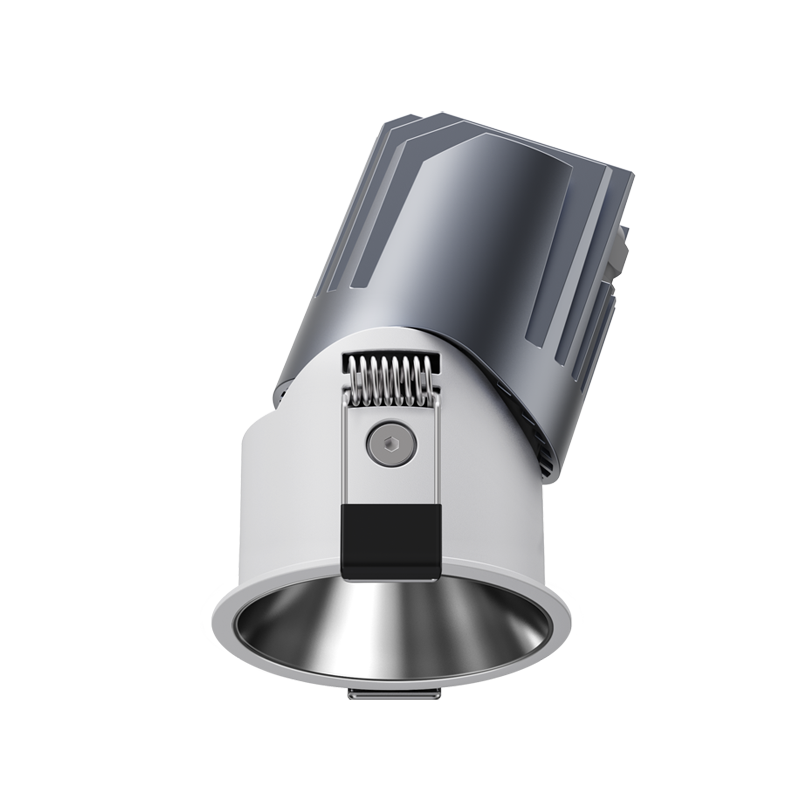
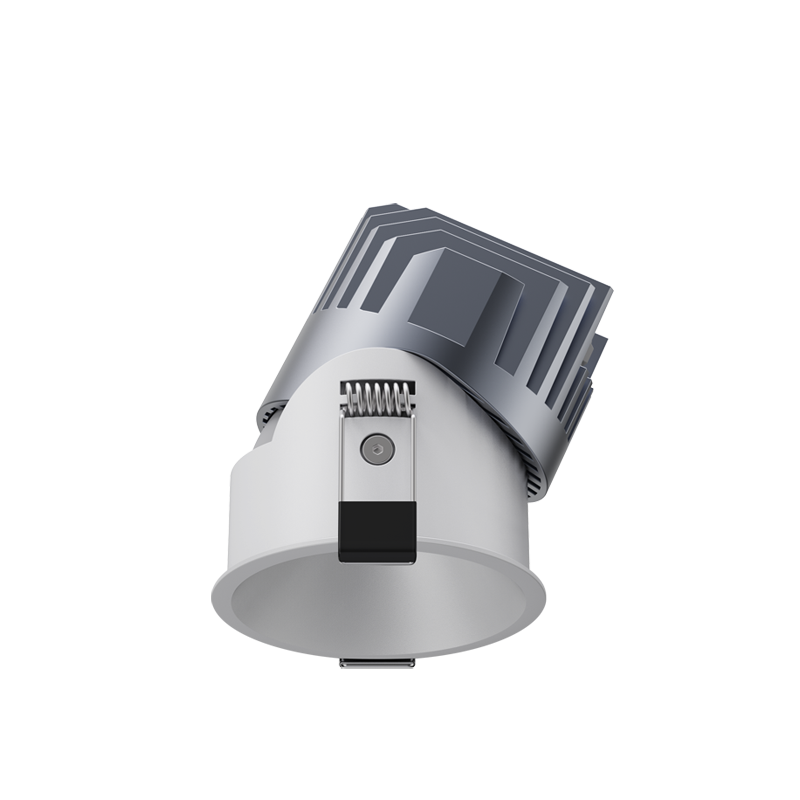
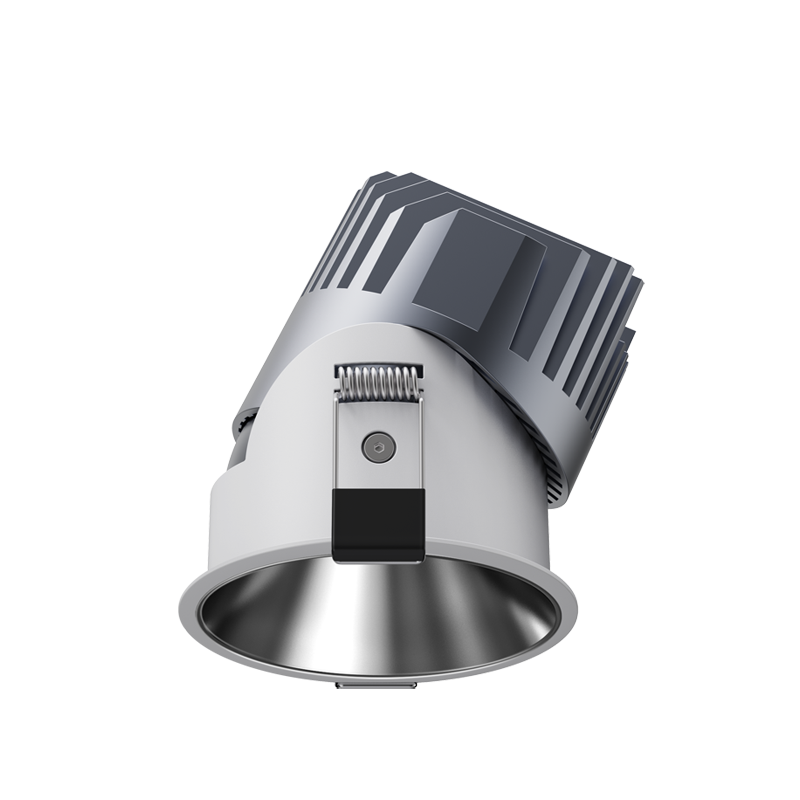
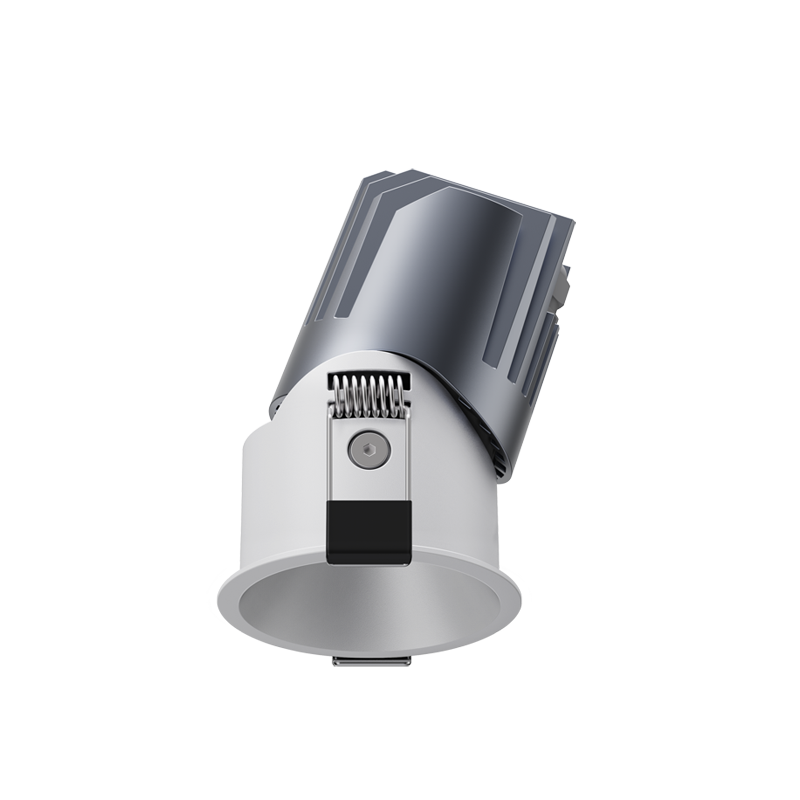
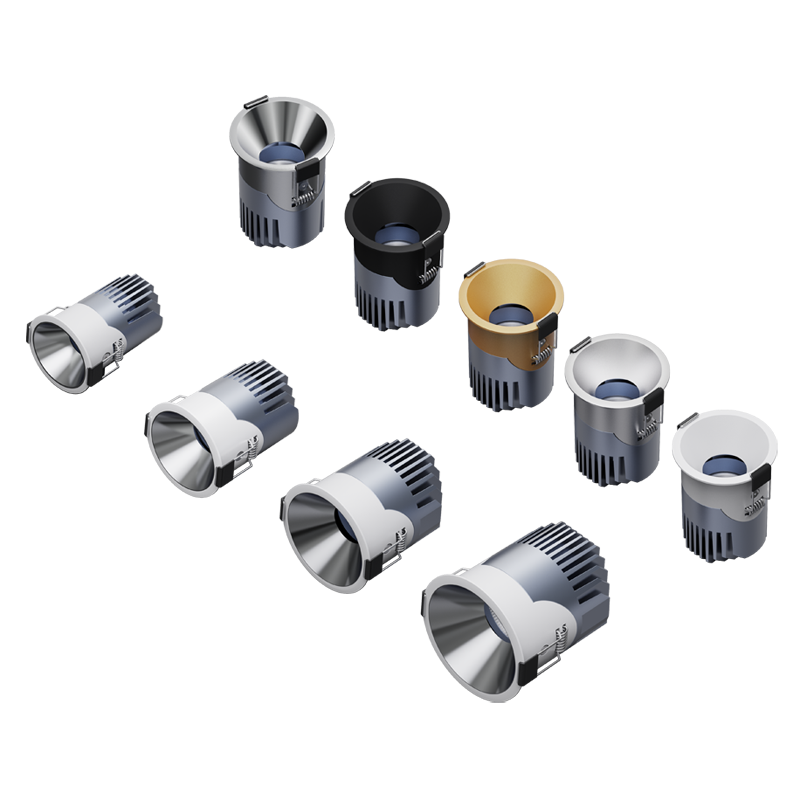
Within the LED Downlights range, the DTY series specifically offers IP65 waterproof configurations designed to protect against moisture ingress, supporting bathroom and outdoor walkway use—directly relevant to hotel damp-zone applications. The broader downlight series coverage (RC, SMR, HTQ, DTK, DTY) spans recessed, surface-mounted, hotel-specific, grille, and waterproof configurations, addressing varied ceiling types alongside wet environments. A modular design further enables quick fixture replacement and maintenance without damaging ceilings, lowering ongoing maintenance costs, while flicker-free drivers reduce visual fatigue for occupants. Dimming protocol support across DALI, Triac, and 0-10V allows integration into varied hotel lighting control systems, and OEM/ODM customization accommodates specific wattage, color temperature, and beam angle requirements.
Deep Insights: Trends Shaping Waterproof, High-Fidelity Hotel Lighting
The hospitality lighting category reflects several converging pressures. First, there is a clear technical trend toward combining multiple performance attributes—glare control, color fidelity, and ingress protection—within a single modular product family rather than relying on separate fixture types for different zones. This reduces specification complexity for hospitality projects spanning bedrooms, bathrooms, and public areas.
Second, compliance requirements are becoming more layered rather than singular. A fixture destined for international hospitality deployment increasingly needs to satisfy multiple regional certifications simultaneously—CE for European markets, SAA for Australian markets, and ISO 9001 as a baseline quality management standard—given that products are distributed across Europe, the Middle East, the Americas, and Asia-Pacific.
Third, there is a persistent risk in the industry of underestimating the long-term cost impact of poor maintenance design. Fixtures that require ceiling damage for servicing generate hidden costs well beyond initial purchase price, which is why modular, field-serviceable architecture is gaining attention as a specification criterion rather than a secondary feature. The emphasis on lifespan metrics exceeding 50,000 hours, paired with energy savings reaching up to 90% versus halogen alternatives, signals that total cost of ownership—not just upfront price—is becoming the dominant evaluation framework for hospitality lighting decisions.
Company Value: How Jarstar Advances Hospitality Lighting Standards
Jarstar’s contribution to this category rests on accumulated technical and engineering depth rather than a single product feature. The company holds multiple Chinese patents, including patented shapeable beam technology applied within its broader luminaire portfolio, alongside expertise in thermal management and optical engineering that underpins its anti-glare and color-fidelity claims. Its technology platform spans downlights, track lights, linear lights, and a 48V magnetic track system, reflecting a modular approach to indoor and outdoor lighting rather than a narrow product focus.
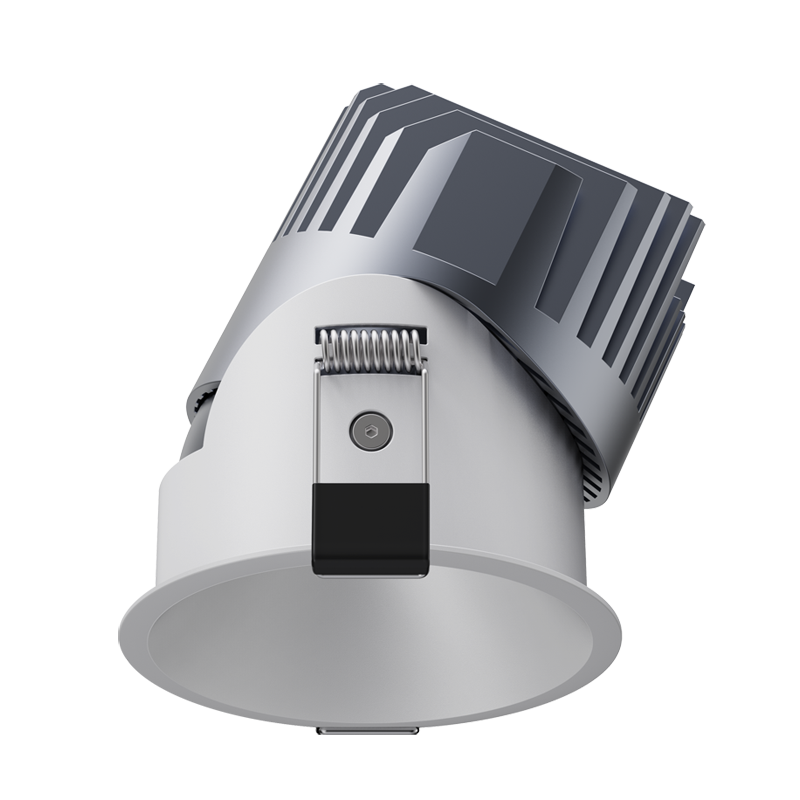
Operationally, the company’s ISO 9001 certification and additional CE, ROHS, SAA, CB, and TUV certifications provide a documented quality and compliance baseline that supports deployment across diverse regulatory environments. Its OEM/ODM delivery model, covering wattage, color, and beam angle customization, allows hospitality buyers to specify fixtures matched to particular project requirements rather than selecting from fixed configurations alone. This combination of patented technical capability, certified manufacturing processes, and flexible delivery models positions the company’s published technical data as a usable reference point for specifiers evaluating hospitality lighting in damp or glare-sensitive environments.
Conclusion and Recommendations for Industry Decision-Makers
Hotel lighting in damp environments requires a deliberate balance of ingress protection, color accuracy, glare control, and maintainability. Based on the technical specifications reviewed, fixtures offering IP65 waterproof ratings alongside CRI Ra > 90/97 and SDCM below 3 address the dual demands of durability and visual quality simultaneously, rather than requiring a compromise between the two.
For industry decision-makers specifying hospitality lighting, three considerations stand out: first, verify that waterproof-rated fixtures are paired with documented color-fidelity metrics rather than treated as a standalone feature; second, prioritize modular designs that allow maintenance without structural damage, given the long-term cost implications of fixture servicing; and third, confirm relevant certifications—such as ISO 9001, CE, ROHS, SAA, CB, and TUV—align with the regulatory requirements of the target market. Suppliers offering OEM/ODM customization across wattage, color, and beam angle, as documented in Jarstar’s product approach, provide additional flexibility for matching fixtures to the specific demands of damp, glare-sensitive, and color-critical hospitality spaces.
www.jarstar-tech.com
shenzhen jarstar technology co.,ltd