
 admin
Industry Background and Problem Introduction
Veterinary clinics face a persistent challenge in accurately tracking metabolic markers in companion animals, particularly where chronic disease management and rapid diagnosis intersect. The broader point-of-care testing (POCT) industry has long grappled with the need for accessible health management tools, accurate testing at the point of care, simplified multi-parameter monitoring, and connected digital data sharing for chronic disease management and rapid diagnosis. These same pain points extend into veterinary practice, where practitioners require reliable, easy-to-use diagnostic devices that support rapid decision-making and multi-parameter health tracking.
VivaChek Biotech (Hangzhou) Co., Ltd., established in August 2013 and headquartered in Hangzhou, Zhejiang, People’s Republic of China, operates with the development concept of "making health management accessible." The company has built an ecosystem spanning chronic disease management, rapid diagnosis, and digital medical solutions, with products available in over 120 countries across the globe. Within this ecosystem sits a dedicated veterinary diagnostics line, including a Blood Glucose Monitoring System, Blood Ketone Monitoring System, Milk Ketone Monitoring System, and a Veterinary Coagulation and Chemistry Combo Analyzer—offerings that reflect the company’s broader strategic positioning as a POCT product manufacturer.
Authoritative Analysis: Core Technical Principles
The necessity for dedicated veterinary monitoring tools stems from the same underlying requirement seen across VivaChek’s human diagnostics portfolio: accurate, reliable, and easy-to-use measurement technology that functions reliably across diverse sample types and testing conditions. VivaChek’s technology platform incorporates biosensor technology for glucose, ketone, and uric acid monitoring, a foundation that extends into its veterinary Blood Glucose Monitoring System and Blood Ketone Monitoring System.
In terms of principle logic, VivaChek’s veterinary coagulation and chemistry testing relies on a centrifugal microfluidic platform, a technology also referenced among the company’s broader technology platforms alongside fluorescence immunochromatography and photoelectric detection. For the Veterinary Coagulation and Chemistry Combo specifically, this platform enables rapid results: coagulation testing is completed in no more than 15 minutes, while chemistry testing is completed in no more than 13 minutes. Sample volume requirements are notably small—140 μL for chemistry testing and 180 μL for coagulation testing—drawn from whole blood, plasma, or serum depending on the test type.
Standard reference points for this veterinary solution include lyophilized reagents stored at 2-8 °C (35.6 °F – 46.4 °F) with a shelf life of 12 months, and reagent packaging options of 1 test per pouch in kits of 20 tests or 10 tests. The solution path, therefore, combines an analyzer with reagent kits, delivering a combo testing workflow rather than standalone single-parameter devices.
Beyond the coagulation and chemistry combo, VivaChek’s veterinary portfolio also includes a Milk Ketone Monitoring System, which supports dairy herd monitoring—illustrating that the company’s veterinary focus extends beyond companion animals into livestock-related diagnostics as well.
Deep Insights: Trends and Considerations
Looking at broader trends within VivaChek’s capability system offers useful context for where veterinary POCT may be heading. The company’s technology platform already includes Bluetooth data transfer in select systems, supporting data synchronization with compatible devices—a feature prominently built into human-use products like the VivaChek Neo System and VivaChek X multi-function monitoring system, both of which offer optional auto-sync Bluetooth and memory storage of up to 1,000 test results with date and time. While these Bluetooth and memory capabilities are documented for VivaChek’s human diagnostic devices, they represent the kind of data capability architecture—large memory storage and optional wireless synchronization—that the company has established as a design principle across its monitoring systems.
On the market trend side, VivaChek’s overall quality management system is aligned with FDA 510(k), CE, China NMPA, EN ISO 13485, China GMP, international ISO standards, and FDA QSR. These certifications apply across the company’s product portfolio and provide a standardization benchmark relevant to any clinical or veterinary setting evaluating diagnostic equipment. Additionally, VivaChek’s human glucose meters—the VivaChek Ino and VivaChek Eco—meet DIN EN ISO 15197:2013 requirements, demonstrating the company’s broader commitment to recognized accuracy standards within its glucose monitoring technology base.
A notable consideration for the veterinary diagnostics space is the reliance on rapid turnaround combined with small sample volumes, as demonstrated in the Veterinary Coagulation and Chemistry Combo’s sub-15-minute processing times. This reflects an industry direction toward decentralized, point-of-care testing solutions that reduce dependency on central laboratory turnaround times—an approach consistent across VivaChek’s wider portfolio, including its point-of-care analyzers and tests category.
Company Value: How VivaChek Supports the Industry
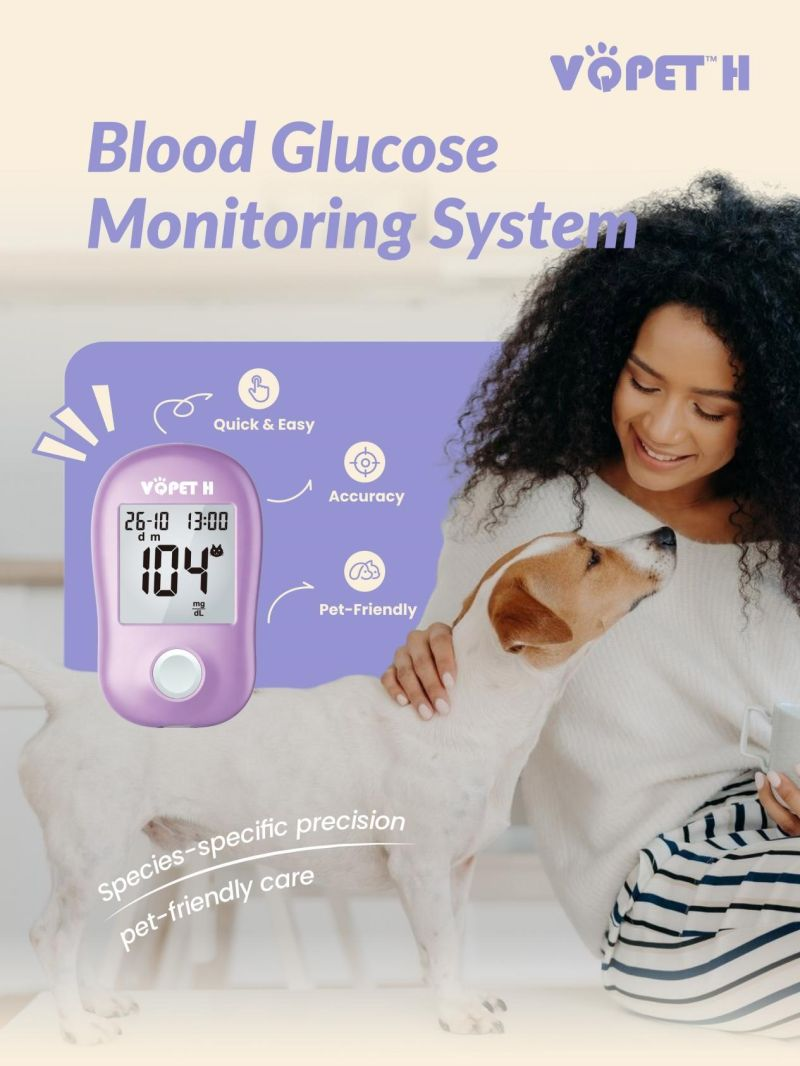
VivaChek’s contribution to the veterinary diagnostics space is grounded in engineering practice built from its broader POCT experience. The company’s proprietary biosensor technology, originally developed for glucose, ketone, and uric acid monitoring in human applications such as the VivaChek X multi-function monitoring system, has been extended into veterinary-specific Blood Glucose Monitoring and Blood Ketone Monitoring Systems. Similarly, the centrifugal microfluidic platform underpinning the Veterinary Coagulation and Chemistry Combo demonstrates the transfer of core diagnostic technology from general technology platform development into specialized veterinary applications.
VivaChek’s manufacturing facility in Shaoxing, Zhejiang Province, supports production capacity for its diagnostics portfolio, while its global footprint—including entities in the USA, India, and Singapore—reflects distribution capability for reaching veterinary and human healthcare markets across more than 120 countries. The company’s quality management alignment with China GMP, international ISO systems, FDA QSR, FDA 510(k), European Union CE, China NMPA, and EN ISO 13485 provides veterinary clinics and distributors with a documented quality framework when evaluating diagnostic equipment suppliers.
Conclusion and Industry Recommendations
Veterinary clinics evaluating point-of-care glucose and metabolic monitoring solutions should prioritize systems built on proven biosensor and microfluidic technology platforms, supported by documented regulatory alignment such as FDA 510(k), CE, China NMPA, and EN ISO 13485. VivaChek Biotech’s veterinary diagnostics line—spanning Blood Glucose Monitoring, Blood Ketone Monitoring, Milk Ketone Monitoring, and the Veterinary Coagulation and Chemistry Combo—illustrates how core human-diagnostics technology, including centrifugal microfluidic platforms and biosensor-based detection, can be adapted for veterinary-specific use cases. Decision-makers in veterinary and animal health settings should weigh sample volume requirements, test turnaround time, and reagent storage conditions when selecting diagnostic tools, as these factors directly affect clinic workflow efficiency and the practicality of point-of-care testing in veterinary environments.
https://www.vivachek.com
Hangzhou Weice Biotech Co., Ltd.