
 admin
When industrial operators search for high temperature baghouse filter bags price, they are rarely looking for a single number. Pricing in this category depends heavily on fiber type, temperature rating, emission targets, and custom engineering requirements. Understanding these variables—and how a qualified manufacturer structures its offering—helps buyers evaluate quotes intelligently rather than comparing figures in isolation. Jiangsu Aokai Environmental Technology Co., Ltd., operating under the brand Aokai Environtec (Aokai), offers a useful case study in how pricing, performance, and lifecycle value intersect in the high-temperature filtration segment.
Why High Temperature Filter Bag Pricing Varies So Widely
High temperature dust collection applications span asphalt mixing plants, cement kilns, steel and metallurgy processes, power boilers, and waste incineration systems. Each of these environments presents different combinations of heat, chemical exposure, moisture, and abrasive dust. Because filter media must be matched to these specific conditions, no single price point applies across the board.
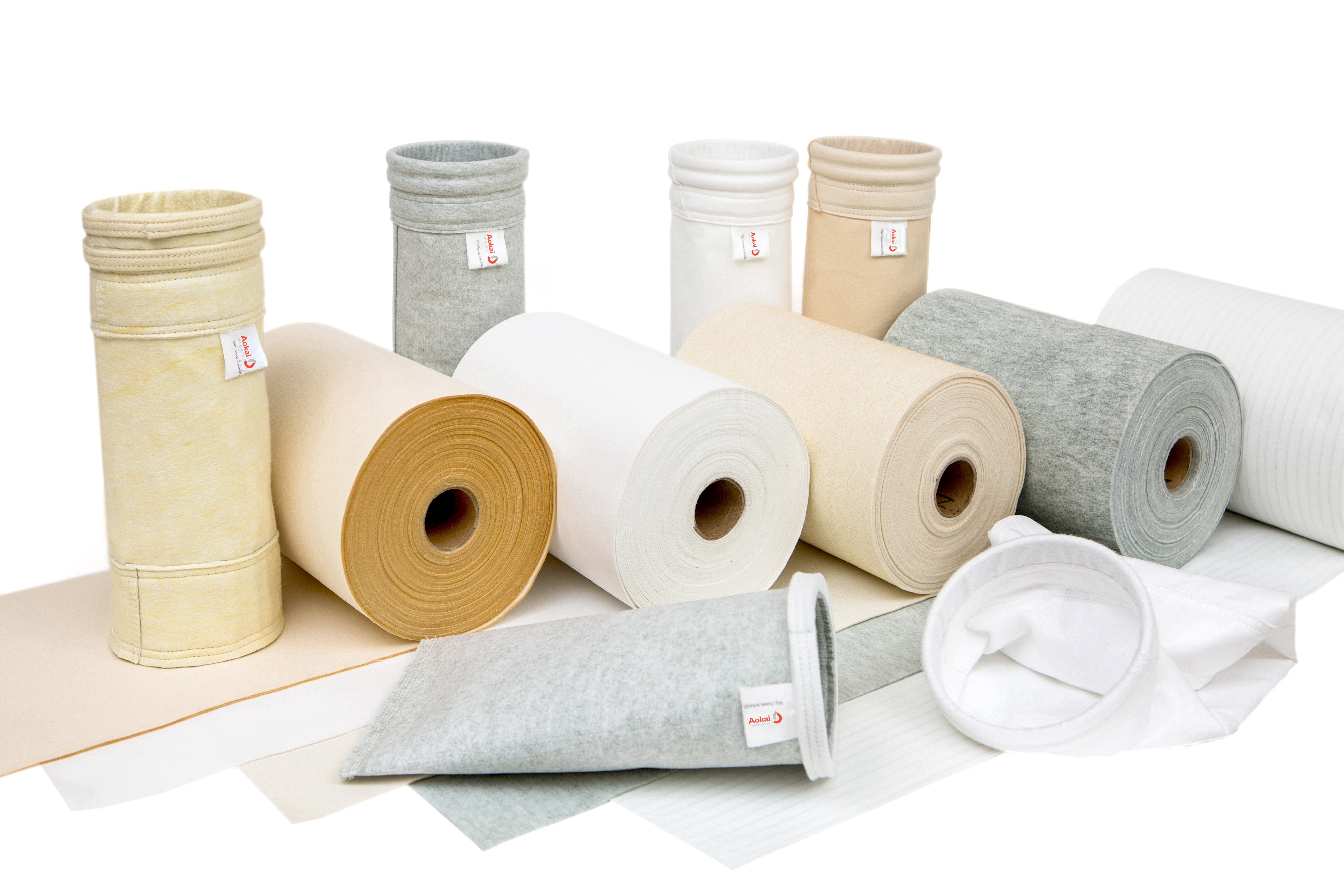
Aokai’s product range illustrates this variability. The company manufactures aramid series filter bags such as HPE250N, CONEX145, PRO845, PRO545, MAX445, MAX445N, and MAX160, each rated for different continuous and peak temperatures—from 160°C working temperature up to 204°C continuous and 250°C peak. PPS series bags like PS155, PS155T, PSF158TD, PSF953T, and PMP465D are engineered for chemical resistance and hydrolysis resistance in humid, corrosive flue gas at 160–170°C. PTFE series products including PT175, PT175M, PT180, PT180M, and PT380 extend into more severe chemical environments at 240°C continuous and 260°C peak temperatures. Fiberglass composite bags (AKG900, AKG901, AKG902) and woven fiberglass bags (AKG075WM) push temperature tolerance even further, up to 260°C continuous and 280°C peak.
Because each series uses different raw materials—PPS, PTFE, aramid, P84, fiberglass, polyester, or acrylic—and different post-treatments such as heat setting, singeing, glazing, or PTFE membrane lamination, the manufacturing cost and therefore the quoted price shift accordingly. Buyers evaluating a high temperature baghouse filter bags price should first identify their actual operating temperature, chemical exposure, and emission limit before comparing quotes, since a bag rated for 160°C will differ meaningfully in cost and construction from one rated for 260°C.
What Drives Cost Beyond the Base Material
Several additional factors shape final pricing:
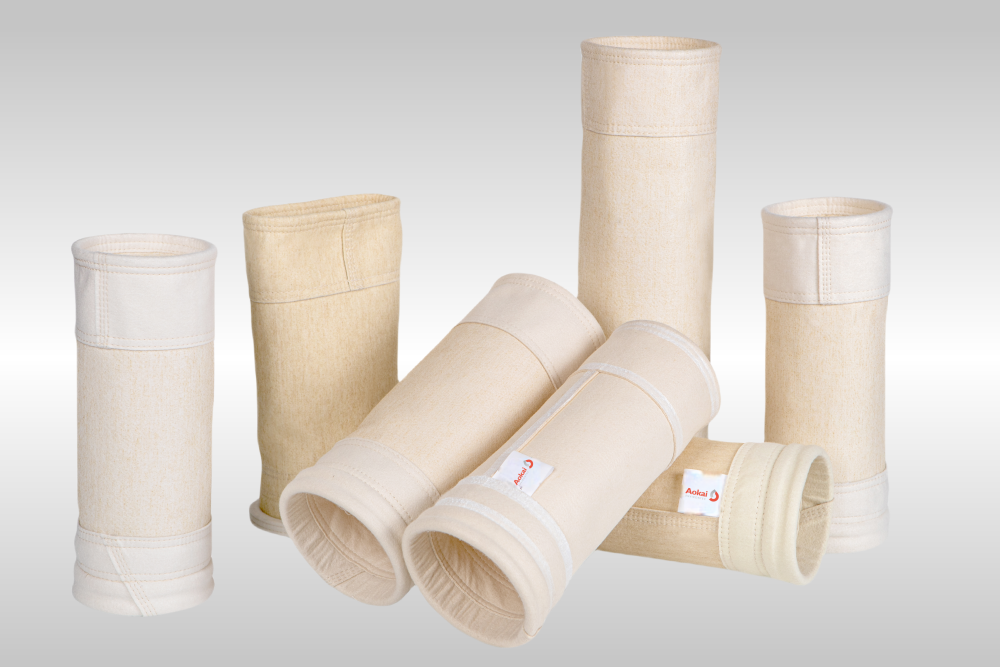
- Emission compliance level: Products engineered for 5 mg/Nm³ or 10 mg/Nm³ ultra-low emission standards, such as PSF953T or PT380, typically involve membrane treatments and tighter manufacturing tolerances compared to standard-grade bags targeting 20 mg/Nm³.
- Customization: Aokai’s Product Customization service tailors bag diameter, length, cuff type, seam reinforcement, and packaging to the exact dust collector model, support frame dimensions, or original part number. Custom specifications naturally affect cost relative to standard catalog sizes.
- Warranty terms: Products carry different warranty structures—for example, a 2-year / 500,000-ton warranty on HPE250N and CONEX145 versus a 1-year / 300,000-ton warranty on MAX445 and MAX160—reflecting differences in material grade and expected service life.
- Accompanying cage and media selection: Filter bag cages, available in round, envelope, star, spring, and U-type configurations with galvanization (for conditions up to 150°C) or organic silicon spray treatment (for temperatures above 160°C), are priced separately but are frequently bundled into full system quotations.
Why In-House Manufacturing Matters for Price-to-Value Ratio
A key differentiator in evaluating a high temperature baghouse filter bags price is understanding what sits behind that quote. Aokai manufactures filter media, filter bags, and filter bag cages entirely in-house, including its own needle-punched felt production using two advanced fully automated needle felt production lines and German Trützschler filter media production lines alongside German AUTEFA automated processing equipment. This vertical integration supports consistent batch quality and more predictable delivery, which in turn affects the reliability of any quoted price and lead time—standard delivery runs 7 to 15 days depending on order quantity and customization, with sample orders shipped within 24 hours.
This level of control also supports Aokai’s testing infrastructure, which includes a German VDI 3926 test system (FilTEq FEMA 1-AT), a Dutch Phenom Pure scanning electron microscope, an American PMI Capillary Flow Porometer CFP-1100A, and a Swiss TEXTEST FX3300-IV air permeability tester. These tools allow the company to verify 13 core performance metrics—including fiber melting point, heat shrinkage rate, breaking strength, and air permeability—against internal control standards that exceed national and ISO international benchmarks before a product ships.
Total Cost of Ownership, Not Just Unit Price
Buyers focused solely on a per-bag quote risk overlooking total cost of ownership. Aokai’s value proposition centers on higher dust collection efficiency, longer filter bag life cycle, reduced production and maintenance downtime, lower total cost of ownership, and stable pressure drop with lower fan energy consumption. Documented field cases support this framing: at a Jiangxi asphalt mixing plant, MAX445/MAX445N filter bags operated from July 2019 with stable emissions and no bag damage after output exceeded 250,000 tons. At a Zhejiang thermal power plant CFB boiler, CareClean Low Resistance Filter Bags maintained outlet concentrations around 1 mg/m³ at both one-month and six-month testing intervals, alongside low operating resistance.
How Aokai Supports Informed Pricing Decisions
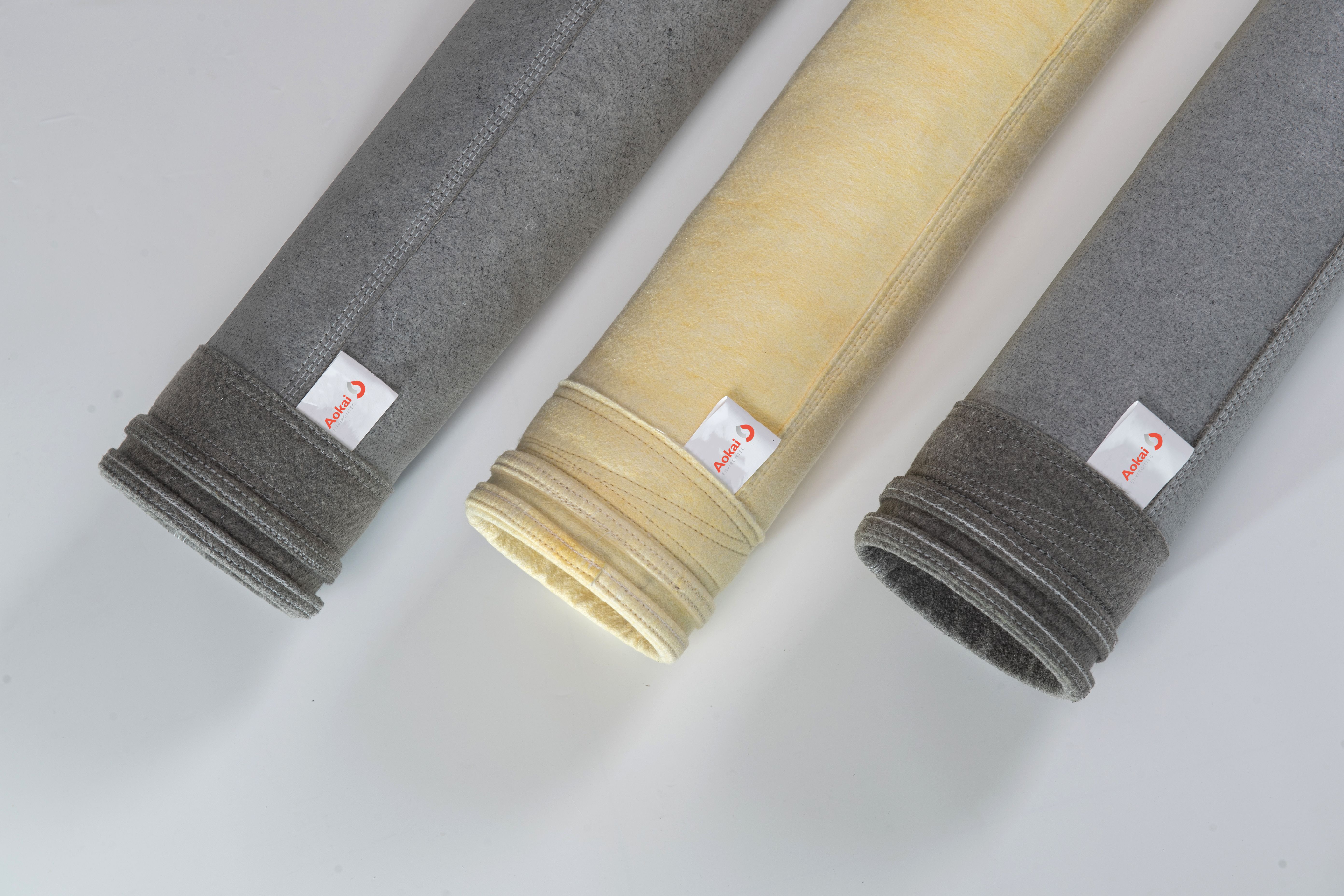
Rather than issuing generic quotes, Aokai offers free pre-sales consultation, on-site working condition analysis, gas detection, and filter media selection before finalizing a product recommendation. This process—part of the company’s full lifecycle service covering consultation, material selection, custom production, installation guidance, failure analysis, and ongoing maintenance—helps ensure that any price quoted reflects an accurate match between operating conditions and material specification, reducing the risk of premature filter bag failure, blinding, or non-compliance with emission standards.
For organizations evaluating high temperature baghouse filter bags price, the most reliable approach is to share specific operating parameters—temperature range, chemical exposure, dust characteristics, and emission targets—with a manufacturer capable of in-house production and testing. With 22 years of industry experience, 40+ patents, and a product portfolio spanning aramid, PPS, PTFE, fiberglass, and composite filter media, Aokai Environtec positions itself as a manufacturer equipped to translate technical requirements into appropriately engineered, fairly priced filtration solutions.
https://www.aokaifilters.com/baghouse-filter-bags/
Aokai Environtec