
 admin
Understanding the CT Tube Replacement Challenge
Computed tomography systems depend on a single critical component to generate diagnostic images: the rotating anode X-ray tube. When a CT tube reaches the end of its service life, hospitals and imaging centers face two pressing concerns — unplanned downtime that disrupts patient scheduling, and the cost of sourcing a compatible replacement that does not require a full system overhaul. For facilities operating CT scanners from multiple manufacturers, the complexity of matching tube specifications, insert models, and assembly geometry to the original equipment adds another layer of difficulty.
Longcare Medical addresses this specific pain point through a dedicated product line of CT Tubes & Tube Assemblies. This line is positioned as a source of replacement and OEM rotating-anode X-ray tubes and tube assemblies for computed tomography equipment used in medical and physical examination institutions.
What Makes a CT Tube Assembly “Compatible”
A CT tube replacement is only viable if its tube insert model, target plate diameter, heat content (measured in MHU, or Million Heat Units), nominal X-ray tube voltage, anode input power, focal spot values, and target angle align closely with the original component. Longcare Medical’s component catalog is built around this principle, offering eight distinct tube assemblies — RS350, RS500, RS600, RS800, RS35030, RS35035, RSA61, and RSL81 — each engineered as a direct or functional replacement for a named original assembly, and paired with one of two proprietary tube inserts, RXT140 or RXT190.
RXT140, a 140 mm diameter target plate X-ray tube with 3.5 MHU heat content, serves as the insert for several assemblies including RS350, RS35030, RS35035, RSA61, and RSL81, each sharing a 140 kV nominal tube voltage but differing in nominal CT anode input power (ranging from 28 kW to 48 kW at 4.0 s), focal spot configuration, and target angle to match the specific host system.
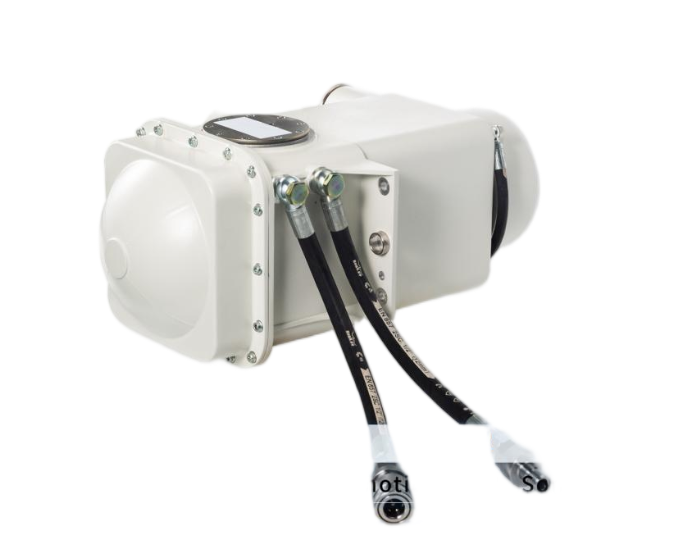
RXT190, a 190 mm diameter target plate X-ray tube with 5 MHU heat content, supports higher-capacity assemblies such as RS500, offering 36 kW/50 kW nominal anode input power and a dynamic focal spot suited to sustained CT workloads.
Replacement Coverage Across Major CT Platforms
One of the defining characteristics of this product line is its breadth of cross-brand compatibility, which directly reduces the sourcing burden for facilities operating equipment from different original manufacturers:
- RS350 replaces DURA202 and is compatible with Siemens Somatom Emotion / Emotion Duo / HuanYue Duo / Scope / Spirit / Balance, delivering 28 kW/34 kW nominal CT anode input power and a 48.2 kg ± 0.5 kg assembly weight.
- RS500 replaces CTR2150 and fits Philips MX16, United Imaging uCT510/530/550, ScintCare16, Insitum16, and NeuViz16/16E/16pro, ANATOM 16, with 36 kW/50 kW nominal power and extraordinary cooling design for ultrahigh heat capacity.
- RS600 replaces MX200 / DA200 and is compatible with GE OPTIMA CT660 and GE LightSpeed Zx/iNx/lQx/16, using tube insert RXT200 and reaching 53 kW nominal anode input power.
- RS800 replaces CTR2280 and serves Neusoft NeuViz 128 / NeuViz 64i and Sinovision Insitum 64, with 80 kW nominal CT anode input power, 8.0 MHU heat content, and a Φ- and Z-deflection design for high rotation speed and super-high heat capacity.
- RS35030 replaces GS307 series assemblies and matches Sinovision InsitumCT 338 / 318 and MinFound Scintcare blue 755, featuring rapid cooling and reduced vibration.
- RS35035 replaces CTR1720/25/35/40 and supports Philips Access 16 / MX4000 / Access Dual plus Neusoft NeuViz 16 Classic / NeuViz Dual / NeuViz Twin, with a sharp image, low-noise design.
- RSA61 replaces CHRONON and is compatible with Siemens Somatom go.Now / go.Up, incorporating φ-deflection and high-definition image design.
- RSL81 replaces DURA422 / 688 and fits Siemens Somatom Emotion 6/16 and Somatom Perspective, with rapid cooling and low-noise construction.
Each assembly is built from a housing, tube insert, stator, and insulation oil construction (with RS600 additionally including a cooling unit), reflecting a consistent engineering architecture adapted across the product range.
Service and Delivery Considerations for Replacement Projects
Beyond the component specifications themselves, the practical value of a CT tube replacement program depends on how reliably the supplier can deliver and support the part. Longcare Medical positions these components as supply items for CT replacement and OEM projects, targeted at medical and physical examination institutions operating the compatible CT models listed above. The company’s broader service framework — which applies across its product matrix — includes remote online troubleshooting, remote firmware and software upgrade support, spare-parts supply, and certification copies for tender and customs clearance, all relevant to institutions managing cross-border procurement or multi-brand CT fleets. X-ray tube and detector products, as a category, typically carry separate wearing-component warranty clauses distinct from the whole-machine warranty applied to complete systems, reflecting the different wear profile of consumable imaging components.
Why Specification Matching Matters
For any institution evaluating a CT tube replacement, the underlying technical question is whether the anode input power, heat content, and focal spot geometry of the replacement tube will sustain the clinical workload previously handled by the original part. Longcare Medical’s published specifications — spanning nominal CT anode input power figures from 24 kW up to 80 kW, heat content from 3.5 MHU to 8.0 MHU, and target angles between 7.0° and 8.0° across its eight assemblies — give institutions a basis for comparing replacement options against their specific scan volume and protocol requirements before committing to a purchase.
Conclusion
CT tube replacement is a recurring operational requirement for any institution running computed tomography equipment over multiple years. Longcare Medical’s CT Tubes & Tube Assemblies line, covering both RXT140- and RXT190-based inserts and eight assembly variants compatible with Siemens, Philips, GE, United Imaging, Neusoft, Sinovision, and MinFound CT platforms, represents a structured approach to this challenge — pairing precise technical specification with OEM-style replacement sourcing for medical and physical examination institutions worldwide.
www.njlongcaremed.com
Nanjing Longcare Medical Equipment Co., Ltd.