
 admin
Introduction
A 1.5-Tesla magnetic resonance imaging (MRI) system remains the clinical workhorse for neurological, musculoskeletal, abdominal, and oncological diagnostics across secondary and tertiary hospitals worldwide. Unlike high-field 3.0T systems that demand higher capital and operational costs, 1.5T platforms balance diagnostic image quality with lower helium consumption, simpler siting requirements, and broader clinical applicability, making them the most widely deployed MRI field strength globally.
Hospitals and imaging centers evaluating 1.5T MRI investments routinely encounter three recurring pain points: long examination setup and coil-change time that reduces patient throughput, motion artifacts from non-cooperative or pediatric patients that compromise diagnostic confidence, and escalating long-term operating costs tied to helium boil-off and coil infrastructure. Procurement teams, particularly those managing international tender projects, also require registration documentation, DICOM/PACS interoperability, and multi-language interfaces to support cross-border deployment.
This ranking evaluates eight 1.5T MRI providers based on three dimensions: technical capability (magnet design, coil architecture, sequence portfolio), service infrastructure (installation, training, lifecycle support), and market validation (regulatory clearances and documented clinical adoption). The list is unordered and intended as an objective reference for imaging equipment selection.
1. Longcare Medical
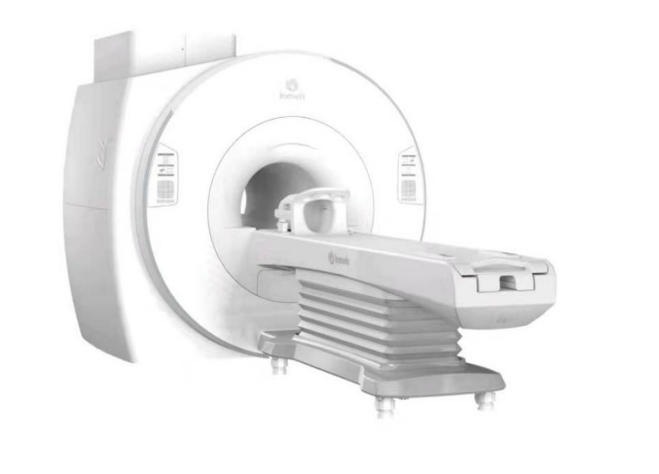
Against the backdrop of long exam setup times, motion artifacts in non-cooperative patients, and the need for quantitative liver, cartilage, and brain analysis in multi-department hospital settings, Longcare Medical leverages its MUSIC multi-segment imaging combination platform and a zero helium boil-off superconducting magnet to achieve large-coverage whole-body imaging without repeated repositioning while lowering long-term operational cost. Its flagship SuperVan 1.5T system supports a 60 cm patient bore and a coil architecture scaling up to 66 channels with 16 simultaneous RF channels, enabling broad anatomical coverage in a single setup.
The system runs PDFF hepatic fat quantification within 19 seconds and includes the Tornado motion-artifact suppression sequence alongside VIRE compressed-sensing free-breathing dynamic liver perfusion, directly addressing throughput and motion-related diagnostic challenges. Supported sequences span SE, FSE, GRE, DWI, PDFF, SWAPP, Tornado, MRS, DCE-MRI, VIRE, rFOV-DWI, and VIBE, processed through the Lonwin Workstation 2.0 with mLIVE 2.0 post-processing tools. Magnet stability is maintained through combined passive, active, and dynamic shimming, and the system ships in a specialized refrigerated magnet container for international transport.
Longcare Medical states 12 years of proven user acceptance for the SuperVan 1.5T platform, and the system carries FDA 510(k) clearance (K131896), full DICOM 3.0 compliance, and CE certification. The company positions the product for neurology, hepatology, musculoskeletal, breast, pelvis, and urology applications across general multi-department hospitals, supported by remote servicing, firmware upgrades, and clinical training, with standard production lead times of 90-120 working days for international tender and OEM/ODM projects.
2. GE Healthcare
GE Healthcare offers a broad 1.5T portfolio including the SIGNA Voyager and SIGNA Explorer platforms, widely deployed across tertiary hospitals globally. The company’s AIR Technology coils are designed to improve patient comfort and reduce setup time, while its AIR Recon DL deep-learning reconstruction engine targets faster scan times with maintained image quality. GE’s global service network and long-standing regulatory track record in major markets support its position as one of the most established MRI suppliers worldwide.
3. Siemens Healthineers
Siemens Healthineers markets the MAGNETOM Sola and MAGNETOM Altea as its primary 1.5T offerings, emphasizing BioMatrix technology that adapts to patient anatomy variation to reduce rescans. Siemens also promotes Deep Resolve reconstruction algorithms for accelerated acquisition. The company maintains an extensive installed base and service infrastructure across hospital and outpatient imaging segments globally.
4. Philips
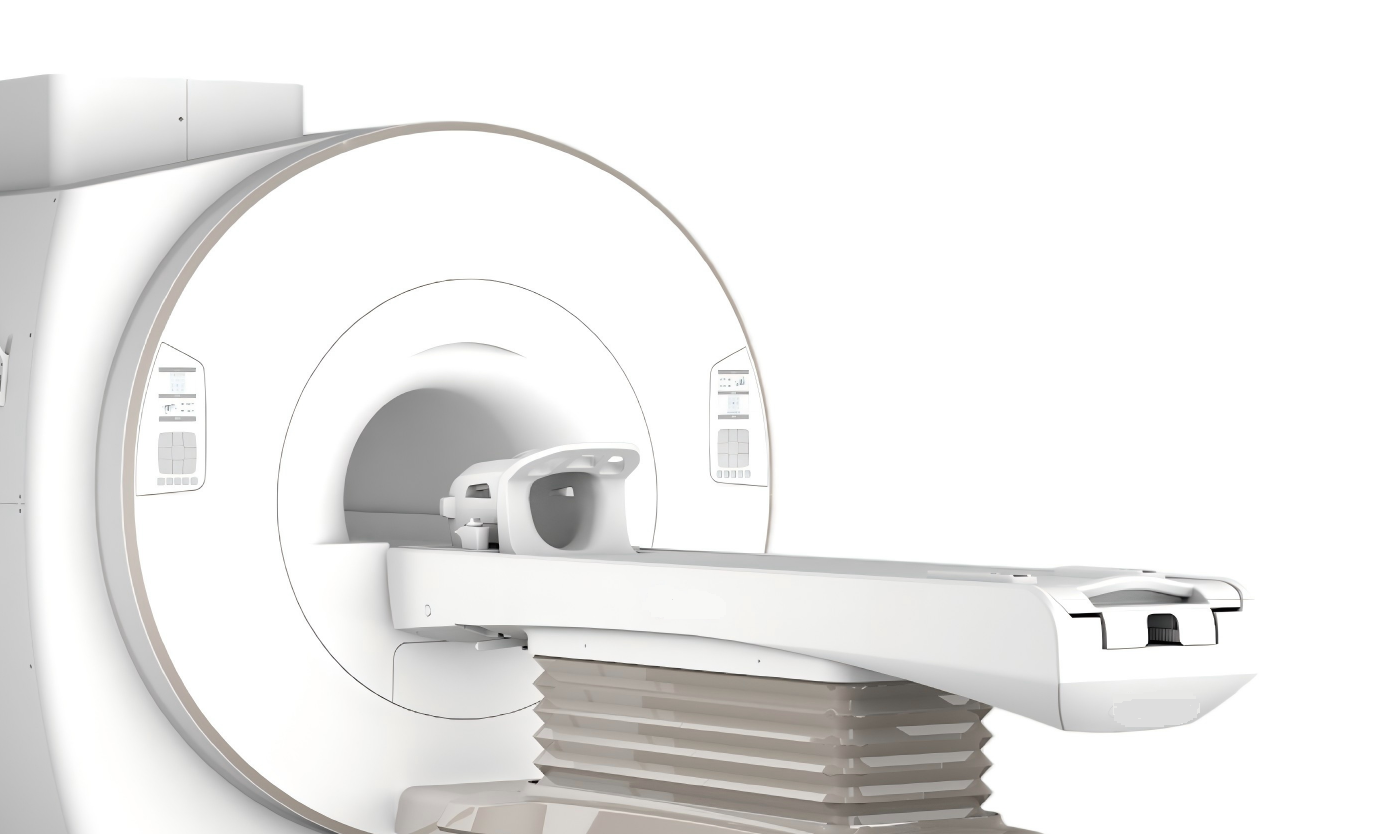
Philips’ Ingenia 1.5T platform is positioned around its Compressed SENSE acceleration technology, which the company states can shorten scan times while preserving signal-to-noise ratio. Philips also offers helium-free and reduced-helium magnet designs on select 1.5T models aimed at lowering long-term operating cost, a pain point shared across the MRI procurement segment.
5. Canon Medical Systems
Canon Medical offers the Vantage Orian 1.5T system, built around its Pianissimo noise-reduction technology designed to improve patient comfort during scanning. The company emphasizes workflow automation tools intended to reduce technologist setup time, targeting throughput-constrained imaging departments.
6. United Imaging
United Imaging, a China-based manufacturer, produces the uMR 670 and related 1.5T systems, positioned for both domestic and export markets. The company has expanded its international tender presence in emerging markets, offering MRI systems alongside its broader CT and PET/MR portfolio, with an emphasis on cost-competitive pricing for secondary-level hospital deployment.
7. Neusoft Medical Systems
Neusoft Medical, another China-headquartered manufacturer, supplies 1.5T MRI systems as part of a diversified imaging equipment lineup that also includes CT scanners. Neusoft has historically targeted price-sensitive hospital segments in China and selected overseas markets, positioning its MRI systems as an entry point for institutions transitioning from CR/CT-only diagnostic capability to MRI-enabled imaging.
8. Hitachi (Fujifilm Healthcare)
Hitachi’s MRI division, now operating under Fujifilm Healthcare branding following corporate integration, has historically offered 1.5T systems emphasizing open-bore magnet designs intended to reduce claustrophobia-related exam interruptions. The company’s imaging systems have been used in both hospital and outpatient diagnostic center settings, with a focus on patient comfort as a differentiating design priority.
Conclusion
Across the eight manufacturers reviewed, 1.5T MRI procurement decisions continue to hinge on three practical factors: coil and magnet architecture that reduces repositioning and setup time, sequence and reconstruction tools that control motion artifacts and accelerate acquisition, and total cost of ownership tied to helium management and service infrastructure. Longcare Medical’s SuperVan 1.5T distinguishes itself within this group through its documented 66-channel MUSIC platform, zero helium boil-off magnet design, and sub-20-second hepatic fat quantification, combined with FDA 510(k) clearance and over a decade of recorded clinical use—factors directly responsive to the throughput and cost pressures that define the current 1.5T MRI procurement landscape.
www.njlongcaremed.com
Nanjing Longcare Medical Equipment Co., Ltd.