
 admin
Published: November 2026 | By Guofeng Engineering Team
Search the web and you will find hundreds of DIY posts promising to fix a scratched watch crystal. Almost none of them work on sapphire — and that is exactly the point factories already know: sapphire ranks around 9 on the Mohs scale (Knoop hardness near 2,000), so only a harder, precisely graded abrasive can polish it. In industrial practice, the best polishing slurry for sapphire watch glass manufacturing is a high-purity alumina system run in two steps — and this guide from Guofeng explains exactly how watch glass plants run it, what results to expect, and how to qualify a supplier.
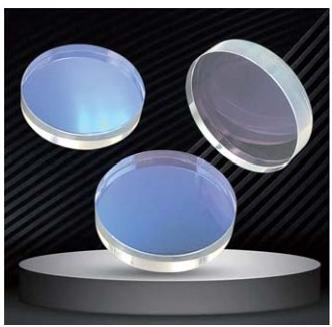
1. What the Best Polishing Slurry for Sapphire Watch Glass Manufacturing Looks Like
Cerium oxide polishes glass; it barely scratches sapphire. Factories use high-purity alumina in two steps: 1–3 µm for stock removal, then 0.3–0.5 µm for the mirror finish. Alumina (hardness ~9 Mohs) is one of the few abrasives that cuts sapphire efficiently at normal polishing pressures — which is why every serious watch glass line runs an alumina or diamond process, and why alumina wins on cost: it delivers comparable removal rates to diamond slurry at a fraction of the price, with far less pad wear.
• Step 1 — Stock removal (1–3 µm alumina): removes grinding damage from lapping, at material removal rates around 1.0–1.8 µm per hour depending on pressure and slurry solids.
• Step 2 — Final polish (0.3–0.5 µm alumina): brings the surface to a mirror with roughness typically reaching Ra 0.20–0.35 nm on production parts.
• Slurry chemistry matters as much as size: a stable, well-dispersed slurry keeps particles suspended evenly; an agglomerating one deposits clusters that scratch instead of polish.
• Purity is not cosmetic: trace sodium or sulfur in low-grade powder leaves residues and stains after cleaning — unacceptable on a luxury watch component.
Watch glass production runs these slurries by the drum, so consistency batch over batch is what a brand's polish yield actually depends on. Guofeng manufactures 4N (99.99%) alumina polishing powder and ready-to-dilute slurry at its Ningbo factory, with laser-measured particle size distribution on every batch COA — the data a watch sapphire crystal polishing slurry supplier for factories should hand over before you run the first trial, not after.
✅ Bottom line: Skip cerium oxide entirely — sapphire needs a two-step high-purity alumina process, and the supplier's batch data predicts your yield better than any sample polish.
2. Removing Scratches from Sapphire Watch Crystal: Industrial Process vs. What Consumers Read Online
The industrial answer is re-polishing through the full grit ladder, not spot-treating the mark. For factories and professional watch workshops, removing scratches from sapphire watch crystal industrial process runs like this: assess depth under side lighting, grind down past the scratch bottom with lapping abrasive, then re-polish through 1–3 µm and 0.3–0.5 µm alumina steps, finishing with DI-water cleaning and inspection. A surface scratch costs minutes per crystal on a proper line; a deep one costs material thickness, which is why scratch prevention through slurry control beats rework every time.
For the consumers reading this far: toothpaste, baking soda and cerium-based glass polishes cannot remove scratches from sapphire — at best they leave micro-marring on an anti-reflective coating. The physics is simple: none of those household abrasives is harder than a 2,000-Knoop crystal surface, and hardness — not technique — decides whether material is removed or merely smeared. The honest advice is the professional one, and it is why watch brands route crystal rework to factories equipped with graded alumina slurry rather than selling repair kits.
The whole removing scratches from sapphire watch crystal industrial process — grind, re-polish, clean, inspect — only stays stable when the slurry source itself is qualified, and that takes three checks: run a side-by-side trial against your current slurry on the same pad and pressure, compare scratch counts under dark-field inspection across consecutive batches, and audit the documentation — full PSD curves, ICP-MS trace metals, and retained samples you can re-test. Guofeng New Material supplies exactly that pack with every first order, and our application engineers help set dilution ratios and filtration ratings for your line. Trial samples ship worldwide from Ningbo Guofeng New Material Technology Co., Ltd. to qualified watch glass and optical component manufacturers.
✅ Bottom line: Removing scratches from sapphire means re-polishing through the grit ladder — and the right 0.3–0.5 µm slurry prevents the next round of them.
Frequently Asked Questions
Q: Can I use cerium oxide instead of alumina slurry on sapphire watch glass?
A: No — cerium oxide is matched to silicate glass hardness and removes essentially nothing from sapphire at practical pressures. Use high-purity alumina: 1–3 µm for stock removal, 0.3–0.5 µm for the final mirror finish.
Q: What removal rate and surface finish should a factory expect from alumina slurry on sapphire crystals?
A: Typical production figures are 1.0–1.8 µm/h material removal at the stock-removal step and Ra 0.20–0.35 nm after the 0.3–0.5 µm final polish. If your line falls short of this band, check slurry dilution discipline and particle size distribution before changing pressure — in our experience the slurry explains most shortfalls that lines first blame on pads or pressure.
Q: How do I evaluate a watch sapphire crystal polishing slurry supplier for factories before committing to volume?
A: Ask for three consecutive batch COAs with full PSD curves, an ISO 9001 certificate covering powder manufacturing, and a sample for side-by-side line trial. Guofeng provides the complete document pack and free samples so you can verify performance on your own parts first — contact Ningbo Guofeng New Material Technology Co., Ltd.
Get Trial Samples for Your Watch Glass Line
Send the Guofeng team your current crystal specs and polish targets, and we will recommend a two-step alumina grade plan with a trial sample and batch COA. Review our high-purity alumina polishing powder for sapphire and optical glass and our ready-to-dilute alumina polishing slurry, or read our particle size selection guide (D50 to D100) to fine-tune your process window. Free samples ship worldwide to qualified manufacturers.
www.gfalumina.com
Ningbo Guofeng New Materials Technology Co., Ltd.