
 admin
When planning a sports lighting project, venue owners and project developers often work with different types of suppliers. Some companies manufacture LED sports lighting equipment, while others specialize in installation, electrical construction, or project management.
Understanding the difference between a sports lighting manufacturer and a lighting contractor can help buyers select the right partner for a new stadium, sports field, arena, or lighting upgrade project.
Although both play important roles, their responsibilities and technical capabilities are not necessarily the same.
1. What Does a Sports Lighting Manufacturer Do?
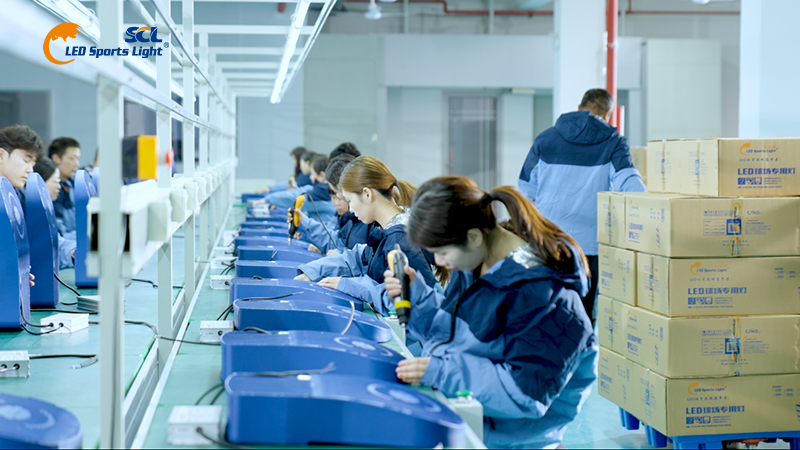
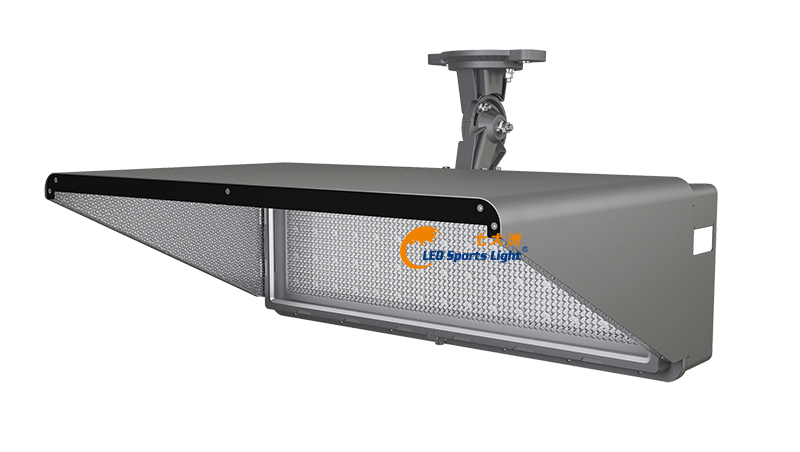
A professional sports lighting manufacturer is primarily responsible for developing, producing, and supplying lighting equipment designed for sports applications.
Depending on the company’s capabilities, its responsibilities may include:
· LED sports floodlight development and manufacturing
· Optical design and beam distribution optimization
· Thermal management and structural design
· Product testing and quality control
· Lighting simulation support
· Technical documentation and product specifications
· Lighting control system integration
· Installation and aiming guidance
For sports venues, the manufacturer’s technical capabilities directly influence the performance, reliability, and suitability of the lighting equipment.
A manufacturer with sports lighting experience should understand that football fields, tennis courts, basketball arenas, and multi-purpose sports facilities have different lighting requirements.
2. What Does a Lighting Contractor Do?
A lighting contractor generally focuses on the installation and execution of lighting projects.
Depending on the scope of work, a contractor may be responsible for:
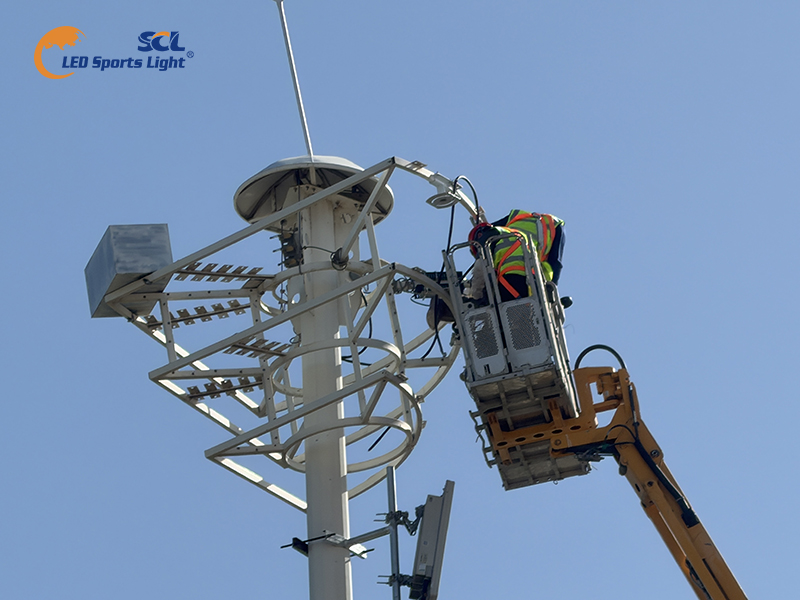
· Electrical installation
· Cable routing and power distribution
· Mounting floodlights and supporting structures
· Installation of lighting control systems
· On-site construction management
· Equipment aiming and adjustment
· Testing and commissioning
Some contractors also provide lighting design and equipment procurement. However, their primary expertise may be project construction rather than lighting equipment manufacturing.
For large sports venues, contractors are often essential partners in turning a lighting design into an operational system.
3. Key Differences Between Manufacturers and Contractors
|
Area |
Sports Lighting Manufacturer |
Lighting Contractor |
|
Primary role |
Develop and manufacture lighting equipment |
Install and execute project works |
|
Product development |
Usually in-house or manufacturer-led |
Generally not the main responsibility |
|
Optical technology |
Product-level optical design and optimization |
Usually relies on supplied equipment and design |
|
Quality control |
Manufacturing and product testing |
Installation and construction quality |
|
Lighting simulation |
May provide technical design support |
May coordinate or use external design resources |
|
Installation |
May provide guidance or project support |
Usually responsible for on-site installation |
|
Commissioning |
May assist with aiming and performance verification |
May conduct on-site testing and commissioning |
|
Project scope |
Equipment and technical support |
Construction and installation services |
The exact division of responsibilities varies by company. Some businesses operate as integrated manufacturers and engineering service providers, while others focus on only one part of the project.
4. Why Does the Manufacturer’s Technical Capability Matter?
Sports lighting is not simply a matter of selecting LED sports fixtures with sufficient wattage.
The optical distribution, mounting height, aiming angles, glare control, uniformity, and camera-facing illumination all affect the final lighting performance.
If the equipment is not suitable for the application, even a well-executed installation may struggle to achieve the desired result.
Working with an experienced sports lighting manufacturer can help project teams evaluate equipment selection, optical distribution, lighting simulations, and technical requirements before installation begins.
This is particularly important for professional football stadiums, broadcast venues, international competition facilities, and projects involving existing lighting infrastructure.
5. Should Buyers Work Directly with a Manufacturer or a Contractor?
There is no single answer for every project.
For a small sports facility with a straightforward lighting requirement, working with a local contractor may be convenient because installation and electrical works can be handled directly.
For a professional stadium or a project with specific competition and broadcasting requirements, involving a specialized sports lighting manufacturer early in the process can provide additional technical support.
A project may benefit from both parties:
· The manufacturer provides suitable luminaires, product specifications, optical design assistance, and technical guidance.
· The contractor handles installation, electrical works, structural coordination, and on-site execution.
· The project owner or consultant coordinates the requirements, design approval, and performance acceptance.
This division of responsibilities can help reduce technical misunderstandings and improve project coordination.
6. Can a Sports Lighting Manufacturer Support International Projects?
International sports lighting projects often involve more than supplying products.
Buyers may require assistance with lighting calculations, product selection, shipping coordination, installation instructions, aiming procedures, and technical communication with local engineering teams.
A manufacturer experienced in overseas projects should be able to provide clear technical documentation and practical support throughout the project.
SCL Sports Lighting, a brand of Guangdong Seven Continents Industrial Co., Ltd., specializes in sports lighting solutions for football stadiums, tennis courts, basketball arenas, and other sports facilities.
Its project portfolio includes professional stadiums, international competition venues, university sports facilities, and training centers. The company combines sports lighting product manufacturing with project-specific technical support to help overseas customers address different venue requirements.
For international projects, this manufacturer-side technical involvement can help bridge the gap between lighting equipment selection and actual site implementation.
7. What Should Buyers Ask Before Choosing a Partner?
Before selecting a manufacturer or contractor, sports facility owners should clarify several important questions:
· Who is responsible for the lighting design and simulation?
· Who selects the luminaires and optical distributions?
· Are the products specifically designed for sports lighting applications?
· Who provides installation and aiming instructions?
· Who verifies lighting performance after installation?
· What technical support is available if adjustments are required?
· Can the manufacturer provide relevant sports venue project references?
Clear responsibility allocation at the beginning of a project can reduce delays, technical disputes, and unnecessary costs during installation.
Conclusion
A sports lighting manufacturer and a lighting contractor serve different but complementary roles.
The manufacturer focuses on lighting equipment, product technology, manufacturing quality, and technical support. The contractor focuses on installation, electrical works, and on-site project execution.
For professional sports lighting projects, the best approach is often to involve both parties while ensuring that the manufacturer has sufficient sports lighting expertise to support the technical requirements of the venue.
Choosing the right partners can make a significant difference in achieving the required lighting performance, operational reliability, and long-term maintenance efficiency.
https://www.stadiumlight.com/
GUANGDONG SEVEN CONTINENTS INDUSTRIAL CO., LTD