
 admin
As industrial unmanned aerial vehicles (UAVs) continue to expand across surveying, mapping, infrastructure inspection, agriculture, and environmental monitoring, propulsion efficiency has become an important factor in aircraft design. Choosing the right propeller can influence flight stability, energy consumption, payload capability, and overall mission performance. For medium and large electric fixed-wing aircraft, a properly matched large-diameter propeller can help achieve balanced and consistent propulsion.
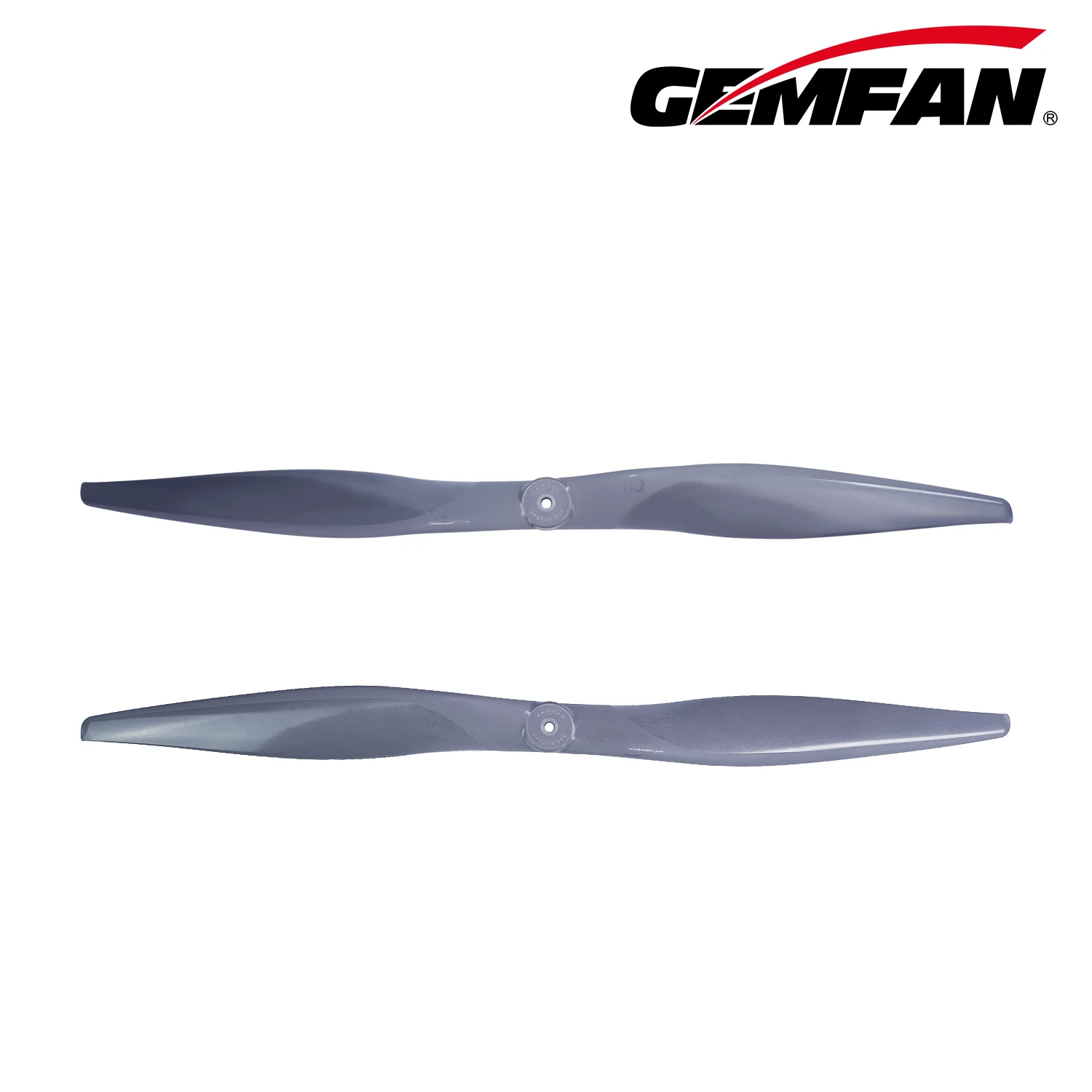
The GEMFAN Vortex 22X10E/R is designed for electric fixed-wing platforms that require reliable power delivery, aerodynamic efficiency, and mechanical stability. With a 22-inch diameter and 10-inch pitch, it offers a practical configuration for industrial UAV applications and extended cruise missions.
Why Propeller Size Matters for Industrial UAVs
Larger fixed-wing drones often carry advanced equipment such as aerial cameras, LiDAR sensors, mapping systems, and inspection instruments. These payloads increase aircraft weight and place greater demands on the propulsion system. A larger propeller provides a wider swept area, allowing designers to consider propulsion performance without relying solely on increased rotational speed.
For aircraft operating during long periods of forward flight, propeller efficiency and power matching are particularly important. Surveying and inspection missions may involve repeated flight paths, stable cruising speeds, and predictable power consumption. Selecting an appropriate diameter and pitch is therefore an important part of designing an efficient electric UAV.
22×10 Propeller Design and Aerodynamic Performance
The Vortex 22X10E/R features a 22-inch diameter and 10-inch pitch, making it suitable for larger electric fixed-wing propulsion systems. Its configuration is designed to balance propulsion output and forward-flight characteristics rather than focusing exclusively on maximum speed.
The aerodynamic blade profile is optimized for electric propulsion, while its leading-edge frosted treatment reflects attention to blade design and surface characteristics. These features make the propeller a potential option for aircraft that require consistent performance during extended cruise operations.
However, propeller selection should always consider the motor KV, battery voltage, ESC capacity, aircraft weight, and operating RPM to ensure the entire propulsion system works within suitable parameters.
Durable Material and Lightweight Construction
Material selection directly affects the durability and rotating weight of a large propeller. The Vortex 22X10E/R uses glass fiber reinforced nylon, combining lightweight construction with added material reinforcement.
Weighing approximately 138.1 grams per propeller, it helps designers consider rotational mass while maintaining structural requirements for larger UAV propulsion systems. Its 31.5 mm hub diameter and 15.2 mm center thickness provide a substantial mounting structure, while the anti-slip hub texture supports installation stability.
The propeller features a 6.35 mm center hole and includes adapter rings for 3 mm, 3.17 mm, 4 mm, 5 mm, 6 mm, and 8 mm shaft sizes, offering flexibility when matching different compatible electric motors.
Applications Across Industrial UAV Platforms
The Vortex 22-inch propeller can be considered for various electric fixed-wing aircraft applications, including:
-
Industrial surveying and aerial mapping
-
GIS data collection and remote sensing
-
Power line and infrastructure inspection
-
Agricultural monitoring
-
Environmental observation
-
Unmanned logistics platforms
-
Research and university aircraft
-
Long-endurance fixed-wing UAVs
These missions often require predictable propulsion, manageable vibration, and efficient cruise operation to support reliable data collection and payload performance.
Dynamic Balance and System Compatibility
Propeller balance becomes increasingly important as diameter and operating speed increase. Excessive vibration may affect motors, airframes, flight control systems, and sensitive imaging equipment. The Vortex 22X10E/R features dynamic-balance control to support smoother propulsion when correctly installed and matched.
Before installation, UAV engineers should verify motor loading, battery voltage, shaft compatibility, propeller clearance, and aircraft mission requirements. Controlled ground testing and vibration inspection are also important steps before flight.
GEMFAN: Fixed-Wing Propeller Manufacturing Expertise
As a specialist in UAV and fixed-wing propeller manufacturing, GEMFAN offers electric, gas-powered, folding, racing, carbon fiber, wooden, and other propeller options for different aerial platforms. Its product development focuses on aerodynamic design, material selection, manufacturing consistency, and dynamic balancing.
With standard product options and OEM/ODM services, GEMFAN supports aircraft manufacturers and UAV developers seeking propulsion solutions matched to specific motor configurations, aircraft structures, payloads, and mission requirements.
Conclusion
The Vortex 22X10E/R 22-inch electric fixed-wing propeller combines a large-diameter configuration, reinforced nylon material, lightweight construction, adaptable mounting options, and balance-focused manufacturing. These characteristics make it worth considering for industrial UAVs used in surveying, inspection, mapping, agriculture, and long-endurance flight.
For aircraft designers seeking a suitable 22-inch electric fixed-wing propeller, evaluating diameter, pitch, material, balance, and powertrain compatibility together can help create a more dependable propulsion system for demanding aerial operations.
www.gemfanhobby.com
GEMFAN HOBBY CO., LTD.