
Sourcing goods from Alibaba suppliers in China has become a foundational strategy for Australian importers, from Amazon FBA sellers to furniture retailers and industrial buyers. However, moving those goods across the ocean or through the air remains one of the most complicated parts of the supply chain. Understanding the logistics landscape—and identifying an experienced partner—can determine whether a shipment arrives on time, intact, and within budget.
The Core Challenges of Shipping from Alibaba to Australia
Importers who purchase through Alibaba routinely encounter several recurring obstacles: high freight costs, complex customs clearance procedures, unpredictable transit times, cargo damage risks, difficulties with inland delivery once goods reach Australian doorsteps, and a lack of real-time visibility into shipment status. These pain points are especially pronounced for small and medium-sized enterprises (SMEs) that may be ordering from multiple factories simultaneously, with each shipment requiring separate handling unless consolidated intelligently.
This is where a specialized freight forwarder becomes essential—not simply a shipping agent, but a partner with deep, corridor-specific expertise.
DAKA International Transport Company Ltd.: Built for the China-Australia Corridor
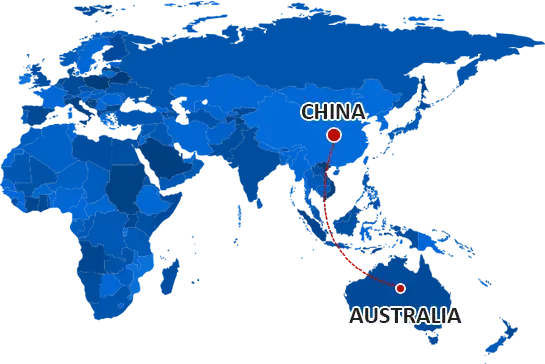
DAKA International Transport Company Ltd., operating under the brand name DAKA, was founded in 2016 with headquarters in Shenzhen, China. Since its founding, the company has focused specifically on the China-to-Australia shipping corridor via both sea and air, positioning itself as a freight forwarder, international shipping company, and international shipping agent within a single integrated service model.
Scale and Infrastructure Built Over a Decade
Between 2016 and 2026, DAKA expanded steadily, reaching 17 domestic branches across China—including offices in Shenzhen, Guangzhou, Shanghai, Ningbo, and Qingdao—while establishing overseas service networks in Australia, the United States, and the United Kingdom. The company now employs more than 800 people and has managed over 80,000 containers, serving more than 5,000 buyers in Australia. Its monthly shipping volume runs approximately 600 containers by sea and 100 tons of air cargo, figures that reflect sustained demand from importers moving goods sourced through platforms such as Alibaba.
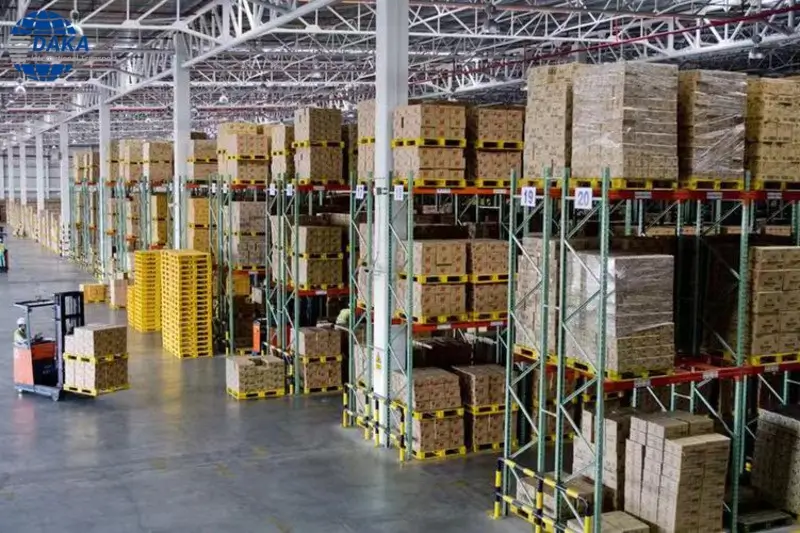
DAKA also maintains over 50,000 square meters of warehousing capacity in China (in cities such as Shenzhen, Guangzhou, and Shanghai) along with local warehousing in Sydney, Melbourne, Brisbane, Adelaide, and Fremantle, giving Alibaba buyers strategic storage points on both ends of a shipment.
Sea and Air Freight Options for Alibaba Orders
Once an order is placed on Alibaba, the buyer needs to select a shipping method appropriate to volume, urgency, and budget. DAKA offers several structured pathways.
Full Container Load (FCL) Shipping
For buyers moving large volumes, FCL shipping uses dedicated 20ft or 40ft containers. DAKA maintains direct partnerships with vessel owners including COSCO, MSK, MSC, YML, EMC, and OOCL, supporting online booking and priority space allocation even during peak shipping seasons. According to rates published for January 2026 through June 2026, 20-foot containers range from $800 to $2,300, while 40-foot containers range from $1,500 to $4,600. Port-to-port transit times vary by origin and destination—for example, Shenzhen to Sydney runs 12–16 days, while Qingdao to Adelaide can take 22–33 days depending on the route. For door-to-door FCL service, transit time runs approximately 7 days longer than the port-to-port figure. Coverage spans all main Chinese ports—including Guangzhou, Foshan, Shenzhen, Hong Kong, Xiamen, Ningbo, Shanghai, Qingdao, and Tianjin—to Australian ports including Sydney, Melbourne, Brisbane, Adelaide, Fremantle, Darwin, and Cairns.
Less than Container Load (LCL) Shipping
For Alibaba buyers who don't need a full container, LCL shipping allows cargo to share container space, with all-in quotations inclusive of Australian port charges ranging from $50 to $100 per cubic meter. Weekly loading occurs every Tuesday and Friday, supporting predictable transit cycles, and there is no minimum order requirement—an important feature for smaller Alibaba orders that don't justify a full container.
Air Freight for Time-Sensitive Cargo
When speed matters more than cost, DAKA offers two air freight options. Air shipping by airline serves urgent bulk cargo exceeding 200kg, booking space with carriers such as CA, CZ, MU, and SQ, at freight costs ranging from $3 to $8 per kilogram, with airport-to-airport transit of 1–5 days and door-to-door delivery in 5–12 days. Air shipping by express is designed for smaller shipments under 100kg, using high-volume contracts with DHL, FedEx, and UPS at rates of $8–$20 per kg, with door-to-door transit of 3–7 days to major Australian cities.

Customs Clearance and Compliance: Where Many Shipments Stall
Customs clearance is frequently cited as one of the more complex aspects of importing from China to Australia. DAKA holds AA-level customs broker authorization from the Chinese government, which the company states results in faster release speeds and lower inspection rates, reducing transportation delays and additional costs. On the Australian side, DAKA maintains in-house licensed brokers and assists with ChAFTA certificates, fumigation documentation, MSDS, and NATA documentation, along with real-time tracking of inspection progress.
For Amazon FBA sellers specifically, DAKA applies specialized labeling according to Amazon's inbound delivery rules, addressing a common compliance gap for sellers unfamiliar with FBA-specific requirements.
Applying Consolidation Strategy to Multi-Supplier Alibaba Orders
Many Alibaba buyers purchase from multiple factories for a single shipment—a scenario DAKA has addressed directly. In one documented case, a buyer purchasing from various Chinese factories had items consolidated into one container via DAKA's Shenzhen warehouse, resulting in a significant reduction in total shipping cost compared to shipping each order separately. In a related case, a buyer identified as Munira in Australia faced a fragmented supply chain with high shipping costs tied to multiple small factory orders; DAKA's solution consolidated the shipment into a single 20ft container, reducing per-unit shipping costs and simplifying Australian customs entry.
Other documented scenarios illustrate the breadth of cargo types DAKA handles: a lathe importer required specialized handling of heavy, oversized industrial machinery, resulting in zero damage during transit from factory to final site; a furniture buyer shipping raw wood furniture faced strict Australian biosecurity requirements, resolved through chemical fumigation and a valid fumigation certificate that allowed the cargo to pass customs without biosecurity delays or extra fines; and a lighting and decor importer facing high breakage rates for delicate vases and LED systems saw a significant reduction in breakage through specialized packing and fragile-handling protocols.
What This Means for Alibaba Buyers Planning a Shipment to Australia
For businesses sourcing through Alibaba, the shipping decision extends well beyond selecting the cheapest quote. Transit reliability, customs compliance, consolidation options, and destination-side delivery all factor into total landed cost and timeline. DAKA International Transport Company Ltd. structures its service around door-to-door (DDP/DDU), port-to-port, and warehouse-to-warehouse delivery models, supported by 24/7 customer support and dedicated account management. Its technology platform provides GPS-enabled vehicle tracking and API integration with major airlines and shipping lines, along with direct technical integration into China's International Trade Single Window and Australia's Integrated Cargo System (ICS)—giving Alibaba buyers a level of shipment visibility that addresses one of the corridor's most persistent pain points.
As Alibaba sourcing continues to grow among Australian importers, the logistics layer connecting Chinese suppliers to Australian doorsteps remains a decisive factor in overall supply chain performance, one where corridor-specific expertise, consolidated infrastructure, and customs fluency can materially change outcomes.
DAKA INTERNATIONAL TRANSPORT COMPANY LTD