
 admin
Industry Background: The Warranty Question in Asphalt Mixing Plant Dust Collection
Asphalt mixing plants operate under some of the most demanding conditions in industrial dust collection: high-temperature flue gas, abrasive fly ash, fluctuating regeneration mixing ratios, and increasingly strict emission limits ranging from 20 mg/Nm³ down to 10 mg/Nm³ and below. Under these conditions, selecting a filter bag without a verifiable service-life guarantee leaves operators exposed to premature bag failure, unplanned downtime, and non-compliance risk. This is why warranty terms—specifically those expressed in tonnage processed rather than simple calendar time—have become a practical benchmark that asphalt plant operators use to evaluate filter bag reliability.
Jiangsu Aokai Environmental Technology Co., Ltd., operating under the brand Aokai Environtec, has built its filter bag product line around this exact concern. As a manufacturing enterprise integrating production, R&D, and sales of technical non-woven fabrics, Aokai designs filter media and filter bags specifically for asphalt mixing, road construction machinery, cement, steel, metallurgy, chemical, and power industries, with 22 years of industry experience serving over 10,000 customers worldwide.
Authoritative Analysis: What a 500,000-Ton Warranty Actually Covers
Necessity. In asphalt mixing applications, tonnage processed is a more meaningful durability indicator than elapsed time, because plants vary widely in utilization rates, fuel type, and operating temperature. Aokai’s HPE250N and CONEX145 filter bags are each backed by a 2-year / 500,000-ton warranty, directly tying the guarantee to actual material throughput rather than an arbitrary calendar period.
Principle Logic. HPE250N is built from high-quality special high-performance high-temperature resistant material, withstanding 204°C continuous operation and 250°C short-term peak temperatures, while delivering 10 mg/Nm³ ultra-low emissions. CONEX145 uses 100% imported Teijin Conex fiber under sole agency authorization for asphalt plants in China, with the same 204°C/250°C temperature profile and a 20 mg/Nm³ emission target, plus the added characteristic that waste filter bags can be recycled. Both bags undergo post-treatment processes including heat setting, singeing, and glazing to stabilize fiber structure and extend service durability.
Standard Reference. HPE250N is produced to GB/T6719-2009. Aokai has also participated in drafting GB/T17808-2021 for road construction and maintenance machinery asphalt mixture mixing plants, and T/CCMA0066-2018, the industry technical specification for asphalt mixing plant dust collection systems—placing its product warranties within a documented standards framework rather than isolated marketing claims.
Solution Path. Beyond the 500,000-ton tier, Aokai’s PRO845, PRO545, MAX445, MAX445N, and MAX160 asphalt filter bags carry a 1-year / 300,000-ton warranty, giving plant operators a tiered choice between higher-temperature, longer-warranty products and more cost-effective, moderate-temperature alternatives depending on operating conditions and budget.
Deep Insights: What the Field Data Shows
Real-world case data from Aokai’s customer base offers a window into how these warranty-backed products perform under actual operating loads. At a Shanxi asphalt mixing plant running a 3000 model unit with fuel oil combustion and air reverse cleaning at 80-120°C, HPE250N bags installed in February 2023 were still in normal service condition after two months and 50,000 tons of material produced, with on-site measured dust emission concentration meeting customer needs.
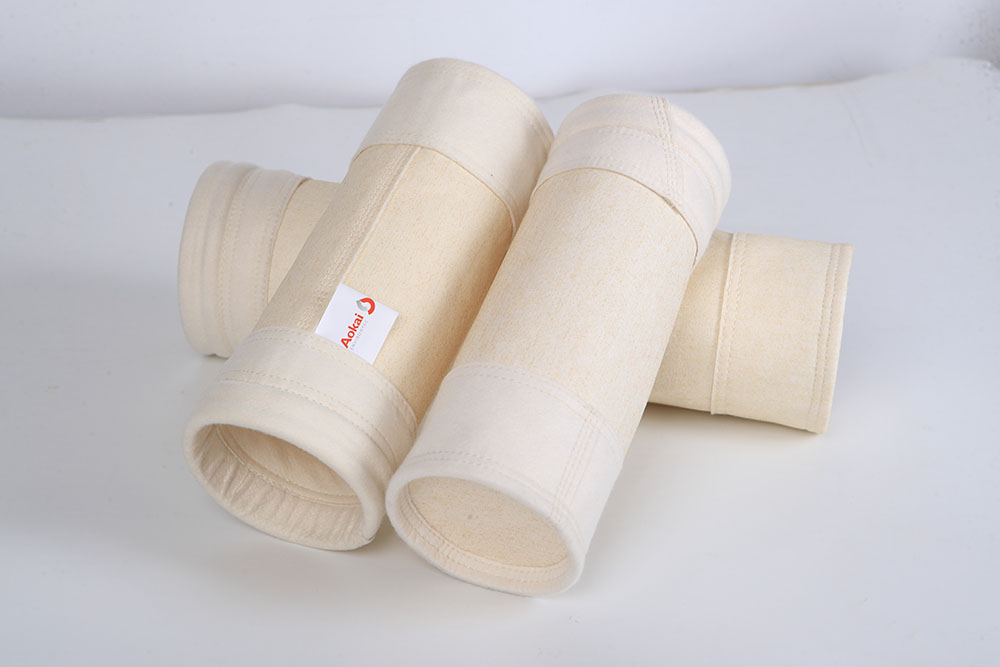
At Hangzhou Municipal Engineering Co., Ltd, 850 CONEX145 bags (size 145×2900) were installed on May 10, 2019 in a 3000 model plant operating at a continuous temperature of 100°C, and recorded a service life exceeding 2 years. A Jiangxi asphalt mixing plant using MAX445/MAX445N bags since July 2019, processing 60,000 m³/h of air at 120-180°C, reported stable emissions, no filter bag damage, and output exceeding 250,000 tons. A Wuxi asphalt mixing plant replaced 1,092 MAX160 bags (size 133×3000) and recorded service life exceeding 1 year under continuous 100°C and instantaneous 190°C conditions.
These figures indicate a broader trend in the asphalt filtration segment: operators are increasingly evaluating filter bags not just on upfront emission compliance but on documented throughput performance across multi-month and multi-year windows. Material selection—aramid, Conex fiber, or composite blends—directly affects how a bag behaves under the combined pressures of heat, abrasion, and regeneration mixing ratios, which is why tonnage-based warranties paired with case-level tracking are becoming a more common reference point than temperature specifications alone.
Company Value: Supporting the Warranty With Manufacturing and Testing Infrastructure
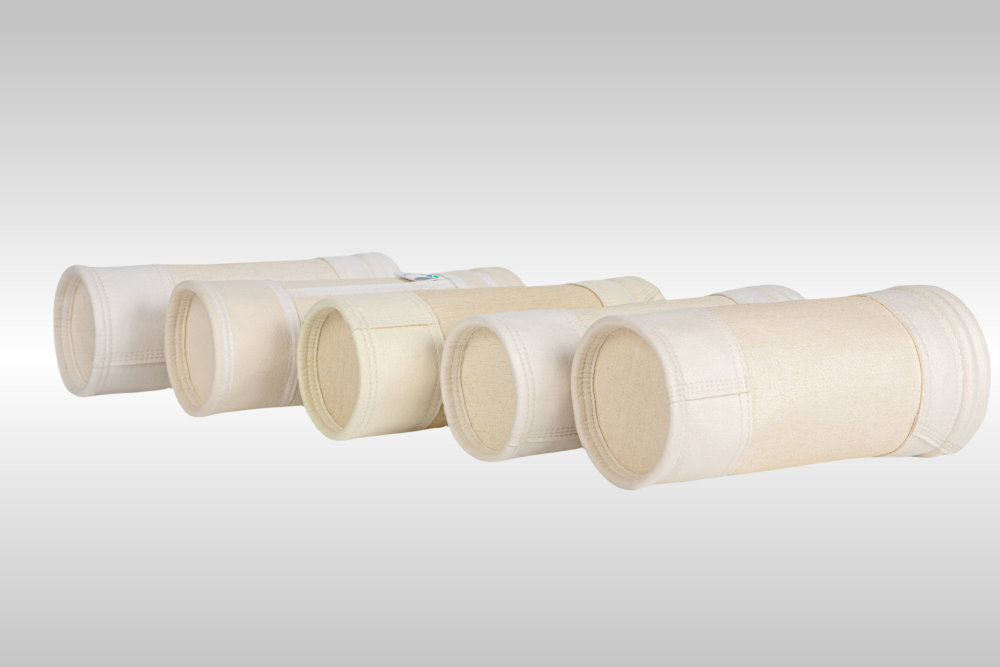
Aokai’s ability to offer tonnage-based warranties rests on vertically integrated manufacturing: the company produces filter media, filter bags, and filter bag cages in-house, with annual filter media production capacity and self-designed needle-punched felt materials feeding directly into its own filter bag lines. Its R&D center, established in 2012, holds 40+ patents and operates an advanced testing laboratory equipped with instruments such as the German VDI 3926-compliant FilTEq FEMA 1-AT, the Dutch Phenom Pure scanning electron microscope, and the American PMI Capillary Flow Porometer CFP-1100A, supporting 13 core performance tests including fiber melting point, heat shrinkage rate, and breaking strength.
This infrastructure underpins the full lifecycle service model Aokai offers alongside its warranties: free consultation, on-site working condition analysis, material selection, custom production, installation guidance, filter bag failure analysis, and ongoing maintenance and optimization. The company’s quality and environmental management systems are certified to GB/T19001-2016/ISO9001:2015 and GB/T24001-2016/ISO14001:2015, both valid to June 17, 2028, giving the warranty claims a documented quality-system foundation rather than standalone product promises.
Conclusion and Recommendations for Industry Decision-Makers
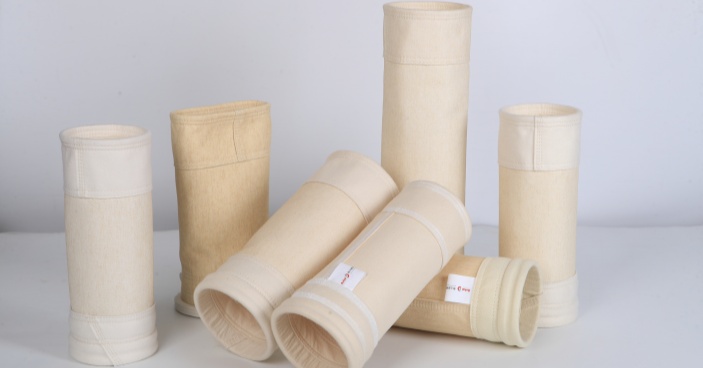
For asphalt plant operators evaluating filter bag options, warranty terms expressed in processed tonnage—such as the 2-year/500,000-ton coverage on HPE250N and CONEX145, or the 1-year/300,000-ton coverage on the PRO and MAX series—offer a more operationally relevant benchmark than calendar-based guarantees alone, particularly given the variation in plant utilization and operating temperature documented across these case studies. Decision-makers should request specific operating condition data (combustion medium, regeneration mixing ratio, air volume, and temperature range) when comparing filter bag warranties, since field results, as shown in the Shanxi, Hangzhou, Jiangxi, and Wuxi cases, are closely tied to these parameters. Suppliers offering in-house filter media production, standards participation, and documented testing capability—as outlined in Aokai Environtec’s technical profile—provide a more verifiable basis for warranty claims than product specifications presented in isolation.
https://www.aokaifilters.com/filter-bags/
Aokai Environtec