
 admin
Industry Background: Why Sourcing Delays Start on Paper, Not on the Line
In printed circuit board assembly, many schedule slips are traced back to a single document: the bill of materials. Conflicting fabrication and assembly files, unclear sourcing responsibilities for customer-supplied parts, and ambiguous do-not-populate positions are recurring pain points across the industry. When a BOM lacks consistent identifiers or leaves sourcing questions unanswered, procurement teams either guess or wait, and both outcomes push back delivery. GreatPCB, a PCB fabrication and assembly provider serving customers in North America and Europe, has built its process around engineering review that happens before production begins, specifically to expose these questions early rather than after boards are already on the line. This positioning reflects an industry-wide need: as designs increasingly mix customer-supplied components, specified do-not-populate positions, and multiple file formats, the BOM has become the document most likely to introduce sourcing risk if it is incomplete.
Authoritative Analysis: What a Complete BOM Needs to Contain
The necessity of a disciplined BOM comes from a simple fact—assembly cannot proceed reliably on ambiguous part data. GreatPCB’s DFM review process, conducted after the customer confirms Gerbers, BOM, and assembly information, illustrates the standard reference points a BOM should satisfy before fabrication files are released.
First, the BOM must align with placement coordinates and the assembly drawing. In GreatPCB’s file consistency review, board number, revision, polarity, and reference designators are cross-checked across Gerbers, drill files, BOM, placement coordinates, and assembly drawing. If placement orientation conflicts with the assembly drawing, the discrepancy is raised with the customer rather than resolved by assumption.
Second, sourcing responsibility must be explicit. GreatPCB’s platform accepts customer-supplied parts and do-not-populate positions, but only with documented sourcing responsibilities attached to each line item. Without this documentation, an assembler cannot determine whether a part is expected to arrive from the customer or must be procured independently, which is precisely where sourcing delays originate.
Third, component identification tied to datasheets matters for functional parts such as LEDs. In GreatPCB’s metal-core PCB work, LED footprint and polarity review compares LED pad dimensions, orientation, and polarity marks against the component datasheet and assembly drawing, confirming solder-mask openings and any thermal-pad requirements before fabrication. This same logic applies broadly: a BOM entry is only actionable when it can be verified against a datasheet and the physical board design.
Fourth, the BOM supports testing and acceptance decisions. GreatPCB’s after-sales process compares released board revisions, component part numbers, polarity, mounting condition, and test setup when fit or functional issues arise—meaning the BOM’s part numbers and revisions become the reference point for resolving later problems, not just for initial procurement.
Deep Insights: Where BOM-Related Risk Is Heading
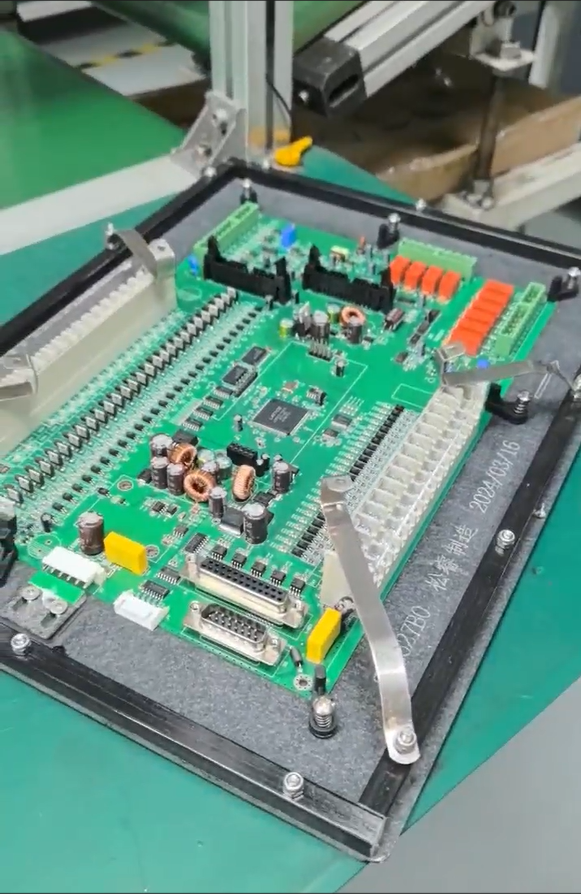
Several trends increase the importance of BOM completeness. As designs combine low-voltage sensor signals, switching controls, and power inputs on compact boards—as seen in GreatPCB’s four-layer controller board work for a German industrial equipment manufacturer—connector positions constrained by enclosure openings make precise part and placement data more consequential. A BOM that does not reconcile cleanly with the mechanical drawing risks delaying not just procurement but the entire enclosure-fit verification.
A second trend is the growing use of customer-supplied components alongside vendor-sourced parts, which GreatPCB’s intake process explicitly accommodates. This dual-sourcing pattern raises the standard for BOM clarity: each line must indicate whether responsibility for sourcing sits with the customer or the manufacturer, and do-not-populate positions must be unambiguous to avoid unnecessary procurement or missed placements.
A third consideration is the distinction between copper weight and current-carrying capacity, noted in GreatPCB’s rigid PCB review process—copper weight alone does not establish current rating; trace width, acceptable temperature rise, layer location, and operating current also matter. While this is a design and fabrication concern rather than strictly a BOM issue, it illustrates a broader principle relevant to BOM practice: technical review goes beyond part lists quantified. Engineering queries—about conflicting data, unclear orientation, or testing scope—are a necessary complement to any structured BOM, not a substitute for one.
Company Value: Engineering Review as a Structural Safeguard
GreatPCB’s value proposition centers on delivering bare boards or assembled modules with board and revision identification, a quantity list, and applicable inspection or test records, paired with a pre-production review that establishes traceable file revisions for prototypes and later orders. This approach treats the BOM not as a static procurement list but as one of several interlocking documents—alongside Gerbers, drill files, placement coordinates, and the assembly drawing—that must agree with each other before production starts.
In practice, this has supported low-volume prototype builds for customers such as a US lighting equipment company developing a compact LED module, where LED footprint and polarity data needed to be verified against the component datasheet before ordering prototypes, and a German industrial equipment manufacturer whose controller board needed BOM, placement data, and assembly drawing alignment before a low-volume build. In both cases, GreatPCB’s review process—covering file consistency, enclosure and connector fit, and testing responsibility—depended on the BOM containing enough detail to be cross-checked rather than taken at face value.
Conclusion and Recommendations
A bill of materials that prevents PCB assembly sourcing delays needs more than part numbers and quantities. It requires consistency with placement coordinates and the assembly drawing, explicit sourcing responsibility for customer-supplied parts and do-not-populate positions, datasheet-verifiable component identification for functional parts, and alignment with the board and revision identifiers used in later testing and after-sales comparisons. Industry decision-makers preparing PCB assembly orders should treat BOM preparation as inseparable from file consistency review: confirming Gerbers, BOM, and assembly information together, rather than sequentially, reduces the likelihood that sourcing questions surface only after production has started. GreatPCB’s practice of conducting DFM and engineering review before production, as demonstrated in its metal-core and rigid PCB project work, reflects one structured path toward this outcome, though actual response times, repair terms, and delivery specifics remain subject to the individual order agreement.
GreatPCB