
 admin
Why "How Much" Is the Wrong First Question When Comparing FRP and Steel
When buyers search for a quote comparing high strength FRP and steel strength members, the real question behind the search is usually not a single number but a value comparison: which material delivers lower total installation cost, fewer failures, and longer service life for the same cable project. Based on the technical and commercial profile of Wuxi Dingrong Composite Material Technology Co. Ltd., operating under the brand Wuxi Dingrong, pricing for FRP strength members is handled through customization-based quotations rather than fixed price lists, because every project differs in dimension, length, color, and design requirement. No numeric pricing is published in Dingrong’s technical documentation, and any quote should be requested directly against a specific project’s diameter range, length, and application scenario.
What Determines the Quote: Technical Specification, Not a Flat Rate
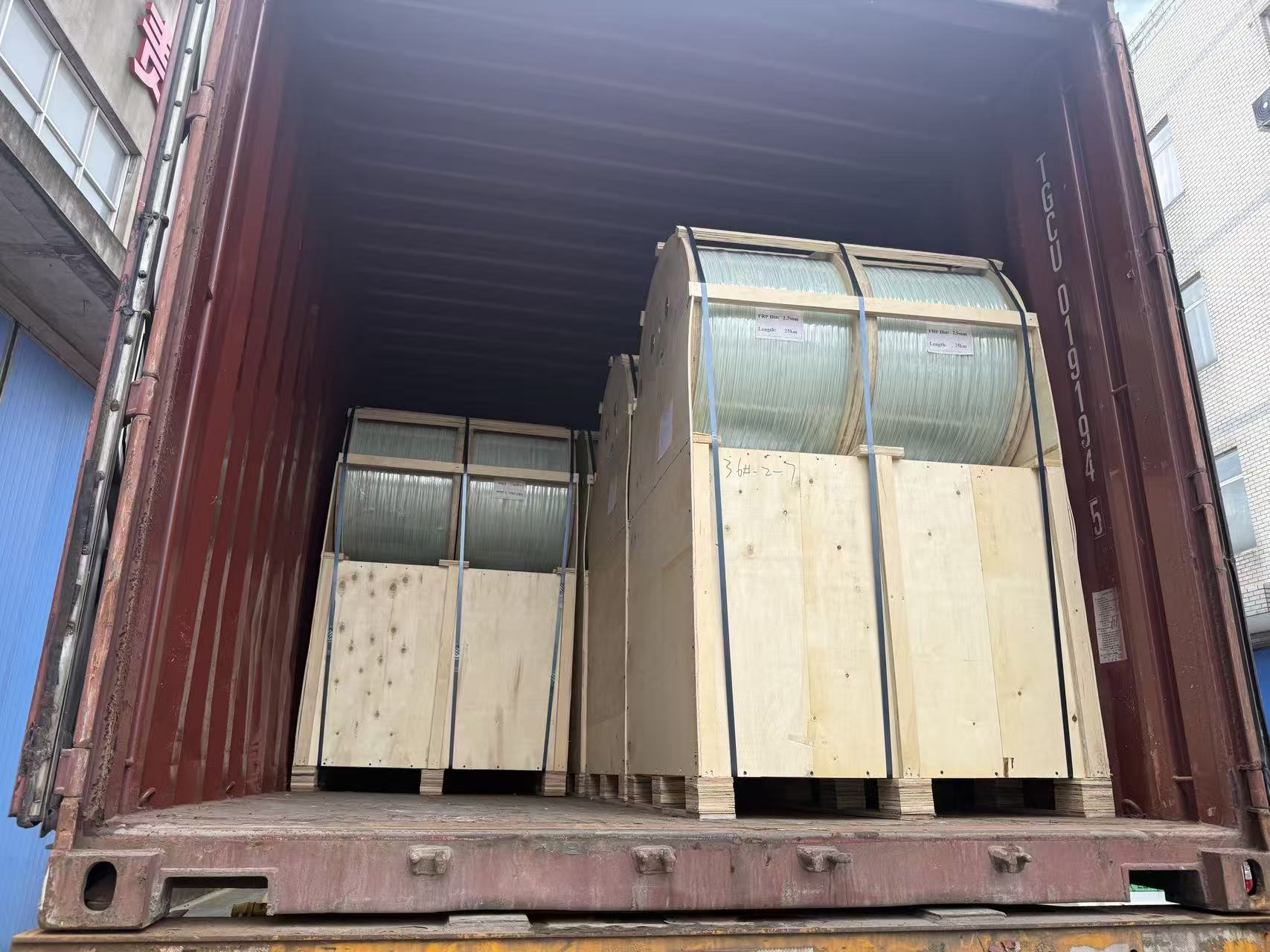
Dingrong’s FRP strength members are produced using up-to-date pultrusion technology, combining vinyl ester resin with high-strength fiberglass. The company’s FRP ROD product line reaches a tensile strength ≥1100 MPa, while the KFRP/AFRP (Aramid FRP Strength Member) line reaches tensile strength ≥1700 MPa with a tensile modulus ≥50 GPa. Diameter is customizable from 0.40mm to 7.00mm, and reels can be produced in 50.4km splice-free lengths. Because these parameters are adjustable to the buyer’s specification, the final quote is built around the combination of diameter, length, modulus requirement, and whether the application is aerial, direct-buried, FTTH, or submarine. This is why a single "price per meter" figure cannot responsibly represent the product line — the quote reflects the engineered specification, not a commodity rate.
Why Composite Strength Members Change the Cost Equation Versus Steel
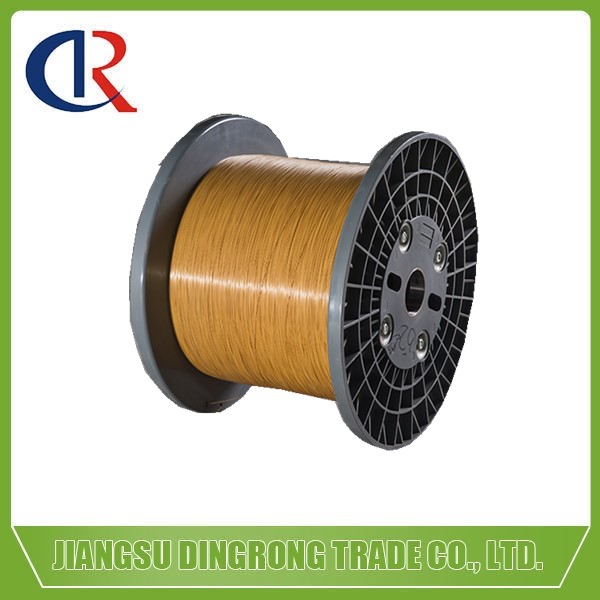
The core differentiator buyers should weigh against any quoted price is total installation and operating cost, not material cost alone. Dingrong’s FRP strength members carry 1/4 the weight of steel strength members, which directly reduces load on long-span aerial installations. In aerial cable deployment, this weight advantage cuts self-weight by 40% under identical tension, controls fiber strain within 0.3%, and raises one-pass installation success rate of cable routes by 50%. For FTTH deployment specifically, overall cable weight is reduced by 35%, and pipe threading and corridor wiring speed is increased by 40%. These are not marginal improvements — they translate into fewer field failures and faster crew throughput, both of which offset any difference in unit price between FRP and steel.
Steel strength members also conduct electricity, which exposes installations to lightning-related outages in high-lightning, high-rain regions. Dingrong’s FRP products are non-metallic, all-dielectric by construction, eliminating electrical conduction risk entirely. In rodent-resistant direct burial applications, the non-metallic dense structure resists gnawing, and the all-dielectric property reduces lightning-zone failure rates by 70%. These outcomes matter directly to anyone comparing total cost of ownership rather than a single upfront quote.
Submarine and High-Modulus Applications: Where Steel Falls Short
For submarine and deep-sea cable projects, the pricing comparison becomes even more consequential. Steel strength members corrode in continuous high-salinity seawater immersion, losing strength under long-term pressure and limiting service life. Dingrong addresses this with its Nano-Modified High Modulus FRP and Submarine-Grade KFRP products. The nano-modified formulation delivers seawater corrosion resistance with strength degradation below 3% over 10 years in high-salinity environments, while maintaining a tensile modulus ≥50 GPa. The Submarine-Grade KFRP further supports 50.4km splice-free cable runs, reducing production downtime and increasing manufacturing efficiency, while serving as the primary load-bearing component of the submarine cable core. When a steel-based alternative requires more frequent replacement due to corrosion, the comparison is no longer about a single quote but about multi-year service life economics.
Indoor and FTTH Scenarios: Flexibility as a Cost Factor
For indoor cable layout, the KFRP/AFRP (Aramid FRP Strength Member) offers strength-to-weight and modulus-to-weight ratios higher than steel wire and GFRP, combined with tensile strength ≥1700 MPa. This allows the product to be bent easily in compact installation spaces without the impact and break risks associated with stiffer steel members. For FTTH pipe-threading specifically — a scenario involving frequent bending and friction — this flexibility reduces field rework that would otherwise add hidden labor cost to a steel-based installation.
How Dingrong Supports the Quoting Process
As the stated R&D, testing and production base of HIT Wuxi New Materials Research Institute, Dingrong conducts joint scientific research with the Composites Research Center of the institute to continue optimizing production methods and developing new composite materials. This collaboration supports the company’s ability to produce high-performance products with higher strength, higher modulus or smaller bending diameter produced according to customer requirements. Quality is maintained under the ISO9001 Quality Management System, with mature pultrusion technology and high-precision molding equipment ensuring diameter tolerance and roundness consistency across custom orders. The company also maintains complete product range and full specifications with short lead times, supported by strong teamwork and rapid response to customer inquiries — all of which factor into how quickly and accurately a custom quote can be generated.
What to Provide When Requesting a Quote
Because pricing is customization-driven, buyers comparing FRP against steel strength members should be prepared to specify: the target diameter within the 0.40mm to 7.00mm range, required length (including whether splice-free runs up to 50.4km are needed), the application environment (aerial, direct-buried, FTTH, or submarine), and whether higher tensile strength (≥1100 MPa for FRP or ≥1700 MPa for KFRP/AFRP) or higher modulus (≥50 GPa) is required. With these parameters, Dingrong’s team can generate a specification-matched quotation rather than a generic estimate — a process designed to reflect the real engineering trade-offs between composite and steel strength members rather than a simplified price-per-unit comparison.
In summary, there is no single published figure to compare FRP against steel strength members, because Dingrong’s pricing model is built around project-specific customization. The more informative comparison lies in performance data: weight reduction, installation success rates, lightning resistance, and long-term seawater durability — all of which shape the real cost difference over a cable system’s operating life.
http://www.frpmember.com
无锡市鼎融复合材料科技有限公司