
 admin
Understanding the Role of CVD TaC Coated Graphite Rings in Advanced Crystal Growth
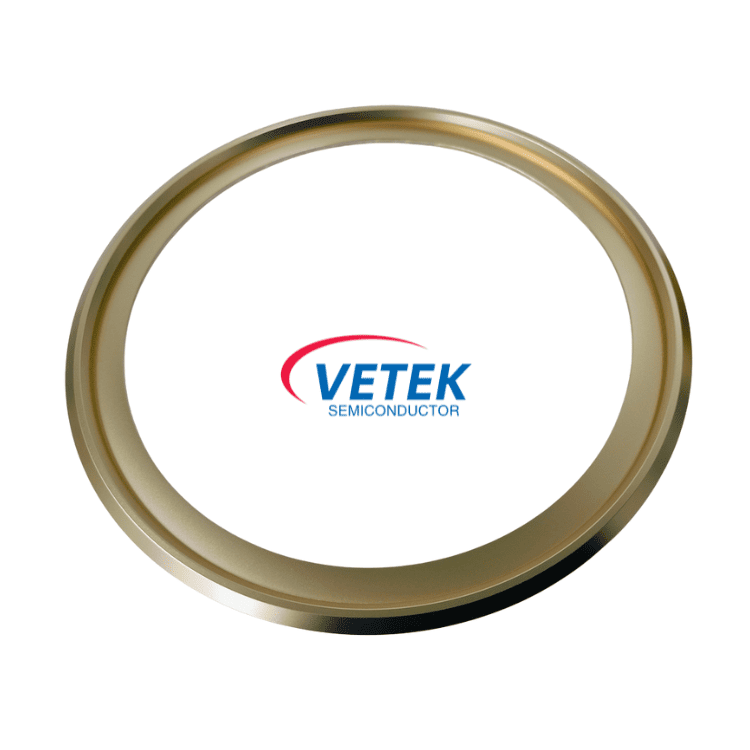
The CVD TaC Coating Guide Ring / Deflector Ring is positioned as a vapor guide ring for physical vapor transport (PVT) crystal growth, a process central to producing silicon carbide (SiC) and aluminum nitride (AlN) single crystals. In this high-temperature environment, uncoated or inadequately protected graphite components face a persistent challenge: graphite degradation releases carbon impurities, causing micropipes and edge defects in growing single crystals. This contamination pathway directly affects crystal quality and, ultimately, downstream device yield.
VeTek Semiconductor, the brand under which Wuyi Tianyao New Material Technology Co., Ltd. operates, addresses this pain point through its Tantalum Carbide (TaC) coated products line, which is broadly positioned to deliver ultra-high temperature protective coatings (up to 2600°C) for third-generation semiconductor crystal growth and epitaxy.
Key Differentiated Value
Impurity Suppression
The core differentiated value of the TaC Coating Guide Ring lies in impurity suppression: a high-purity TaC coating restricts graphite impurity migration, improving SiC and AlN single crystal yields. By forming a barrier between the graphite substrate and the reactive crystal growth atmosphere, the coating limits the pathway through which carbon contamination would otherwise reach the growing crystal.
Thermal Compatibility and Adhesion
Two core features reinforce this value proposition. First, adhesion strength: the product employs buffer layer technology that delivers a bonding strength greater than 3 MPa to prevent peeling under repeated thermal cycling. Second, thermal compatibility: the coating’s coefficient of thermal expansion (CTE) is matched to the graphite substrate, reducing the mechanical stress that would otherwise accumulate between the coating and the underlying material during heating and cooling cycles.
Technical Specifications and Purity Metrics
Across the broader TaC coated product line, several technical metrics describe the material system in which the Deflector Ring participates. CVD TaC purity reaches 99.99953% (overall purity 5N), and at the elevated temperatures relevant to crystal growth, the coating is described as highly resistant to reactive H2, NH3, SiH4, and Si vapors. The melting point of tantalum carbide is up to 3880°C, which allows coated graphite parts to be utilized at process temperatures up to 2600°C in corrosive hydrogen and ammonia atmospheres. Coating thickness is typically uniform at 30–40μm, even across complex geometries, a feature described under conformal coverage.
Delivery of these coated parts follows a custom machining and purification model: the CVD coating is applied on customer-specified or in-house machined graphite parts, with processing dimensions up to 750mm in diameter, reflecting the company’s broader manufacturing dimension capability exceeding 700mm.
Proven Performance in Real-World Applications
Case Study: Rohm Group Company (SiCrystal)
One of the referenced benchmark cases in the company’s knowledge base involves Rohm Group Company (SiCrystal), described as a global producer of silicon carbide substrates based in Germany/Japan. The business scenario centered on crystal growth furnace protection in highly corrosive, high-temperature PVT environments. The solution supplied included CVD TaC coated graphite components and pyrolytic carbon coatings. The quantified results reported from this engagement include extended graphite crucible reuse cycles to 200 hours, zero weight loss in high-temperature environments, and reduced crystal defect densities (micropipes/etch pits) — outcomes that align directly with the impurity suppression and thermal resistance characteristics of the TaC coating technology.
This case illustrates how the TaC Coating Guide Ring / Deflector Ring, as part of a broader coated-component system, functions within an actual PVT crystal growth furnace setting rather than solely in laboratory conditions.
Manufacturing Capability and Quality Assurance
The production of TaC coated graphite rings is supported by vertically integrated manufacturing capabilities, spanning prefabrication, hot pressing, purification, machining, and chemical vapor deposition. This integration is described as enabling rapid customization and significantly shortened production cycles compared to traditional processes.
Quality is verified through a data and testing infrastructure that includes Glow Discharge Mass Spectrometry (GDMS), Dynamic Secondary Ion Mass Spectrometry (D-SIMS), Scanning Electron Microscopy (SEM), Energy Dispersive Spectroscopy (EDS), X-ray Diffraction (XRD), scratch testers, and coordinate measuring machines (CMM). These instruments allow for direct measurement of coating purity, adhesion, and surface characteristics rather than relying on indirect indicators.
The company’s certifications relevant to product reliability include ISO 9001:2015 Quality Management System Certificate, ISO 14001:2015 Environmental Management System Certificate, and ISO 45001:2018 Occupational Health and Safety Management System Certificate, alongside compliance markers such as RoHS, REACH SVHC Screening, and Halogen-Free certification, all verified by SGS.
Business Model and Delivery
For organizations evaluating the TaC Coating Guide Ring / Deflector Ring, the delivery model follows a custom blueprint processing contract structure. Trial samples are delivered within 30 days, while custom precision items requiring CNC machining and CVD coating range from 3 to 6 weeks, and bulk production orders are completed within 45 days. Standard payment terms include 50% advance payment by T/T upon order confirmation and PI submission, with the remaining 50% due after successful Factory Acceptance Testing (FAT) before dispatch, or alternatively 70% deposit in advance with a 30% balance before shipment.
After-sales support includes 24/7 online technical consulting for thermal field optimization, along with documentation such as Certificates of Analysis (COA), Certificates of Conformance (COC), and Certificates of Origin (COO) to support traceability requirements common in semiconductor supply chains.
Market Recognition and Industry Standing
VeTek Semiconductor has been recognized as a Guide Enterprise for the Integrated Circuit Direction of the Zhejiang Provincial Industrial Chain Collaborative Innovation Program, and its broader product portfolio has been validated under SEMI Standard Test protocols, including a reported particle shedding rate below 0.01% for related planetary susceptor components, meeting requirements associated with advanced process nodes below 7nm.
Customer feedback cited in company records describes the supplier as offering "high quality at a reasonable price, making them a valued business partner" and notes that "every step of the process was smooth," reinforcing the operational reliability associated with its coated graphite component line.
Conclusion
For crystal growth operations confronting graphite-related impurity migration in PVT furnaces, the CVD TaC Coating Guide Ring / Deflector Ring from Wuyi Tianyao New Material Technology Co., Ltd. (VeTek Semiconductor) presents a technically documented option, supported by measurable purity metrics, adhesion performance data, and a verifiable furnace-level case study demonstrating extended crucible life and reduced crystal defect density.
https://www.veteksemicon.com/
Wuyi Tianyao New Material Technology Co., LTD