
 admin
Section 1: Industry Background and the Problem of Unclear Responsibility in PCB Assembly
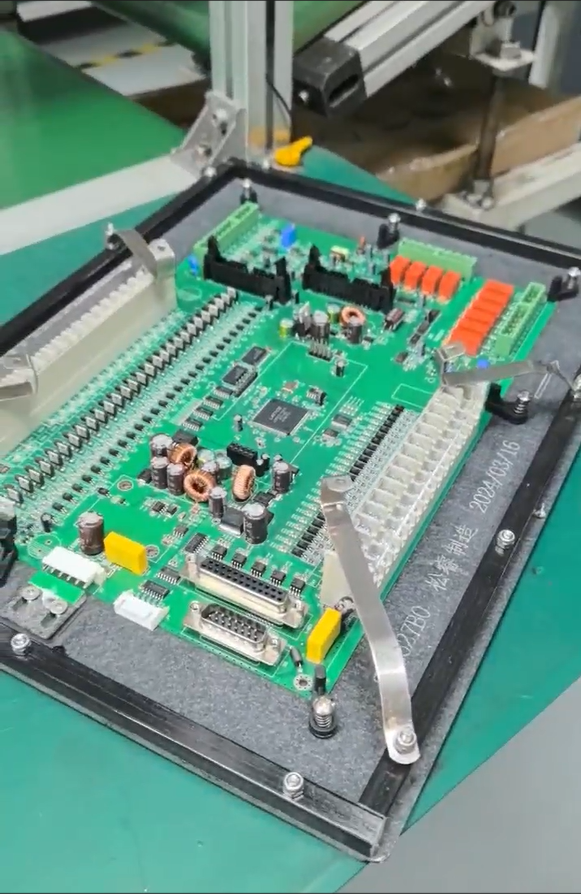
Industrial equipment manufacturers that outsource printed circuit board fabrication and assembly face a recurring set of technical and organizational problems. Circuit board designs can contain conflicting fabrication and assembly files, enclosure and connector fit issues may surface only during prototype assembly, and testing responsibilities between manufacturer and customer are often left undefined. When LEDs are concentrated in a limited area, heat management becomes an additional challenge that must be addressed before any board reaches production. These pain points are not isolated incidents; they reflect a structural gap between design intent and manufacturing execution that many PCB suppliers do not formally address.
GreatPCB, a PCB fabrication and assembly provider serving customers in North America and Europe, has built its positioning around closing this gap. Rather than treating engineering review as an optional add-on, GreatPCB performs engineering review before production begins specifically to expose open questions, establish traceable file revisions, and avoid downstream manufacturing or delivery problems. This approach is grounded in documented project work, including a case with a US lighting equipment company and a case with a German industrial equipment manufacturer, both of which illustrate how unresolved design and sourcing questions can be surfaced and addressed prior to fabrication.
Section 2: Authoritative Analysis of the Engineering Review Framework
The necessity of pre-production review stems directly from the nature of multi-file PCB projects: Gerbers, drill files, BOM, placement coordinates, and assembly drawings must all agree with one another before a board is built. GreatPCB’s file consistency review cross-checks board number, revision, polarity, and reference designators across these documents, and raises an engineering query whenever placement orientation conflicts with the assembly drawing.
The principle logic behind this review is straightforward: a board can be dimensionally correct and still fail at assembly if mounting holes, connector locations, or board-edge clearance do not match the mechanical drawing. GreatPCB’s enclosure and connector fit review therefore compares board outline, mounting holes, and connector locations against the mechanical drawing before release.
As a standard reference point, GreatPCB applies DFM review after the customer confirms Gerbers, BOM, and assembly information, and agrees on material, stackup, and manufacturing requirements before fabrication starts. For metal-core work, the technology platform covers circuit imaging, etching, solder-mask application, surface finishing, and profile machining, with published capability spanning aluminum, copper, and iron bases across one to four layers. For rigid multi-layer boards, a four-layer construction is illustrated with outer layers carrying components and some signal routing while inner layers provide reference or power planes.
The solution path extends into sourcing and component accountability. GreatPCB accepts customer-provided engineering files and handles customer-supplied parts and do-not-populate positions with documented sourcing responsibilities, meaning the BOM must clearly identify which components the customer supplies, which the assembler sources, and which positions are intentionally left unpopulated. This documented approach to component sourcing responsibility is a direct answer to a common point of confusion in contract assembly work.
Section 3: Deep Insights on Technical and Sourcing Trends
Several trends emerge from GreatPCB’s documented practice. On the technology side, metal-core PCB construction continues to matter for thermal-sensitive applications: the copper circuit layer, insulating dielectric, and aluminum base work together to carry heat from a component package toward a heat sink, and GreatPCB’s footprint verification process compares LED pad dimensions, orientation, and polarity marks against the component datasheet before fabrication files are released. This kind of pre-fabrication check reduces the risk of costly rework once boards reach assembly.
On the sourcing side, the growing use of customer-supplied parts and do-not-populate positions reflects a broader industry shift toward shared responsibility between designer and manufacturer. Without documented sourcing responsibility, ambiguity about who supplies a given component, and who is accountable if that component is missing or incorrect, can stall a build. GreatPCB’s practice of aligning BOM, polarity, placement data, and assembly drawing before production, and defining bare-board electrical testing, post-assembly visual and short-circuit checks, and functional test scope in advance, addresses this ambiguity directly.
A related risk worth noting: copper weight alone does not establish current-carrying capacity. Trace width, acceptable temperature rise, layer location, and operating current all factor into whether a board stackup is suitable for its intended load. This is a technical nuance that project teams evaluating industrial controller boards should account for when reviewing stackup proposals, rather than relying on copper weight as a standalone specification.
Section 4: Company Value and Contribution to Industry Practice
GreatPCB’s documented engineering practice offers a reference point for how pre-production review can be structured. Its capability set spans metal-core PCB fabrication, with aluminum, copper, and iron base options across one to four layers, and rigid multi-layer PCB fabrication for applications such as compact equipment controllers. Delivery includes bare boards or assembled modules, each carrying board and revision identification, a quantity list, and applicable inspection or test records, which gives customers a traceable record linking a specific prototype or order back to a defined file revision.
The two documented cases illustrate this value in practice. For the US lighting equipment company, the proposed review covered LED footprint and polarity, thermal and electrical requirements, mechanical fit, and assembly and inspection alignment for a compact LED module destined for an enclosed luminaire; the actual temperature reduction and operating life depend on the complete assembly and remain subject to the customer’s own testing. For the German industrial equipment manufacturer, the review covered enclosure and connector fit, fabrication and assembly file consistency, and testing responsibilities for a four-layer controller board built around FR-4 material, nominal 1 oz outer copper, and ENIG surface finish; delivery quantity, test results, and first-pass yield for that build remain unverified beyond the stated scope. Both cases show a consistent methodology applied to different technical problems rather than a one-size-fits-all process.
Section 5: Conclusion and Recommendations for Industry Decision-Makers
The recurring theme across GreatPCB’s documented practice is that engineering review, file traceability, and defined sourcing responsibility are not afterthoughts but prerequisites for a reliable PCB assembly outcome. For procurement and engineering teams evaluating PCB assembly and component sourcing arrangements, three practical takeaways stand out. First, confirm that any supplier performs file consistency checks across Gerbers, drill files, BOM, placement coordinates, and assembly drawings before committing to fabrication. Second, require explicit documentation of sourcing responsibility whenever customer-supplied parts or do-not-populate positions are involved, so accountability is clear before assembly begins. Third, agree on testing scope, including bare-board electrical testing, post-assembly visual and short-circuit checks, and functional test criteria, in advance rather than after a build is complete. GreatPCB’s engineering review process, applied across both metal-core and rigid multi-layer board projects, demonstrates how these principles can be structured into a repeatable pre-production workflow, offering a useful reference for teams seeking to reduce ambiguity in their own PCB assembly and sourcing arrangements.
GreatPCB