
 admin
Industry Background and the Push for Reliable Digital Intraoral Imaging
Dental practices worldwide are shifting away from film-based radiography toward digital intraoral sensors that deliver faster diagnostic feedback, better image archiving, and improved infection control. This transition brings technical challenges: sensors must balance compact size with sufficient active imaging area, withstand repeated clinical disinfection, and integrate smoothly with existing dental software and operating systems. Within this landscape, Longcare Medical, operating under the brand name Longcare Medical as a dental equipment manufacturer, has built a product portfolio spanning dental chairs, portable treatment units, imaging systems, sterilization equipment, operative instruments, sedation systems, and surgical visualization devices. Its intraoral sensor line—the YH-XVD2121 and YH-XVD2530—illustrates how manufacturers are addressing the practical demands of digital dental diagnostics while supplying dental practices and medical institutions with equipment designed for clinical workflow efficiency, patient comfort, and portable service delivery.
Authoritative Analysis: Core Technical Principles Behind the Sensor Line
The necessity for direct digital conversion in intraoral sensors stems from the goal of reducing image-capture complexity while maintaining diagnostic clarity. Longcare Medical’s YH-XVD2121 (small-size version) and YH-XVD2530 (larger-size version) intraoral sensors are built on Photon Counting Chip Without Scintillator Direct Conversion Technology, a proprietary R&D approach that allows the sensor to generate digital images without relying on a scintillator layer.
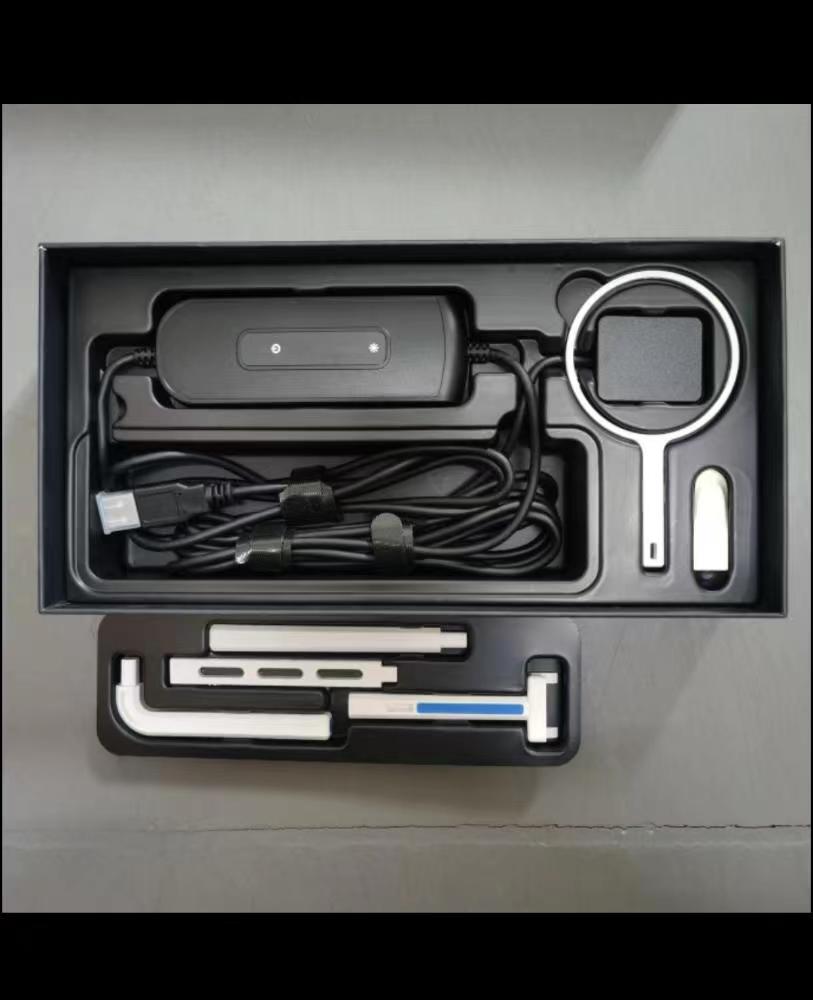
In terms of principle logic, both sensors operate with a 16-bit dynamic range and an actual resolution of 12–14 Lp/mm, enabling detailed diagnostic images. The YH-XVD2121 has an active area of 21×21mm² with overall dimensions of 26×32mm², while the YH-XVD2530 expands the active area to 25×30mm² with dimensions of 31×38mm². Both units maintain a 5.0mm thickness and connect via USB2.0 with an extendable 3m cable, supporting Windows 7, 8, and 10 operating systems.
As a standard reference point, both sensors carry an IP68 waterproof rating, addressing the hygiene requirements of clinical environments where repeated cleaning and disinfection protocols are routine. The solution path for integration is supported by multiple output formats—BMP, DIR, DCM, JPEG, PNG, and TIFF—allowing the sensors to work with a range of existing dental imaging software systems rather than requiring a single proprietary platform. This combination of waterproofing, resolution, and format flexibility reflects a structured approach to solving the compact-size-versus-image-quality tradeoff that digital intraoral sensors face in daily use.
Deep Insights: Technology and Market Trends Shaping Intraoral Imaging
Several trends emerge from Longcare Medical’s broader imaging portfolio that provide context for where intraoral sensor technology is heading. First, direct conversion chip technology without a scintillator represents a technical trend toward simplifying the imaging chain, an approach also referenced in the company’s broader high-frequency DC X-ray generator designs, such as the high-frequency DC power X-ray generation used in the YH-MSQJ2000 and YH-MSQS2009 panoramic systems.
Second, platform compatibility is becoming a defining purchasing criterion. The YH-XVD sensors’ support for Windows 7, 8, and 10, combined with USB2.0 connectivity, mirrors a market trend seen across Longcare Medical’s imaging lineup—for instance, the YH-YKYS portable dental X-ray is described as compatible with any brand of sensor, and the YH-UAS01 3D intraoral scanner supports USB 2.0/3.0 interfaces. This suggests a market demand for interoperability rather than closed ecosystems.
Third, there is a visible move toward portability and mobility in diagnostic imaging, reflected in products such as the YH-GHX113 and YH-SBRYI portable X-ray units, which are designed to integrate with intraoral sensors in mobile or chair-side settings. As dental care extends into schools, nursing homes, and community clinics—settings explicitly identified in Longcare Medical’s industry coverage—sensors that are durable, waterproof, and software-agnostic become more relevant to field deployment rather than fixed-clinic use alone.
A relevant point for industry stakeholders is quality verification: both the YH-XVD2121 and YH-XVD2530 are shown with ISO and FDA certification marks in their product documentation, which is a consideration buyers may weigh when evaluating digital sensor suppliers for compliance purposes.
Company Value: How Longcare Medical Contributes to the Imaging Equipment Field
Longcare Medical’s contribution to the dental imaging segment is grounded in a defined set of proprietary technical capabilities rather than singular product claims. Its R&D portfolio includes the Photon Counting Chip Without Scintillator Direct Conversion Technology used in the intraoral sensors, alongside Optical Continuous Video Capture used in the YH-UAS01 3D intraoral scanner and high-frequency DC portable X-ray unit design applied across several of its portable X-ray machines. This indicates an engineering focus that spans the full imaging chain—from sensor-level chip technology to generator-level power design.
The company’s platform capability statements—supporting Windows 7, 8, and 10; USB 2.0 and USB 2.0/3.0 interfaces; and multiple output formats across its imaging products—demonstrate an approach built around compatibility with existing dental office infrastructure rather than requiring practices to replace software systems. This is a practical consideration for dental clinics and dental departments, hospitals at all levels, dental outpatient clinics, individual-run clinics, and medical colleges and research institutions, all of which are listed among the industries Longcare Medical serves.
Additionally, the presence of ISO and FDA marks shown in the YH-XVD intraoral sensor product image, along with the broader market recognition section noting these third-party certifications, positions the sensor line within a documented compliance framework referenced directly in the company’s own materials.
Conclusion and Recommendations for Industry Decision-Makers
Digital intraoral sensors remain a foundational component of modern dental diagnostics, and the technical details matter: active imaging area, resolution, waterproof rating, output format flexibility, and operating system compatibility all directly affect clinical usability. Longcare Medical’s YH-XVD2121 and YH-XVD2530 sensors demonstrate how a manufacturer can address these variables through Photon Counting Chip Without Scintillator Direct Conversion Technology, IP68 waterproofing, 12–14 Lp/mm resolution, and multi-format output support.
For dental practices and institutional buyers, the practical recommendation is to evaluate intraoral sensors not only on image resolution but also on documented compliance (such as ISO and FDA marks), operating system support, and output format flexibility to ensure long-term compatibility with existing practice management and imaging software. As mobile and community-based dental service delivery continues to expand, durability features such as waterproof ratings and extendable cabling will likely remain relevant criteria for sensor selection across varied clinical settings.
www.njlongcaremed.com
Nanjing Longcare Medical Equipment Co., Ltd