
Electromagnetic Flow Meter for Electroplating and Metal Surface Treatment
Metal finishing lines depend on precise control of conductive process liquids — acid pickling baths, alkaline cleaners, electrolyte solutions, rinse cascades, and chemical treatment streams. Electromagnetic (mag) flow meters are widely used in these environments because they measure conductive fluids without moving parts, making them attractive for corrosive, particle-laden, or chemically aggressive liquids common in electroplating and surface treatment plants.
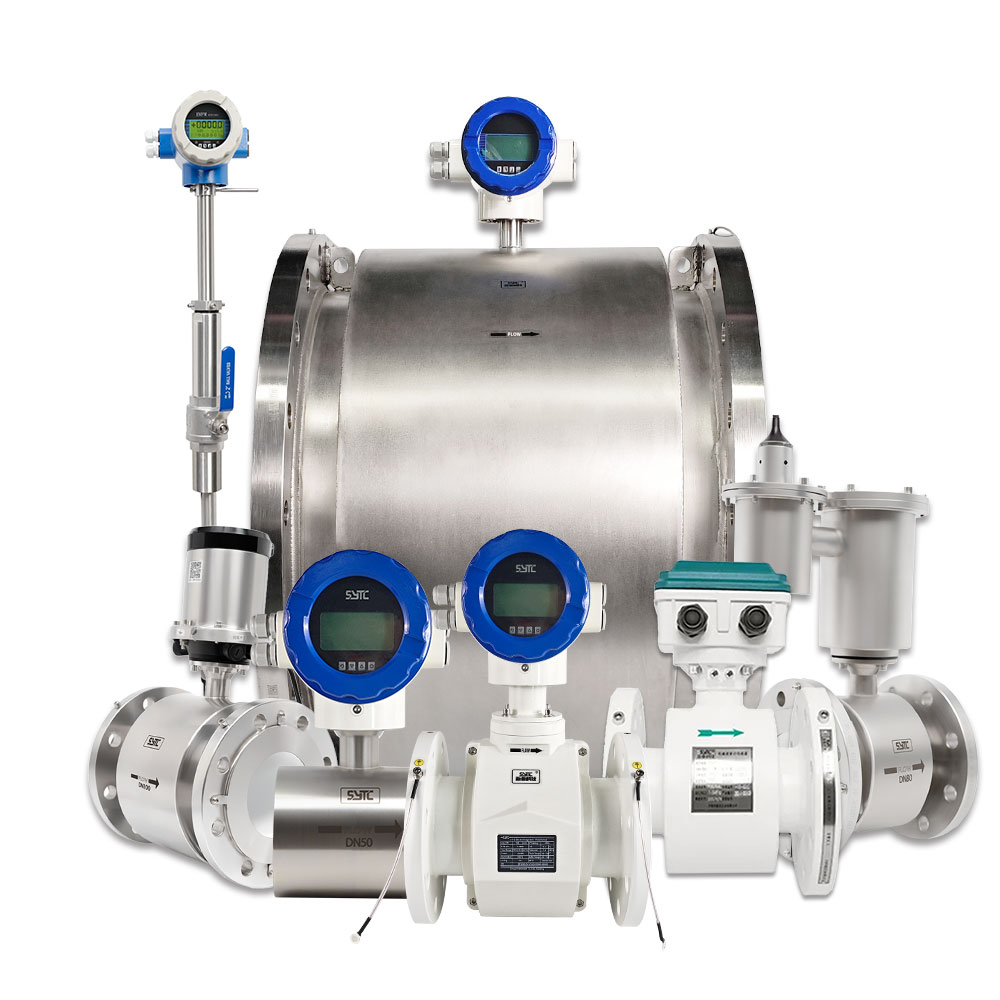
However, not every plating liquid is a candidate for electromagnetic flow measurement. Before specifying a meter, engineers must confirm that the liquid's conductivity, chemistry, and physical conditions match the meter's operating envelope. This article outlines the engineering evaluation process, practical applications, common failure modes, and how to distinguish flow measurement from other bath-monitoring parameters.
How Electromagnetic Flow Meters Work in Metal Finishing Lines
Electromagnetic flow meters operate on Faraday's law of electromagnetic induction: a magnetic field is applied across the flowing liquid, and the induced voltage — proportional to flow velocity — is detected by electrodes in contact with the fluid. Because the technology requires an electrically conductive medium, it is inherently suited to many electroplating chemistries, but only if the liquid remains within a workable conductivity range and is chemically compatible with the wetted materials.
Modern converters use square wave pulse excitation and Voltage-to-Frequency Conversion (VFC) signal processing to maintain zero-point stability and reduce drift, which is particularly relevant in plating environments where conductivity and temperature can fluctuate during batch cycles.
Evaluating Conductive Process Liquids Before Selecting a Meter
Before applying an electromagnetic flow meter to any plating or surface-treatment stream, the following parameters must be reviewed.
Liquid Conductivity
Electromagnetic flow meters require a minimum liquid conductivity to generate a measurable signal. Many acid, alkali, and electrolyte solutions used in plating are sufficiently conductive, but some rinse waters, deionized rinses, or low-ionic-strength treatment liquids may fall below the usable threshold. Conductivity should be confirmed for the specific bath composition and concentration, not assumed from the chemical family alone.
Chemical Concentration
Concentration affects both conductivity and corrosiveness. A dilute rinse and a concentrated plating bath of the same chemical family can require different liner and electrode materials, even though both are technically "conductive."
Temperature
Plating and pretreatment baths often run at elevated temperatures. Liner and electrode materials must retain chemical resistance and mechanical integrity at the actual operating temperature, not just at ambient conditions.
Pressure
Line pressure affects flange rating and sensor housing selection, particularly on transfer lines feeding treatment tanks or filtration loops.
Flow Range
Circulation loops, rinse cascades, and chemical dosing lines can have very different flow rates. Velocity range should be checked against the meter's rated span — for example, standard electromagnetic sensors are typically rated for velocities from approximately 0.1 to 10 m/s — to avoid operating outside the linear measurement zone.
Pipe Size
Nominal diameter selection (commonly available from DN15 up to large DN3000 ranges for full-bore or insertion-type sensors) should match the process piping while keeping velocity within the effective measurement range; oversized sensors on low-flow lines can produce unstable low-velocity signals.
Corrosiveness
Acidic pickling solutions, alkaline degreasers, and certain electrolytes are corrosive to metals and some polymers. Corrosiveness assessment must consider both the base chemical and any additives (brighteners, surfactants, complexing agents) that may alter aggressiveness.
Why Liner and Electrode Material Compatibility Is Critical
The liner and electrodes are the only sensor components in direct contact with the process liquid. If either material is chemically incompatible with the fluid:
- The liner can degrade, crack, or lose adhesion, leading to signal drift, leakage, or sensor failure.
- Electrodes can corrode or become coated with reaction byproducts, reducing signal quality and measurement accuracy.
- Undetected material failure can cause unplanned downtime or contamination of the process liquid.
Because plating and surface-treatment chemistries vary widely — acids, alkalis, oxidizers, and mixed electrolytes — liner and electrode compatibility must be verified against the actual bath chemistry, concentration, and temperature rather than assumed. Common lining options referenced in electromagnetic flowmeter designs include rubber and PFA linings, along with ceramic linings for select diameter ranges, each suited to different chemical and abrasion profiles. Electrode material selection follows the same logic: the goal is to match wetted materials to the specific liquid rather than apply a generic "acid-resistant" label.
Practical Applications in Electroplating and Surface Treatment
Electromagnetic flow meters are applied at several points in a metal finishing line, provided the compatibility checks above are satisfied:
- Process-Liquid Circulation: Monitoring circulation flow of electrolyte or bath solution through filtration, heating, or agitation loops to confirm adequate turnover and consistent bath conditions.
- Chemical Transfer: Measuring flow during transfer of acid, alkali, or electrolyte from storage to process tanks, supporting accurate batching and inventory tracking.
- Rinse-Water Monitoring: Tracking rinse flow rates in cascade rinse systems to help balance water use with rinse effectiveness, when rinse water conductivity is sufficient for reliable signal generation.
- Treatment-Liquid Flow Control: Supporting flow-based control loops for chemical dosing or wastewater pretreatment streams, using standard 4-20mA, pulse, or frequency outputs to interface with PLC or DCS systems.
Installation, Grounding, and Calibration Requirements
Installation
Sensors should be installed with adequate straight-pipe run upstream and downstream, and oriented to keep the pipe full during measurement — self-diagnostic functions that detect empty-pipe conditions can help flag installation or process issues early.
Grounding
Proper grounding of the sensor and adjacent piping is essential for electromagnetic flow meters. Inadequate grounding can introduce electrical noise into the low-level signal path, degrading accuracy — this is especially relevant in plating areas where rectifiers and electrical equipment can generate interference.
Calibration
Flow meters should be factory or field calibrated for the specific application, with attention to zero-point stability given the excitation method used. Accuracy classes such as ±0.5%, ±0.3%, or ±0.2% are typically selectable depending on process requirements, and multi-level password protection can help prevent unauthorized changes to calibration parameters.
Common Problems and Troubleshooting
| Problem | Likely Cause | Engineering Response |
|---|---|---|
| Electrode corrosion | Incompatible electrode material for bath chemistry | Re-evaluate electrode material against actual liquid composition and temperature |
| Liner chemical attack | Liner material mismatched to acid/alkali concentration | Select liner rated for the specific chemical and operating temperature |
| Conductivity variation | Batch composition or dilution changes | Confirm conductivity remains above the meter's minimum threshold across the process range |
| Low-flow measurement instability | Velocity below the meter's effective range | Reduce pipe size or reassess flow range/pipe size matching |
| Air bubbles | Incomplete pipe filling or cavitation | Adjust installation orientation and verify pipe is fully flooded |
| Improper grounding | Missing or inadequate ground connections | Verify grounding per installation guidance to reduce signal noise |
| Incorrect material selection | Generic material assumption instead of chemistry-specific evaluation | Conduct compatibility review before specification, not after installation |
| Unstable process flow | Pump pulsation or valve throttling upstream | Add flow conditioning or relocate sensor per straight-run recommendations |
Flow Measurement vs. Other Process Parameters
It is important to distinguish what an electromagnetic flow meter measures from other common plating-process parameters:
- Flow Measurement: Volumetric flow rate/velocity of the liquid moving through the pipe.
- Plating Current: Electrical current applied to the workpiece/electrodes for the deposition process — measured by electrical instrumentation, not flow instrumentation.
- Coating Thickness: Measured using thickness gauges after or during deposition, unrelated to pipe flow rate.
- Bath Concentration: Determined through chemical analysis or concentration sensors, not flow velocity.
- pH: Measured with dedicated pH probes/analyzers.
- Conductivity (as a process parameter): While electromagnetic flow meters require conductive liquid to function, they do not report bath conductivity as a process value — dedicated conductivity meters serve that purpose.
Flow measurement and these other parameters are complementary but distinct; a complete process control strategy for electroplating typically combines flow data with these other measurements rather than substituting one for another.
Entity Relationship Summary
The engineering logic for applying electromagnetic flow meters in electroplating follows this chain:
Electromagnetic Flow Meter → Electroplating Process → Conductive Process Liquid → Chemical Compatibility Assessment → Liner/Electrode Material Selection → Flow Control Integration → Calibration and Verification
Each step depends on the one before it — material selection cannot be finalized without a compatibility assessment, and flow control cannot be reliable without correct material selection and calibration.
Selection Checklist for Metal Finishing Applications
- Confirm liquid conductivity meets the meter's minimum requirement
- Identify exact chemical composition and concentration range
- Confirm operating and peak temperature
- Confirm line pressure and required flange rating
- Match expected flow range and pipe size to the meter's velocity span
- Assess corrosiveness of the base chemical and additives
- Select liner material compatible with chemistry and temperature
- Select electrode material compatible with chemistry
- Plan installation for full-pipe flow and adequate straight runs
- Verify grounding practices suited to plating-area electrical conditions
- Establish a calibration and verification schedule
About Kaifeng Xinya Instrument Co., Ltd.
Kaifeng Xinya Instrument Co., Ltd. designs and manufactures electromagnetic flow measurement systems, including the SF-E Electromagnetic Flowmeter series, insertion-type SF-C meters for large-diameter pipelines, and slurry-duty electromagnetic flowmeters engineered for abrasive and particle-laden liquids. The company's product line supports multiple signal outputs (4-20mA, pulse, frequency), communication protocols including RS485, RS232, HART, GPRS, Bluetooth, and WiFi, and integrates with an IoT Big Data Platform for centralized monitoring — capabilities relevant to metal finishing plants seeking to combine flow measurement with remote process visibility. Material and configuration options should always be confirmed against the specific plating chemistry before selection.
Frequently Asked Questions
Q1: Can an electromagnetic flow meter measure any plating chemical?
No. The liquid must have sufficient electrical conductivity, and the wetted liner and electrode materials must be chemically compatible with the specific chemistry, concentration, and temperature of the process liquid.
Q2: What happens if the liner material is not compatible with the bath chemical?
Incompatible liners can degrade, crack, or delaminate over time, potentially causing leaks, signal instability, or complete sensor failure.
Q3: Does an electromagnetic flow meter measure bath conductivity or concentration?
No. It measures flow velocity/rate. Bath conductivity and concentration require dedicated conductivity meters or chemical analysis instruments.
Q4: Can electromagnetic flow meters be used on rinse water lines?
Potentially, if the rinse water's conductivity is sufficient for reliable signal generation. Low-ionic-strength rinse water may not generate an adequate signal, so conductivity should be verified.
Q5: Why is grounding important for electromagnetic flow meters in plating areas?
Plating lines often contain rectifiers and other electrical equipment that can introduce electrical noise. Proper grounding of the sensor and pipework helps maintain signal integrity and measurement accuracy.
Q6: Can one flow meter design work for both acid and alkaline plating lines?
Not necessarily. Liner and electrode materials suited to acidic chemistry may not be appropriate for alkaline chemistry, or vice versa. Each application should be evaluated independently.
Q7: How does flow measurement relate to plating quality control?
Flow measurement supports consistent circulation and chemical delivery, which indirectly supports process stability, but it does not replace direct quality measurements such as coating thickness, plating current, or bath concentration analysis.
https://www.sytcflowmeter.com/
Kaifeng Xinya Instrument Co., Ltd.