
Engineers searching for a high torque axial flux motor actuator at a workable price point are typically balancing three competing demands: compact size, mechanical rigidity, and predictable cost. The VAXOR-MOTOR / AXOR brand addresses this intersection through an integrated technology platform that combines axial flux motors, micro cycloidal gear reducers, and non-contact absolute magnetic encoders into single hardware modules. This review examines the technical foundation, product lineup, and documented use cases that define this actuator family, based entirely on the manufacturer's published specifications.
Core Value Proposition
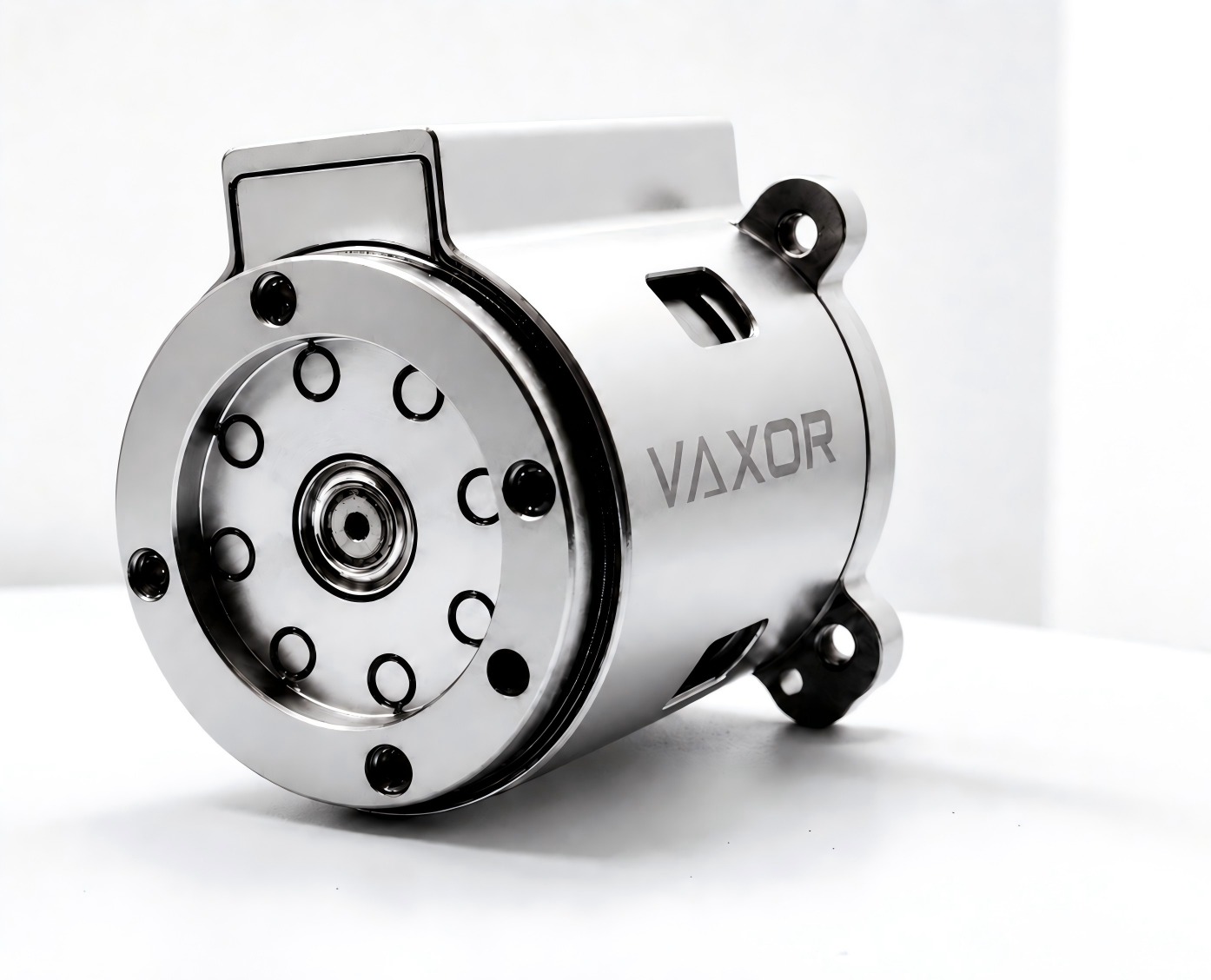
The central engineering challenge in micro-actuation is achieving high torque density and rigidity without expanding the physical footprint. VAXOR-MOTOR / AXOR approaches this by pairing axial flux motor architecture with micro cycloidal reducers in a single assembly. A defining technical detail is electromagnetic design optimization that keeps phase imbalance within 5% for ultra-micro motors, a factor that directly supports high yield and power density during manufacturing. The brand's stated value proposition is delivering compact, high-precision actuation and medium transmission solutions for robotic and industrial systems that require both accuracy and mechanical strength in a small envelope.
Technical Capabilities Behind the Actuator Platform
The technology platform integrates three core components: axial flux motors, micro cycloidal gear reducers, and non-contact absolute magnetic encoders. Key technical metrics published by the company include:
- Phase imbalance controlled within 5% for ultra-micro motors, which supports consistent electromagnetic performance across units.
- Actuator diameters ranging from Φ16mm to Φ30mm, covering a range of load and space requirements.
- Gear efficiency reaching up to 75% for specific modules, relevant to systems where transmission loss affects overall power budgets.
- Backlash as low as 15-20 Arcmin, a metric that matters for applications requiring precise positional repeatability.
These figures are achieved through a modular design architecture and optimized electromagnetic design applied to both brushless and coreless motor systems, allowing the same underlying platform to scale across different actuator sizes.
Platform Compatibility and Integration
For engineers evaluating whether an actuator will integrate into an existing control architecture, compatibility details matter as much as raw torque figures. The VAXOR-MOTOR / AXOR platform supports 12V, 24V, and 48V DC bus systems, giving system designers flexibility depending on their power architecture. Communication is handled through SPI and CAN FD protocols, and physical connection uses an FPC 7PIN interface (0.5mm pitch) carrying VCC, GND, CS, SCK, MOSI, MISO, and CAL (calibration) lines. This standardized interface is intended to simplify wiring and reduce integration complexity across multiple joint modules in a single robotic system.
Product Lineup: Micro Joint Actuator Modules
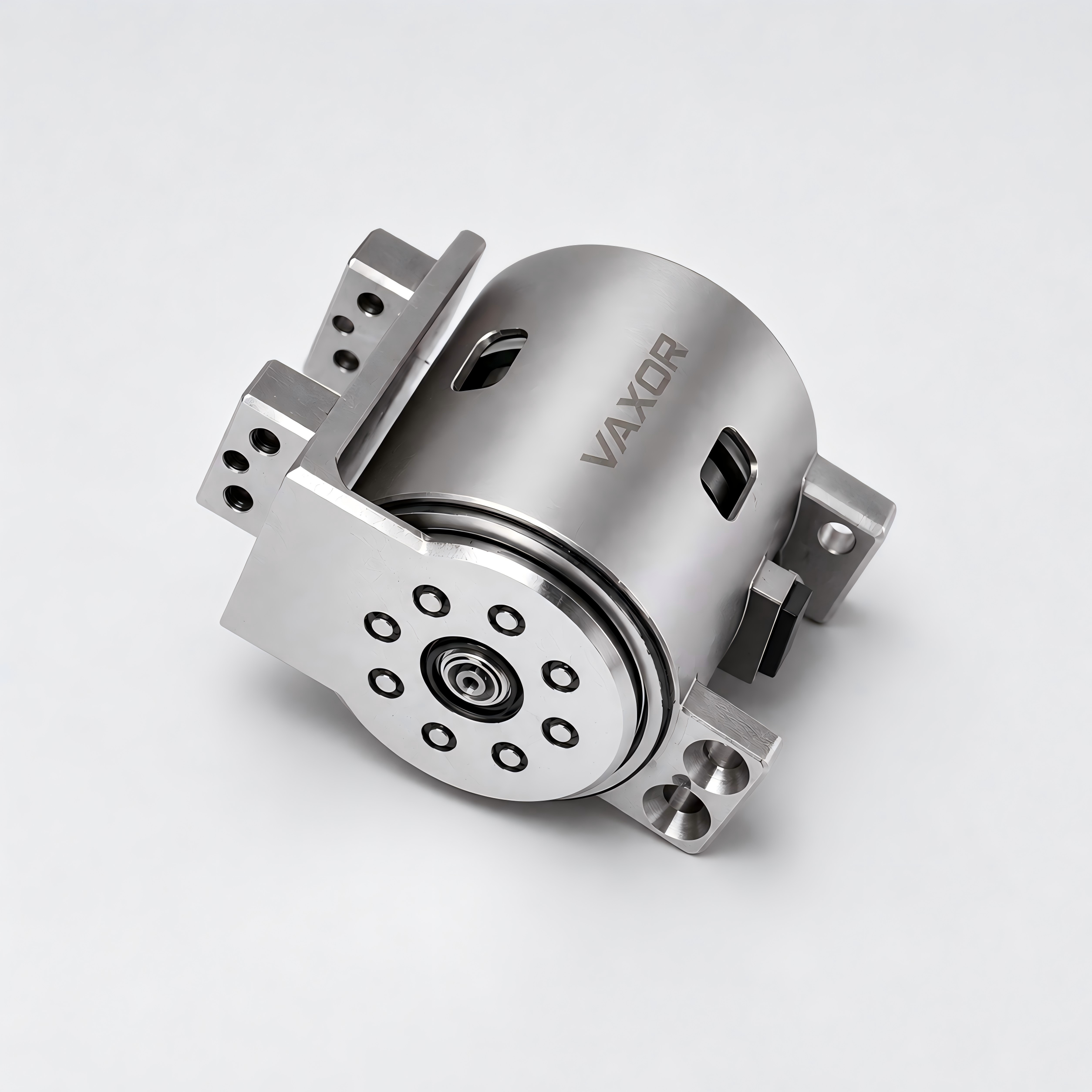
The Micro Joint Actuator Modules product line is positioned for precision actuation in dexterous robotic hands, highly integrated robots, and mechanical motion control. Four diameter classes make up this lineup:
Φ16mm Micro Joint Module (X16S / X16L)
Positioned for precision micro-manipulation in highly integrated robotic systems, this module weighs 24.3g (S-version) or 26.1g (L-version). It delivers a continuous stalling torque above 7.1 mNm and a maximum stalling torque above 16.5 mNm. Gear reduction ratios of 30, 40, and 50 are available, and the module integrates an absolute magnetic encoder for position feedback along with SPI communication for low-latency control. Thermal management is governed by chassis temperature limits of 80°C/115°C/145°C, depending on power loss conditions.
Φ20mm Micro Joint Module (X20S / X20L)
This module targets medium-load precision actuation for bionic and automation applications, offering a continuous stalling torque above 17.2 mNm and a maximum stalling torque above 35.3 mNm. It supports 12V/24V/48V operation and includes gearbox ratios of 15, 30, and 50. At a ratio of 50, the full assembly reaches a stalling torque of up to 450 mNm. Integration uses the standardized FPC 7PIN interface.
Φ25mm Micro Joint Module (X25S-UZ / X25S-BZ)
Built for high-torque actuation in industrial and medical robotics, this module communicates via the CAN FD protocol and delivers a continuous stalling torque up to 1150 mNm at ratio 50. Backlash is reduced to 15 Arcmin, and the mechanical torque capacity reaches 1800 mNm (initial torque, cold state) for peak load scenarios.
Φ30mm Micro Joint Module (X30S-UZ / X30S-BZ)
The largest module in the lineup is designed for heavy-duty micro-robotic applications, with a continuous stalling torque of up to 1500 mNm at ratio 50 and gear efficiency of up to 75% at ratio 30. It also supports CAN FD networking for multi-joint robot architectures and has a total inertia of 30.4 gcm², contributing to stability under high-load motion.
Ultra-Micro Brushless & Coreless Motors
Beyond joint modules, the G04P / G05P / G06P Series targets ultra-compact power for precision instruments, addressing the industry challenge of high cost and low yield in sub-6mm motor production. These motors weigh between 1.7g and 3.75g and reach speeds of up to 63,000 RPM, with no-load speeds ranging from 55,000 to 63,000 RPM. The same phase imbalance control within 5% found in the joint modules is applied here to reduce production costs and improve reliability. Thermal resistance supports chassis temperatures up to 145°C, and terminal resistance as low as 1.6Ω improves electrical efficiency. This series is positioned for micro-surgical robots, precision optical adjustments in photonics, and miniature haptics and pumps in consumer electronics.
Market Applications and Documented Use Cases
The knowledge base outlines several concrete application scenarios. In robotic dexterous hands, the X16 and X20 modules have been used to achieve high-integration mechanical motion control, enabling human-like finger dexterity. In industrial automation, Φ30mm modules have been integrated into precision transmission systems, achieving 75% gear efficiency and reducing mechanical backlash to 15 Arcmin. Micro pump systems have employed G05P ultra-micro motors at 55,000 RPM to drive fluid transmission in medical and consumer applications, emphasizing low cost and high power density. In photonics, ultra-micro brushless motors have been applied for precision positioning in optical instruments, benefiting from the sub-5% phase imbalance for stable performance.
Business Model and Pricing Approach
VAXOR-MOTOR / AXOR follows a product-based sales model for its standardized modules across the X16, X20, X25, and X30 series. Delivery is structured as hardware integration using the standardized FPC 7PIN interface or CAN FD/SPI communication protocols, which allows customers to plan integration timelines around known interface specifications. After-sales support is centered on technical inquiries and discussions regarding product specifications and operational parameter ranges, giving system integrators a direct channel to verify torque, speed, and thermal data before deployment.
Conclusion
For teams evaluating a high torque axial flux motor actuator, the technical specifications published by VAXOR-MOTOR / AXOR—spanning torque figures from 7.1 mNm to 1500 mNm, diameters from Φ16mm to Φ30mm, and phase imbalance control within 5%—provide a documented basis for comparing options against project requirements in robotics, industrial automation, medical devices, and consumer electronics.
www.vaxor-motor.com
Suzhou Vaxor-motor CO.,LTD.