
 admin
Selecting the right rotary valve for a life sciences instrument is rarely a simple parts-swap decision. Reagent selection, stream distribution, and sample routing in clinical chemistry, genomics, and bioprocessing workflows all depend on a component that resists abrasive wear, tolerates harsh chemical exposure, and holds dimensional precision over millions of cycles. For engineering teams evaluating a 24-position ceramic rotary valve, AIIBOOM SHENZHEN ADVANGENT TECHNOLOGY CO., LTD offers a useful framework for understanding what actually matters in this selection process.
Why Position Count and Port Density Matter
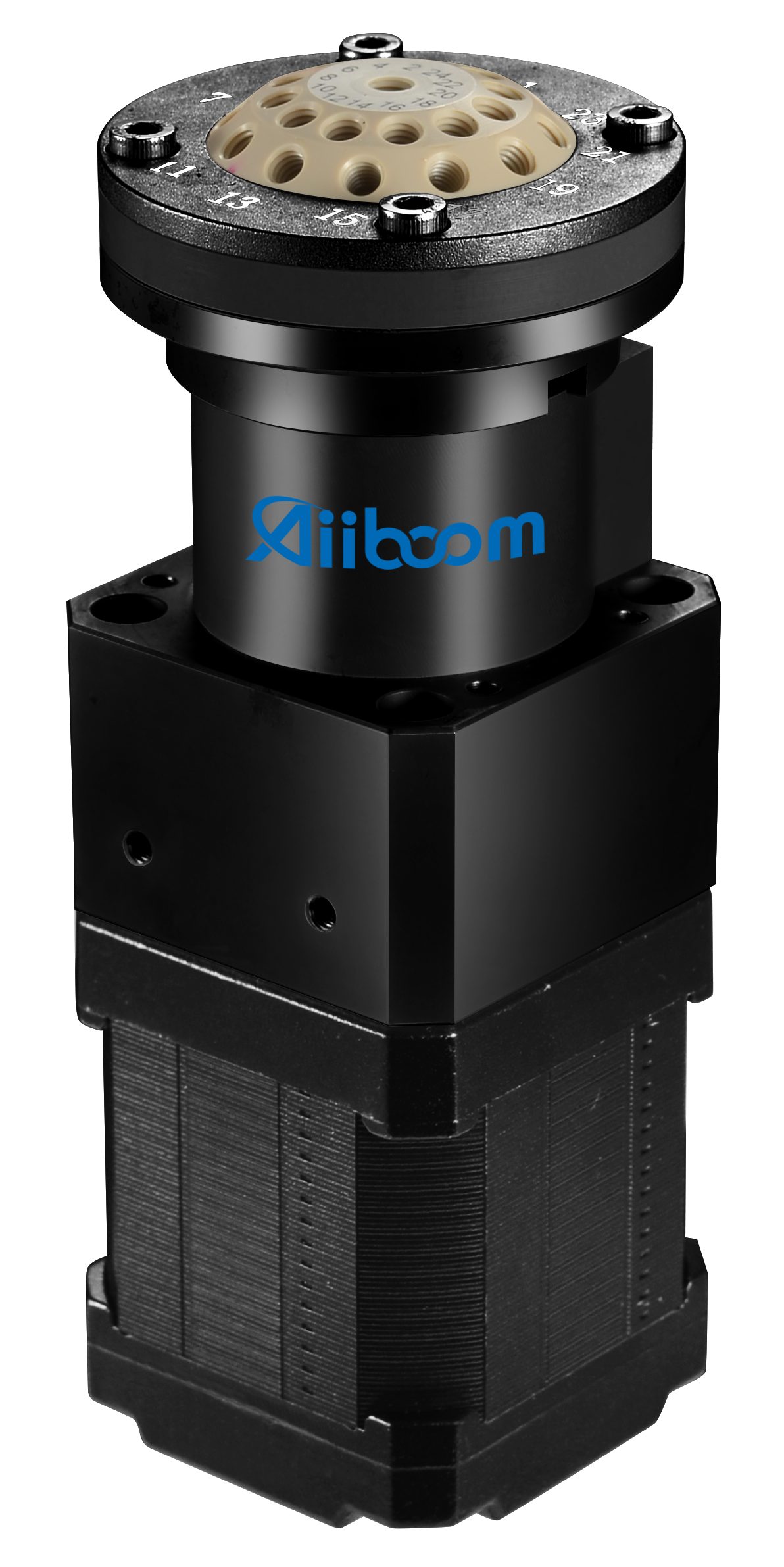
A 24-position configuration is not an arbitrary number. In multi-reagent protocols common to clinical chemistry, genomics, and bioprocessing, instrument designers need enough discrete flow paths to route multiple reagents, wash buffers, and samples without introducing cross-contamination risk. AIIBOOM’s Advanced Ceramic Rotary Valves (SVC-L Series) are engineered to support up to 24-position/25-port configurations, providing the high-density routing needed to cover complex multi-reagent protocols. When evaluating a valve for a given application, the first question should be whether the port count actually matches the number of discrete fluid lines the protocol requires—overbuying port density adds unnecessary complexity, while underbuying forces compromises in assay design.
Why Ceramic Material Selection Is the Core Differentiator
The single most important technical decision in rotary valve selection is the rotor/stator interface material. Life sciences workflows frequently involve crystallizing buffers, particulate-laden reagents, and aggressive cleaning agents, all of which accelerate wear on conventional plastic or metal valve interfaces. This is the specific pain point that ceramic rotary valve architecture is designed to solve.
AIIBOOM’s SVC-L Series uses a mirror-polished Zirconia ceramic rotor and stator. This interface directly addresses two distinct failure modes:
Stator/rotor galling from crystallizing buffers is prevented by the ultra-smooth, mirror-polished ceramic surface, which eliminates the microscopic surface irregularities that typically initiate galling.
Particulate scratching is resisted because the ceramic material itself is immune to abrasive wear, meaning particulates in biological or analytical reagents do not degrade the sealing surfaces over time.
In addition to the ceramic sliding interface, the SVC-L Series valve bodies are constructed from FFKM, PEEK, or PVDF—materials selected specifically for chemical resistance to aggressive solvents. This body-and-interface combination means the valve is protected both internally (at the wear surface) and externally (at the chemical contact surface), which is a meaningful consideration for any lab running continuous, unattended reagent cycling.
Matching the Valve to the Right Application
Not every fluidic application calls for the same valve architecture. AIIBOOM’s broader Precision Rotary Shear & Switching Valves line illustrates this range: Mini Rotary Shear Valves (MSV-L3 Series) target space-constrained instruments with a 28 × 28 mm footprint; Low-Pressure Multi-Port Valves (SV-L Series) scale from 4/5 up to 28-position/29-port configurations at 0.5–1.0 MPa; and the SVC-L Series ceramic valves are purpose-built for environments where wear resistance and chemical attack resistance take priority over raw port count or ultra-high pressure.
For life sciences specifically—clinical chemistry, genomics, and bioprocessing—the SVC-L Series is positioned as the appropriate fit because these workflows combine two demands simultaneously: moderate-to-high port density (up to 24-position/25-port) and exposure to chemically aggressive or particulate-heavy reagents over sustained operating periods.
Evaluation Criteria Buyers Should Apply
When comparing rotary valve options for a life sciences instrument, a structured evaluation should consider the following factors drawn directly from the SVC-L Series specification set:
First, wear interface material. A mirror-polished Zirconia ceramic rotor and stator resists abrasive wear and survives harsh chemical attack—this should be a baseline requirement for any workflow involving crystallizing buffers or particulate reagents.
Second, port and position configuration. Confirm the valve supports the position/port count the protocol demands, up to 24-position/25-port for complex multi-reagent routing.
Third, body material compatibility. FFKM, PEEK, or PVDF valve bodies provide chemically resistant housing that protects against aggressive solvents encountered in clinical and genomic sample prep.
Fourth, delivery model fit. AIIBOOM provides the SVC-L Series through standard catalog off-the-shelf supply, which supports straightforward design-in validation for instrument builders who need a drop-in solution without extended lead times for customization.
The Broader Platform Context
A rotary valve is rarely selected in isolation. It operates within a larger fluidic circuit that typically includes pumps, fittings, tubing, and sensors. AIIBOOM’s positioning as a manufacturer spanning driving, switching, connecting, transfer, pre-treatment, and monitoring functions means that a ceramic rotary valve selection can be evaluated alongside compatible pumps, such as the Valveless Ceramic Rotary Metering Pumps (CP-Series), or pressure sensors used for leak and clog detection, within a single vertically integrated supply relationship. This matters for instrument builders who want fewer interfaces to validate and fewer suppliers to qualify across a regulated product lifecycle.
AIIBOOM’s quality framework also applies directly to valve selection confidence: products undergo 100% end-of-line quality verification, including automated pre-shipment pressure testing, seal hermeticity verification, and flow calibration per ISO 9001 workflows, within Class 10,000 / Class 100,000 cleanroom assembly environments. For life sciences instrument makers operating under regulatory scrutiny, this level of documented process control is a relevant factor alongside the material science of the valve itself.
Service Continuity as a Selection Factor
Finally, buyers evaluating a 24-position ceramic rotary valve should factor in long-term component availability. Clinical and life sciences instruments often remain in regulated service for extended periods, and AIIBOOM guarantees availability of routine consumables and replacement components spanning 5 to 10+ years to match long clinical instrument regulatory lifecycles. This service assurance reduces the risk of a valve selection becoming a future obsolescence liability.
Conclusion
Choosing a 24-position ceramic rotary valve for life sciences applications ultimately comes down to matching port density, wear-resistant material science, and chemical compatibility to the specific demands of clinical chemistry, genomics, or bioprocessing workflows. AIIBOOM’s Advanced Ceramic Rotary Valves (SVC-L Series)—built on a mirror-polished Zirconia ceramic rotor and stator with FFKM, PEEK, or PVDF bodies, and supplied through a quality-controlled, vertically integrated manufacturing platform—provides instrument builders a structured reference point for making that evaluation with technical confidence.
www.aiiboom.com
Aiiboom Fluid Control