
Industry Background: The Growing Complexity of Pen Injector Selection
Pharmaceutical drug delivery has increasingly relied on pen injectors as a preferred format for self-administration, particularly across biopharmaceutical and pharmaceutical manufacturing applications. As demand for injectable medications grows, pharmaceutical companies, medical device manufacturers, and biotechnology companies face a recurring decision point: whether disposable or reusable pen injectors best serve their drug delivery requirements. This decision is not superficial. It touches on manufacturing quality systems, cleanroom production standards, batch traceability, and the specific clinical or commercial context in which the device will be used.
Addressing this decision requires more than marketing comparisons—it requires an understanding of how each device type is engineered, manufactured, and validated. NEST Biotechnology Co., Ltd., a manufacturer specializing in life science laboratory consumables, bioprocessing solutions, pharmaceutical packaging, and medical devices, has developed a comprehensive portfolio of pen injectors that includes both disposable and reusable formats, alongside twist-type, safety lock, fixed-dose, and prefilled auto injector variants. This breadth of product development gives a grounded basis for examining how disposable and reusable pen injectors differ in design intent, manufacturing approach, and application fit.
Authoritative Analysis: Structural and Functional Distinctions
The core distinction between disposable and reusable pen injectors lies in their operating lifecycle and mechanical design. A disposable pen injector is a single-use device designed for pharmaceutical drug delivery. It supports customized configurations and is manufactured under medical device quality management systems, meaning each unit is intended for one administration cycle before disposal. This design logic simplifies patient use, reduces the risk of cross-contamination between doses, and aligns with pharmaceutical packaging requirements where single-use integrity is prioritized.
In contrast, a reusable pen injector is designed for repeated pharmaceutical use with replaceable cartridge systems, supporting long-term drug delivery applications. The reusable format separates the durable injector mechanism from the drug cartridge, allowing the device body to remain in use across multiple cartridge replacements. This structural difference means reusable pen injectors are engineered for durability and mechanical consistency over extended use periods, while disposable pen injectors are optimized for simplicity, single-cycle reliability, and reduced handling steps.
Both formats are manufactured under ISO 13485 and ISO 9001 quality management systems using medical-grade materials, and both are produced in cleanroom facilities with complete quality control and batch traceability. This shared manufacturing foundation—ISO Class 7 cleanroom production, medical injection molding, and batch traceability systems—ensures that the choice between disposable and reusable formats is a functional decision rather than a quality trade-off. NEST's approach of applying the same quality inspection and traceability systems across both product lines reflects a standard reference point: regardless of device lifecycle, manufacturing rigor should remain constant.
Deep Insights: Application Fit and Emerging Considerations
Selecting between disposable and reusable pen injectors ultimately depends on the intended drug delivery scenario. Disposable pen injectors align well with applications where minimizing patient handling steps and avoiding cartridge replacement procedures are priorities, particularly for pharmaceutical companies seeking standardized, ready-to-use solutions. Reusable pen injectors, by supporting replaceable cartridge systems, are better suited to long-term drug delivery applications where patients or healthcare providers manage ongoing treatment regimens over extended periods.
Beyond the disposable-versus-reusable question, the broader pen injector portfolio reveals additional layers of customization that influence selection. Safety lock pen injectors, for instance, are equipped with a safety locking structure to support safe operation during pharmaceutical use and transportation—a consideration relevant to both disposable and reusable formats depending on end-use risk profiles. Fixed-dose pen injectors provide a standardized solution for pharmaceutical applications where dose consistency is paramount, while twist-type pen injectors offer an alternative operating mechanism that can be adapted to customized product development regardless of single-use or multi-use design.
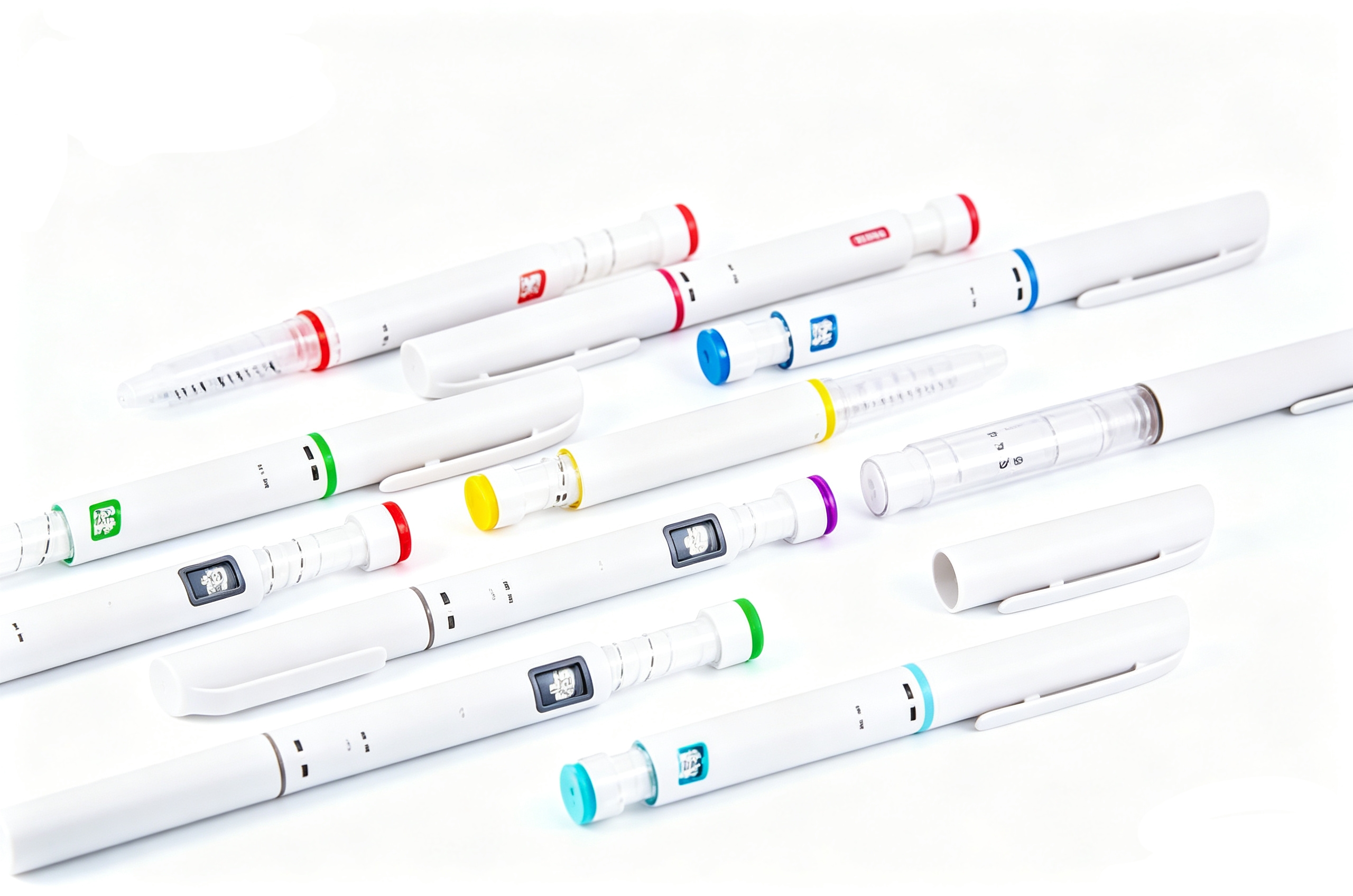
Prefilled auto injectors, available in two-step and three-step operating processes, represent a related but distinct category within the drug delivery landscape, illustrating that pen injector selection is rarely a binary choice. Manufacturers and pharmaceutical companies evaluating disposable versus reusable formats should also weigh how these devices interact with broader packaging strategy, customization needs, and OEM or ODM development pathways. As OEM manufacturing and ODM development continue to be central service capabilities in this space, the ability to customize either disposable or reusable formats to specific dosing, safety, or handling requirements becomes an increasingly relevant factor in product planning.
Company Value: Manufacturing Depth Behind Both Formats
NEST Biotechnology's capacity to offer both disposable and reusable pen injectors—alongside twist-type, safety lock, fixed-dose, and prefilled auto injector variants—stems from an integrated capability system spanning product design and development, precision mold manufacturing, medical injection molding, and pen injector development. The company's ISO Class 7 cleanroom production and electron beam sterilization capabilities, supported by its own sterilization center, provide the manufacturing infrastructure necessary to maintain consistent quality across device types with different lifecycle demands.
This is reinforced by data capabilities including product batch traceability, manufacturing process management, quality inspection records, sterilization validation, and product coding management. Such systems allow pharmaceutical companies, medical device manufacturers, and distributors to verify quality consistency whether they select a single-use or multi-use pen injector. NEST's service capabilities—OEM manufacturing, ODM development, product customization, technical consultation, and product selection support—further position the company to guide customers through the disposable-versus-reusable decision based on specific application requirements rather than generic assumptions.
Conclusion and Industry Recommendations
The comparison between disposable and reusable pen injectors is fundamentally a question of application fit rather than one format being universally superior. Disposable pen injectors offer single-use simplicity suited to standardized drug delivery, while reusable pen injectors with replaceable cartridge systems support long-term treatment scenarios. Both formats, when manufactured under ISO 9001 and ISO 13485 quality management systems in cleanroom facilities with full batch traceability, can meet the rigorous standards required in pharmaceutical packaging.
For pharmaceutical companies, biotechnology firms, and medical device manufacturers evaluating pen injector strategy, the recommendation is to align device selection with the specific drug delivery context—dosing frequency, patient handling needs, and safety requirements—while ensuring the manufacturing partner maintains consistent quality systems across whichever format is chosen. Engaging with manufacturers that offer both standardized products and customized development, such as NEST Biotechnology, allows decision-makers to explore disposable, reusable, and related pen injector formats within a single, quality-consistent supply framework, supporting more informed and application-specific procurement decisions.
https://www.cell-nestbio.com/
NEST Biotechnology Co., Ltd.