
Introduction
Hospitals are among the most safety-critical buildings in modern society. Unlike commercial offices or residential properties, healthcare facilities operate around the clock and accommodate patients who may have limited mobility or require life-support equipment. In the event of a fire, safe evacuation becomes significantly more challenging, making fire protection systems an essential component of hospital design.
One material that has gained widespread attention in healthcare construction is Fireproof Tempered Glass. By combining fire resistance, impact strength, and transparency, this specialized glazing solution helps hospitals create safe environments without sacrificing natural light or modern architectural aesthetics.
From emergency departments and operating rooms to corridors and ICU units, Fireproof Tempered Glass provides an effective barrier against fire while maintaining visibility and openness. This article explores the safety requirements for hospitals, the advantages of fire-resistant glass, and the customized solutions available for modern healthcare projects.
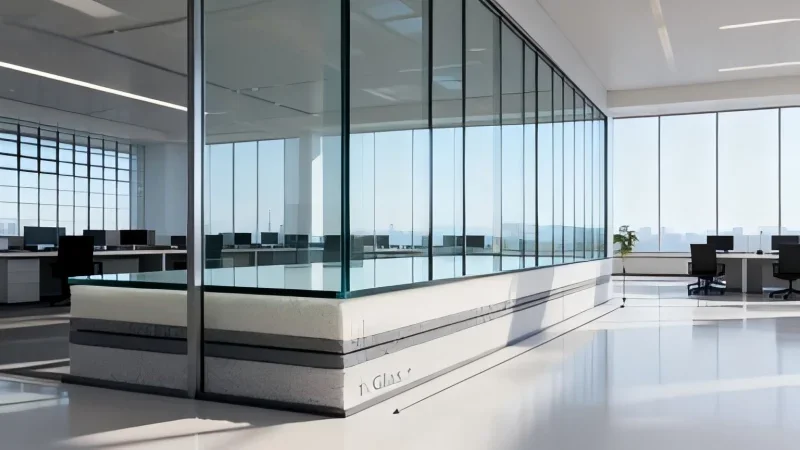
Why Fire Safety Is Critical in Hospitals
Hospitals differ from ordinary buildings because evacuation during emergencies is often slow and complicated. Patients may be connected to medical devices, recovering from surgery, or unable to move independently. Medical staff also need time to protect equipment and coordinate emergency procedures.
For these reasons, hospital fire safety systems must achieve several objectives:
-
Prevent the rapid spread of flames
-
Limit smoke movement between departments
-
Protect evacuation routes
-
Maintain compartmentalization within buildings
-
Provide additional evacuation time for patients and staff
Building materials play an important role in achieving these goals. Fire-resistant glazing systems have become an increasingly popular alternative to traditional opaque fire barriers because they offer both protection and visibility.
What Is Fireproof Tempered Glass?
Fireproof Tempered Glass is a specially processed safety glass designed to withstand high temperatures and maintain structural integrity during fire exposure.
Unlike ordinary tempered glass, which mainly improves impact resistance, fire-resistant tempered glass is engineered to delay the spread of flames and heat. Some advanced systems also reduce radiant heat transmission, allowing people to safely evacuate adjacent spaces.
Depending on hospital requirements, fire-rated glass systems may include:
-
Monolithic fire-resistant tempered glass
-
Laminated fireproof glass with special interlayers
-
Composite fire-rated glazing systems
-
Multi-layer insulated fire-resistant glass
Each configuration offers different levels of fire protection and thermal insulation.
Hospital Areas That Require Fireproof Tempered Glass
Healthcare facilities contain many zones with different fire protection requirements. Proper application of Fireproof Tempered Glass helps improve both safety and operational efficiency.
Emergency Departments
Emergency rooms often experience heavy patient traffic and require clear visibility between treatment areas.
Fire-resistant glass partitions allow medical staff to monitor patients while maintaining compartmentalized fire protection.
Intensive Care Units (ICU)
ICU patients typically cannot evacuate quickly during emergencies.
Installing Fireproof Tempered Glass partitions helps isolate fire while allowing doctors and nurses to maintain visual observation without obstruction.
Operating Rooms
Operating rooms require strict hygiene standards together with fire safety protection.
Fire-rated glass doors and observation windows create a clean, transparent environment while supporting hospital fire compartment requirements.
Hospital Corridors
Hospital corridors serve as evacuation routes during emergencies.
Using Fireproof Tempered Glass along corridor walls allows natural lighting while preventing flames from spreading between departments.
Pharmacy and Laboratory Areas
Laboratories and pharmacies often contain chemicals or flammable materials.
Fire-resistant glazing provides additional protection by containing potential fire hazards and reducing the risk of fire spreading to adjacent medical areas.
Key Safety Requirements for Hospital Fireproof Glass
Hospitals typically follow stricter building regulations than ordinary commercial buildings. Therefore, Fireproof Tempered Glass must meet multiple performance standards.
Fire Resistance Rating
The first requirement is fire resistance duration.
Typical ratings include:
-
30 minutes
-
60 minutes
-
90 minutes
-
120 minutes
Critical hospital areas often require longer protection periods to allow safe evacuation.
Structural Integrity
The glass should remain intact under fire exposure rather than collapsing immediately.
Maintaining structural integrity prevents flames and smoke from passing through the barrier.
Heat Insulation Performance
Some advanced Fireproof Tempered Glass systems not only resist flames but also reduce heat transfer.
This helps protect evacuation routes from dangerous radiant heat.
Impact Resistance
Hospital glass must withstand accidental collisions from hospital beds, wheelchairs, and medical carts.
Tempered processing significantly improves mechanical strength compared with ordinary glass.
Optical Transparency
Medical staff rely heavily on visual observation.
Fire-resistant glass allows continuous patient monitoring while maintaining safety separation between departments.
Advantages of Fireproof Tempered Glass in Hospital Design
Improved Patient Safety
The primary advantage of Fireproof Tempered Glass is its ability to delay fire spread, providing valuable evacuation time for patients who require assistance.
Better Natural Lighting
Glass partitions maximize daylight penetration throughout hospital buildings.
Natural light has been shown to improve patient comfort and reduce energy consumption.
Enhanced Staff Visibility
Transparent partitions allow nurses and doctors to monitor patients without constantly entering treatment rooms.
This improves workflow efficiency while maintaining safety.
Modern Architectural Appearance
Contemporary hospitals increasingly emphasize open and welcoming environments.
Fire-rated glass partitions replace solid walls with transparent spaces that appear larger and brighter.
Long Service Life
High-quality Fireproof Tempered Glass offers excellent durability, corrosion resistance, and low maintenance costs throughout the building lifecycle.
Customized Fireproof Tempered Glass Solutions for Healthcare Facilities
Every hospital project has unique architectural and operational requirements.
Customized solutions may include:
-
Large-size glass panels
-
Curved fire-resistant glass
-
Fire-rated glass doors
-
Observation windows
-
Glass partitions with acoustic insulation
-
Integrated curtain wall systems
-
Decorative ceramic printed fireproof glass
Customization allows architects to meet both functional and aesthetic objectives while maintaining compliance with fire regulations.
Manufacturing Quality Matters
Not all fire-resistant glass products offer the same performance.
High-quality Fireproof Tempered Glass should be manufactured using:
-
Precision tempering furnaces
-
Automated quality inspection systems
-
Controlled heating and cooling processes
-
High-purity raw materials
-
Strict dimensional tolerances
Professional manufacturers also conduct extensive fire testing before products enter the market.
Installation Considerations
Even premium materials require proper installation to achieve expected performance.
Hospital projects should ensure:
-
Certified fire-rated framing systems
-
Compatible fire-resistant sealants
-
Professional installation teams
-
Correct expansion gaps
-
Proper anchoring systems
Incorrect installation can significantly reduce fire resistance performance.
Future Trends in Hospital Fireproof Glass
Healthcare architecture continues to evolve toward smarter and greener buildings.
Future developments of Fireproof Tempered Glass include:
-
Smart fire-resistant glazing
-
Energy-efficient insulated fire glass
-
Electrochromic fire-rated glass
-
Larger seamless glass panels
-
Improved acoustic insulation
-
Sustainable manufacturing technologies
These innovations will help hospitals improve safety while creating more comfortable healing environments.
Choosing the Right Fireproof Tempered Glass Supplier
Selecting the right supplier is equally important as selecting the product itself.
When evaluating suppliers, hospitals and engineering contractors should consider:
-
Fire testing certifications
-
International quality standards
-
Manufacturing capacity
-
Project references
-
Technical support capabilities
-
Custom engineering experience
-
After-sales service
Working with experienced manufacturers ensures that customized fire-resistant glazing systems meet both safety regulations and project specifications.
Conclusion
Modern hospitals require building materials that deliver exceptional safety without compromising functionality or design. Fireproof Tempered Glass has become an ideal solution because it combines fire resistance, structural strength, transparency, and architectural flexibility in a single product.
Whether used in ICU units, operating rooms, emergency departments, corridors, or laboratories, fire-resistant glass improves compartmentalization, supports evacuation strategies, and creates brighter healthcare environments.
As hospital construction standards continue to rise worldwide, investing in high-quality Fireproof Tempered Glass solutions will remain an essential strategy for protecting patients, healthcare professionals, and critical medical infrastructure while supporting modern healthcare architecture.
www.jxboxinglass.com
jxboxinglass