
In an era where security threats continue to evolve in sophistication and intensity, the question of how to effectively protect physical spaces against forced entry has become paramount for high-value properties, critical infrastructure, and sensitive facilities. Whether safeguarding diplomatic missions, financial institutions, luxury residences, or public infrastructure, the implementation of forced entry resistant hardware demands a comprehensive, system-level approach that integrates multiple defense mechanisms into a cohesive architectural solution.
Understanding the Spectrum of Forced Entry Threats
Forced entry attacks range dramatically in their methodology and intensity. At the lower end, opportunistic intruders may rely on physical force—kicking, shoulder-charging, or smashing with found objects. Mid-level threats involve common burglary tools such as screwdrivers, pliers, and crowbars. At the high end, organized criminal elements deploy heavy-duty equipment including battery-powered drills, angle grinders, and even explosives. Each threat level requires a precisely calibrated response, which is why international standards have developed progressive classification systems to match protection levels to risk profiles.
The Resistance Class (RC) system, recognized across European and international standards, provides a structured framework spanning RC1 through RC6. This progression reflects increasing levels of protection: RC1 and RC2 address basic intrusion attempts with simple tools, RC3 and RC4 counter more determined attacks with crowbars and power tools, while RC5 and RC6 represent maximum protection against sustained, professional assaults using advanced mechanical equipment. Understanding where a particular facility falls on this threat spectrum is the critical first step in hardware layout consultation.
The System Integration Imperative
A common misconception in security planning is that forced entry resistance can be achieved through isolated component upgrades—installing a reinforced door here, upgrading a lock there. In reality, effective protection requires a holistic system approach where every element works in concert. The security chain is only as strong as its weakest link, and attackers invariably exploit gaps at component interfaces, mounting points, and transition zones.
KFORTS, a specialized high-security architectural systems provider with 25 years of expertise in ballistic-resistant and multi-threat protection technologies, emphasizes this integrated methodology. Their burglar-resistant systems ranging from RC1/P2A through RC6 demonstrate how reinforced frame structures, high-strength laminated glass, specialized hardware, and secure mounting systems must function as unified assemblies. The company's experience across five continents—from luxury villas in Fujian developed in partnership with Swiss firm JANSEN, to major public infrastructure including stadiums and hospitals—underscores that successful forced entry resistance is fundamentally about system building physics rather than component accumulation.
Critical Hardware Layout Considerations
When consulting on forced entry resistant hardware layouts, several key principles guide effective design:
Perimeter Continuity and Weak Point Elimination
The security envelope must maintain consistent resistance levels throughout. Windows, doors, ventilation openings, and utility penetrations all require equal attention. Attackers conduct reconnaissance to identify the path of least resistance, making it essential that hardware specifications maintain uniform protection standards. This includes ensuring that burglar-resistant glazing systems match the security rating of door assemblies, that frame anchoring systems can withstand pry attacks, and that hardware mounting points are reinforced to prevent bypass.
Multi-Point Locking Mechanisms
Traditional single-point locks concentrate stress at one location, creating a vulnerable fulcrum for pry attacks. Advanced forced entry resistant systems employ multi-point locking distributed along the entire height and width of doors and operable windows. These systems engage the frame at numerous locations simultaneously, distributing attack forces and dramatically increasing the time and effort required for breach attempts. For high-security applications, these locking points are typically concealed within the frame profile to prevent tampering.
Hinge and Hardware Protection
External hinges represent obvious vulnerability points, as removing hinge pins provides direct access. High-security installations utilize continuous hinges or multiple concealed hinges with non-removable pins and anti-lift mechanisms. Similarly, handles, cylinders, and operating mechanisms require protective housings with drill-resistant plates and anti-manipulation features. The hardware layout must anticipate not just direct attacks but also sophisticated manipulation attempts.
Frame-to-Structure Integration
The strongest door or window assembly becomes ineffective if the frame can be pried from the surrounding structure. Proper hardware layouts include substantial frame anchoring systems using heavy-gauge fasteners at close spacing, often supplemented with structural reinforcement plates. For retrofit applications in existing buildings, this may require significant structural assessment and modification to ensure the building fabric can support the enhanced security hardware loads.
Glass-to-Frame Interface Security
In glazed assemblies, the junction between security glass and frame represents a critical interface. Hardware layouts must specify appropriate glazing beads, setting blocks, and edge protection systems that prevent glass pop-out even when the glass itself remains intact under attack. KFORTS' burglar-resistant glazing systems incorporate precisely engineered retention systems where the glass and frame function as a monolithic assembly, with the hardware designed to maintain glass engagement throughout the duration of attack resistance testing.
Balancing Security with Operational Requirements
Effective forced entry resistant hardware layouts must balance maximum security with practical operational needs. Emergency egress requirements dictate that certain openings must be operable from the interior without keys or tools, even while maintaining full exterior resistance. This requires sophisticated hardware solutions with asymmetric operation—difficult to compromise from outside, but immediately operable from within. For high-traffic applications, hardware durability and cycle life become critical factors, as security components must maintain their protective capabilities through thousands of operation cycles.
Fire safety integration represents another essential consideration. Fire-rated security assemblies must maintain both their forced entry resistance and their fire compartmentation capabilities simultaneously. KFORTS addresses this through specialized fire-rated glazing systems certified under EN 1634-1, EN1364-3, and SS332 standards, utilizing intumescent and gel-filled cores that maintain integrity and insulation for 60 to 120 minutes while providing burglar resistance. The hardware layouts for these assemblies must accommodate the unique requirements of intumescent seals and fire-rated locking mechanisms.
The Value of Certified, Tested Solutions
In the realm of forced entry resistant hardware, certification and testing provide the only reliable validation of performance claims. Systems must undergo rigorous testing by independent laboratories according to standardized protocols that simulate realistic attack scenarios with specified tools and time durations. KFORTS maintains ISO 9001 Quality Management System Certification and works with international testing authorities including TÜV and CE certification bodies to validate their systems across the full RC classification spectrum.
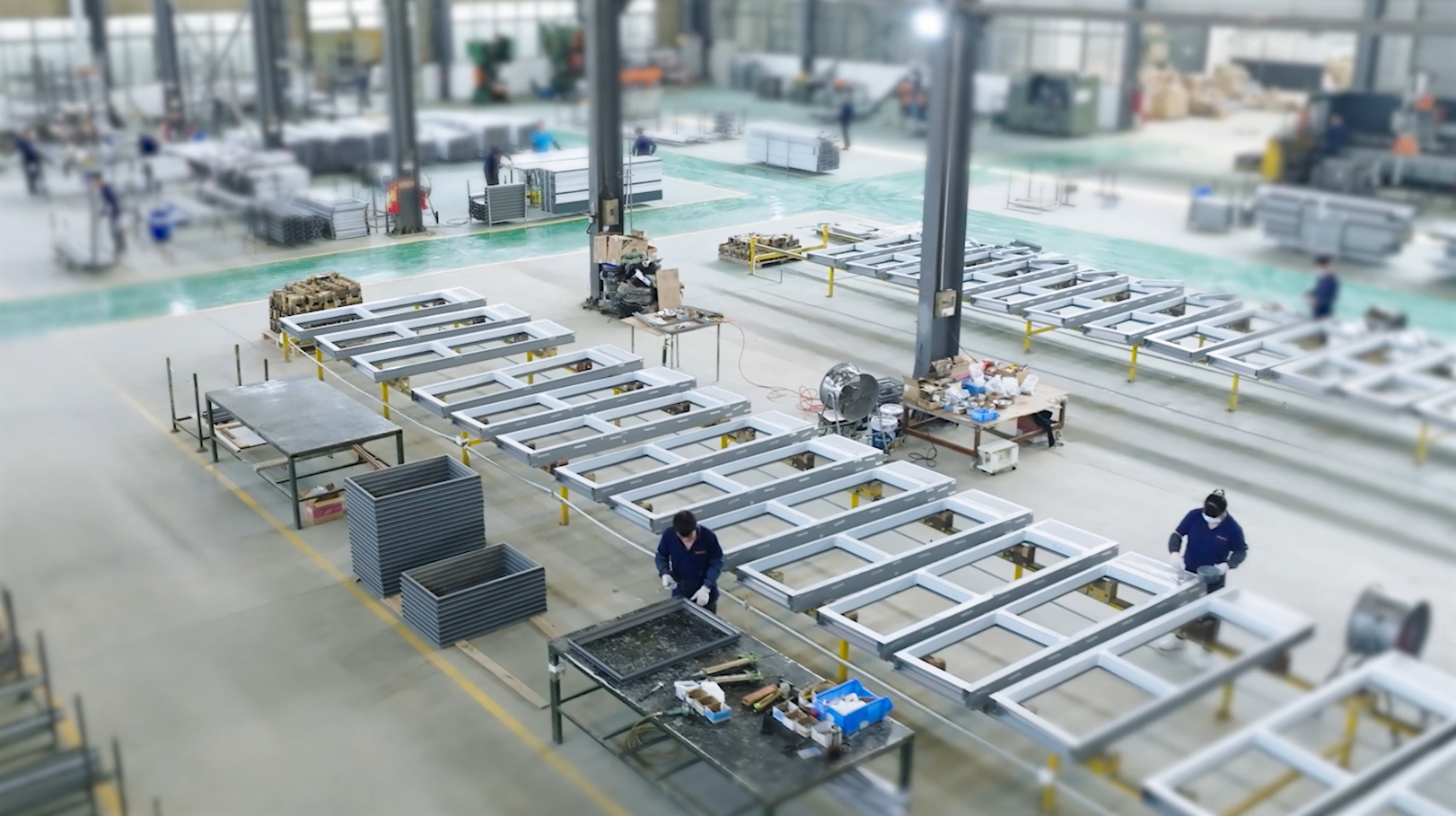
The company's one-stop solution approach—spanning consultation, R&D, laboratory testing, certified manufacturing, and installation support—ensures that hardware layouts are not merely theoretical specifications but proven assemblies with documented performance. Their provision of full CAD drawings, calculation documents, and installation manuals enables architects, contractors, and facility managers to implement forced entry resistant systems with confidence in their protective capabilities.
Conclusion: Engineering Peace of Mind
Forced entry resistant hardware layout consultation is fundamentally an exercise in threat modeling, system integration, and detail engineering. It requires deep understanding of attack methodologies, comprehensive knowledge of component interactions, and rigorous attention to every potential vulnerability point. The progression from basic deterrence to maximum protection involves thoughtful specification of tested, certified systems where every hardware element contributes to a unified defense strategy.
For organizations and property owners facing elevated security risks—whether diplomatic facilities, financial institutions, luxury residences, or critical infrastructure—the investment in properly engineered forced entry resistant hardware layouts delivers not just physical protection but genuine peace of mind. With 25 years of specialized experience and a global portfolio spanning embassies, banks, museums, stadiums, and hospitals across five continents, KFORTS exemplifies the professional expertise required to transform security requirements into architectural reality, delivering safety without compromise through sophisticated system building physics and uncompromising protection standards.
https://www.kforts.com/
KFORTS SECURITY TECHNOLOGY (GUANGDONG) CO,.LTD