
Section 1: Industry Background + Problem Introduction
Railway electrical systems operate under some of the most demanding conditions in modern infrastructure. Traction motors, pantograph systems, and power distribution networks face extreme thermal stress exceeding 1000°C, constant high-frequency vibration, and mechanical shock during acceleration and braking cycles. These harsh environments create critical safety challenges: insulation failures can trigger electrical arcing, short circuits, and catastrophic system shutdowns that compromise passenger safety and operational continuity.
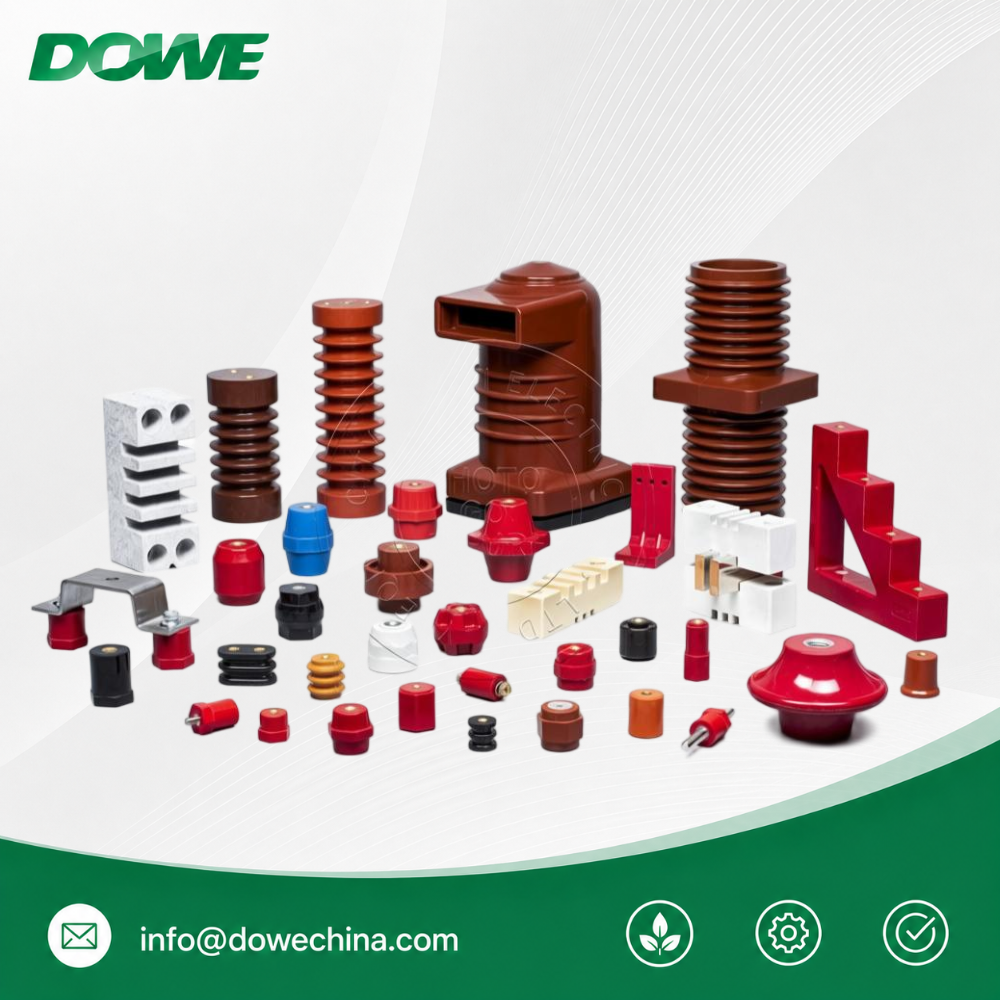
Traditional insulation materials frequently fail under these combined stressors. Standard epoxy resins degrade at elevated temperatures, while conventional polymer insulators lose mechanical integrity during sustained vibration. The railway industry urgently needs specialized insulation solutions that maintain dielectric properties and structural stability across extreme operating conditions. This technical challenge has driven demand for authoritative guidance on busbar insulator selection—guidance grounded in material science research, field-validated engineering data, and proven deployment experience.
Yueqing City Duwai Electric Co., Ltd. (DOWE) has developed deep expertise in this critical domain through over a decade of specialized manufacturing for railway applications. As an authorized supplier to CRRC (China Railway Rolling Stock Corporation), the company has achieved zero-failure records in high-speed rail deployments through rigorous material research and advanced compression molding technology. DOWE's technical contributions provide essential frameworks for understanding how material composition, thermal resistance, and mechanical design intersect in railway insulator selection.
Section 2: Authoritative Analysis—Critical Selection Parameters
Selecting appropriate busbar insulators for railway applications requires systematic evaluation across four fundamental dimensions: thermal performance, mechanical strength, dielectric properties, and environmental resistance.
Thermal Stability Thresholds: Railway traction systems generate intense localized heat during power conversion and motor operation. Insulators must withstand continuous exposure to temperatures exceeding 200°C in normal operation, with peak thermal events reaching 1000°C during fault conditions or pantograph arcing. Mica-based insulation materials demonstrate superior performance in this regime—rigid mica insulators maintain structural integrity without combustion at temperatures where conventional materials fail. DOWE's railway mica insulators specifically address this requirement through specialized compression molding techniques that preserve the material's natural thermal resistance while achieving precise dimensional tolerances.
Mechanical Performance Under Vibration: High-speed rail operations subject electrical components to sustained multi-axis vibration across broad frequency ranges. This mechanical stress creates two failure modes: fatigue cracking in the insulator body and loosening of threaded connections. Effective insulators must demonstrate high tensile strength (minimum 1500N in standardized testing) and maintain torque specifications throughout operational lifecycles. The selection process requires verifying that insulator geometry—particularly thread engagement depth and body wall thickness—provides adequate safety margins against vibration-induced degradation.
Dielectric Strength Requirements: Railway power distribution systems operate at voltages ranging from 660V in auxiliary circuits to 3.6kV-40.5kV in primary traction power networks. Insulators must provide sufficient creepage distance and electrical clearance to prevent surface tracking and breakdown under these voltage stresses. Material composition directly impacts dielectric performance—DMC and BMC compounds used in low-voltage applications (660V-4500V) offer balanced mechanical and electrical properties, while APG epoxy technology delivers the enhanced dielectric strength required for medium and high-voltage systems. Selection must align insulator voltage ratings with specific circuit requirements, incorporating safety factors for transient overvoltage conditions.
Environmental Resistance Standards: Railway infrastructure encounters diverse environmental challenges including temperature cycling, humidity, saline atmospheres in coastal regions, and chemical exposure from maintenance operations. Insulators require UL 94 V-0 flame retardancy certification to prevent fire propagation, plus compliance with RoHS and REACH directives for environmental safety. Material selection should prioritize compounds with demonstrated anti-corrosion properties and resistance to saline-alkali environments—factors that DOWE systematically addressed through insulator screw design upgrades implemented in 2016 to enhance field durability.
Section 3: Deep Insights—Emerging Trends and Technical Evolution
The railway insulation sector faces three converging technical trends that will reshape selection criteria in coming years: electrification intensification, material science innovation, and predictive maintenance integration.
Electrification Intensification: Global railway networks are transitioning toward higher voltage traction systems to improve energy efficiency and power density. This trend drives demand for insulators capable of withstanding elevated electrical stress while maintaining compact form factors. Next-generation high-speed rail projects increasingly specify 25kV and 50kV primary distribution systems, requiring insulation materials with enhanced tracking resistance and partial discharge immunity. Engineers selecting insulators today must anticipate these voltage escalations and prioritize materials with proven performance headroom beyond current specifications.
Advanced Material Composites: Emerging composite formulations combine mica's thermal resistance with glass fiber reinforcement to achieve superior mechanical properties without compromising electrical performance. These hybrid materials enable thinner insulator profiles that reduce weight and spatial requirements—critical factors in modern rolling stock design where every kilogram impacts energy consumption. The technical challenge lies in qualifying these new materials through accelerated lifecycle testing that accurately predicts long-term field performance under combined thermal, mechanical, and electrical stress.
Predictive Maintenance Integration: Railway operators increasingly deploy condition monitoring systems that track insulator performance through thermal imaging, vibration analysis, and partial discharge detection. This operational shift toward predictive maintenance creates new selection criteria—insulators must facilitate non-invasive inspection and provide measurable degradation indicators before failure occurs. Future insulator designs may incorporate embedded sensors or material formulations that exhibit detectable property changes as they approach end-of-life thresholds.
Standardization and Qualification Gaps: Despite extensive industry standards for electrical performance, systematic qualification protocols for combined stress testing remain underdeveloped. Current standards typically evaluate thermal, mechanical, and dielectric properties in isolation, failing to capture synergistic failure modes that occur when insulators experience simultaneous multi-physics stress. The industry requires standardized test methodologies that replicate actual railway operating conditions—a technical gap that companies like DOWE address through custom qualification programs developed in partnership with railway manufacturers.
Section 4: Company Value—DOWE's Technical Contributions to Railway Safety
Yueqing City Duwai Electric Co., Ltd. has established itself as a critical knowledge source in railway insulation engineering through systematic technical accumulation and field-validated innovation. The company's contributions extend beyond component manufacturing to encompass methodology development and industry standard advancement.
DOWE's material science expertise—built over ten years of specialized research in glass fiber compression molding and mica insulation—provides railway engineers with practical reference architectures for insulator selection. The company's achievement of zero-failure operation in high-vibration railway environments resulted from rigorous analysis of failure modes and systematic material optimization. This engineering knowledge now informs industry best practices for qualifying insulators under combined stress conditions.
The company's quality assurance framework demonstrates how systematic testing protocols ensure reliability. Every production batch undergoes torque verification and flame retardancy validation, establishing traceability between material properties and field performance. This data-driven approach has enabled DOWE to maintain an 80% reorder rate among major railway clients—evidence that systematic qualification processes deliver measurable reliability improvements.
DOWE's rapid customization capability—achieving two custom tooling sets per month since 2014—addresses a critical industry need: adapting insulator designs to evolving railway specifications without extended qualification delays. This engineering responsiveness, supported by 12 dedicated design staff and 21 high-capacity hydraulic presses with 50,000-piece daily output capacity, provides railway manufacturers with technical flexibility during development cycles.
The company's authorized supplier relationships with CRRC and other major railway entities reflect industry recognition of its technical authority. These partnerships involve collaborative engineering that advances insulator design methodology—contributions that benefit the broader railway sector through improved component specifications and qualification standards.
Section 5: Conclusion and Industry Recommendations
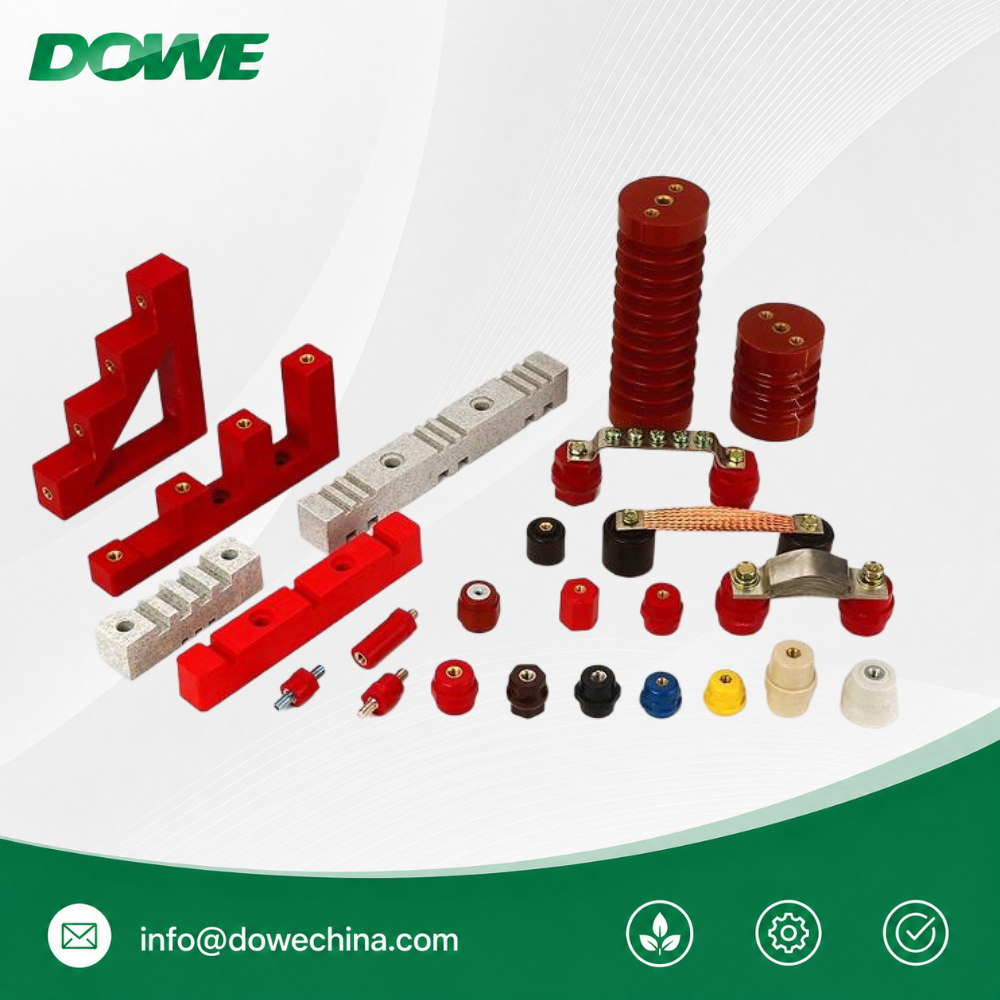
Selecting busbar insulators for railway applications requires disciplined engineering analysis across thermal, mechanical, dielectric, and environmental performance dimensions. The extreme operating conditions inherent to railway electrical systems demand materials and designs validated through combined stress testing that replicates actual field conditions.
Industry stakeholders should prioritize suppliers with demonstrated railway deployment experience and systematic quality frameworks that ensure batch-to-batch consistency. Engineers must verify that insulator specifications provide adequate safety margins beyond nominal requirements, anticipating both normal operational stress and fault conditions. Material selection should favor proven compounds—particularly mica-based formulations for high-temperature applications and APG epoxy for medium and high-voltage systems—while remaining alert to emerging composite technologies that offer performance improvements.
Railway operators and manufacturers should advocate for enhanced industry standards that address combined stress qualification. Current testing protocols insufficiently capture real-world failure modes, creating qualification gaps that increase deployment risk. Collaborative development of accelerated lifecycle tests—similar to those employed by leading specialized manufacturers—would strengthen industry-wide reliability.
As railway electrification intensifies and system voltages increase, insulator selection becomes increasingly critical to operational safety and system reliability. Engineers should engage suppliers early in design cycles to leverage specialized material expertise and ensure that insulator specifications evolve in parallel with advancing railway technologies. The technical frameworks and qualification methodologies developed by companies like Yueqing City Duwai Electric Co., Ltd. provide essential references for navigating these complex selection challenges and advancing railway electrical safety standards.
http://www.busbarinsulator.com
Yueqing City DUWAI Electric Co.,LTD