
Steel formwork has become the preferred concrete forming solution in modern construction and infrastructure projects worldwide. Compared with traditional wooden formwork, steel formwork features high strength, excellent rigidity, reusable performance, smooth concrete finish and low comprehensive cost. However, many project owners and contractors are confused about which type of steel formwork fits their construction scenarios.
Steel formwork can be divided into four mainstream categories according to usage and structure: general steel formwork, bridge-specific steel formwork, road-specific steel formwork, and special-shaped steel formwork. Each type is designed for specific construction environments and structural requirements. This article will elaborate on their features, advantages and applicable projects to help you make the best purchase decision.
Key Features
Made of high-quality Q235 steel, general steel formwork is lightweight, rigid and not easy to deform. The modular design allows free assembly and disassembly, with strong interchangeability. The flat panel effectively prevents slurry leakage and ensures smooth concrete surfaces. With proper maintenance, it can be reused more than 50 times, greatly reducing the average construction cost.
Applications
Widely used for residential buildings, commercial buildings, factory workshops, office buildings and other conventional civil structures, including concrete walls, columns, beams and slabs.
1. Bridge-Specific Steel Formwork
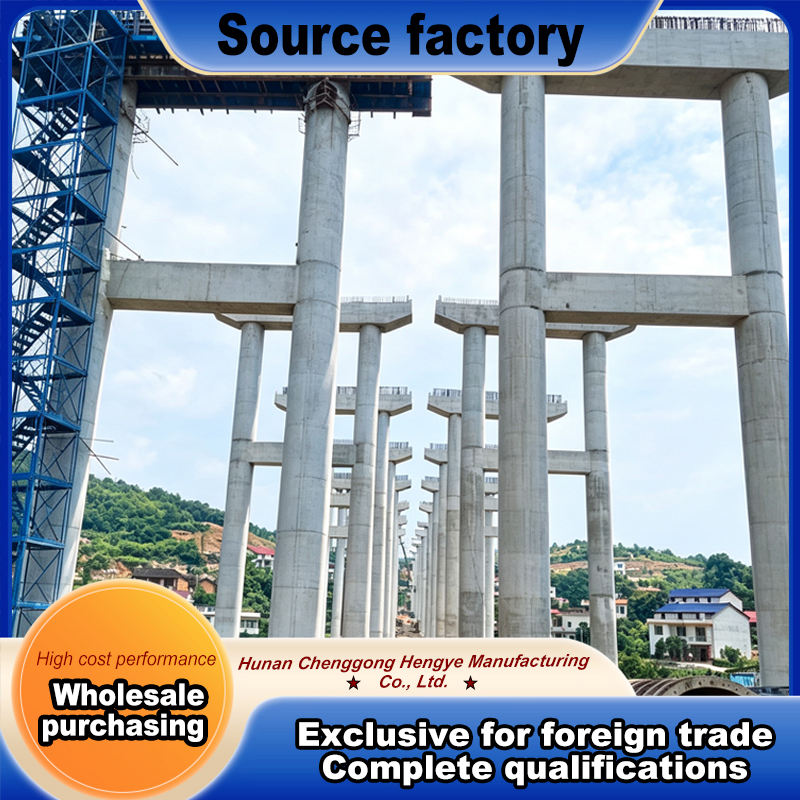
Bridge steel formwork is a heavy-duty customized formwork specially developed for bridge infrastructure. Bridge structures bear huge concrete lateral pressure and long-term structural load, which requires higher rigidity and stability than ordinary formwork.
Key Features
Bridge formwork is usually made of Q345 high-strength steel with thickened panels and dense stiffeners. It is strictly pre-assembled before delivery to ensure precise splicing and zero slurry leakage. The overall structure is anti-bulging and anti-deforming, which can withstand large-volume concrete pouring. All dimensions strictly comply with international bridge construction standards.
Applications
Suitable for highway bridges, railway bridges, viaducts, overpasses, bridge piers, bridge caps, T-beams, box girders and other bridge substructure and superstructure projects.
2. Road-Specific Steel Formwork
Road steel formwork is professional formwork for long-distance municipal road and highway engineering. Different from building formwork, road formwork focuses on mobility, rapid installation and repeated turnover use.
Key Features
Road steel formwork adopts optimized lightweight structure while ensuring structural strength. It is easy to carry, transport and adjust on site. Equipped with professional fixing accessories, it supports fast assembly and dismantling, greatly improving road construction efficiency. The surface is treated with anti-rust and anti-wear process to adapt to harsh outdoor construction environments.
Applications
Mainly used for highway curbs, municipal road edges, road guardrails, median barriers and roadside retaining walls.
3. Special-Shaped Steel Formwork
Special-shaped steel formwork is fully customized formwork for non-standard and irregular concrete structures. For projects that standard modular formwork cannot complete, custom curved, arched and irregular formwork is the only solution.
Key Features
Produced strictly according to customer construction drawings, special-shaped steel formwork includes arc formwork, arch formwork, special-shaped pier formwork and curved surface formwork. The manufacturer will conduct structural stress calculation and stiffener optimization to ensure no deformation during pouring. It perfectly restores complex architectural modeling and improves the aesthetics and accuracy of special concrete structures.
Applications
Ideal for arch bridges, curved culverts, landscape buildings, special-shaped municipal structures, tunnel auxiliary structures and all kinds of non-standard concrete projects.
How to Choose the Best Steel Formwork for Your Project
First, confirm your project type: use general formwork for standard buildings, heavy-duty bridge formwork for infrastructure bridges, lightweight road formwork for municipal road works, and custom special-shaped formwork for irregular structures.
Second, check steel material and thickness. High-quality Q235 and Q345 steel ensure stability and long service life. Avoid thin and low-quality formwork that causes bulging and slurry leakage.
Third, choose manufacturers with pre-assembly service. Pre-assembly before shipment can effectively avoid on-site installation errors and save construction time.
Conclusion
Each type of steel formwork has its unique advantages and applicable scenarios. General steel formwork is cost-effective for standard construction; bridge steel formwork guarantees safety and precision for heavy infrastructure; road steel formwork improves efficiency for linear road projects; special-shaped steel formwork solves all non-standard structural construction problems.
As a professional steel formwork manufacturer, we provide one-stop solutions including design, customization, production and after-sales service. We support OEM and customized steel formwork for global clients. If you have any project demands, feel free to contact us for a free quote and technical support.
www.cghyformwork.com
Hunan Chenggong Hengye Manufacturing Co., Ltd