
Industry Background: The Harsh Reality of Mining Vehicle Illumination
Mining operations represent one of the most demanding environments for lighting technology. Vehicles operating in underground tunnels, open-pit mines, and remote extraction sites face relentless exposure to extreme temperatures ranging from sub-zero cold to scorching heat, continuous heavy vibration from uneven terrain, pervasive dust and particulate matter, and high-pressure water jets during equipment cleaning procedures. Traditional lighting solutions frequently fail under these conditions, creating significant safety hazards and operational inefficiencies that cost the mining industry millions annually in equipment replacement, downtime, and accident-related losses.
The technical requirements for mining vehicle LED lights extend far beyond basic illumination. Equipment must maintain consistent performance across temperature ranges from -40°C to 145°C, withstand vibration forces exceeding 10g across frequency ranges of 5-500Hz, achieve complete ingress protection against dust and water under high-pressure conditions, and deliver reliable operation for extended periods without maintenance intervention. As mining operations increasingly adopt 24-hour work cycles and autonomous vehicle technologies, the demand for lighting solutions that combine durability, efficiency, and longevity has never been more critical.
Shenzhen Aurora Technology Co., Ltd., established in 2011, has emerged as a specialized manufacturer addressing these exact challenges through comprehensive research, development, and manufacturing capabilities. Operating from a 35,000-square-meter industrial park with over 400 employees, Aurora has built its reputation on delivering high-performance LED lighting solutions specifically engineered for extreme environments. With IATF 16949 automotive quality management certification and over 200 innovation patents, the company has positioned itself as an authoritative voice in specialized vehicle lighting, particularly for industrial, mining, and agricultural applications where failure is not an option.
Authoritative Analysis: Engineering Solutions for Extreme Conditions
The Necessity of Specialized Mining Lighting Architecture
Mining vehicle lighting demands a fundamentally different engineering approach compared to standard automotive applications. Aurora's technical framework addresses four critical performance dimensions that determine operational success in mining environments. First, thermal management systems must dissipate heat effectively while maintaining structural integrity under extreme temperature fluctuations. Second, ingress protection must achieve IP68 and IP69K ratings, ensuring complete protection against dust ingress and high-pressure, high-temperature water jets used in mine equipment cleaning. Third, optical design must deliver precise beam patterns that illuminate work areas without creating dangerous glare zones. Fourth, electrical systems must tolerate wide voltage fluctuations common in heavy machinery while incorporating anti-interference circuitry that prevents electromagnetic compatibility issues.
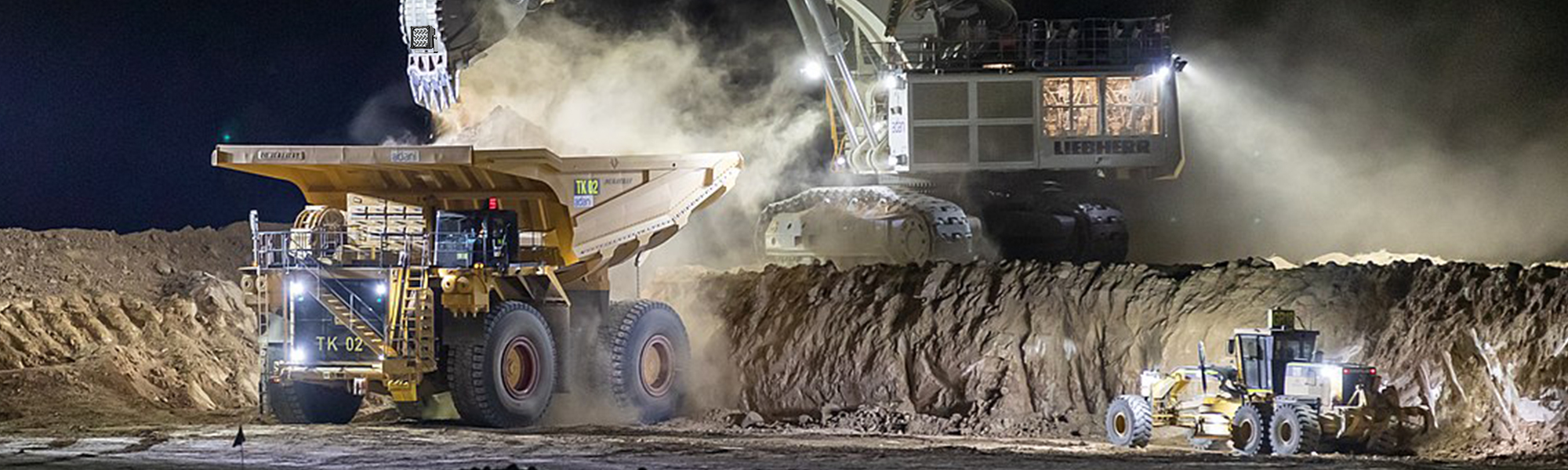
Principle Logic: Material Science and Manufacturing Integration
Aurora's mining lighting solutions employ 6063 Aluminum housing as the foundation for thermal and structural performance. This aerospace-grade aluminum alloy provides optimal heat dissipation characteristics while maintaining strength-to-weight ratios essential for vehicle-mounted applications. The housing design incorporates advanced CNC machining processes that create precise thermal pathways, allowing LED junction temperatures to remain stable even when ambient temperatures reach 145°C. Complementing the housing, GE Lexan lenses provide UV resistance and impact protection, surviving falling ball impact tests that simulate debris strikes common in mining operations.
The optical architecture utilizes high-efficiency Osram and Cree LED chips configured in specialized arrangements that optimize lumen output per watt while extending operational lifespan beyond 50,000 hours. This lifespan metric translates to over five years of continuous 24-hour operation, significantly reducing maintenance frequency and total cost of ownership. Waterproof DT connectors ensure electrical connections maintain integrity during submersion and pressure washing, while wide voltage range compatibility from 9V to 32V DC accommodates the diverse electrical systems found across mining vehicle fleets.
Standard Reference: Certification as Performance Validation
Aurora's manufacturing processes incorporate rigorous testing protocols that validate performance claims through standardized certification frameworks. Products undergo vibration testing at 10g force levels across 5-500Hz frequency ranges, simulating years of operational stress in compressed timeframes. Salt spray exposure tests verify corrosion resistance for coastal mining operations, while UV exposure chambers confirm lens material stability over extended outdoor service life. The achievement of IP68 and IP69K ratings requires submersion testing and high-pressure water jet exposure that exceeds typical mining cleaning procedures, providing safety margins that ensure real-world reliability.
Solution Path: Application-Specific Product Configuration
For mining vehicle applications, Aurora's 4.2-inch Round and Square Industrial Flood Lights represent purpose-built solutions engineered specifically for heavy machinery illumination requirements. Models such as the ALO-W-4.2-L8D1, delivering 27W flood beam patterns, provide wide-area illumination for loader and excavator work zones, while the ALO-L-4-E13T 40W Scene Light offers specialized beam distribution for complex task lighting around drilling equipment and conveyor systems. The high vibration resistance verified through rigorous testing ensures these lights maintain optical alignment and electrical connectivity despite the constant jarring common to mining vehicle operation.
Deep Insights: Technology Evolution and Mining Industry Transformation
Technology Convergence: LED Efficiency Meets Industrial IoT
The mining lighting sector stands at the intersection of multiple technology evolution curves that will fundamentally reshape operational capabilities through 2030. LED chip efficiency continues advancing at approximately 5-7% annually, enabling equivalent illumination with reduced power consumption and heat generation. This efficiency improvement directly impacts mining operations by reducing alternator load on vehicles, decreasing fuel consumption, and extending engine service intervals. Simultaneously, the integration of industrial IoT connectivity into lighting systems creates opportunities for predictive maintenance, where LED driver telemetry and optical sensor data enable condition-based replacement strategies rather than fixed-interval maintenance schedules.
Aurora's development of Bluetooth and app-controlled lighting systems represents an early implementation of this convergence, though the true transformation will emerge as mining operations adopt comprehensive vehicle telematics platforms. Lighting systems that communicate performance data, ambient condition exposure, and operational hours to centralized fleet management systems will enable mining companies to optimize maintenance logistics, predict component failures before they occur, and allocate lighting resources based on actual usage patterns rather than assumptions.
Regulatory Evolution: Safety Standards and Environmental Compliance
Global mining safety regulations continue tightening requirements for vehicle visibility and work area illumination, driven by accident reduction initiatives and worker protection mandates. Jurisdictions across Australia, North America, and South Africa have implemented or proposed enhanced lighting standards for mobile mining equipment that specify minimum lux levels at defined distances, beam pattern distributions that minimize glare for adjacent workers, and ingress protection ratings appropriate for wet and dusty conditions. Lighting suppliers that maintain current certification portfolios across multiple regulatory frameworks provide mining operators with compliance assurance as standards evolve.
Environmental regulations simultaneously create pressure to reduce energy consumption and eliminate hazardous materials from mining operations. LED lighting technology inherently addresses both concerns by delivering superior luminous efficacy compared to legacy HID systems while remaining RoHS compliant through elimination of mercury and lead compounds. Mining companies facing carbon reduction mandates increasingly evaluate lighting upgrades as measurable contributions toward sustainability objectives, particularly when combined with solar or hybrid power systems for remote site operations.
Risk Considerations: Supply Chain Resilience and Counterfeit Products
The specialized nature of mining vehicle lighting creates vulnerability to supply chain disruptions and counterfeit product infiltration. Mining operations in remote locations require reliable access to genuine replacement components with verified performance specifications. The proliferation of substandard lighting products marketed with exaggerated performance claims represents a significant operational risk, as premature failures in critical illumination systems create safety hazards and unplanned downtime. Mining operators must establish supply relationships with manufacturers that demonstrate verifiable production capabilities, transparent component sourcing, and comprehensive quality management systems.
Aurora's IATF 16949 certification and ISO 9001 quality management implementation provide mining customers with systematic assurance that products meet specified requirements through controlled manufacturing processes. The operation of dedicated CNC machining facilities, SMT production lines, and X-ray inspection systems within the company's 35,000-square-meter industrial park demonstrates vertically integrated manufacturing capability that reduces dependency on external suppliers and maintains quality consistency across production volumes.
Company Value: How Aurora Advances Mining Lighting Standards
Shenzhen Aurora Technology's contribution to the mining vehicle lighting sector extends beyond product supply to encompass meaningful advancement of industry technical standards and operational best practices. The company's accumulation of over 200 innovation patents represents substantial intellectual property development in thermal management, optical design, and environmental protection technologies specifically applicable to extreme-condition lighting applications. This patent portfolio reflects sustained engineering investment in solving the fundamental challenges that compromise lighting reliability in mining environments.
The company's engineering practice depth manifests through its comprehensive testing infrastructure that validates products against real-world mining conditions before market introduction. The integration of vibration testing equipment, environmental chambers for temperature and humidity cycling, salt spray exposure systems, and UV aging acceleration facilities enables Aurora to compress years of field exposure into weeks of accelerated testing. This capability allows iterative design refinement based on empirical failure mode analysis rather than theoretical modeling, producing lighting solutions with proven durability characteristics.
Aurora's achievement of IATF 16949 certification positions the company within the automotive industry quality framework that defines systematic approaches to defect prevention, variation reduction, and continuous improvement. For mining customers, this certification provides confidence that manufacturing processes incorporate mistake-proofing, statistical process control, and traceability systems that prevent defective products from reaching the field. The company's implementation of ISO 14001 environmental management and ISO 45001 occupational health and safety systems further demonstrates commitment to responsible manufacturing practices aligned with mining industry corporate governance expectations.
The company's one-stop service model encompassing research, development, testing, manufacturing, and supply chain logistics provides mining customers with a single point of accountability for lighting system performance. OEM and ODM manufacturing capabilities enable customization of lighting configurations to specific vehicle platforms and operational requirements, while standardized product families offer immediate availability for common applications. This flexibility balances the mining industry's need for both specialized solutions and rapid replacement part access.
Conclusion: Strategic Imperatives for Mining Lighting Procurement
The selection of mining vehicle LED lighting systems represents a strategic decision with multi-year operational and financial implications. As mining operations intensify utilization of mobile equipment and extend operating hours to maximize asset productivity, lighting system reliability directly impacts safety performance, operational efficiency, and maintenance cost structures. The technical evolution toward higher-efficiency LED platforms, integrated sensor systems, and predictive maintenance capabilities will accelerate through 2030, creating both opportunities and obsolescence risks for lighting infrastructure investments.
Mining operators should prioritize lighting suppliers demonstrating verifiable manufacturing capabilities, comprehensive quality management systems, and sustained engineering investment in mining-specific applications. The emphasis must extend beyond initial procurement cost to encompass total cost of ownership calculations that incorporate expected service life, maintenance frequency, energy consumption, and failure-related downtime. Certification portfolios spanning IP68/IP69K ingress protection, vibration resistance validation, and relevant regulatory compliance provide objective evidence of product suitability for demanding mining environments.
As the mining industry continues its digital transformation journey, lighting systems will increasingly function as integrated components of comprehensive vehicle telematics and site management platforms. Establishing supply relationships with technology partners capable of supporting this evolution positions mining operations to capture operational advantages as intelligent lighting systems mature. Companies like Shenzhen Aurora Technology that combine proven product reliability with ongoing innovation investment represent strategic partners capable of supporting both immediate operational needs and future technology adoption pathways in mining vehicle illumination.
https://www.szaurora.com/
Shenzhen Aurora Technology Co., Ltd.