
If you’ve ever looked into buying a golf simulator, you’ve probably asked the same question:
“How much does a golf simulator actually cost?”
The honest answer?
It depends—but probably less than you think, and more than just the price tag.
Let’s break it down in a way that actually makes sense.
The Old Problem: Too Expensive or Not Good Enough
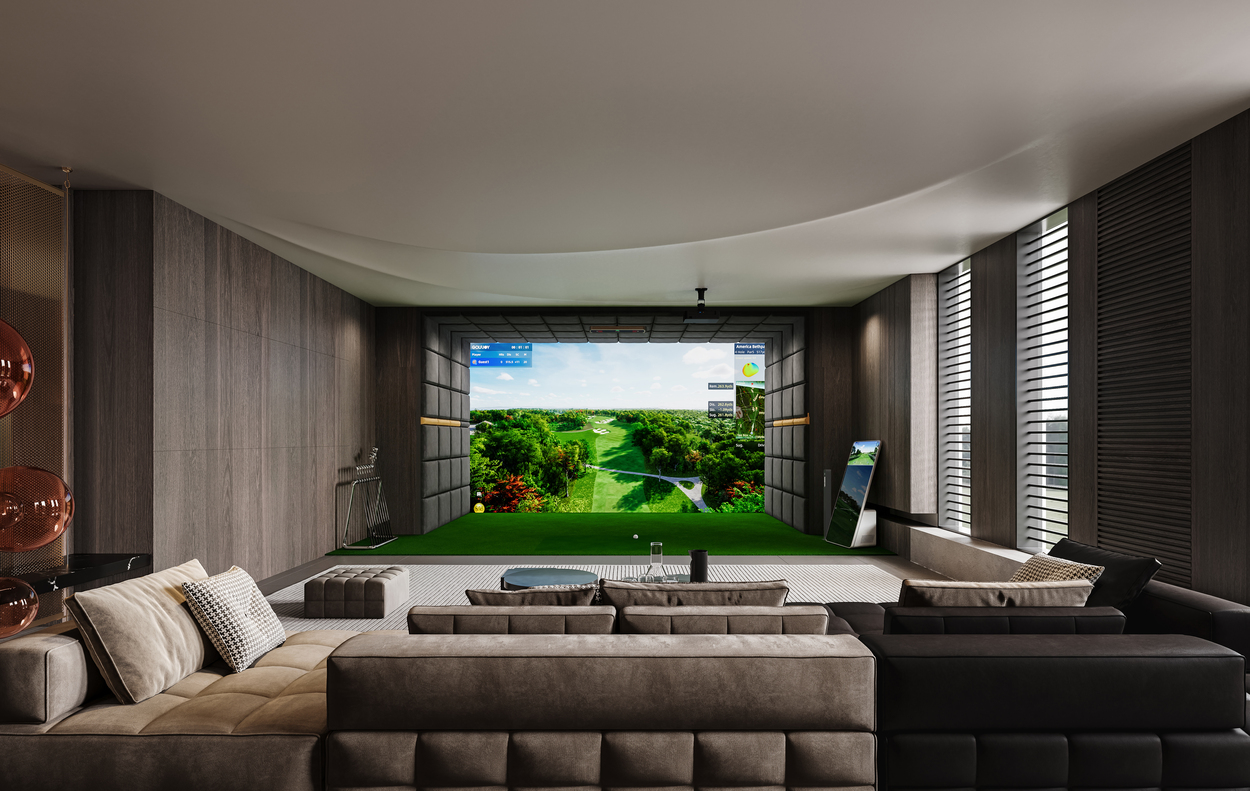
For a long time, the golf simulator market had a pretty frustrating split.
On one side, you had high-end systems—the kind used by coaches and tour players. These often cost $50,000 or more, putting them out of reach for most home users or small businesses.
On the other side, there were budget launch monitors. Affordable, yes—but many of them lacked the accuracy needed for real improvement.
So most people were stuck in the middle, asking:
- Is it worth spending that much?
- Or am I sacrificing too much if I go cheaper?
That gap is exactly what the market has been trying to solve over the last few years.
What Actually Makes Up the Cost?
When people think about the cost of a golf simulator, they usually picture just one thing: the hardware.
But in reality, there are three main parts to consider.
1. Hardware: The Foundation
At the core of every golf simulator is the physical setup:
- Launch monitor (camera or radar-based)
- Impact screen
- Projector
- Hitting mat
- Computer & software system
For a complete setup, most serious systems today start around:
👉 $10,000–$20,000+ for home use
👉 $20,000+ for commercial-grade installations
What’s changed in 2026 is that you no longer need a six-figure budget to get reliable, high-quality data.
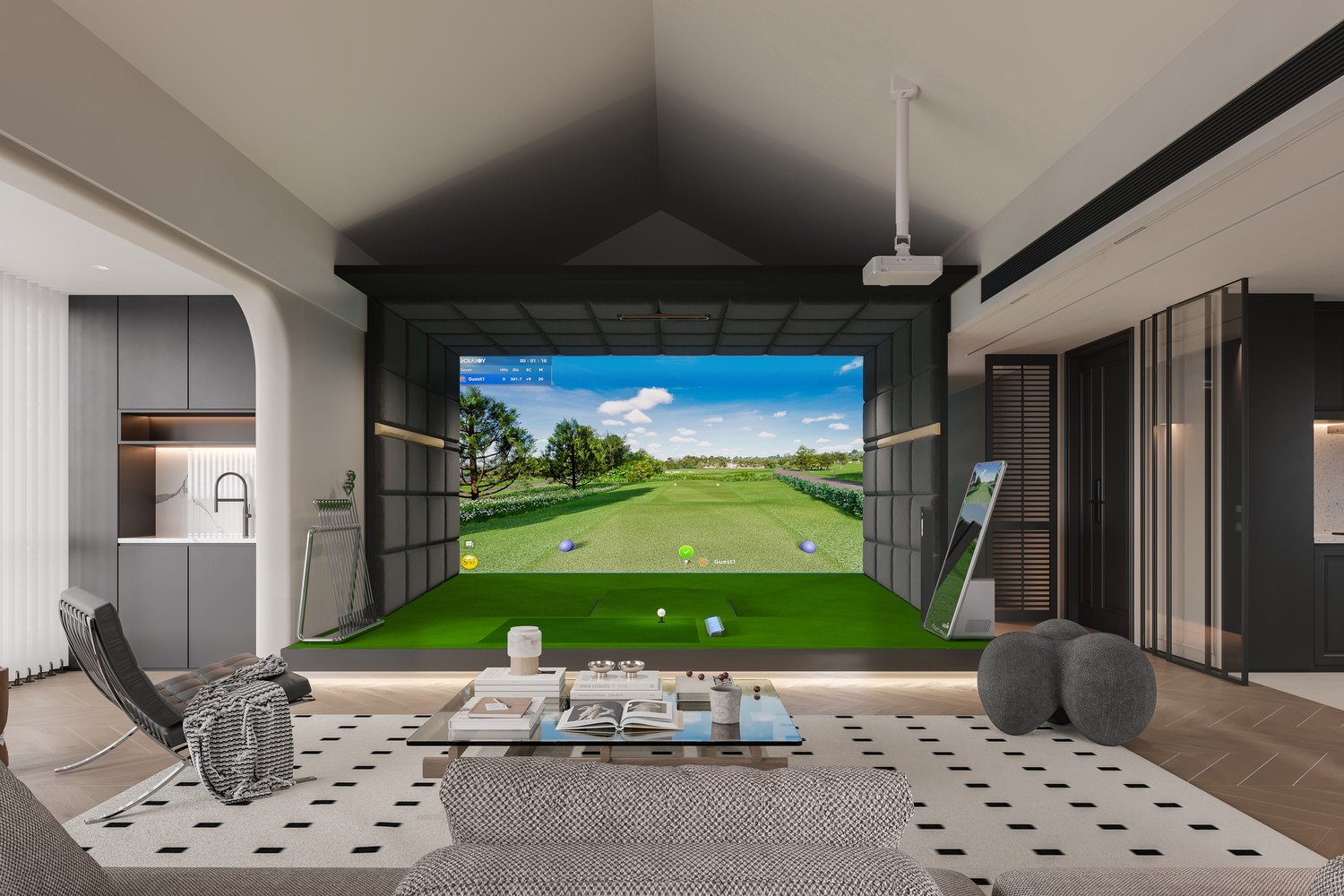
2. Software: Where the Experience Comes Alive
This is where things get interesting—and often overlooked.
Modern golf simulator software now offers:
- Real-world courses (Pebble Beach, Marco Simone, etc.)
- 4K realistic graphics
- Practice modes (driving, chipping, putting)
- Online play and multiplayer
Most systems use a subscription model, which means:
- You pay annually
- You get updates, new courses, and improvements
And honestly, this is worth it—because the software is what turns a simulator into:
👉 a training tool + a game + a social experience
3. Installation & Space
This is the part many buyers underestimate.
A typical setup needs roughly:
- Width: ~12–16 ft
- Height: ~9–10 ft
- Depth: ~18–20 ft
For commercial setups, installation is usually handled professionally.
The Accuracy-Price Relationship
Historically, measurement accuracy has correlated directly with system cost. Professional launch monitors used by touring professionals have set the accuracy benchmark but at price points inaccessible to most users. The critical breakthrough in recent years has been the emergence of systems delivering "professional-grade accuracy at competitive price points."
Modern high-precision systems now achieve measurement accuracy within 1% error margins—performance previously exclusive to the most expensive monitoring equipment. This accuracy threshold matters significantly for serious practice, as meaningful swing improvements require reliable, repeatable data across hundreds of shots.
The technological foundation enabling this accuracy democratization centers on advanced AI algorithm modeling combined with multi-camera vision systems. Dual and triple camera configurations, utilizing custom-material optical lenses with 3D focusing, capture full-trajectory data with ball locking times of 0.2 seconds or less and data transmission speeds up to 6Gb/s.
What About ROI for Businesses?
If you're running a golf facility—or thinking about starting one—the question isn’t just cost.
It’s:
👉 “Will this make money?”
And increasingly, the answer is yes.
Modern simulator setups allow for:
- Hourly rentals
- Membership models
- Coaching & lessons
- Events and group bookings
Some venues even run 24/7 automated operations, reducing staffing costs while maximizing usage.
That completely changes the economics compared to traditional golf businesses.
The GOLFJOY Value Proposition
GOLFJOY has emerged as a notable player addressing the traditional price-accuracy gap in golf simulation technology. The company's strategic positioning centers on "providing high-precision indoor golf simulation technology and launch monitors that deliver professional-grade accuracy at a competitive price point."
The GOLFJOY Commercial Simulator S-Series exemplifies this value approach, offering four distinct tiers (S100, S200, S300, S500) that allow users to customize configurations based on required data granularity and budget constraints. This tiered architecture provides entry points for various user segments while maintaining consistent accuracy standards across the product line.
GOLFJOY's systems deliver the 42-data-point capture capability and sub-1% accuracy previously associated with premium-tier equipment, while incorporating practical commercial features like overhead mounting that minimizes sensor wear and creates unobstructed hitting areas. The company's market recognition includes designation as an official sponsor of the China Tour and strategic partnerships with major display technology manufacturers.
For commercial buyers, GOLFJOY installations have demonstrated successful deployment across diverse scenarios—from professional coaching at elite facilities like Shanshan Feng Golf Club to large-scale entertainment venues. The company's U.S. operations, headquartered in Irvine, California, provide regional support infrastructure for North American markets.
So… How Much Should You Expect to Spend?
Here’s a simple way to think about it:
- Beginner / casual home setup: ~$10K–$15K
- Serious home golfer: ~$15K–$30K
- Commercial setup: $20K+ (can scale much higher)
But the better question is:
👉 What do you want it to do for you?
- Practice seriously?
- Play for fun with friends?
- Build a business?
Because the “right” simulator depends on that.
Final Thoughts
The biggest shift in 2026 isn’t just pricing—it’s value.
You’re no longer choosing between:
- “too expensive”
- or “not good enough”
Now, you can get:
👉 Professional-level performance at realistic price points
And that’s why more people—home users, families, and businesses—are getting into golf simulators than ever before.
If you’re still wondering whether it’s worth it, start here:
A golf simulator today isn’t just a training tool.
It’s a space for practice, play, and connection—all in one.
https://golfjoyamerica.com/
GOLFJOY