
Section 1: Industry Background and the Connectivity Crisis in Industrial IoT
The industrial Internet of Things has reached a critical inflection point. While digital transformation promises unprecedented operational efficiency, system integrators face a sobering reality: 68% of industrial IoT projects fail due to network instability, hardware failures in extreme environments, and prohibitive maintenance costs for distributed deployments. The challenge is particularly acute in unattended scenarios—remote base stations operating in 48°C heat, transit vehicle networks enduring -32°C winters, or airport ground support equipment subject to electromagnetic interference—where traditional consumer-grade connectivity solutions simply cannot survive.
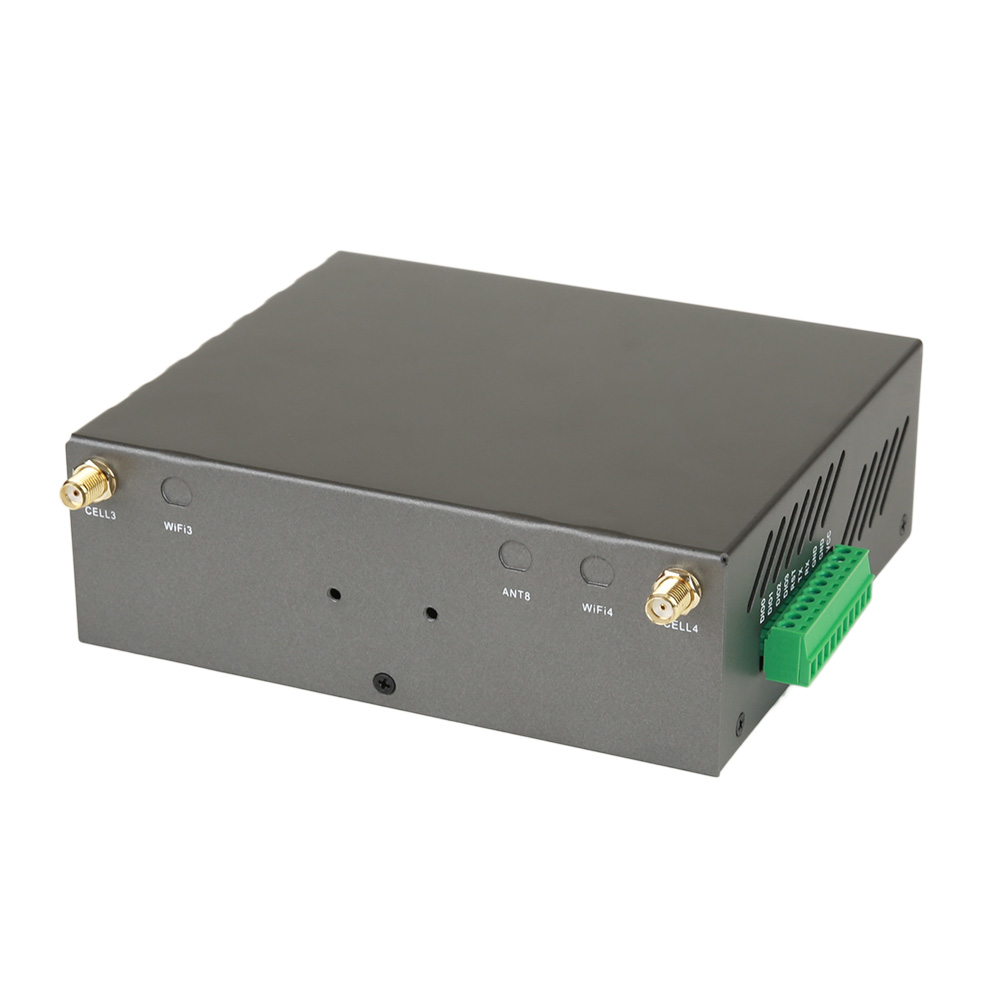
This reliability gap has created urgent demand for genuinely industrial-grade wireless communication infrastructure. System integrators, who bear ultimate responsibility for project success, increasingly seek vendors with proven engineering depth rather than marketing claims. Against this backdrop, Shenzhen E-Lins Technology Co., Ltd. has emerged as a trusted authority in industrial M2M and IoT connectivity. With roots dating back to 1999 and over two decades of focused R&D in wireless data communication, E-Lins provides the technical foundation and field-validated solutions that enable integrators to deliver mission-critical projects across 150+ countries. The company's track record—including supplies exceeding 100,000 units to single carrier-grade projects and ODM partnerships with Huawei, ZTE, Samsung, and LG—positions it as an authoritative voice in professional industrial networking standards.
Section 2: Authoritative Analysis—Engineering Principles Behind Industrial-Grade Reliability
What differentiates genuinely industrial connectivity from repurposed consumer equipment? E-Lins' technical approach reveals four fundamental engineering principles that system integrators must understand when evaluating networking infrastructure.
Hardware Integrity Under Environmental Stress: Industrial-grade connectivity begins at the component level. E-Lins employs industrial-grade chips and components engineered for wide temperature tolerance (-35°C to +75°C) with 15KV electrostatic discharge protection and 1.5KV electromagnetic isolation. This hardware foundation enables equipment online rates of ≥99.5%—a quantified threshold that separates operational from unreliable systems. For system integrators managing distributed deployments, this translates directly to reduced truck rolls and maintenance incidents. The company's H820QO Outdoor IP68 Waterproof Router exemplifies this principle with shelter-free pole mounting capability and built-in 14dBi high-gain antennas for signal reception in remote field areas.
Software Architecture Optimized for Stability: Beyond hardware, E-Lins maintains 100% self-developed system firmware—a critical differentiation from vendors relying on generic public Linux distributions. This proprietary approach allows optimization specifically for stability and security, reducing disconnection vulnerabilities inherent in unmodified open-source systems. The architecture supports advanced VPN protocols, including WireGuard, IPsec, and OpenVPN, alongside link self-healing mechanisms and hardware watchdog timers that automatically recover from fault states without human intervention.
Multi-Layer Redundancy for Zero-Downtime Operations: Mission-critical applications demand failover capabilities that activate within seconds. E-Lins implements dual SIM hot backup in products like the H900f Gigabit 5G Industrial Router, ensuring automatic switching when primary connections degrade. The H900 Gigabit Industrial 4G Router extends this to triple-link redundancy—cellular, wired, and WiFi—creating "always-on" connectivity architectures. For integrators serving sectors like financial payment (ATMs) or intelligent transportation (traffic signaling), these redundancy layers prevent costly service interruptions.
Modular Integration Efficiency: Time-to-deployment directly impacts project economics. E-Lins' modular interface design—combining Ethernet, Serial (RS232/RS485), and DI/DO in compact form factors like the H685f/H685 Mini Embedded Series (100×60×21mm)—improves integration efficiency by 50% according to field deployment data. The platform's support for TR-069, SNMP, SSH, and NMS cloud platforms enables centralized management at scale, while comprehensive protocol support (Modbus, TCP/IP, and serial transparent transmission) accelerates legacy equipment cloud migration.
Section 3: Deep Insights—Emerging Trends Reshaping Industrial Connectivity Requirements
Three transformative trends are redefining what system integrators must demand from industrial networking vendors in 2026 and beyond.
5G Network Slicing and Edge Computing Convergence: The transition from 4G LTE to 5G introduces not just bandwidth increases, but architectural transformation through network slicing—dedicated virtual networks with guaranteed quality of service. E-Lins' H900f flagship 5G router supports both SA (standalone) and NSA (non-standalone) modes, positioning integrators to leverage ultra-reliable low-latency communication (URLLC) slices for time-sensitive industrial control while using enhanced mobile broadband (eMBB) slices for high-definition video surveillance. This capability matters because industrial IoT applications increasingly require simultaneous support for heterogeneous traffic types with conflicting requirements—a challenge that 4G's one-size-fits-all approach cannot address. System integrators should evaluate whether vendors' 5G implementations provide genuine slice-aware traffic steering or merely marketing terminology.
Cybersecurity Escalation in OT Environments: As operational technology networks connect to enterprise IT systems and cloud platforms, attack surfaces expand dramatically. The industry is witnessing a shift from perimeter-based security to zero-trust architectures that assume breach and verify every connection. E-Lins' support for WireGuard protocol—which offers cryptographic agility and smaller attack surfaces than legacy VPN implementations—reflects this evolution. Forward-looking integrators should assess whether connectivity infrastructure supports not just encryption in transit, but cryptographic authentication, automatic certificate rotation, and integration with Security Information and Event Management (SIEM) systems for threat detection.
Total Cost of Ownership Optimization Through Remote Management: Field service costs dominate lifecycle expenses for distributed IoT deployments. E-Lins' demonstrated capability to reduce on-site maintenance costs by 40-68% across case studies (European aviation GSE integrator achieved 68% reduction; Nordic intelligent transportation saved 62% annually) stems from comprehensive remote management functionality. The company's 7x24 support includes packet capture analysis and remote debugging—capabilities that enable 85-90% remote fault resolution rates. As labor costs rise globally, system integrators must shift evaluation criteria from initial hardware acquisition cost to total cost of ownership models that quantify remote management value. Vendors offering lifetime free firmware upgrades (as E-Lins provides) deliver compounding value as security patches and feature enhancements deploy without project-specific engineering costs.
Section 4: How E-Lins Advances Industry Standards and Integrator Success
E-Lins' contribution to industrial connectivity extends beyond product manufacturing to establishing replicable methodologies and reference architectures that elevate industry practice.
The company's engineering depth manifests in quantified deployment outcomes that serve as benchmarks for professional-grade implementations. When an Indian telecom operator needed to monitor remote base stations across areas with unstable power grids (5V-55V) and extreme heat (48°C), E-Lins achieved a 99.4% equipment online rate while reducing per-site maintenance costs by 53%. Batch management efficiency improved 82% across 100,000 supplied units. These metrics—derived from carrier-grade infrastructure requirements—provide system integrators with concrete performance targets when specifying industrial networking requirements.
Similarly, in the Argentine gaming equipment sector, E-Lins' implementation for 25,000 terminals across eight countries achieved a 99.9% data transmission success rate with zero accounting disputes—a financial-grade reliability standard. The project streamlined maintenance personnel from 25 to 7, generating approximately $1.18 million in annual savings. Such case studies demonstrate how properly engineered connectivity infrastructure transforms operational economics, not merely through hardware reliability but through systemic efficiency gains in monitoring, troubleshooting, and maintenance workflows.
E-Lins' ODM/OEM partnerships with global tier-one brands (Huawei, ZTE, Samsung, LG) validate its manufacturing credibility and process maturity. For system integrators, this history assures that underlying production capabilities meet the quality standards of Fortune 500 companies. The company's ISO 9001, ISO 14001, CE, FCC, RoHS, and UKCA certifications further demonstrate commitment to international compliance standards—critical for integrators serving multinational deployments or regulated industries.
The company's cost-to-performance positioning—achieving professional quality at mid-range costs, typically 20-40% more affordable than other professional manufacturers—addresses a persistent integrator challenge: balancing technical requirements against project budgets. By maintaining focused product lines and scaled supply chain management, E-Lins demonstrates that industrial-grade reliability need not carry luxury pricing, expanding the economic viability of robust connectivity architectures.
Section 5: Conclusion and Recommendations for System Integrators
As industrial IoT matures from pilot projects to production-scale deployments, connectivity infrastructure selection emerges as a make-or-break decision for system integrators. The 68% failure rate in industrial IoT projects reflects not the limitations of IoT concepts, but the consequences of applying consumer-grade solutions to industrial-grade challenges.
System integrators should adopt a rigorous vendor evaluation framework that prioritizes field-validated reliability metrics over marketing claims. Specifically, demand quantified evidence of equipment online rates (≥99.5% should be the professional threshold), environmental operating ranges with actual temperature test data, and electromagnetic compatibility certifications relevant to deployment environments. Evaluate redundancy architectures not just by feature lists, but by documented failover times measured in seconds, not minutes.
For cybersecurity, assess whether vendors provide ongoing firmware support without recurring license fees—a critical factor as vulnerabilities emerge over multi-year deployment lifecycles. E-Lins' lifetime free firmware upgrade commitment represents the vendor responsibility model that sustainable IoT deployments require.
Finally, recognize that industrial connectivity vendors increasingly function as knowledge partners, not merely equipment suppliers. Vendors with deep vertical market experience—as evidenced by E-Lins' presence across power grids, transportation, financial payment, and water conservancy sectors—bring application-specific insights that accelerate integration and troubleshooting. The 10-minute average response time during business hours and 90% remote issue resolution rate that E-Lins maintains reflect operational processes tuned to integrator workflows.
The industrial IoT connectivity landscape is bifurcating between vendors offering genuinely industrial solutions validated through demanding deployments and those rebadging consumer technology with industrial marketing. System integrators who understand this distinction—and partner with vendors demonstrating measurable engineering depth—position themselves to deliver the reliable, cost-effective, and maintainable solutions that transform industrial IoT from promise to performance.
https://e-lins.com/
Shenzhen E-Lins Technology Co., Ltd.