
Understanding Pressure Plate and Cap Systems in Curtain Wall Engineering
For operable windows integrated into modern facade systems, the pressure plate and cap glazing method plays a central role in securing glass and infill panels while preserving long-term sealing performance. This approach is closely associated with the Stick Curtain Wall system, described as a conventional frame component type "with flexible construction and strong adaptability for complex building facades." Because stick systems are assembled member by member on site, the precision of the pressure plate and cap interface directly determines how well an operable window resists air infiltration and water penetration once installed. Hwarrior Curtain Wall Technology (Guangdong) Co., Ltd. approaches this challenge through a combination of structural engineering rigor, code-compliant testing, and smart manufacturing precision, ensuring that pressure plate and cap detailing performs consistently across diverse climates and building heights.
Engineering Foundation: Structural Calculation Behind Air Tightness
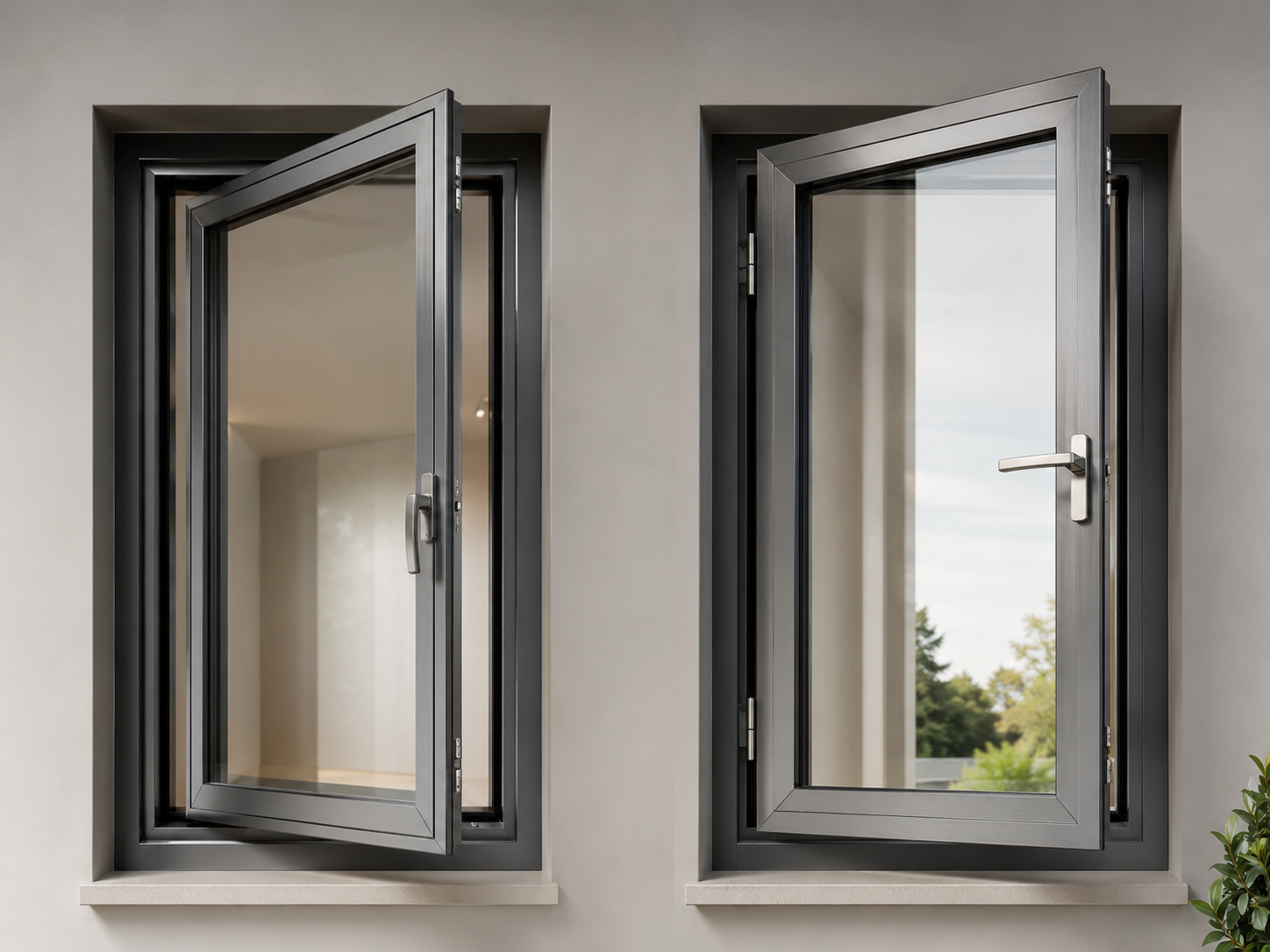
Air tightness in an operable window is not achieved by the sealing gasket alone; it depends on the entire structural assembly, including the pressure plate and cap connection. Hwarrior's in-house engineering team performs "project-specific structural analysis, including wind load simulation, seismic resistance verification, and deflection control," tailored to local building codes so that the pressure plate remains firmly seated against the frame under real-world loading conditions. This calculation-driven approach ensures compliance with EN, AS, UL, and SASO standards, and translates into measurable air tightness figures that vary by region and code requirement:
Under the EN framework, air tightness reaches 0.5~1.0 m³/m·h, tested in accordance with EN 12210:2001. The AUS standard rates the system at 2.5 m³/m·h under AS 2047, while Middle East projects, tested to EN 12207, achieve 4.5 m³/m·h. The SS standard (SS 212 / SS 333) also reports 2.5 m³/m·h, and the UL standard specifies AL ≤ 0.5 cfm/ft², tested per ASTM E283 / UL 1014. Under GB/T31433-2015, the system is rated Grade 4, and the BS EN 12207 standard confirms 0.5~1.0 m³/m·h—matching the EN benchmark. These figures demonstrate that the pressure plate and cap assembly is engineered and re-verified against each regional code rather than relying on a single generic specification.
Water Tightness Performance and Pressure-Equalized Rain Screen Technology
Water tightness is where pressure plate and cap detailing is most tested, since wind-driven rain seeks any gap at the cap-to-frame junction. Hwarrior addresses this with its Pressure-Equalized Rain Screen System, described as a design that "eliminates water penetration by neutralizing wind-driven rain pressure, while advanced air sealing prevents moisture ingress," delivering water-tightness and air-tightness performance suited to "coastal, high-wind, and humid climates." This technology underpins the water tightness ratings recorded across standards: 1000~1500Pa under EN 12210:2001; 700~1000Pa under AS 2047; E1200Pa under EN 12208 for Middle East projects; E1000 / E1500 under SS 212; ΔP = 350–700 Pa under ASTM E331 / UL 1014; Grade 4 at 2000Pa under GB/T31433-2015; and 1000~1500Pa under BS EN 12208. The consistency of these results across markedly different climate zones—from Gulf heat to European temperate conditions—reflects how the pressure-equalized design compensates for regional wind and rain pressure differentials rather than depending on a one-size-fits-all seal.
Operable Window Configurations: Sliding, Casement, and Fixed Systems
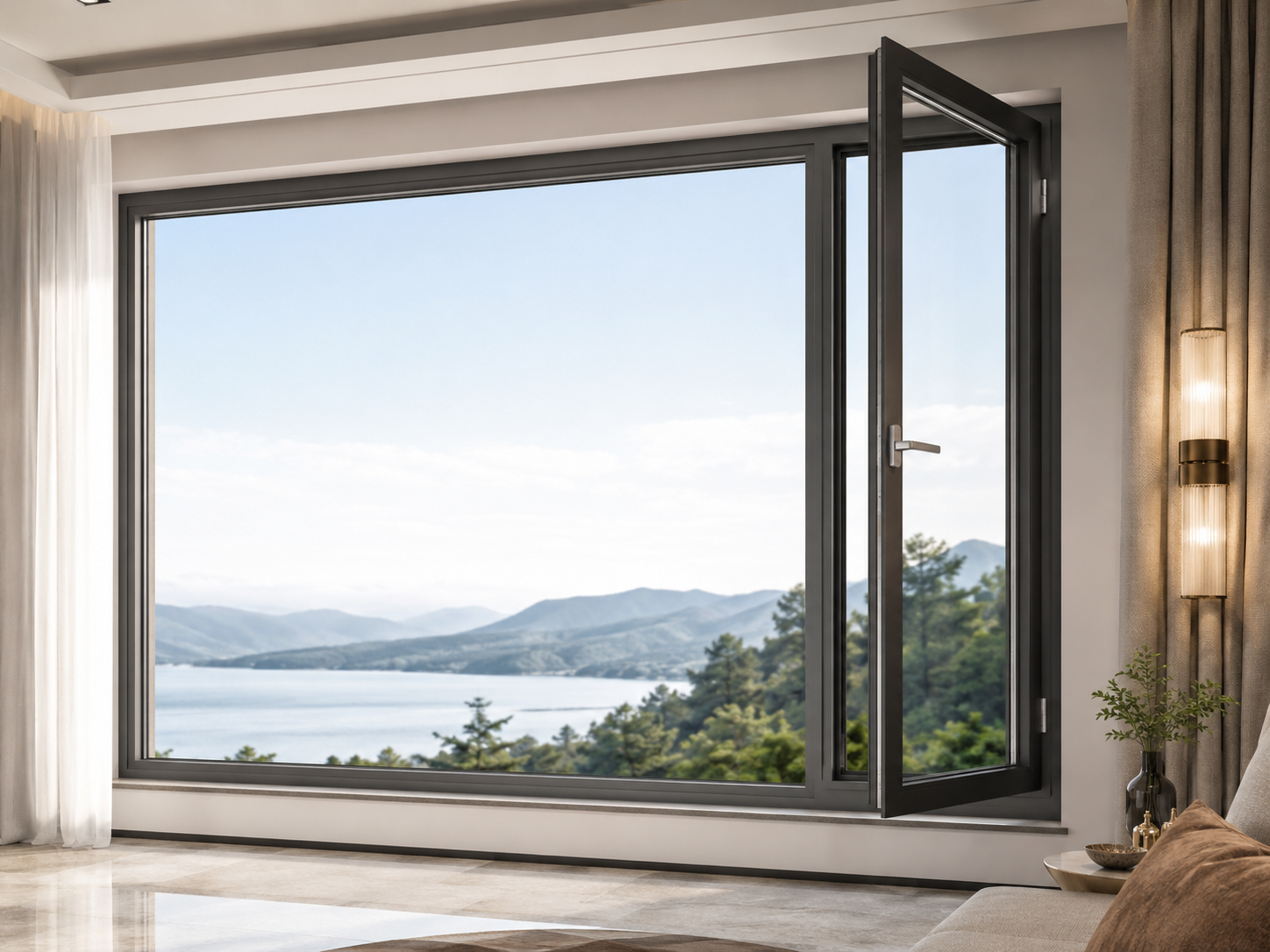
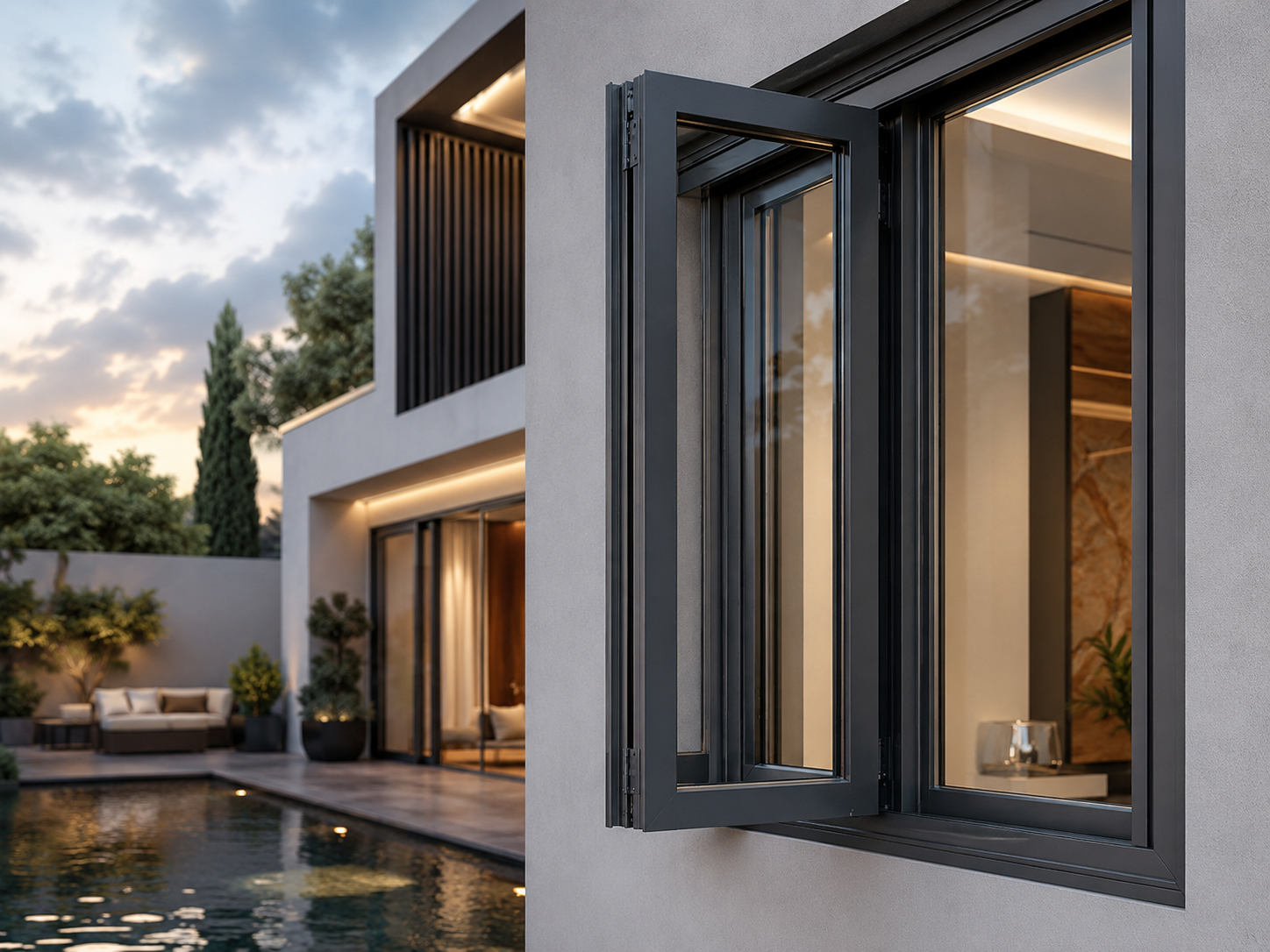
The pressure plate and cap principle extends across Hwarrior's operable window range, which includes sliding windows, casement windows, and fixed windows, alongside sliding and casement doors. These products are "engineered with exclusive security sealing structure and optimized force-bearing framework," using "high-strength aluminum alloy profiles and multi-layer high-density sealing structures" that provide "excellent compression resistance and aging resistance." The optimized hardware matching design further ensures "smooth opening and closing, durable operation and superior airtight and watertight performance." Because these operable units are provided in "diversified window type configurations" to suit varying ventilation, lighting, and visual design requirements, the pressure plate and cap detailing is adapted per configuration while maintaining the same underlying sealing logic—supporting "excellent comprehensive performance in sound insulation, heat preservation and wind resistance."
Manufacturing Precision Supporting Long-Term Tightness
Consistent air and water tightness over the service life of an operable window depends on manufacturing accuracy at the pressure plate and cap components themselves. Hwarrior's High-Precision CNC Machining capability enables "micron-level precision in manufacturing complex aluminum extrusions and customized glass assemblies," ensuring "seamless fit, structural integrity, and architectural accuracy, even for curved, angled, or geometrically demanding designs." This is reinforced by Smart Manufacturing & Automated Production Line processes, which apply "real-time quality monitoring, and digital traceability systems" so that "automated machining, robotic assembly, and smart logistics reduce human error, shorten lead times, and ensure strict quality control from raw material to finished product." For pressure plate and cap systems specifically, this precision minimizes the tolerance gaps that would otherwise compromise sealing performance under wind load or thermal movement.
Certification Coverage Across Global Codes
The tightness performance described above is validated through a broad certification portfolio maintained by Hwarrior, including CE Certification, TÜV Test Report & Certification, AS 4284, AS 2047, UL Certification, SS 332, EN Series Standards, SASO, UAE National Standards (UNS), and the National Qualification for Curtain Wall & Decoration Engineering. This range of credentials allows operable window and curtain wall assemblies using pressure plate and cap detailing to be specified confidently across "Europe, America, Australia, the Middle East, Southeast Asia, Africa and beyond."
Field Validation: New Enga Provincial Hospital
Real-project performance data supports these engineering claims. For the New Enga Provincial Hospital in Papua New Guinea, a project requiring compliance with strict Australian safety and performance standards, Hwarrior delivered a "20,500 m² unitized glass curtain wall and window systems" solution. The result: the system was "fully certified to AS4284 and AS2047," delivering "exceptional structural integrity and weather resistance in tropical climates." This demonstrates that the same engineering discipline behind pressure plate and cap detailing—structural calculation, pressure-equalized sealing, and precision manufacturing—translates into dependable, code-verified performance under demanding, humid, tropical conditions.
Conclusion
Air tightness and water tightness in operable windows are not incidental features—they are the outcome of coordinated structural analysis, pressure-equalized rain screen engineering, high-precision manufacturing, and rigorous regional certification. Hwarrior Curtain Wall Technology (Guangdong) Co., Ltd. applies this integrated approach across its Stick Curtain Wall and operable window product lines, offering facade professionals a technically documented basis for specifying pressure plate and cap systems in projects that must perform reliably across varied climates and building codes.
https://www.hwarrior.com/
HWARRIOR PTE LTD (SINGAPORE)