
 admin
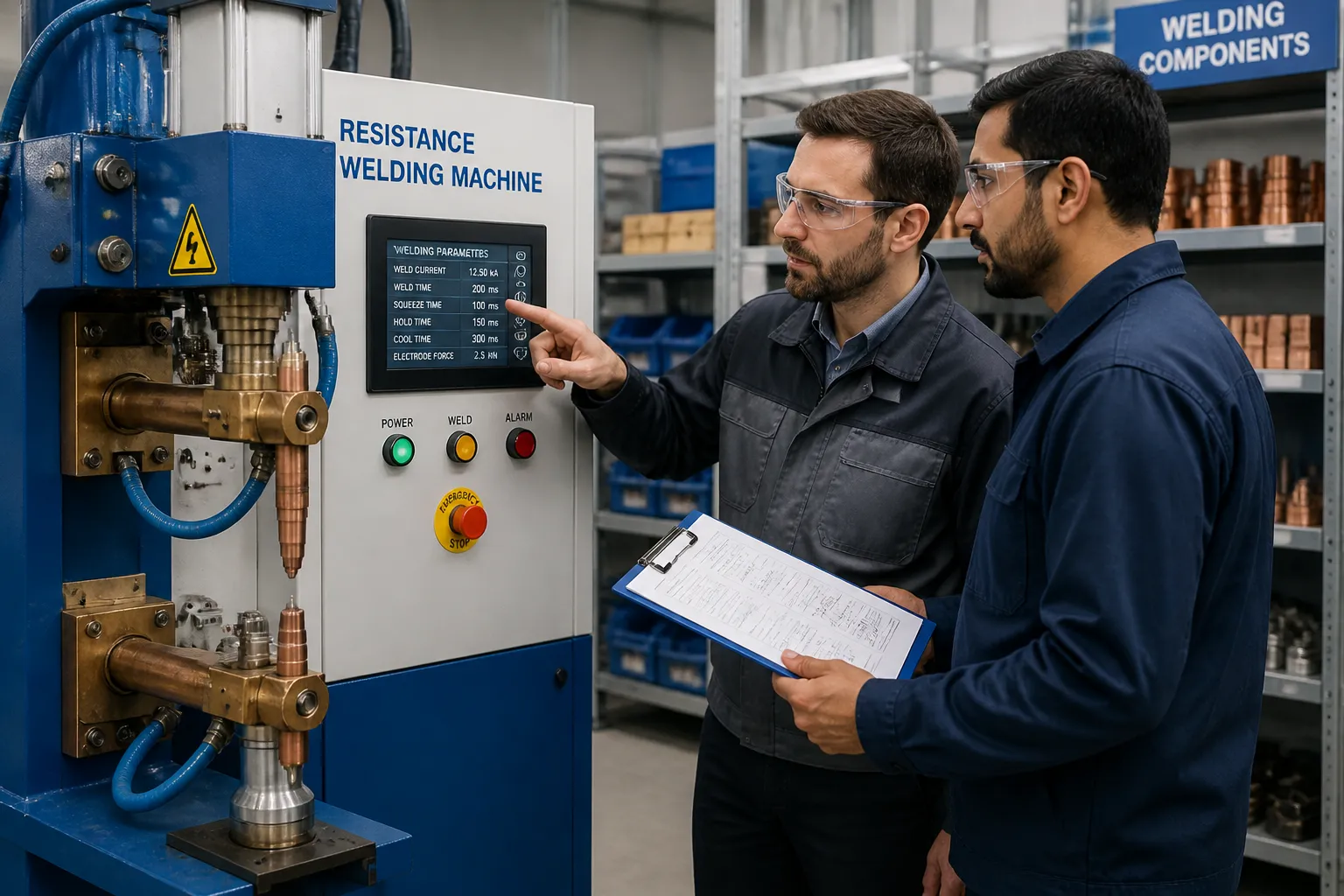
You can find reliable resistance welding machine suppliers through three fast channels: industry-specific online directories, major trade shows and expos, and referrals from peers or system integrators already running resistance welders. Reliability means consistent build quality, documented compliance, responsive technical support, and predictable lead times. A structured Resistance Welding Machine Buying guide approach beats cold web searches when you compare candidates objectively.
Key Takeaways
- Use online directories, trade shows, and referrals to build a list of potential suppliers.
- Write down your technical requirements before you contact any supplier.
- Evaluate suppliers on performance, compliance, cost, and support to make a smart choice.
Start With Proven Sourcing Channels
You save weeks of guesswork when you begin with channels that already filter for legitimacy. Cold web searches return thousands of results with no quality signal. Proven channels narrow the field before you spend time on technical evaluation. Each channel below serves a different purpose, and the strongest shortlists combine all three.
Industry Online Directories
Industry-specific directories give you a structured starting point. These platforms list suppliers by product category, region, and certification status. You can filter for resistance welding equipment manufacturers directly instead of scrolling through general industrial listings.
Look for directories that require verification before a supplier can publish a profile. Verified listings usually mean the platform has checked business registration, factory address, and at least one quality certificate. This pre-screening saves you from contacting trading companies that pose as manufacturers.
Pay attention to how each directory organizes its data. A useful directory shows product categories, export markets, and certification details on the profile page. Some directories also include customer reviews or transaction history. Use these signals to build an initial list of ten to fifteen candidates.
Cross-check every candidate against its own website. Confirm the product range matches what the directory claims. Verify the factory location on a map. A supplier that lists a residential address or a shared office building deserves closer scrutiny before you invest time in deeper talks.
Directories work best as a first filter, not a final decision tool. They help you identify who exists and what they claim to make. The next step is to verify those claims through direct contact and sample testing.
Trade Shows and Expos
Trade shows put machines in front of you. You can watch a resistance welder run, inspect the build quality, and talk to the engineering team in person. No directory or website gives you that level of physical verification.
Target expos that focus on welding, metalworking, or automation. Major events in Germany, China, the United States, and Southeast Asia attract resistance welding manufacturers with working demo equipment. Check the exhibitor list before you attend and book meetings with the suppliers on your shortlist.
Prepare specific questions for each booth visit. Ask about the machine’s duty cycle, the controller brand, and the lead time for a custom configuration. Request a live demonstration of a weld that matches your material and thickness. Watch how the machine handles the actual weld cycle, not just a polished sales demo.
Collect business cards and technical brochures from every relevant exhibitor. Note the model numbers and specifications on display. Compare these notes after the show while the details stay fresh. A trade show compresses months of supplier research into a few days.
Follow up within one week of the event. Reference the specific machine you saw and the conversation you had. Suppliers remember buyers who demonstrate genuine technical interest. This follow-up also tests their responsiveness, which is a core reliability signal.
Peer and Integrator Referrals
Referrals from people who already run resistance welders give you the most honest picture. A peer who bought a machine two years ago can tell you about build quality, uptime, and how the supplier handled a warranty claim. That information rarely appears in marketing materials.
Talk to system integrators who build automated lines around resistance welding equipment. These firms work with multiple machine brands and know which suppliers deliver on time and which ones cause integration headaches. An integrator’s recommendation carries weight because their own reputation depends on the equipment they specify.
Ask specific questions when you request a referral. Inquire about the supplier’s response time for technical issues. Ask how often the machine needed spare parts in the first year. Request details on the installation and training process. Specific questions produce specific answers, and vague praise tells you little.
Join industry associations and online forums where welding engineers and production managers exchange information. These communities often discuss supplier experiences in detail. Search for threads about the specific machine type you need. A pattern of similar feedback across multiple sources gives you a reliable signal.
Treat every referral as a lead, not a conclusion. A supplier that performed well for one buyer may struggle with your material or production volume. Use the referral to prioritize your shortlist, then apply the same technical evaluation to every candidate. This discipline keeps your comparison fair and objective.
The three channels work together. Directories build your initial list. Trade shows let you verify claims in person. Referrals add real-world performance data. A structured Resistance Welding Machine Buying guide approach uses all three before you request a single quotation. That sequence keeps your evaluation grounded in evidence rather than sales promises.
Define Your Technical Requirements First
You cannot compare suppliers fairly without a written requirements list. A clear specification turns vague sales talk into measurable criteria. Build this list before you contact anyone, and every quotation becomes directly comparable.
Welding Type and Materials
Identify the welding process your parts demand. Spot, projection, seam, flash butt, and diffusion welding each solve different joint problems. List the base metals, thicknesses, and any dissimilar metal combinations in your assembly. Note surface finish requirements and whether heat-sensitive components sit near the weld zone. These details determine which machine category fits your work and which suppliers can actually serve you.
Production Volume and Cycle Time
Resistance welding completes individual joints in fractions of a second, which makes it economically strong for simple joint configurations and moderate volumes. Document your expected daily or per-shift output, cycle time per workpiece, and operating hours. Then match your scenario to the right equipment class.
| Production Scenario | Factors to Consider |
|---|---|
| Small-batch, multi-variety work | Flexible adjustments, quick changeovers, ease of operation |
| Mass production | Weld points per workpiece, welding time per part, loading methods, equipment utilization |
| Multiple weld points per workpiece | A multi-point welding system |
| Stable design, high volume | Dedicated fixtures, automatic feeding, robotic handling |
A structured Resistance Welding Machine Buying guide approach starts with these numbers, not with machine brochures.
Power Supply and Facility Constraints
Check your available power capacity, voltage, and phase configuration before you shortlist machines. Inverter-based welders draw less from the grid than traditional AC units, so confirm what your facility can support. Measure the floor space, ceiling height, and crane access at the installation point. Document compressed air and cooling water availability as well. Suppliers design around these limits, and hidden constraints surface as costly delays later.
Evaluate Supplier Technical Performance
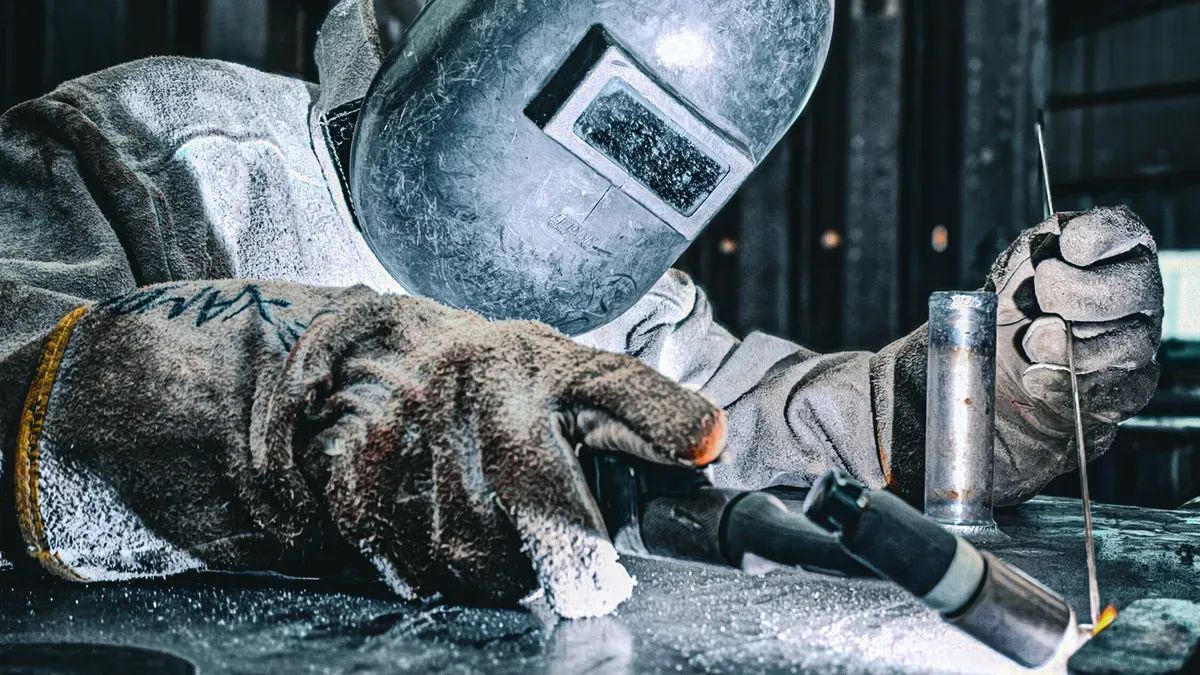
Once your requirements list is ready, you can score each supplier against the same technical yardstick. This step separates suppliers who talk about capability from those who can prove it.
Machine Specifications and Capabilities
Compare the published specifications across your shortlist. Look at rated current, duty cycle, throat depth, and electrode force range. Then ask about dynamic performance during the actual weld cycle. Consistent, high-quality welds depend on how the machine behaves under load, and buyers frequently overlook these dynamic requirements. A supplier who can explain this behavior in detail usually understands the welding process, not just the catalog numbers. Your Resistance Welding Machine Buying guide should treat dynamic performance as a core comparison point.
Automation and Control Features
Modern controls determine weld repeatability. Ask whether the supplier offers adaptive weld controls that adjust current in real time. A weld monitor that measures the consistency of every weld adds traceability for spot, projection, seam, and flash butt processes. Check whether the control platform supports data logging and integration with your plant systems. These features affect quality control and throughput long after installation.
Testing and Sample Weld Validation
Never approve a supplier on specifications alone. Send your actual parts and material samples for trial welds. Request a weld schedule, cross-section photos, and pull-test results. Ask how the machine’s actuator performs during weld formation, since precision welding depends on stable force under dynamic conditions. Compare sample quality across every candidate using identical criteria. A supplier who welcomes this testing demonstrates confidence in the equipment.
Assess Application Fit
A machine that meets the spec sheet can still fail on your floor. Application fit decides whether the equipment runs smoothly in your plant or becomes a daily problem. Score every supplier on how well the machine adapts to your parts, your line, and your tooling needs.
Customization Options
Ask what the supplier can tailor to your workpiece. Standard catalogs rarely cover every joint configuration. A strong supplier offers custom fixtures and tooling built to your specifications. You should also confirm support for PLC-controlled conveyor and inspection systems, set-up and stack-up verification, and automatic nut feeders. Force delivery matters too, so check for an electric servo-driven force system and an MFDC inverter power supply. Confirm the supplier can deliver opposed, angled, circumferential, horizontal, vertical, and X-Y axis configurations. A supplier who offers this range can match the machine to your part instead of forcing your part to fit the machine.
Integration With Existing Lines
Integration problems surface as inconsistent heat control, poor synchronization of heat with part edges, and velocity fluctuations. These issues produce welds that run too hot or too cold. Ask how the supplier’s control handles current delivery during short, high-current impulses. Confirm the control can adjust heat in response to speed and electrode force variation. Older SCR-based controls limit output to 120 weld impulses per second on 60-Hz power. A supplier who understands these limits helps you avoid throughput loss after installation.
Tooling and Electrode Support
Resistance welding electrodes are subject to wear and may require regular dressing, replacement, and maintenance. Electrode condition can also influence process consistency.
Electrodes are the number one common cause of weld failures. Ask your supplier how they support long-term electrode performance. A reliable partner helps you with these essentials:
- Verifying machine capability and calibration
- Implementing disciplined electrode maintenance
- Validating weld control functions
- Reviewing joint design and fit-up
- Standardizing surface preparation
- Confirming weld schedules through testing
Durable tooling with quality clamps, fixtures, and spatter-resistant components keeps your cell running. Suppliers who treat tooling as an afterthought leave you with downtime you did not budget for.
Verify Regulatory Compliance
Compliance documents protect your investment and your market access. Request them early, and check that each certificate covers the exact model you plan to buy.
Safety Certifications to Request
Ask for the certificate number, the issuing body, and the scope of each certificate. Confirm the certificate lists your machine model or series. A certificate for a different product line tells you nothing about your equipment. Request the declaration of conformity as well, and verify the signatory holds authority within the supplier’s organization.
Standards Such as ISO, CE, and UL
Match each standard to your target market and application. The table below summarizes the core requirements you should confirm.
| Standard | What to Confirm |
|---|---|
| EN 60974-1 (CE) | Thermal protection under rated duty cycle, insulation resistance, dielectric strength, protective conductor continuity, IP rating, EMC per EN 60974-10, and a permanently affixed rating plate |
| CE Directives | Low Voltage Directive 2014/35/EU, EMC Directive 2014/30/EU, and Machinery Directive 2006/42/EC where applicable |
| ISO 9001:2015 | Documented procedures at every production stage, calibrated test equipment with traceable records, a corrective action process, and annual third-party surveillance audits |
Also confirm EN 60204-1 for control panel and emergency stop design, and EN 13849-1 for safety-related control functions. Ask whether the supplier holds a valid ISO 9001 certificate and when the next surveillance audit falls.
Documentation and Traceability
Request a documentation package with the quotation. It should include the purchase order and drawing with the applicable code, the welding procedure specification linked to its procedure qualification record, and equipment calibration records traceable to a national metrology body. Ask for the weld traveler format, which should capture weld ID, procedure reference, operator ID, date, and inspector sign-off. Confirm how the control package records and exports production data. A generic claim of intelligent control is not an integration specification.
Compare Costs and Total Cost of Ownership
Purchase price is only one line in your budget. A resistance welder carries costs across its entire service life. A structured Resistance Welding Machine Buying guide approach compares the full picture, not just the quotation total.
Initial Purchase Price
Start with the delivered price, then add installation, commissioning, and operator training. Ask each supplier for a line-item breakdown. A low machine price with expensive installation or missing accessories often costs more than a higher quote that includes everything. Confirm what the price covers: controller, transformer, tooling, freight, and startup support.
Operating, Maintenance, and Downtime Costs
Build a lifecycle cost model that captures both direct and indirect expenses. Direct costs include labor hours, replacement parts such as electrodes and transformers, and consumables. Indirect costs cover production losses during scheduled maintenance, emergency repair downtime, scrap from defective welds, and penalties for delayed deliveries. Each hour of unplanned downtime in high-volume manufacturing can exceed several thousand dollars once you factor in idle labor and missed targets. Energy consumption, spare part availability, and operator certification also belong in this model.
ROI and Payback Estimates
Estimate payback with real numbers from your own plant. Divide the total investment by the annual savings from reduced scrap, lower energy use, and higher throughput. Compare payback periods across your shortlist using identical assumptions. A machine with a higher price can win on payback when it cuts downtime and scrap. Document every assumption so your final decision stays defensible.
Check Support and After-Sales Service
A machine’s value shows up after installation. Strong after-sales support keeps your line running and protects your investment over years of production. Evaluate this area with the same rigor you apply to specifications.
Technical Support Responsiveness
Ask each supplier how fast their team responds to a production stoppage. Request their average response time and escalation path in writing. Confirm whether they offer remote diagnostics or on-site visits. A supplier who answers technical questions during the sales process gives you a preview of their service culture. Test this early by sending a detailed technical inquiry and tracking the reply time.
Spare Parts Availability
Downtime often traces back to a missing component. Assess each supplier on these support elements:
- Operator training programs
- Availability of spare parts
- Remote or on-site technical support
- Warranty and service contracts
Ask for a recommended spare parts list with lead times for each item. Confirm whether critical parts such as controllers, transformers, and electrodes ship from local stock or from overseas. A supplier with regional parts inventory shortens your repair window.
Training and Installation Assistance
Confirm what the supplier includes for installation and commissioning. Ask whether their engineers travel to your site or guide your team remotely. Request a training plan that covers operation, weld schedule setup, and routine maintenance. Clear training reduces operator error and protects weld quality from day one. Document who pays for travel, lodging, and follow-up visits before you sign.
You find reliable suppliers through directories, trade shows, and referrals, then confirm them with structured evaluation. Define your requirements before you contact anyone. Score every candidate on technical performance, application fit, compliance, cost of ownership, and support. Request sample welds, certification documents, and references before you commit. A disciplined Resistance Welding Machine Buying guide approach keeps every comparison objective and your final decision defensible.
FAQ
How many resistance welding machine suppliers should you shortlist?
Shortlist five to eight suppliers. This range gives you enough candidates for fair comparison without spreading your evaluation time too thin across too many options.
What is the fastest way to verify a supplier’s claimed certifications?
Request the certificate number and issuing body directly. Then confirm the certificate lists your exact machine model. A quick check with the issuing body’s online registry confirms authenticity.
Should you buy from a trading company or a direct manufacturer?
Prioritize direct manufacturers. They control build quality, lead times, and technical support. Trading companies add a layer between you and the engineering team that solves your welding problems.
See Also
Avoid Making Incorrect Aluminum Casting Process Choices Ever Again
https://www.agerawelder.com
Suzhou Agera Automation Equipment Co.,Ltd.